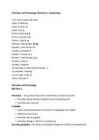
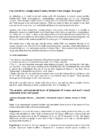
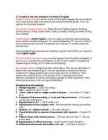
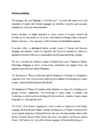
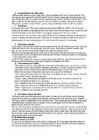
Phonetics and Phonology. Mid-term 1. Terminology. Testi tuleb kindlasti see tabel! Nasal, Bilabial: m Nasal, Alveolar: n Nasal Velar: Plosive, Bilabial: p; b Plosive, Alveolar: t; d Plosive, Velar: k; Affricate, Post-Alveolar: t; d Fricative, Labio-dental: f; v Fricative, Dental: ; Fricative, Alveolar: s; z Fricative, Post-Alveolar: ; Fricative, Velar: x Fricative, Glottal: h Approximant, Alveolar ja Post-Alveolar: Approximant, Palatal: j Approximant, Velar: w Lateral, Alveolar: l Phonetics and Phonology. Mid-term 1. Phonetics the general study of the characteristics of speech sounds: how they may be "strung" together to form meaningful units how they are produced It studies: how to describe the speech sounds in the languages of the world what these sounds are how they fall into patterns
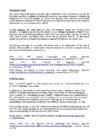
greater breath force, voiceless in all positions, fortis plosives are aspirated in syllable-initial position, vowels are shortened before a fortis consonant. Example: voiceless [bb ] is "lenis", whereas [p] is "fortis". Lenis plosives have less intraoral pressure than fortis ones. The difference is easily noticed in the English pair "touched" vs. "judged" (said in isolation). The final consonants are pronounced without vocal fold vibration in both cases. But the fricative component of the affricate in "touched" is much noisier (more turbulent) than that of the affricate in "judged". This is presumably because in devoiced lenis obstruents the vocal folds adopt the ‘whisper’ position, i.e. are narrowed, unlike the wide open position that they adopt for fortis obstruents. This reduces the flow of air and therefore reduces the amount of turbulence. SIL International. 1997. LinguaLinks Library. Available at http://www- 01.sil
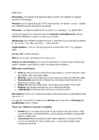
Nasal m n voiceless p t k Plosive voiced b d voiceless ts t Affricate voiced dz d voiceless f s Fricative voiced v z Trill r Approximant l · 5 short, 6 long vowels and 7 diphthongs · Stress is generally on the penultimate syllable · il(l)- = the · For example: l-omm, il-missier RECOGNITION · Very similar to other languages · The article · Written form · Two tenses
produce a turbulent airflow. Continuant consonants can be produced until all the air is out of the lungs – s, m, n etc. Fricatives on English: Labiodental Dental Alveolar Post- Glottal alveolar Fortis f s Lenis v z Affricates are sounds that start with a plosive and end with a fricative – both have the same place of articulation. Affricates of English: Nasal consonants are produced so the air flow in the oral cavity is completely blocked and the velum lowers and air escapes through the nasal cavity. Nasals of English: m – bilabial n - alveolar - velar Laterals are sound where the air escapes from the sides of the tongue and out of the oral cavity – closure is made somewhere along the axis of the tongue.
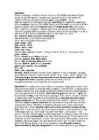
used indiscriminately for both the voiceless and the voiced variant. Thorn, or orn (, ), is a letter in the Anglo-Saxon and Icelandic alphabets. It was also used in medieval Scandinavia, but was later replaced with the digraph th. The letter originated from a rune in the Elder Fuark, called thorn in the Anglo-Saxon and thorn or thurs ("Thor", "giant") in the Scandinavian rune poems, its reconstructed Proto-Germanic name being *Thurisaz. It has the sound of either a voiceless dental fricative, like th as in the English word thick, or a voiced dental fricative, like th as in the English word the. (In Modern Icelandic the usage is restricted to the former. The voiced form is represented with the letter eth (, ), though eth can be unvoiced, depending on its position within a sentence). Yogh-letter (cf yoke Estonian "ike") modified Latin g. Probably stood for several sounds starting with /j/ up to /g/. Prefix ge probably · not stressed · yokh-letter stood for /j/.
Lesbian; Bisexual (GLB) and heterosexual people. Experiment 1 examined the acoustic characteristics of single words produced by both men and women who identified as either GLB or heterosexual. The largest differences between GLB and heterosexual women were in the F1 frequency of /e/ and the F2 frequency of /oR/. The largest differences between the groups of men were in the F1 frequency of /e/ and /a/, and the spectral skewness of the fricative /s/. Experiment 2 showed that listeners' judgments of perceived sexual orientation were related to the acoustic parameters found to differ in Experiment 1: Listeners showed greater sensitivity to differences in men's sexual orientation when listening to words containing low front vowels than when listening to words containing back vowels. Moreover, Regression analyses showed that judgments of men's sexual orientation were influenced by /s/ skewness, the F1 frequency of low
was!) Vocabulary: · ,,Del" and ,,Bach"- terms of endearment · Welsh use ,,delight" in the meaning of ,,interest" · ,,Rise" in the meaning of ,,get" or ,,buy" (I'll rise the drinks) · ,,Tidy" in the meaning of ,,nice" or ,,good" (It's a tidy car) · Bara brith a loaf of bread · Words with double "l" (Llymru porridge dish) · Eisteddfod a competitive arts festival 7) Scottish English (peculiarities of pronounciation, grammar, vocabulary) Pronounciation: · Velar fricative [x] (loch, night) · Dark ,,l" : fu (full), saut (salt), ca (call) · Short vowels are longer (jacket= [jaykit] · Bright [breht] · Rhotic ,,r" · Absence of dipthongs before r (cheers -> chers) · There's a rule that determines when vowels are pronounced short or long · Distinction between [ ] and [w] · No distinction between / æ/ / / / / and /a:/ /u:/ / :/ Grammar: · Have does not need ,,do" support · Using ,,will" with first person subjects in questions (Will I put out the light?)
Until the 20th century, the language's spoken form was the language of only the upper noble classes and urban population, as Russian peasants from the countryside continued to speak in their own dialects. By the mid-20th century, such dialects were forced out with the introduction of the compulsory education system that was established by the Soviet government. Despite the formalization of Standard Russian, some nonstandard dialectal features (such as fricative [] in Southern Russian dialects) are still observed in colloquial speech. History The history of Russian language may be divided into the following periods. Kievan period and feudal breakup The Moscow period (15th17th centuries) Empire (18th19th centuries) Soviet period and beyond (20th century) Judging by the historical records, by approximately 1000 AD the predominant ethnic group over much of modern European Russia, Ukraine and Belarus was the Eastern branch of the
use. Currently, French vocabulary is found in all areas-government, law, art, and literature. More than one third of English words today are derived, directly or indirectly, from French. This is so pronounced, that without prior study, English speakers already know 15,000 French words. Pronunciation Change Much of current English pronunciation can be traced to definite French influence. Old English had many unvoiced, fricative sounds, while French introduced voiced counterparts. English French f v s z th th sh g (as in mirage) 3
 annaabi.ee