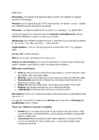
Oclusivas son consonantes que se caracterizan por una interrupción en el paso del aire, motivada por el cierre completo de dos órganos articulatorios (la oclusión). El cierre dura milésimas de segundo y suele deshacerse mediante una pequeña explosión. [p] oclusiva bilabial sorda [b] oclusiva bilabial sonora [t] oclusiva dental sorda [d] oclusiva dental sonora [k] oclusiva velar sorda [g] oclusiva velar sonora Fricativas - Durante su emisión se produce un estrechamiento del canal bucal sin que se llegue nunca al cierre completo de los órganos articulatorios. [β] fricativa bilabial sonora [ð] fricativa interdental sonora [γ] fricativa velar sonora [f] fricativa labiodental sorda [θ] fricativa interdental sorda [s] fricativa alveolar sorda [ss] fricativa alveolar sonorizada [ǰ] fricativa palatal sonora [x] fricativa velar sorda
Allophones are different variations of how a phoneme is pronounced according to the context. E.g. dark and clear l – clear and dull. Segmentation is the act of dividing speech sounds into units. E.g. segment- ation Larnyx (kõri) is the voice box. Glottis is the opening between the vocal cords. Manner of articulation is the way the airstream is blocked when producing a sound – blocked vs partially blocked; vibrating vs no vibration. Different sound types: Velar sounds are produced by the tongue being in contact with the lower side of the velum aka soft palate. Alveolar sounds are produced by the tongue touching the alveolar ridge. Post-alveolar sounds are produced by the tongue touching the area before the alveolar ridge. Dental sounds are produced by the tongue touching the front teeth. Bilabial sounds are produced by the contact of both lips.
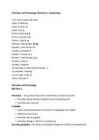
Phonetics and Phonology. Mid-term 1. Terminology. Testi tuleb kindlasti see tabel! Nasal, Bilabial: m Nasal, Alveolar: n Nasal Velar: Plosive, Bilabial: p; b Plosive, Alveolar: t; d Plosive, Velar: k; Affricate, Post-Alveolar: t; d Fricative, Labio-dental: f; v Fricative, Dental: ; Fricative, Alveolar: s; z Fricative, Post-Alveolar: ; Fricative, Velar: x Fricative, Glottal: h Approximant, Alveolar ja Post-Alveolar: Approximant, Palatal: j Approximant, Velar: w Lateral, Alveolar: l Phonetics and Phonology. Mid-term 1. Phonetics the general study of the characteristics of speech sounds: how they may be "strung" together to form meaningful units how they are produced It studies: how to describe the speech sounds in the languages of the world what these sounds are how they fall into patterns how they change in different circumstances
kavade kirjeldustega. Eksimuseks loetakse see, kui võimleja arvestatud punktid ei ühti kohtunike arvestatud punktidega (suurusvahe 1,5p), siis võetakse üldhindest 0,5 p maha. Eesti meistrid iluvõimlemises 1990-2008 1990 Natalja Nikolajeva- Tartu LNSK 1991 Natalja Bestshastnja - EESTI LNSK 1992 Janika Mölder-Maalmann - Tartu Riiklik Ülikool 1993 Anfissa Svetogor - Tallinna Idarajooni Spordikool 1994-1999 Natalja Kornõsheva - Tallinna Kopli Spordikool 2000-2001 Irina Kikkas - Spordiklubi Velar 2002 Karolina Lill - Spordiklubi Velar 2003-2008 Irina Kikkas - Spordiklubi Velar Janika Mölder Janika Mölder (sündinud 4. jaanuaril 1970 Tartus) on eesti iluvõimleja ja treener. Ta on võimlemisklubi Janika asutaja ja juhatuse esimees. Klubi põhitegevuseks jäi iluvõimlemise arendamine. Janika Mölder on võitnud 22 kulda Eesti meistrivõistlustelt. Samuti on ta NL koondise eest võisteldes võitnud kulla 1989. aasta iluvõimlemise maailmameistrivõistlustelt, hõbeda 1987. ja 1989
bajo 3) La acción del velo del paladar: sonidos orales/bucales sonidos nasales oronasales 4) Modo de articulación: la posición que adoptan los órganos articulatorios en cuant a su grado de abertura o cerrazón. 5) Lugar de articulación Vokaalid: ◦ eesvokaalid (vocal palatal = anterior) [i, e] ◦ keskvokaalid (v. central) [a] ◦ tagavokaalid (v. velar = posterior) [o,u] Consonantes: ◦ Huulhäälikud e bilabiaalid (bilabiales) [p, b] ◦ Labiodentaalid (labiodentales) [f] ◦ Hammashäälikud e (linguo)dentaalid [(linguo)dentales] [t, d] ◦ (Linguo)interdentaalid [(linguo)interdentales] [θ] ◦ (Linguo)alveolaarid [(linguo)alveolares] [r, ,l] ◦ (Linguo)palataalid [(linguo)palatales] [c, ɲ, ɟ]
INFLUENCES · Half the vocabulary from Italian and Sicilian · Wasn't recognized as official language `till 1938 · No written form untill 19th century · Has been under different foreign rules CHANGES · Only changes is the increasing usage of loan-words · Less important · Vanishing in my opinion FEATURES Consonants Bilabial Labio-dental Dental Post-alveolar Velar Pharyn-geal Glottal Nasal m n voiceless p t k Plosive voiced b d voiceless ts t Affricate voiced dz d
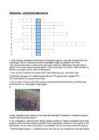
vahenditega. Kavasse kuuluvad erinevates tasapindades kõrged ja madalad visked. Selle veeretamine mööda keha ja mööda maad, tiirutamine, kaheksad ja läbihüpped. Vahendit peab nii parema kui ka vasaku käega kasutama võrdselt. See on tehtud puust või plastist. Selle diameeter on 80-90 cm ja ta peab kaaluma vähemalt 300 grammi. 2. Eesti meister iluvõimlemises aastatel 2003-2008 (Perekonnanimi). Spordiklubi Velar. 3. Rõngakava koosneb 18-st kehaelemendist. Nendest 25% peavad olema hüpped, 25% ................, 25% tasakaalud ja 25% painduvuselemendid. 4. See on kitsas vahend, millel saab teostada mitmesuguseid tasakaaluharjutusi ja võimlemisega seotud harjutusi nt: toenghüpped, kägarhüpped. 5. Kuidas nimetatakse neid võimlemises kasutatavaid vahendeid? Kasutatakse nt küünarvarstoengust hoogtõus harkistesse ja toengusse. 6. See on põrgatuse, visete ja veerete vahend
7. Identifierade understrukna konsonanterna och placera dem i schemat: 8. Vilka är (de sex vanligaste) artikulationsställena för konsonanter? Artikulationsställe- pltsen för förtränging, ställen, som inte är rörliga läpparna (labial) p, b, m tänderna och underläpp (labiodental) v, f tänder (dental) t, s, d, n, s tandvallen (alveolar) tandvallen och hårda gommen (palatal) j mjuka gommen (velar) k g palatoalveolar stämläpparna (laryngal) h 9. Vilket artikulationsställe har: /p/ (labial), /g/ (mjuka gommen), /h/ (laryngal), /b/ (labial), /q/, /n/ (dental), /b/ (labial), /z/, /x/, /m /(labial) , /p/ (labial), 10. Skriv ett svensk ord där det första ljudet är en tonlös dental frikativ. stor, sal 11. Skriv det fonetiska tecknet för: a) en laryngal frikativ b) sex olika dentala ljud c) sex olika nasaler d) en uvular tremulant 12
der Lautgesetze"). BREAKING IN OLD ENGLISH Vowel breaking is a sound change whereby a single vowel changes to become a diphthong in specific environments. The resulting sound preserves the original vowel, which is either preceded or followed by a glide. This process is manifested in a variety of Germanic languages and is characteristic of Old English. Certain front vowels, /æ/ /e/ and /i/, in their short and long variants, were diphthongized when immediately followed by a velar /x/ or a cluster containing a velarized consonant and /l/ or /r/, as its first element. I-UMLAUT In linguistics, umlaut (from German "sound alteration") is a sound change in which a vowel is pronounced more like a following vowel or semivowel. (ö ü). Umlaut is a form of assimilation, the process by which one speech sound is altered to make it more like another adjacent sound. If a word has two vowels, one far back in the mouth and the other far
was!) Vocabulary: · ,,Del" and ,,Bach"- terms of endearment · Welsh use ,,delight" in the meaning of ,,interest" · ,,Rise" in the meaning of ,,get" or ,,buy" (I'll rise the drinks) · ,,Tidy" in the meaning of ,,nice" or ,,good" (It's a tidy car) · Bara brith a loaf of bread · Words with double "l" (Llymru porridge dish) · Eisteddfod a competitive arts festival 7) Scottish English (peculiarities of pronounciation, grammar, vocabulary) Pronounciation: · Velar fricative [x] (loch, night) · Dark ,,l" : fu (full), saut (salt), ca (call) · Short vowels are longer (jacket= [jaykit] · Bright [breht] · Rhotic ,,r" · Absence of dipthongs before r (cheers -> chers) · There's a rule that determines when vowels are pronounced short or long · Distinction between [ ] and [w] · No distinction between / æ/ / / / / and /a:/ /u:/ / :/ Grammar: · Have does not need ,,do" support
 annaabi.ee