Vajad kellegagi rääkida?
Küsi julgelt abi LasteAbi
Logi sisse

BUSINESS VOCABULARY (0)

1 Hindamata
Punktid
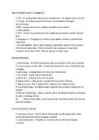
PRODUCTS and BRANDS
1. product catalogue - a list of different products of one company
2. product mix - a range of similar in some way products considered together
2. product range - different particular and specific products of a company
3. product lifecycle - the stages of product lifetime and amount of people who use it at each stage
4. product positioning - is how we see a product or how a company would like us to see it in relation to other products
5. product placement - hidden commercial of a product. Customer can see a product in films, music videos and so on.
6. raw materials - basic materials from which products are made or manufactured
7. finished goods - are goods(products) that have completed manufacturing process and are ready to be sold and used by the end user
8. consumer goods - goods which are produced to satisfy consumer current needs and are bought for individual use
9. consumer durables - long time lasting products, such as home appliances, cars and so on
10. fast moving consumer goods - everyday need products that are sold quickly and in large quantities, food and toiletries for example
11. brand name - word(s) that identify product and it’s company so consumer can easily recognize and notice it.
12. brand awareness - is the extent to which a brand or product can be recognized by consumer
13. brand image - all the ideas and beliefs held about a particular brand
14. brand manager - ensures successful promotion and the quality of products
15. brand identity - it is how a company seeks to identify itself, is the proposal that a company makes to consumers.
16. generic products - products without brand name
17. own brand product - products which have the trademark or label of a retailer
18. brand leader - most widely sold and recognized product of a particular brand
19. brand equity - the value premium that a company realizes from a product
20. brand loyalty - when a person buys the same brand products repeatedly rather than other brand’s.
21. brand stretching - a marketing strategy in which a company uses the same brand name of a product with a well- developed image in a different product category or for a new product
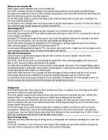
HOW COMPANIES ADVERTISE
1. Word-of-mouth advertising - is when people tell (in a good way) their family or/and friends about products or services that they have bought and used.
2. Institutional or prestige advertising - tries to develop goodwill for a company rather than to sell a specific product.
3. Advertising agencies - agencies which are working on planning, creating and handling advertising for companies
4. An account - advertising contract
5. An advertising budget - amount of money that company is ready to give for advertising
6. A brief - list or statement of the objectives of the advertising
7. An advertising campaign - series of advertisements of a one product of company
8. Media planners - people who decide on which media to place ads, how many people they need and want to reach and so on
9. The threshold effect - the high point of advertising when it becomes effective and starts to give a result
10. Comparative- parity method - to spend the same amount of money on advertising as one's competitors.
11. Counter cyclical advertising - advertising during periods when sales are poor .
OUTDOOR ADVERTISING
1. Billboards - huge outdoor panels where companies put their ads which are very noticeable
2. Outdoor advertising - advertising out of home,on the streets
3. Wallscapes - huge banners which are located on the front of buildings
4. Lightboxes- a lighted display panel
5. Tri face billboards - billboards with rotating sections so consumer can see three different ads at the same billboard
6. Scrollers - signs that can display ads one after the other
7. Street furniture - using street furniture as a place for advertisement, such as bus shelters
8. Transit advertising - advertising on cars, city transport and so on
9. Ambient media - non- traditional media such as receipts, floor ,clothes and so on
10. Digital outdoor advertising - advertising by LED screens on the streets
11. Sonic posters - ads which are “ making ” sounds
12. Lenticular posters - ads which are showing different pictures when somebody is walking past them or near them
13. OTS or coverage - the distance between the point where you first notice the advertisement to the point where you don’t see or recognize it anymore
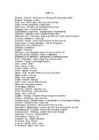
MONEY-BUYING, SELLING AND PAYING
1. Current account - bank account for daily transactions, payments and cash withdrawing
2. Bank statement - is regularly sent to costumer by bank so costumer can see how much money he has on his account
3. Savings account - bank account where you hold your extra money and don’t use it everyday until you need it
4. Be in the red - to have an overdrawn account
5. Be in black - to have credit , opposite to overdrawn
6. A mortgage - money that you lend from the bank to buy a house
7. Pay outright - to pay right here, on the place. Usually when you buy something in a shop you pay for it outright
8. Buy on credit - if you get something from the shop right now and pay later
9. Buy in bulk - if you buy many things at the same time; you can get a discount
10. Give a refund - money that seller will give you back if you bought something and you want to return it and you have a receipt
11. Fee - money that you pay for some service that you get
12. Fare - money that you pay to get somewhere( for a journey )
13. Income tax - the tax that the government collects on wages and salaries
14. Inheritance tax - the tax that the government collects if people inherit something from others
15. Excise duties - customs that have to be paid on things that are imported from other countries
16. VAT - value added tax which is paid when you buy or purchase something
17. Corporation tax - companies tax on their profits
18. Tax rebate - money that you have given back if you paid too much tax
19. Dole - money that the government pays to those who are in need
20. Disability allowance - money that the government pays to disabled people
21. Student grant - money that the government pays to students to help them pay for studying
22. Rate of exchange - the rate at which one currency will be exchanged for another
23. Shares - a single units of ownership in a corporation, company or any other organization that can be sold to members of the public so then they can say that they invested in that company
24. Child benefit - money that the government pays to the parents or guardians of children , teenagers and in some cases young adults
ADVERTISEMENTS THAT WORK
1. AIDA - advertising message: attention , interest, desire , action.
2. Hook - something that you use in ad to catch consumer’s attention
3. Vehicle - something that helps you advertise, for example newspaper or magazine etc.
4. trading radius - is the area where you sell your business
5. Timing - is important part of advertising. Ad has to come in perfect time and place
KNOWING YOUR CUSTOMERS
1. market intelligence - knowledge about the latest trends in a market
2.mystery shoppers - people who company sends to other companies for them to pretend to be real consumers and just see how the things are going on there
3.market research firm - company that does systematic market research
4.secondary data - already existing and publicly available information
5.primary data - information that somebody has collected for a specific purpose
6.observational approach - when you go on place to see yourself how things are going on, how shoppers behave and so on
7. focus group - group of people who are invited to the company to talk about problems, discuss a product and service and so on
8.online focus group - group of people who discuss a product on the Internet
9.survey research- a questionnaire where people are answering to some questions
10.behavioural data - information about what people actually buy and use ( it can be opposite to what they say they buy)
11.experimental research - carried out with the goal of verifying, falsifying, or establishing the validity of a hypothesis
KNOWING YOUR CUSTOMERS II
1.A segment - a group of customers with similar characteristics , needs and requirements
2.behavioural segmentation - customer’s segmentation which depends on when, why and how often they buy a particular product
3.demographic segmentation - customer’s segmentation which depends on age, occupation and social class
4.actualisers - successful people who don’t mind to spend their money on expensive things they want and like
5.strugglers - elderly people who are poorer and who have loyalty to familiar brands
6.experiencers - young people who spend a lot of money on their image( clothes, music etc.). they don’t make plans for the future investments
7.believers - conservative people who prefer familiar brands
8.makers - practical family oriented people with practical taste
9.strivers - people who doesn’t have much money but who pretend to have such with things they buy
CUSTOMER SATISFACTION
1.customer solution - finding a solution to a customer problem by offering the right combination of product and service
2.customer cost - the money paid by the customer for the service or product
3.convenience - the distributing way which is the most convenient for all types of customers
4. communication - two –way communication from company to customer and the other way
5.customer satisfaction - when customers get what they wanted , needed and hoped to get
6.customer delight - when customer’s expectations are exceeded and customers are satisfied
7.degree of involvement - customer is differently involved when he buys different things. For example he is more involved when he buys holiday tickets for his family than chocolate
8.customer retention - keeping existing customers
9.customer defection - when company loose it’s customers
10.churn - the percentage of customers who change suppliers
BRANDS AND BRANDING
1.brand positioning - emphasizing brand’s characteristics and benefits in relation to other brands
2.differentiation - when company makes product look different from other products with same characteristics
3.flagship brand - most important and powerful brand owned by an organization
4.generic brand - brand which is used on a variety if different products of the same company
5.brand stretching - a marketing strategy in which a company uses the same brand name of a product with a well-developed image in a different product category or for a new product .
6.brand dilution - making the brand less powerful
INTERNET SECURITY
1.hackers - illegal penetrators
2.infiltrate - illegal penetration in order to steal or destroy the information
3.denial of service attack - an attempt to make a network resource unavailable to its intended users
4. virus - program designed to make computers malfunction
5.anti-virus programs - used to prevent detect and remove malware
6. Trojan horses - malware which appears to perform a desirable function but instead drops a malicious payload, often including a backdoor allowing unauthorized access to the target 's computer
7.cybercrime - criminal activity on the Internet
8.encrypted - coded , can’t be read by others
9.phishing - when criminals try to get passwords by sending emails that pretend to be from bank ,asking to reconfirm security details
10.identity theft - recording someone ’s passwords and other information while typing by putting spyware on someone’s computer
11.scams - a fraudulent or deceptive acts or operations (lottery “ winning ” emails and so on)
12.electronic trail - a record of the sites that Internet user visited
Vasakule Paremale
BUSINESS VOCABULARY #1 BUSINESS VOCABULARY #2 BUSINESS VOCABULARY #3 BUSINESS VOCABULARY #4 BUSINESS VOCABULARY #5 BUSINESS VOCABULARY #6 BUSINESS VOCABULARY #7 BUSINESS VOCABULARY #8 BUSINESS VOCABULARY #9 BUSINESS VOCABULARY #10
Punktid 100 punkti Autor soovib selle materjali allalaadimise eest saada 100 punkti.
Leheküljed ~ 10 lehte Lehekülgede arv dokumendis
Aeg2013-05-31 Kuupäev, millal dokument üles laeti
Allalaadimisi 16 laadimist Kokku alla laetud
Kommentaarid 0 arvamust Teiste kasutajate poolt lisatud kommentaarid
Autor snigorow Õppematerjali autor
Tegemist on sõnastikuga english-to-english.

Sarnased õppematerjalid

Inglise keele sõnad ADVERTISING
5
docx

Inglise keele sõnad ADVERTISING

THE INTERNET AND E-COMMERCE 1. ISP ­ it is a organization that provides internet access. The internet service provider. 2. e-tailing - the selling of goods and services on the Internet or through e- mail solicitation. 3. B2C.- business-to-consumer, selling to the public on the internet. 4. e-procurement - 5. B2G ­ business-to-goverment, business applay for government contracts and pay taxes. 6. shopping cart ­ Shopping cart is where you put product you have purchased from online shop. 7. last mile problem ­ how to deliver products, purcased on internet to the customers 8. bricks-and-mortar shop ­ Brick and mortar shops are physical shops where customers interact face-to-face. They are opposite to online shops. TELEMARKETING 1

Inglise keel
Monoloogid
4
docx

Monoloogid

Secondly, when you take a bank loan, then you have to consider a fact that you have to pay it back with intrests. Sometimes the intrests are small and sometimes awfully big and might but you in even more worse situation before taking the loan. On the other hand, you can also borrow money from a friend or a relative, but that can have even worse consequences. Money has a way to tair relationships apart and it's best not to mix business with pleasure. In conclusion, when you have to take a loan, either from the bank or from somewhere else, it's best to think about the consequences and the fact if you are able to pay it back. Ways of saving money There are very many different ways of saving money. Some people save money by spending less, some save money by First of all, nowadays it is not very easy to save money. Often people can put asside a little bit of money at

Inglise keel
Unit 3-4 sõnavara
2
doc

Unit 3-4 sõnavara

UNIT 3-4 Retailing - Jaemüük ­ the business of selling goods to the general public Retailers - Jaemüüjad ­ sellers Shop ­ store ­ Pood - place, where you can buy things Outlets - Firma esinduspood ­ a retail outlet Retail chains - Jaeketid - one company but many shops Shopping centres - Ostukeskused - malls Hypermarkets or superstores ­ hüpermarketid vs supermarketid Retail Park - Ärikeskus - there is number of large stores Department store - Kaubamaja - large shop which sell a wide variety of products

Inglise keel
Marketing
4
docx

"Marketing"

BOOK REVIEW ("Marketing" , Eric N. Berkowitz, Roger A. Kerin, William Rudelius) (Pages : 15-23) Prepared: Kadri Tamm, MF-I-4 Instructed: Jane Tammeorg Tartu 2009 Marketing Basics for the Small Business Marketing is the wide range of activities involved in making sure that you're continuing to meet the needs of your customers and getting value in return. Marketing is usually focused on one product or service. Thus, a marketing plan for one product might be very different than that for another product. Marketing activities include "inbound marketing," such as market research to find out, for example, what groups of potential

Inglise keel
Monopolistic competition
5
docx

Monopolistic competition

Price discrimination ­ selling the same good or service at a number of different prices. - Answer ­ Price discrimination is a marketing means to increase economic profit Methods of price discrimination · Discriminate among groups of buyers - works when different buying groups are willing - to pay different prices (on the average) for the same good or service Example: Airline travel ­ prices target business travelers vs. leisure time travelers · discriminator is advance notice, shorter the notice, the higher the price Some Examples of Price Discriminations ­ Doctors often charge rich patients more than poor patients · They may have one price for those with insurance and another price for those without insurance ­ Movies in the evening cost more than those in the early afternoon ­ Senior citizen, youth, and student discounts

Micro_macro ökonoomika
Marketing
8
docx

Marketing

Indroduction This assignment will examine Britain's car market and shows how the external and internal environment factors influences it, mostly on Mini Ltd. External marketing environment is divided into 4 different groups; socio-cultural, economic, technological and political factors. Internal marketing evironment is divided into 6 different groups; which are customers, competitors, suppliers, distributors, employees and stakeholders. Also this assignment is provided with the SWOT analysis, where strengths, weaknesses, opportunities and threats are examined. Mini Mini was at first manufactured by the Austin Motor Company Ltd. In 1957 Alec Issigonis was commissioned to develop a new type of small car. At the same year were the first sketches of Mini made and after that the Mini model is been created from wood and also the most important mechanical parts for Mini has been developed. Four years later the Mini hits the streets. In 1965 the first Mini with an automatic transmission ent

Business english
Correlation between brand longevity and the diffusion of innovations theory
10
docx

Correlation between brand longevity and the diffusion of innovations theory

system one wishes to diffuse it into. This aspect applies to almost every area where the fields of communication, politics, marketing and public affairs are concerned.’ (Tina Gouws and George Peter van Rheede van Oudtshoorn p. 239) Thus, a lot of already well-known brands must change their message or visual in order to fit to the current time. What every company is looking for is repeat-buy or longevity of business. This also can be paralleled with brand loyalty, which is nurtured through three constituents of the brands: insiders, followers and feeders. Those stakeholders are part of creating the myth of the brand, following it and serving it up (to others). Followers are the base – they find the creates value in the myth and identify themselves with it (and with whatever the brand sells). Insiders make the brand seem more legitimate and add credibility. They don’t create revenue

Inglise keel
Turundusplaani koostamine
5
doc

Turundusplaani koostamine

customer service. The basic market need is to offer individuals, families, and take out customers' fresh, creative, attractive, pasta and risotto dishes, salads and desserts. Toscana uses homemade pasta, fresh vegetables, and premium meats and cheeses. Toscana Gourmet possesses good information about the market and knows a great deal about the needs of our most loyal customers. Toscana's management is both focused on repeat business as well as gaining new customers, who can then become part of Toscana's loyal customer family. Toscana customers share 3 main behavior factors: · Enjoy a high quality meal without the mess of making it themselves. · When ordering, health concerns in regard to foods are taken into account. · There is value attributed to the appearance or presentation of food. The market can be segmented into three target populations: · Individuals: people that dine in by themselves.

Inglise keel


Kommentaarid (0)

Kommentaarid sellele materjalile puuduvad. Ole esimene ja kommenteeri


Sellel veebilehel kasutatakse küpsiseid. Kasutamist jätkates nõustute küpsiste ja veebilehe üldtingimustega Nõustun