Vajad kellegagi rääkida?
Küsi julgelt abi LasteAbi
Logi sisse

Review Of Donald Norman Design Of Everyday Things (0)

1 Hindamata
Punktid
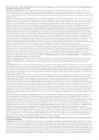
Very rarely it happens so that you can  pick  up a non- fiction  book from a concrete  field  and it will
be making  almost   perfect   sense  to you  even  though you're neither  working  nor educated in that
field. Donald  Norman's Design of  Everyday  Things is that kind of book. It reads effortlessly, for the
most  part , it entertains and for a non-fictional book, that's a rare  quality ; but most importantly,
meanwhile , it educates.
DOET, very aptly renamed from Psychology of Everyday Things, while   having  its shortcomings,
goes  a great mile towards  providing  a starting point for newcomers in the field,  quite  concisely
summing up humankind's  experiences  in design, common errors and  best   practices , while also
providing some  scientific   basis  for many conclusions. Quite notably, Norman's background is in
cognitive   science  and mathematical psychology, which grants him enough of authority to  author
an endeavor  such  as this and not be questioned as to what he  himself  has  designed  and whether
those  products   could  be put on pedestal as  examples  of  good  design.
The  whole  book can be summed up as a cry of frustration with "the  lack  of attention the  maker
pays to the  user " (p.??), but it's not only a thorough  rant about everything that is  wrong  with the
designed world, but a set of explanations, tools and models that should serve to rectify that. Even
though it was the  extreme dissatisfaction with the thoughtlessness of designs that prompted
Norman to act, he approached it from a constructive perspective, doing thorough research on what
exactly was wrong with those irritating designs, how it could be  improved  and how to organize the
findings, which systems of concepts and models they would constitute. Norman himself  states  that
he  makes  it a  rule   never  to criticize  something   unless  he can  offer  a  solution  (p.??). Norman
concentrates on  person 's perception of an  object , on  nature  of human perception of the world in
general, on how people  approach  tasks that designed objects are meant to aid with and poses as an
advocate of a user-centered design approach. The book  places  numerous tools - models, concepts,
the whole approach  described  in detail in 7th  Chapter , encompassing all previously mentioned
notable notions - at the disposal of anyone involved in design willing to use  them . Had it  really
been made a  part  of compulsory  reading  for every designer ever educated from now on, the world
undoubtedly would have become a better, more comfortable and user  friendly   place .
One of the leitmotifs of the book that keeps re-emerging  throughout  is that  majority  of so called
human errors are caused by inadequate design - a notion that serves as an  active  consolation
thanks  to which the reader is  delivered  from their  feeling  of incompetence. Although  majority of
readers do openly embrace this deliverance, to reinstate its  validity  I would  refer  to aviation
industry,  known  for  continuous  reissue of regulations upon the standards to which cockpit and
other  human-operable equipment should conform after any  major   accident  where "human  error "
has been detected. They do recognize that the actual  fault  is with the machinery and that it should
have been "designed for error" in the first  place. “To err is human” Norman states, and I
wholeheartedly agree.
Norman, quite interestingly, goes as far as to absolve some designers of their sins, at  least  partially,
demonstrating a great deal of common sense in doing so. The fault is often with the industry, with
the society and with the unbending bureaucracy and  inertia  of the whole civilized mechanism -
those are the  reasons  why feedback  chain  is virtually non-existent as new generations of product
are  already  under  development  when the  previous   ones  hit the shelves, people demanding  new
trinkets  ASAP and having a tendency to overestimate the value  of multitude of  functions , dated
standards that are too costly to  change  and the right time to do so never seems to  arrive ...
DOET is  certainly  not lacking in examples and in providing those Norman  went  the  path  he is
promoting - he  focused  on  users : himself, his colleagues, his  friends  and his  students  all
contributed numerous examples of their struggles and comic encounters with everyday objects.
While being one of the strongest illustrative  points  of the book,  these  also contribute a great deal to
its  greatest  shortcoming - feeling of repetitiveness. The nature of these examples also is conductive
of ruining the structure of the book, it  felt  that they were largely to blame for the  fact  oftentimes it
was impossible to  tell  what exactly one was reading about and what this  section  of the book was
devoted to. To get a sense of the structure the whole book adheres to one has to refer to contents
table and it's definitely major  drawback .
The  sources  Norman utilized in composing this book are numerous and most of  them  are
respectable publications in the field (many are his own) or accident reports and rulings. These
sources got organized into footnote-like notations in the main  body  of the text and I  kept  expecting
to see something the  bottom  of the page or, as sometimes is the case  with  digital  editions, at the end
of the chapter, but Norman or his  publisher  have made a  decision  to have them as  notes  at the end
of the book and, as a  result , I never read  through  them, although Norman is supplying numerous -
often  valuable  - commentaries to the main text in them. It's a shame the book wasn't read as a  hard
copy  or Norman's daydreaming of hypertext (p.??) wasn't incorporated into the digital  edition .
This formatting decision I consider a shortcoming of the book too.
DOET is about to be republished in a new, updated edition this  year , and should this edition
include  major updates to sections pertaining anticipation of the future, a lot of portions in the
present  edition may be forgiven - it is quite uncomfortable to read Norman's musings and fears for
how the future will deal with  complexity  of  objects that he prophesizes to appear when they are
already integral parts of our everyday life and amongst them  there  are definitely examples of
successful design - and it detracts from perceiving Norman in a wholly  positive   light  and believing
him.
One of the things DOET aspires to teach the reader is observation - for the book to emerge as
wholly successful the readers should start watching and seeing the objects of their everyday use
and their interactions with them. Many readers -  including  myself - have reported at least
temporary  increase  in acuteness of recognition of omission or  application  of principles of good
design; at least, for a time, we start questioning the surrounding world as to why it is the way it is -
was there a deliberate  thought  on the part of the designer put into this or that detail and if it has
served the object well or failed. Regardless of how long the state of acute perception lasts, the book
serves its readers well, as a  regulation  to transfer the blame at least, as an  accumulation  of
knowledge  on  basic  principles of good design, at best.
Review Of Donald Norman Design Of Everyday Things #1 Review Of Donald Norman Design Of Everyday Things #2
Punktid 50 punkti Autor soovib selle materjali allalaadimise eest saada 50 punkti.
Leheküljed ~ 2 lehte Lehekülgede arv dokumendis
Aeg2013-05-21 Kuupäev, millal dokument üles laeti
Allalaadimisi 4 laadimist Kokku alla laetud
Kommentaarid 0 arvamust Teiste kasutajate poolt lisatud kommentaarid
Autor Alysanne Õppematerjali autor
Inglise Keelne Retsensioon Donald Normani raamatule, mida on tarvis TLU kursusele Inimese ja arvuti interaktsiooni alused (IFI7159 Foundations of Human Computer Interaction).

Sarnased õppematerjalid

Steve Krug-Dont Make Me Think 2014
215
docx

Steve Krug-Dont Make Me Think 2014

Don’t Make Me Think, Revisited A Common Sense Approach to Web Usability Steve Krug Don’t Make Me Think, Revisited A Common Sense Approach to Web Usability Copyright © 2014 Steve Krug New Riderswww.newriders.com To report errors, please send a note [email protected] New Riders is an imprint of Peachpit, a division of Pearson Education. Editor: Elisabeth Bayle Project Editor: Nancy Davis Production Editor: Lisa Brazieal Copy Editor: Barbara Flanagan Interior Design and Composition: Romney Lange Illustrations by Mark Matcho and Mimi Heft Farnham fonts provided by The Font Bureau, Inc. (www.fontbureau.com) Notice of Rights All rights reserved. No part of this book may be reproduced or transmitted in any form by any means, electronic, mechanical, photocopying, recording, or otherwise, without the prior written permission of the publisher. For information on getting permission for reprints and excerpts, [email protected]. Notice of Liability

Kategoriseerimata
The Medium Is the Message
18
docx

The Medium Is the Message

1 The Medium Is the Message In a culture like ours, long accustomed to splitting and dividing all things as a means of control, it is sometimes a bit of a shock to be reminded that, in operational and practical fact,, the medium is the message. This is merely to say that the personal and social consequences of any medium-that is, of any extension of ourselves-result from the new scale that is introduced into our affairs by each extension of ourselves, or by any new technology. Thus, with automation, for example, the new patterns of human association tend to eliminate jobs, it is true

Inglise keel
American Literature
10
docx

American Literature

County, New York, in 1778, Crevecoeur traveled extensively inland through the Ohio Valley and on to the banks of the Mississippi. Drawing upon his travel experiences and his life as a farmer, Crevecoeur was the first to seriously attempt a definition of American character with his Letters. The key word for Crevecoeur was "new," which separated and distinguished Americans from things European. In Letters, Crevecoeur thus blended his collection of facts and observations into a fictional portrait of an industrious farmer, one whose natural response to the land became identified with the general character of a new American people. Yet while Crevecoeur echoed Jefferson, Thomas's agrarian ideals, his letters also acknowledged the realities of frontier savagery and southern slavery. After taking a post as a French consul in 1783, Crevecoeur published little in English, though

Inglise keel
A New Earth
378
pdf

A New Earth

..............................................................18 Chapter Two Ego: The Current State of Humanity – 19 The Illusory Self......................................................................................20 The Voice in the Head.............................................................................22 Content and Structure of the Ego.............................................................24 Identification with Things........................................................................25 The Lost Ring...........................................................................................26 The Illusion of Ownership........................................................................29 Wanting: The Need for More....................................................................31 Identification with the Body.....................................................................33 Feeling the Inner Body

Psühholoogia
Cialdini raamat
548
pdf

Cialdini raamat

Boston. New York • San Francisco Mexico City • Montreal • Toronto • London • Madrid • Munich • Paris Hong Kong • Singapore • Tokyo • Cape Town • Sydney Acquisitions Editor: Michelle Limoges Editorial Assistant: Christina Manfroni Executive Marketing Manager: Wendy Gordon Production Supervisor: Liz Napolitano Editorial Production Service: Modern Graphics, Inc. Manufacturing Buyer: JoAnne Sweeney Electronic Composition: Modern Graphics, Inc. Interior Design: Modern Graphics, Inc. Photo Researcher: Rachel Lucas Cover Design: Joel Gendron For related titles and support materials, visit our online catalog at www.pearsonhighered.com Copyright © 2009, 2001 Pearson Education, Inc. All rights reserved. No part of the material protected by this copyright notice may be reproduced or utilized in any form or by any means, electronic or mechanical, including photocopying, recording, or by any information storage and retrieval system, without

Psühholoogia
Keelefilosoofia raamat
234
pdf

Keelefilosoofia raamat

ing facts. A philosophical theory of meaning should explain what it is for a string of marks or noises to be meaningful and, more particularly, what it is in virtue of which the string has the distinctive meaning it does. The theory should also explain how it is possible for human beings to produce and to understand meaningful utterances and to do that so effortlessly. A widespread idea about meaning is that words and more complex lin- guistic expressions have their meanings by standing for things in the world. Though commonsensical and at first attractive, this Referential Theory of meaning is fairly easily shown to be inadequate. For one thing, comparatively few words do actually stand for things in the world. For another, if all words were like proper names, serving just to pick out individual things, we would not be able to form grammatical sentences in the first place. Meaning and understanding Not many people know that, in 1931, Adolf Hitler made a visit to the United

Filosoofia
Ameerika kirjandus alates I maailmasõjast kuni tänapäevani
29
docx

Ameerika kirjandus alates I maailmasõjast kuni tänapäevani.

society. In fact when Steinberg was writing the novel, it was the time of public scandals of America. There were quiz shows were people tried to cheat money. He believed that materialism of American society had weakened the moral fibre of even basically good men such as Ethan Hawley. This corruption around him he is tempted and falls into it. He understands that he cant succeed in life through honesty, he comes to a sad conclusion and sees how other poeple are honest men and he commits several things he is not proud. He causes the death of his best friend, he buys him a box of hard liquer, his friend dies, leaving him his property. Hawley outlaws a banker, and he calls the immigration officials and he gets the shop. And of course he realizes he has done wrong, and he tries to commit suicide but changes his mind. Some people say that the end is very weak. His son is a schoolboy, wants his father to write an essay for him. The beginning of action coinsides with eastern, the passion of christ

Ameerika kirjandus
Philip Larkin’s Poetry-Themes-Form-Style-Imagery and Symbolism
30
odt

Philip Larkin’s Poetry: Themes, Form, Style, Imagery and Symbolism

today. He is, in addition, acid, disagreeable, unpleasant, and we can catalogue these characteristics like the most appreciated by its followers. Larkin gives us through his poetry, a vision of middle-aged conservative, that in a politically incorrect way in our days, does not stand children, detests the life in family, he does not believe in anything and he does not wait anything of the life. He scorns the “literary life” and also the things that normally soften everybody: the romantic love, the memories of the childhood, the nature, etc. Keywords: Larkin, poetry, cruelty, suffering, nature Index Introduction 4 1. Chapter I 5 1.1. Larkin Studies Points of View: Biography and Poetry 5 1.2. Larkin Stylistic Map 8 2

Kategoriseerimata


Kommentaarid (0)

Kommentaarid sellele materjalile puuduvad. Ole esimene ja kommenteeri


Sellel veebilehel kasutatakse küpsiseid. Kasutamist jätkates nõustute küpsiste ja veebilehe üldtingimustega Nõustun