Leidsid 33 sarnast õppematerjali, mis on seotud failiga "Review Of Donald Norman Design Of Everyday Things". Need materjalid aitavad sul teemat sügavamalt mõista.
them, though, object, everyday, part, examples, whole, major, edition, field, while, quite, designed, those, user, serve, approach, error, least, sense, things, providing, himself, good, models, never, perception, place, often, these, fiction, even, rare, having, goes, errors, best, authorould, lack, rant, wrong, tools, doing, states, something, naturecultural matrix within which the particular medium operates. The older unawareness of the psychic and social effects of media can be illustrated from almost any of the conventional pronouncements.-- In accepting an honorary degree from the University of Notre Dame a few years ago, General David Sarnoff made this statement: "We are too prone to make technological instruments the scapegoats for the sins of those who wield them. The products of modern science are not in themselves good or bad; it is the way they are used that determines their value." That is the voice of the current somnambulism. Suppose we were to say, "Apple pie is in itself neither good nor bad; it is the way it is used that determines its value." Or, "The smallpox virus is in itself neither good nor bad; it is the way it is used that determines its value." Again, "Firearms
religion. American Enlightenment a gradual but powerful awakening that established the ideals of democracy, liberty, and religious tolerance in the people of America. If there were just one development that directly caused the American Revolution and uplifted the intellectual culture of the continent while it was only a British colony, it would be the American Enlightenment. Broadly, the Enlightenment was an intellectual movement that changed the fundamental perspective of the masses, urging them to foster skepticism and apply scientific principles in matters of religion and morality. Its chief values were: Liberty, Democracy, Republicanism, Religious Tolerance. The movement gained momentum with the publication of landmark texts like Thomas Paine's The Age of Reason, and the Jefferson Bible, but the most influential thinker was undoubtedly John Locke, whose ideas spread to the colonies and across Europe
have remained rare and isolated phenomena, since conditions were most likely not yet favorable for a widespread flowering to occur. One day, however, a critical threshold was reached, and suddenly there would have been an explosion of color and scent all over the planet – if a perceiving consciousness had been there to witness it. Much later, those delicate and fragrant beings we call flowers would come to play an essential part in the evolution of consciousness of another species. Humans would increasingly be drawn to and fascinated by them. As the consciousness of human beings developed, flowers were most likely the first thing they came to value that had no utilitarian purpose for them, that is to say, was not linked in some way to survival. They provided inspiration to countless artists, poets, and mystics. Jesus tells us to contemplate the flowers and learn from then how to live
ads and the subliminal presentation o Twice as many Reader's Reports- first-person accounts in which readers of odors. of previous editions describe how e Increased coverage of how compliance they've seen a principle work on principles work in other cultures. or for them. Reader's Reports have New insights are derived from the become the most popular feature of research findings, sayings, and customs the book. Boston. New York • San Francisco Mexico City • Montreal • Toronto • London • Madrid • Munich • Paris Hong Kong • Singapore • Tokyo • Cape Town • Sydney Acquisitions Editor: Michelle Limoges Editorial Assistant: Christina Manfroni Executive Marketing Manager: Wendy Gordon
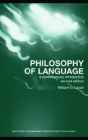
Philosophy of Language Philosophy of Language: a Contemporary Introduction introduces the student to the main issues and theories in twentieth and twenty-first-century phi- losophy of language, focusing specifically on linguistic phenomena. Topics are structured in four parts in the book. Part I, Reference and Referring, includes topics such as Russell's Theory of Descriptions, Donnellan's distinction, problems of anaphora, the description theory of proper names, Searle's cluster theory, and the causalhistorical theory. Part II, Theories of Meaning, surveys the competing theories of linguistic mean- ing and compares their various advantages and liabilities. Part III, Pragmatics and Speech Acts, introduces the basic concepts of linguistic pragmatics,
· Hereditary · Naturalists tried to apply in fiction the processes of natural sciences · Writers task is to record facts, systems of behaviour, living conditions, never revealing any natural unbiased (completely natural) · Point of view: amoral-outside the category of morality, neither good or bad · Naturalist find it absurd to blame the wicked. These criminals are doing what nature, environment, their unconscious tells them to do. Naturalists do not judge their characters, they simply report. Try to describe facts like they are. Naturalists depict the lower, coarser forms of life. · Drab, squallid set of scene. Revolting, disgusting · Characters are people with strong animal desires · Neurotic characters unable to understand the forces that control them · By the end of the 18th century the naturalism depicts in europe, but stars to become
2001, Trouble at Willow Gables in 2002, and Early Poems and Juvenilia in 2005), personal recollections (for instance, Maeve Brennan’s The Philip Larkin I Knew in 2002), another biography (Richard Bradford’s First Boredom, Then Fear in 2005), and critical studies (the latest being M. W. Rowe’s Philip Larkin: Art and Self in 2011). A. T. Trolley’s Larkin at Work (1997) offers an insight into the genesis of a number of major poems and Larkin’s method of composition. Shorter essays add further aspects to the discussion of Larkin. To mention a few examples: Oliver James has approached “This Be The Verse” from a genetician’s point of view, Richard T. Cauldwell has analysed Larkin’s recorded readings phonetically, and David Punter has applied Melanie Klein’s psychoanalysis to his poems. My aim with this paper is to make an academic review about the principles of
character more than specialist knowledge from an antisocial person. God knows we want everyone to be a well-mannered genius. But humans are not cut out to be happy like pigs in a pen. We instead have insatiable brains, with mental appetites. So our goal is to balance the brainwork with hearts and smiles. "Facts served with sauce." Where does common sense fit on? Is it teachable? To a degree, what we mean by common sense is simply learned experience. Something more exists, though. Those who we praise for common sense may be quick-witted, steady-nerved, and efficient at practical decision-making. It is likely some of those traits depend on genetic brain makeup. In any case, for purposes of an essay on education, I propose to say no more about common sense. Similarly, where do concentration, reflection, analysis and criticism enter? Are they best taught individually, or learned wholly as byproducts of studying mathematics, geography, history, etc
and four to see the place, and was so much delighted with it, that he agreed with Mr. Morris immediately; that he is to take possession before Michaelmas, and some of his servants are to be in the house by the end of next week." "What is his name?" "Bingley." "Is he married or single?" "Oh! Single, my dear, to be sure! A single man of large fortune; four or five thousand a year. What a fine thing for our girls!" "How so? How can it affect them?" "My dear Mr. Bennet," replied his wife, "how can you be so tiresome! You must know that I am thinking of his marrying one of them." "Is that his design in settling here?" "Design! Nonsense, how can you talk so! But it is very likely that he may fall in love with one of them, and therefore you must visit him as soon as he comes." "I see no occasion for that. You and the girls may go, or you may send them by
Some basics that you need to understand before starting to write the report. Definition: A design report documents the solution to a unique problem. Purpose: To communicate the solution to a problem. Audience: Anyone who has to implement your design, understand your design, or reference your design to solve their own problem. Typically, this is the project client. While the client may be familiar with the project, the report is still written as though the client is new to the project because that is the best way to tell the whole story. A design report is different than a lab report that you might be familiar with. A lab report describes an experiment and its conclusions and has four main parts: Introduction, Methods, Results and Discussion. The major difference between design and lab reports is that design reports do not include a methods section (other than when describing the evaluation plan
There are all kinds of wars in Africa than the rest of world put together. The majority of so-called Africans leaders want to stay in power until the day their bodies are put in the grave. Through buffoonery, utter mismanagement and downright stealing of the wealth of the masses, these leaders have so impoverished Africa that we are now nothing but a beggar continent. We beg for everything; we are more dependent on our colonial masters than when we received our independence from them. Africa owes the West more money than we and our generations to come can pay. I arrived in America in December of 1967as an official of what we believed was going to be a dynamic African nation – the young Republic of Biafra. But Biafra was defeated and Nigeria remained one, as a giant of Africa. In the last 32 years, I have watched with horror and outright helplessness as the downward slide of the African race continues to escalate. But rather than address the problems, we
CHANGE YOUR LIFE How to Unlock Your Full Potential for Success and Achievement B R I A N T R AC Y JOHN WILEY & SONS, INC. ccc_tracy_fm_i-xviii.qxd 7/7/03 3:22 PM Page iv Copyright © 2003 by Brian Tracy. All rights reserved. Published by John Wiley & Sons, Inc., Hoboken, New Jersey. Published simultaneously in Canada. No part of this publication may be reproduced, stored in a retrieval system, or transmitted in any form or by any means, electronic, mechanical, photocopying, recording, scanning, or otherwise, except as permitted under Section 107 or 108 of the 1976 United States Copyright Act, without either the prior written permission of the Publisher, or authorization through payment of the appropriate per-copy fee to the Copyright Clearance Center, Inc., 222 Rosewood Drive,
THE W R I T E R ' S JOURNEY M Y T H I C STRUCTURE FOR W R I T E R S THIRD EDITION CHRISTOPHER VOGLER S C R E E N W R I T I N G / W R I T I N G Christopher Vogler explores the powerful relationship between mythology and storytelling in his clear, concise style that's made i this book required reading for movie executives, screenwriters, playwrights, fiction and non-fiction writers, scholars, and fans
ÜLESANNE Õppeaines: SISSEJUHATUS ERIALASSE Tehnoloogia ja ringmajanduse instituut Õpperühm: Juhendaja: Tallinn 2021 TABLE OF CONTENTS 2 1 THE CORNERSTONES OF SURVEY RESEARCH 1.1 Introduction The idea of conducting a survey is deceptively simple. It involves identifying a specific group or category of people and collecting information from some of them in order to gain insight into what the entire group does or thinks; however, undertaking a survey inevitably raises questions that may be difficult to answer. How many people need to be surveyed in order to be able to describe fairly accurately the entire group? How should the people be selected? What questions should be asked and how should they be posed to respondents? In addition, what data collection methods should one
PRAISE FOR The 4-Hour Workweek "This is a whole new ball game. Highly recommended." --Dr. Stewart D. Friedman, adviser to Jack Welch and former director of the Work/Life Integration Program at the Wharton School, University of Pennsylvania "It's about time this book was written. It is a long-overdue manifesto for the mobile lifestyle, and Tim Ferriss is the ideal ambassador. This will be huge." --Jack Can eld, cocreator of Chicken Soup for the Soul®, 100+ million copies sold "Stunning and amazing
By DAVID KAHN (abridged by the author) A SIGNET BOOK from NEW AMERICAN LIBRARV TIMES MIRROR Copyright © 1967, 1973 by David Kahn All rights reserved. No part of this book may be reproduced or transmitted in any form or by any means, electronic or mechanical, including photocopying, recording or by any information storage and retrieval system, without permission in writing from the publisher. For information address The Macmillan Company, 866 Third Avenue, New York, New York 10022. Library of Congress Catalog Card Number: 63-16109 Crown copyright is acknowledged for the following illustrations from Great Britain's Public Record Office: S.P. 53/18, no
monkey. They concluded that the two halves in the split-brain monkey had separate memories and could perform separate tasks. This was also tested on human participants, whose brains had been spilt to relieve epilepsy. Test results show that speech is localized in only one half of the brain. So when the patient was shown an image that was projected to his or hers left hemisphere of the brain he or she could easily identify the object. But when it was shown so it would be projected in the right hemisphere, the participant could not verbally identify the object, although he or she could point out what it was, if cards with different words were shown. This evidence implicates that the language processing happens mainly in the left hemisphere of the brain. To test what the right hemisphere of the brain might localize in another test with a split-brain patient was carried out. It is known that the right hand is governed
................ Quotations................................................................................................................................. My Opinion............................................................................................................................... Orson Scott Card He was born on the 24th of August, 1951 in Richland, Washington. Card's writing career began primarily as a poet, studying at Brigham Young University. During his studies as a theatre major, he began "doctoring" scripts, adapting fiction for theatre production, and finally writing his own one-act and full-length plays. Later he has worked both as a freelancer and a contracted writer. He first wrote the short story "Ender's Game" while working at the BYU press. Ender's Game and its sequel Speaker for the Dead were both awarded the Hugo Award and the Nebula Award, making Card the only author (as of 2008) to win both of science fiction's top prizes in consecutive years
John Galsworthy The Man of Property PREFACE "The Forsyte Saga" was the title originally destined for that part of it which is called "The Man of Property"; and to adopt it for the collected chronicles of the Forsyte family has indulged the Forsytean tenacity that is in all of us. The word Saga might be objected to on the ground that it connotes the heroic and that there is little heroism in these pages. But it is used with a suitable irony; and, after all, this long tale, though it may deal with folk in frock coats, furbelows, and a gilt- edged period, is not devoid of the essential heat of conflict. Discounting for the gigantic stature and blood-thirstiness of old days, as they have come down to us in fairy-tale and legend, the folk of the old Sagas were Forsytes, assuredly, in their possessive instincts, and as little proof against the inroads of beauty and passion as Swithin, Soames, or even Young Jolyon. And if heroic figures, in
He holds a degree in electrical engi- which International FAI Silver, Gold homebuilts that have been con- neering, a Ph. D. in aerodynamics .. and Diamond badges would be structed according to the . and made his way to the the U. S. earned. More recently, he has designer's instructions . . . and and a faculty position at Arizona designed and built the S-4 Laminar while designers of composite air- State as a physicist! Though it Magic (Sport Aviation, January craft normally make allowances for never became his profession, Alex 1990), a tiny 30 h. p. machine that builder variances, still there may be has continued to carry a torch for held the world's Class C-1.A/O 3 those who have a nagging uneasi- aviation throughout his life. While kilometer speed record for a time. ness about the integrity of the
Vronsky, Betsy's cousin. Vronsky continues to pursue Anna. Although Anna initially tries to reject him, she eventually succumbs to his attentions. Karenin warns Anna of the impropriety of paying too much attention to Vronsky in public, which is becoming a subject of society gossip. He is concerned about his and his wife's public image, although he believes that Anna is above suspicion. Vronsky, a keen horseman, takes part in a steeplechase event, during which he rides his mare Frou-Frou too hard and she falls and breaks her back. Vronsky escapes with minimal injuries but is devastated that his mare must be shot. Anna tells him that she is pregnant with his child, and is unable to hide her distress when Vronsky falls from the racehorse. Karenin is also present at the races and remarks to her that her behaviour is improper. Anna, in a state of extreme distress and emotion, confesses her affair to her husband
Engineering, Technion Israel Institute of Technology Consultant: Roode Liias- Professor and Dean, Faculty of Civil Engineering, Tallinn University of Technology Title: Integration of Lean Construction and Building Information Modelling Archived: University of Applied Sciences, Faculty of Construction ABSTRACT This research can be divided into two. The first part investigates the current state of the construction industry, while the second part looks at new emerging business models in particular, Lean Construction (LC) and Building Information Modelling (BIM), as well as an integration of these two. Given that the construction industry does not have a particularly good reputation among the public, the first part of this thesis focuses mainly on this problem and its sources. It is the reason why we need
(the first language was German – translated by Martin Luther). This inspired many other translators during that period. • What happened in the 19th and 20th century in translation studies? When and who created the term ‘translation studies’? Translation Studies – James S. Holmes - 1972 Ferdinand de Saussure – Lived during the 19th and 20th century. He was a Swiss linguist and a semiotician. He is widely considered one of the fathers of 20th-century linguistics and one of two major fathers (together with Charles Sanders Peirce) of semiotics/semiology. Saussure's most influential work, Course in General Linguistics (Cours de linguistique générale), was published posthumously in 1916 by former students Charles Bally and Albert Sechehaye on the basis of notes taken from Saussure's lectures in Geneva. The Course became one of the seminal linguistics works of the 20th century, not primarily for the content (many
1. OBJECT-ORIENTED PARADIGM The Model •The model defines an abstract view to the problem. This implies that the model focuses only on problem related stuff and that you try to define properties of the problem. These properties include: 1 •the data which are affected and 2 •the operations which are identified by the problem. Object-oriented Paradigm •Everything is an object •A program is a bunch of objects telling each other what to do by sending messages •Each object has its own memory made up of other objects •Every object has a type •All objects of a particular type can receive the same messages Domain Model •A domain model does not represent the entire domain as it is in the real world. It includes only the concepts that are needed to support the application. Object •Is a partitioned area of memory where object code is stored •The area of memory is protected •This code can function relatively independently of other objects
from soot and gum, and later also from gall nuts and iron vitriol. This gave writing a brownish black color, but black or brown were not the only colors used. There are texts written in red or even gold, and different colors were used for illumination. Sometimes the whole parchment was colored purple, and the text was written on it with gold or silver (for example, Codex Argenteus). Irish monks introduced spacing between words in the 7th century. This facilitated reading, as these monks tended to be less familiar with Latin. However, the use of spaces between
Work on taking yourself deeper into the introspection process by tackling more specific topics. Here are some questions you might want to consider: What am I like? How do my friends characterize me? What are my personality traits? Have I ever experienced a moment of epiphany? Why is (some color) my favorite color? Why is (some movie) my favorite movie? How have my favorites influenced my life? What have I done? What are my major accomplishments? Why do I consider them accomplishments? What extra curricular activities have I participated in? Have I strived hard for something and achieved it? Why did I succeed? Have I strived hard for something and failed to achieve it? Why did I fail? What was the most difficult time of my life? How did my perspective of life change due to that difficult time? Where do I want to go? What would I most like to be doing right now? Where would I like to be? Who would I most like to be with?
............................................. 42 15 Developed Design Model ................................................................. 42 16 Complex Connection in 2D .............................................................. 43 17 Complex Connection Modeled in Tekla ........................................... 43 18 LPR’s 3D CAD Shore-to-Structure Interface ................................... 44 19 Total Station Surveying Target in the Field ..................................... 45 20 Modeled Targets on a Wide Flange Column .................................... 45 21 Duct Clashing With a Beam ............................................................. 46 22 Upper Level Shores .......................................................................... 48 23 Rigging for a Complex Lift Modeled in 3D ..................................... 49 24 Working Session in the Field Office ........
) • Latin 16.7 % cardiac LME [Fr. cardiaque or L cardiacus adjs., f. • Other Germanic languages 4.2 % Gk kardiakos, f. kardia] • Other languages 2.3 % cordial ME [med.L cordialis, f. cor(d-) heart] They suggest that it is not clear where a word ceases to be part of the English language as there are different levels of technicality, foreignness, and so on. An item like heart is core and should be located in the centre of the diagram, whereas an item like cordial is probably more literary (more likely to be written than spoken), whereas an item like cardiac is more scientific (and perhaps more
In the 15 th century Johann Gutenberg invented a mechanical process of duplicating texts, which we today call book printing. The first book was printed between 1444 and 1446, so these years can be considered as the beginning years of book printing. His most important preserved printings are the 40 copies of the Bible. By the end of the 15 th century there were about 1000 print-shops in Europe already. The oldest Estonian book dates back to 1535. Libraries form a vital part of education. They make available-through books, films, recordings and other media- knowledge that has been accumulated through the ages. People in all walks of life use libraries to get information for their work. Libraries also play an important role in preserving people's cultural heritage. For example, some libraries have rare books, authors' and composers' manuscripts or works by artists. Today's libraries differ very much from the ones from the past - not only in
new grammatical classes and although it can change the grammatical shape of the word, the meaning of the word stays the same. For example: consider, considered, considers. Open class words (content words) → These are the word classes that take in new words, for example by adding affixes to them or borrowing words from other languages. In English these words are most commonly nouns, verbs (not auxiliaries), adjectives and adverbs. Closed class words (function words) → These are words that do not take in any new words. In English the word classes are prepositions, pronouns, determiners and conjunctions. Syntax is the study of how sentences are formed in a language. For example what is the word order ( in English
page 5 2 Whilst some people are in favour say), and we share quite a laid-back of the monarchy, others think we approach to life. When it comes to 1 1 Anglo-Saxon 8 Conquest taste, though, I reckon I've got more should do away with it. 2 farming 9 printing press 3 I keep meaning to sort out my in common with my mum. She's got a knack of choosing really brilliant 3 borrowed 10 dictionaries photos but I never get round to it.
SCIENCE AND TECHNOLOGY A century ago communication across any distance was dependent upon the telegraph or letters. No jets crossed the ocean, no television pictures enabled us instantly to see events in any part of the world, there were no worldwide telephone networks and no computers. It is just a short lifetime since humanity first travelled into space and discovered how fragile our planet looks. FROM FIREWORKS TO THE MOON At first glance you might think that there couldn't possibly be anything common between a 13 th century festival in China and the Apollo 11 moon landing in 1969. However, there is a link and that is that they both relied on the use of rockets.
century has been the New Public Management (NPM). It is of particular interest in the post-autistic economics (pae) context because NPM largely rests on the same ideology and epistemology as standard textbook economics (STE) is based (for my take on this, see Drechsler 2000), and it has had, and still has, similar results. Already more on the defensive within public administration (PA) than STE is within economics, NPM also shows that such major paradigm shifts in theory and policy may actually happen. In addition, it occasionally appears that pae-oriented scholars have overlooked the fact that some features in public management reform, state organization, and the economic interpretation of state functions that they advocate from "Good Governance" to "efficiency" as a goal in itself actually belong into the "other camp" and by and large have a disastrous effect on "industrial" and
 annaabi.ee