Vajad kellegagi rääkida?
Küsi julgelt abi LasteAbi
Logi sisse

Linguistics lexicon handout (0)

5 VÄGA HEA
Punktid
Inglise keel - Kõik luuletused, mis on inglise keeles
LEL 2E 
Notes  on  Vocabulary   
 
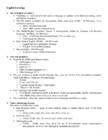
One of the key facts about the  lexicon  of any  language  is that it reflects in various  ways  the 
physical  and  cultural  environment in which the  language  is spoken.  A people unfamiliar 
with, say,  horses  is unlikely to have a word for ‘ horse ’; similarly with ploughs,  printing  
presses, and  internet  porn  sites .  For the most  part  this is trivial – it’s  hard  to  imagine  how it 
could  be otherwise,  given  the general nature of human language.  People tend to make a great 
deal of the alleged  fact  (see Pullum 1989) that “the Eskimos have  lots  of  words  for  snow ”, but 
it doesn’t take much  thought  to realise that any language spoken in a given physical and 
cultural environment is likely to have efficient ways of referring to distinctions that are 
important  in that environment.  That doesn’t  mean  that you can read very much into 
individual  words and individual facts about the lexicon of a given language (this topic has 
already   come  up in  connection  with debates about the  location  of the Indo-European 
homeland), but as a generalisation about lexicons, it’s certainly  valid
 
Systematic  consideration  of the lexicon is often  left  out of language descriptions and doesn’t 
play much of a  role  in  linguistic  theory, in part because the lexicon is (or is often thought of 
as) the repository of everything that is arbitrary and unsystematic about language.  Looked at 
one way, this exclusion  makes   sense : whether a language has a word for ‘horse’ or not tells us 
nothing about the language’s  grammar  or  phonology .   However , the fact that the lexicon 
reflects the physical and cultural environment in which a language is spoken does have an 
important corollary, namely that when the environment  changes , the lexicon has to  change .  
The history of many  languages  is greatly marked by the fact that their environments have 
changed dramatically over the past couple of millennia.  Great  technological  changes have led 
to great cultural changes,  including   greater  contact  between   different   peoples , which in  turn  
have led to more cultural and technological changes.   Therefore  it’s not surprising that  there  
have been great changes in the lexicons of  these  languages as well, mostly in the form of new 
words for new things.  (“Things” in this context can be virtually  anything , not just physical 
objects, but cultural artefacts like a new type of dance, a new way of  killing  people, or the 
concept  of voting for your leaders.)  Where do all the new words come from? 
 
The diachronic  development  of the lexicon in any given language or group of languages is 
characterised by quite a few regularities and regularly occurring phenomena.  Moreover, 
lexical items and lexical characteristics are  among  the most easily shared  features  of 
languages in contact.  There are also a number of broadly European historical events and 
features (e.g. the  Roman  Empire, the Enlightenment) that  affected  many European languages, 
including the Romance languages, in  similar  ways.  So the  identity  of these languages as a 
group is due at  least  in part to features of their lexicons.  To discuss this we need some 
terminology for  talking  about word-formation and diachronic lexical changes. 
 
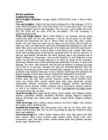
The main grammatical mechanisms that languages have for creating new words are 
derivation and compounding.  Some languages prefer one mechanism over the  other .  These 
mechanisms are fairly systematic and predictable and  hence  tend to feature in discussions of 
language structure. Derivation generally involves the use of affixation of various  types , e.g. 
getting the  noun  derivation from the  verb  derive.  Compounding involves  putting  together 
two existing elements of the lexicon (normally “content” words  rather  than grammatical 
words and affixes) to create a new word, like matchbox.  In  both  derivation and compounding 
there is a  strong  element of compositionalitymeaning  that the meaning of the new word is 
broadly predictable from the meaning of its  component  parts. 
 
Probably the main non-grammatical way in which languages get words for new things is by 
metaphorical extension of the meaning of some existing word. There are  broad  
generalisations about metaphor  cross -linguistically, and some people regard metaphor as a 
central feature of what makes language language (see e.g.  Lakoff  1987).  However, in any 
individual  case  metaphorical extensions are fairly unpredictable and often understandable 
only  once  you already  know  what they mean (e.g. the  bonnet  of a car). 
 
Sometime new words are  formed  by clipping, cutting off part of an existing word or phrase. 
This often happens if a word has (or  appears  to have) an  internal  morphemic structure that 
suggests a  place  to cut (e.g.  burger  from  hamburger  or kiwi from kiwi fruit), and especially 
when a long uncommon word becomes (for one  reason  or another) more common.  A very 
recent  example in Italian is  super  from supermercato ‘supermarket’.  In all languages there 
is a  rough  correlation between the  frequency  of a word and its  length ; this is  known  as Zipf’s 
Law (see  Crystal  1987). 
 
In languages with widespread literacy, other  means  of  forming  new words are  based  on the 
writing system.  In  English  both abbreviations (e.g. BBC, MP, PC, etc.) and acronyms (e.g. 
radar) are common.  (Radar  stands  for RAdio Detection And Ranging.)  Other languages use 
other devices (for example, in languages that use the  Chinese  writing system, it is common 
for long compounds to be reduced to the  first  elements of the subcompounds they  contain , so 
that  Japanese  too-kyo dai-gakku ‘Tokyo  University ’,  literally  ‘ east -capital big-school’ is 
usually  referred  to as too-dai literally ‘east-big’ but more idiomatically  translated  as 
something  like ‘TU’).   German  abbreviations/acronyms are often based not on the first letter 
of the component words, but on the  letters  for the  onset  and  nucleus  of the first syllable of 
the component words, e.g.  Gestapo  from GEheimSTAatsPOlizei ‘secret state  police ’. 
 
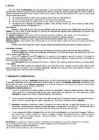
The other obvious way in which languages get new words is from other languages.  These 
take two principal  forms :  A loanword is a word in one language taken from another 
language (e.g. English  chair , table,  restaurant , gateau from  Frenchnote  that the first two  feel  
less  foreign  than the second two, primarily because they were borrowed much earlier and 
have adapted in various ways to the phonological patterns of English).  A calque is a word in 
one language that is based on a corresponding word in another language, formed by 
translating the subparts of the  original  word into the borrowing language.  The  classic  
example is English marriage of convenience based on French mariage de convenance.   
 
There are various other kinds of foreign  influences  on vocabulary. A loanshift is a change in 
the meaning or use of a word in one language based on the meaning or use of a similar-
sounding
 word in another language.  Also, languages that borrow heavily from a  single  
foreign language are likely to create their own words that  look  like loanwords but are in fact 
not part of the source language (e.g.  double -entendre appears French to English speakers but 
does not  exist  in French; a number of  Western  European languages use the apparently English 
word beamer to  refer  to a computer data projector, and speakers of those languages are 
astonished when visiting  native  speakers of English don’t know the word). 
 
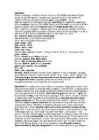
Finally, doublets are  pairs  of different words in a given language that can both be traced  back  
to the  same  source but which have come into the language by different routes.  English  wine  
and  vine  both ultimately go back to  Latin  vinum, but the first was borrowed into  early  
Germanic at the  peak  of the Roman Empire (i.e.  before  Germanic speakers moved to  Britain ), 
whereas the second was borrowed from French into  Middle  English  during  the  period  when 
England  was ruled by Norman French kings.  The Romance languages are  full  of doublets. 
 
Crystal, David (1987). The  Cambridge  encyclopedia of language. Cambridge: Cambridge 
University Press. 
Lakoff, George (1987).  Women , fire, and  dangerous  things : what categories  reveal  about the 
mind.  Chicago  and London: University of Chicago Press. 
Pullum, Geoffrey K. (1991). The great Eskimo vocabulary hoax : and other irreverent  essays  
on the  study  of language.  Chicago and London: University of Chicago Press. 
Linguistics lexicon handout #1 Linguistics lexicon handout #2
Punktid 50 punkti Autor soovib selle materjali allalaadimise eest saada 50 punkti.
Leheküljed ~ 2 lehte Lehekülgede arv dokumendis
Aeg2013-03-20 Kuupäev, millal dokument üles laeti
Allalaadimisi 3 laadimist Kokku alla laetud
Kommentaarid 0 arvamust Teiste kasutajate poolt lisatud kommentaarid
Autor junglette Õppematerjali autor
inglise keeles

Sarnased õppematerjalid

Inglise leksikoloogia kordamisküsimuste vastused
24
doc

Inglise leksikoloogia kordamisküsimuste vastused

g., digital detox)  A new meaning for an existing word (e.g., sick) Examples of Neologisms The following are examples of neologisms at the time of writing (2014): Oversharers: People who post too much information (which is often boring or embarrassing) about themselves on line. Digital Detox: Abstaining from electronic devices to re-engage with the physical world, typically to lower stress levels. Sick: Good. 18. Affixation In linguistics, the process of adding a morpheme* (or affix) to a word to create either (a) a different form of that word (e.g., bird → birds), or (b) a new word with a different meaning (bird → birder). The two primary kinds of affixation are prefixation (the addition of a prefix) and suffixation (the addition of a suffix). Clusters of affixes can be used to form complex words. “An affix is a bound morph that (1) is not a root and (2) is a constituent of a word rather than of a phrase or sentence”

Leksikoloogia ja leksikograafia
English lexicology revision review questions
14
doc

English lexicology revision/review questions

, and entrance (verb: stress on second syllable) to put in a trance; lead (verb: rhyming with ‘deed’) to take, conduct, guide, etc., and lead (noun: rhyming with ‘dead’) a metal. 40. Synonyms - noun a word or phrase that means exactly or nearly the same as another word or phrase in the same language, for example shut is a synonym of close. 41. Opposites (antonyms) - noun a word opposite in meaning to another (e.g. bad and good). 42. Hyponyms - in linguistics, a hyponym of a given term is a more specific term in the same domain; e.g. spaniel is a hyponym of dog, and bag, box, and cup are hyponyms of container. 43. Hypernyms (hyperonyms) - A hypernym is a more general term, so that dog is the hypernym of spaniel, and container of bag, box, and cup. → noun a word with a broad meaning constituting a category into which words with more specific meanings fall; a superordinate. For example, colour is a hypernym of red. 44. Meronyms - noun

Inglise leksikoloogia
Leksikoloogia konspekt-uus
20
doc

Leksikoloogia konspekt (uus)

English lexicology 1. Size of English vocabulary  Vocabulary is a sum total of words used in a language by speakers or for dictionary-making. Active and passive vocabulary.  The Old English vocabulary was homogenous. There were about 50 000 – 60 000 words, 1/3 of which have survived. o About 450 loans from Latin o About 2000 from the Viking invasions.  The Middle-English vocabulary became a heterogeneous hybrid of Germanic and Romanic languages. 100 000 to 125 000 words. o About 10 000 loans from Norman French, 75% are still in use o Continuing Latin influence  Early Modern English. 200 000 – 250 000 words o English becomes a pluricentric language. o Polyglot. Cosmopolitan language  Modern English. 500 000 words o At present at least 1 billion lexical units 2. Core and periphery.  Origin o

Inglise keel
Inglise leksikoloogia 2012
4
doc

Inglise leksikoloogia 2012

the same meaning. e.g. male masculine Opposites (antonyms) words with opposite meanings, e.g. long-short, dead-alive, buy- sell Hyponyms a word phrase or lexeme of narrower or more specific meaning that comes under another- a wider or more general meaning. A rose is a hyponym but a flower is a hypernym. Hypernyms (hyperonyms) a word phrase or lexeme of wider or less specific meaning. Meronyms Semantic relation used in linguistics. Meronymy means a part of a whole. Tree/forest, finger/hand Holonyms Holonymy defines the relationship between a term denoting the whole and a term denoting a part of, or a member of, the whole. Collocations Sequence of words or terms which co-occur ore often than words be expected by chance. There are 14 types of collocations. Types of collocations 1) adjective and noun ­ bright/harsh light 2) quantifier and noun - a beam/ray of light 3) verb and noun - cast light

Inglise leksikoloogia
Exami kysimused-vastused
13
doc

Exami kysimused-vastused

g. the style of a comedy, drama, novel). 4. the selective use of language that depends on spheres / areas of human activity (e.g. style of fiction, scientific prose, newspapers, business correspondence, etc.). STYLISTICS Stylistics ­ is the study of style. The very term "stylistics" came in more common use in English only some 45 years ago. Stylistics is a part of style; it studies principles of selecting and using different linguistic means (grammatical and phonetic) that serve to render shades of meaning. The Stylistics of language studies stylistic devices and expressive shades of linguistic units (words, construction of phrases). The Stylistics of speech studies individual texts viewing the way the message or content is expressed. Literary Stylistics concentrates on artistic expressiveness that characterizes a literary work, a writer, or a whole time period.

Stilistika (inglise)
History of the English language
7
doc

History of the English language

Suppletion Present in languages of different families. Present in Old, Middle and Modern English, though the general tendency is towards more regularity/iconicity so the number of suppletive forms has decreased.In the text: goon ­ to go wenden - to turn Gan was suppletive in Old English, past form: eode.Eode was supplanted by went (past form of wenden) at the end of the Middle English period.To wend has survived in Modern English in phrases such as to wend one's way, we wended homewards (ironic usage). Thus: suppletivity- suppletion ­ different parts of one and the same paradigm come from what were originally different paradigms (different words with close meanings or words in different but close dialects).Suppletion embraces verbs, adjectives, nouns. Be ­ was/were ­been (Old English beon/wesan) (am, art, is, are); in Old English some suppletive forms were used parallel to one another) Good ­better ­ best Bad ­ worse ­ worst Much ­ more ­ most Little ­ less ­ least Estonian

Inglise keel
Stilistika loeng
31
doc

Stilistika loeng

However, it was recorded for the first time much earlier ­ in 1882, meaning "the study of literary style, the study of stylistic features" (Oxford Dictionary). Stylist is a writer / speaker skilled in a literary style (e.g. Hemingway is considered a peculiar stylist ­ used a lot of repetitions). Stylistician is a scholar (a student). Style is applied to many things: clothing, architecture, hairstyles, etc. A linguistic style (style in language) is a variety of subsystems of language with its peculiar vocabulary, phraseology, grammatical and phonetic features that are used selectively to express ideas in a given situation. Stylistics is a part of style; it studies principles of selecting and using different linguistic means (grammatical and phonetic) that serve to render shades of meaning. Stylistics studies

Stilistika (inglise)
History of english review questions and answers 2016
5
odt

History of english review questions and answers 2016

Verner's law, stated by Karl Verner in 1875, describes a historical sound change in the Proto- Germanic language whereby voiceless fricatives *f, *, *s, *h, *h, when immediately following an unstressed syllable in the same word, underwent voicing and became respectively the fricatives[1] *b, *d, *z, *g, *g. Significance: Karl Verner published his discovery in the article "Eine Ausnahme der ersten Lautverschiebung" (an exception to the first sound shift) in Kuhn's Journal of Comparative Linguistic Research in 1876, but he had presented his theory already on 1 May, 1875 in a comprehensive personal letter to his friend and mentor, Vilhelm Thomsen. It was received with great enthusiasm by the young generation of comparative philologists, the so- called Junggrammatiker, because it was an important argument in favour of theNeogrammarian dogma that the sound laws were without exceptions ("die Ausnahmslosigkeit der Lautgesetze"). BREAKING IN OLD ENGLISH

Inglise keele ajalugu


Kommentaarid (0)

Kommentaarid sellele materjalile puuduvad. Ole esimene ja kommenteeri


Sellel veebilehel kasutatakse küpsiseid. Kasutamist jätkates nõustute küpsiste ja veebilehe üldtingimustega Nõustun