 10 punkti
Autor soovib selle materjali allalaadimise eest saada 10 punkti.
10 punkti
Autor soovib selle materjali allalaadimise eest saada 10 punkti.
 ~ 3 lehte
Lehekülgede arv dokumendis
~ 3 lehte
Lehekülgede arv dokumendis
 2012-02-09
Kuupäev, millal dokument üles laeti
2012-02-09
Kuupäev, millal dokument üles laeti
 10 laadimist
Kokku alla laetud
10 laadimist
Kokku alla laetud
 0 arvamust
Teiste kasutajate poolt lisatud kommentaarid
0 arvamust
Teiste kasutajate poolt lisatud kommentaarid
 KatrinKre
Õppematerjali autor
KatrinKre
Õppematerjali autor
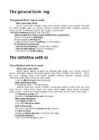
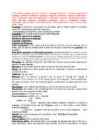
Gerunds (to) and infinitives (-ing) 7.1 Verbs followed by the gerund form ing. I considered buying a flat in Monte Carlo, but they were too expensive. Here are some common verbs which are followed by the gerund: Admit, appreciate (hindama), avoid, can´t help, can´t stand, consider, delay (viivitama), deny, detest (jälestama), dislike, enjoy, escape, excuse, face, feel like, finish, forgive, give up, imagine (ette kujutama), involve (sisaldama), mention (mainima), mind, miss, postpone (edasi lükkama), practise, put off, recall, resent, risk, suggest, understand 7.2 Verbs and phrases followed by the infinitive without ´to´ You must answer all the questions.
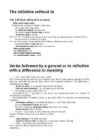
to+v..) 2) To express purpose (She went to Spain to meet her friend.) 3) After some nouns ( decision to+v.., time to+v.., wish to+v..) 4) After some main verbs ( appear, agree, ask, begin, choose, decide, expect, happen, help, hope, learn, like, love, mean, offer, prepare, promise, refuse, remember, start, try, want..) USING 1) After some main verbs (let,make, hear, see, watch, feel, notice, help...) In passive sentences make, hear, help are followed by an infinitive with to! Let > allowed in passive sentence My parents let me stay out late. I am allowed to stay out late by my parents. 2) After modal verbs (can, could, may, must, shall, should, will, would) 3) After would rather/had better (You'd better come in now.) 1) Can't bear/stand, like, hate, love, prefere Used with infinitive more specifical situation with gerund more general situation 2) Remember, forget + ing an action that happened before the
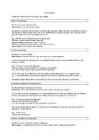
MODULE 1 Greeting. Introducing oneself and the others. The alphabet. Spelling. The tenses. How to introduce yourself and others Formal introductions How to respond and reply to an May I introduce myself? I am John introduction Smith. How do you do. Allow me to introduce John Smith to Pleased to meet you. you. Standard introduction Nice to meet you. I'd like you to meet John Smith. Hello. I want you to meet John Smith. I'm so pleased to meet you. This is Jane Smith. I'm Jane Smith. My name's John Smith. Informal introduction Hi. John. Jane. Hello. Titles: Mr Mrs Miss Ms Ms is a modern form of address for women. It replaces the traditional forms of Mrs and Miss. Greetings Good morning/afternoon/evening! 'How are you?' Very often people expect you to s
No overlap sing sang sung eat ate eaten The morphology of main verbs Verb forms and the verb phrase. 1. the base form: call, sing, walk, etc. finite: a) the present tense (except 3sg): I eat every day. b) the imperative: Open the window! c) the present subjunctive: They demanded that she leave the room. non-finite: a) the bare infinitive: He may come tomorrow. b) the to-infinitive: He wants her to call him. 2. the -s form: calls, sings, walks, etc. finite: the 3rd person singular present tense: She walks a mile every day. 3. the -ing participle: calling, singing, walking, etc. non-finite: a) the progressive aspect: He's reading a book now. b) ing clauses: Calling early, I found her at home. 4. the past form: called, sang, walked, etc. finite: the past tense: I walked a mile yesterday. 5
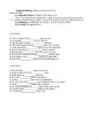
What should I do? He can’t dance. You mustn’t tell lies! • Modal auxiliary verbs don’t usually have past forms. Other expressions are used instead: I had to work hard at school. The prisoner was able to/managed to escape by climbing onto the roof of the prison. (NOT *could escape) (=ability / performance on one occasion) In some cases could can be used with a past meaning: I could swim when I was six. (=general ability) • They have no infinitives and no –ing forms. Other expressions are used instead. I’d love to be able to ski. I hate having to get up early. • They are followed by an infinitive without -to. The exception is ought to. You must go. I’ll help you. You ought to see a doctor. • They can be used with perfect infinitives to talk about the past. You should have told me that you can’t swim. You might have drowned. 2
· Wish/if only I wish/If only I hadn't hurt her. · Would rather (past) I'd rather you had not revealed our secret. · As if/as though He spoke about Maradona as if/as though he had been a personal friend. Had better/Would rather I. Had better (= it would be good to) is used to give strong or urgent advice. Had better cannot be used in the past or the comparative. · had better + bare infinitive immediate future You had better ask for help. II. Would rather (= would prefer to) expresses preference. When the subject of would rather is also the subject of the following verb, we use the following constructions: · would rather + present bare infinitive present/future I'd rather tell you now. · would rather + perfect bare infinitive past
Book 1 BASIC ENGLISH BASIC ENGLISH GRAMMAR GRAMMAR BASIC ENGLISH GRAMMAR Book 1 Book 1 Younger students at beginning to intermediate levels will greatly benefit from this step-by-step approach to English grammar basics. This is the ideal supplement to your language arts program whether your students are native English speakers or beginning English language learners. Skill-specific lessons make it easy to locate and prescribe instant reinforcement or intervention. · Illustrated lessons a
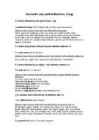
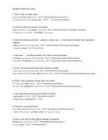
) Andy likes skiing very much. (NOT Andy likes very much skiing.) 14. Don't use the present perfect have/has seen, have/has gone etc with words that name a finished time. I saw him yesterday. (NOT I have seen him yesterday.) They went to Greece last summer. (NOT They have gone ... last summer.) 15. English (the language) normally has no article. You speak very good English. (NOT You speak a very good English.) 16. After look forward to, we use ing, not an infinitive. I look forward to seeing you. (NOT I look forward to see you.) We're looking forward to going on holiday. (NOT ... to go on holiday.) 17. Information is an uncountable noun. Can you give me some information? (NOT Can you give me an information?) I got a lot of information from the Internet. (NOT I got a lot of informations from the Internet.) 18. Use ing forms after prepositions. I drove there without stopping. (NOT I drove there without to stop.) Wash your hands before eating
 annaabi.ee









Kõik kommentaarid