Vajad kellegagi rääkida?
Küsi julgelt abi LasteAbi
Logi sisse

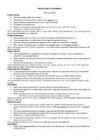
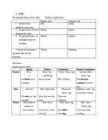
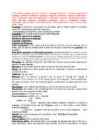
Contitional sentences (0)

5 VÄGA HEA
Punktid
Conditionals
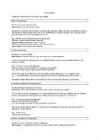
Sentences with if are used to express possibilities.
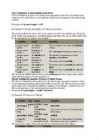
0 Zero conditional
If- clause present (past) simple
Main clause  present (past) simple
Sometimes sentences with if express certainty rather than possibility. The zero conditional is used to talk about sth. that is always true ( such as a scientific fact ), or that was always true in the past. In this type of conditional we can use when instead of if.
E.g., If/When you mix blue and red, you get purple .
If/When you don’t water flowers, they die.
(present simple in both parts of the sentence)
If/When I asked her to come with us, she always said no.
(past simple in both parts of the sentence)
1 First conditional
If-clause  present simple;
Main clause  future tense (or: can, must, may, etc., + bare infinitive )
Used to talk about the consequences of a possible action (a real or very probable situation in the present or future).
E.g., If I write my essay this afternoon,
I will have time to go out tonight . (or: I might go out tonight).
(It is still morning , and it is quite possible that I will do this.)
NOTE : With type 1 conditionals we can use unless + affirmative verb (= if + negative verb).
E.g., I will not be able to come unless Joe gives me a lift. (= If Joe does not give me a lift, ...)
Provided that/ providing that are synonyms for if that can be used with type 1 conditionals.
2 Second conditional ( unreal present)
If-clause past simple/past continuous ;
Main clause conditional tense (would, could , might + present bare infinitive)
Used to talk about the consequences of a hypothetical action (imaginary situations that are contrary to facts in the present, and therefore are unlikely to happen in the present or the future).
E.g., If I wrote my essay this afternoon,
I would have time to go out tonight.
(It is still morning, but I think it is less likely that I will do this.)
We can use either was or were for I, he, she, it in the if-clause. We can also use the structure If I were you... to give advice .
E.g., If I were you,
I would tell her the truth .
3 Third conditional (unreal past)
If-clause  past perfect /past perfect continuous;
Main clause  conditional perfect tense (would, could, might + perfect bare infinitive)
Used to talk about the possible consequence of an action that did not happen (imaginary situations that are contrary to facts in the past). Also used to express regrets or criticism.
E.g., If I had written my essay this afternoon,
I would have had time to go out tonight.
(It is now evening , and I haven ’t written my essay: it is now impossible for me to go out.)
E.g., If I hadn’t been working today , we would have gone to the beach .
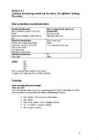
Mixed conditionals
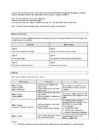
We can form mixed conditionals (if the context permits it) by combining an if-clause from one type with a main clause from another .
If-clause
Main clause
Type 2
If he came back late last night ,
Type 1
he won’t be on time for work today.
Type 2
If you were polite ,
Type 3
you wouldn’t have talked to him like that.
Type 3
If he hadn’t missed the bus,
Type 2
he would be here now.
Wishes
We can use wish / if only to express a wish.
Verb tense
Example
Use
Wish / if only
+ past simple/
past continuous
I wish I was on holiday now. (but I’m not)
If only I were going with them . (but I’m not)
To say that we would like sth. to be different about a present situation
Wish / if only
+ past perfect
I wish I had passed the exams . (but I didn’t)
If only she hadn’t cheated me. (but she did)
To express regret about sth. that happened or didn’t happen in the past
Wish / if only
+ subject + would + bare inf.
I wish you wouldn’t talk with your mouth full .
If only it would stop snowing.
To criticise other people or complain about a situation now, in the future or generally.
I.e., to express:
  • A polite imperative
  • A desire for a situation or person’s behaviour to change
Wish + could
I wish I could come with you to that concert next week.
To express hypothetical ability or permission now, in the future or generally
NOTE:
  • If only is used in exactly the same way as wish, but it is more emphatic or more dramatic.
  • We can use were instead of was after wish and if only. E.g., I wish I were/was on holiday now.

The Unreal Past
A past tense does not always refer to past time. In some sentences and with certain verbs or phrases we use a past tense to refer to the present or the future or to a general situation.
  • The past simple can be used to refer to the present when we talk about imaginary, unreal or impossible situations that are contrary to facts in the present.
    The past simple is used with:
    • Type 2 conditionals – If he had money , he would move into a bigger flat.
    • Suppose /supposing – Suppose/Supposing he lied to you, what would you do?
    • What if – What if life existed on other planets?
    • Wish/if only – I wish/If only I had more space.
    • Would rather (present) – I’d rather you left now.
    • As if/as though – Nancy acts as if/as though she owned the place .
    • It’s (about/high) time – It’s (about/high) time you went to bed.

  • The past perfect can be used to refer to imaginary, unreal or impossible situations that are contrary to facts in the past.
    The past perfect is used with:
    • Type 3 conditionals – If he hadn’t been so slow , he wouldn’t have lost the race .
    • Suppose/supposing – Suppose/Supposing you had been in a position to help, would you have done so?
    • Wish/if only – I wish/If only I hadn’t hurt her.
    • Would rather (past) – I’d rather you had not revealed our secret .
    • As if/as though – He spoke about Maradona as if/as though he had been a personal friend .

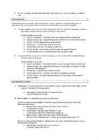
    Had better/Would rather
  • Had better (= it would be good to) is used to give strong or urgent advice. Had better cannot be used in the past or the comparative .
    • had better + bare infinitive  immediate future
      You had better ask for help.

  • Would rather (= would prefer to) expresses preference.
    When the subject of would rather is also the subject of the following verb, we use the following constructions:
    • would rather + present bare infinitive  present/future
      I’d rather tell you now.
    • would rather + perfect bare infinitive  past
      I went out last night but I’d rather have stayed in.
    • Would rather + bare infinitive + than + bare infinitive
      Since it’s such a beautiful day, I’d rather go to the park than watch TV.

    When the subject of would rather is different from the subject of the following verb, we use the following constructions:
    • would rather + past tense  present/future
      I’d rather Susan lived with us.
    • would rather + past perfect  past
      I’d rather we had left earlier, then we wouldn’t have been caught in the rush hour traffic .

  • Contitional sentences #1 Contitional sentences #2 Contitional sentences #3 Contitional sentences #4
    Punktid 10 punkti Autor soovib selle materjali allalaadimise eest saada 10 punkti.
    Leheküljed ~ 4 lehte Lehekülgede arv dokumendis
    Aeg2012-11-29 Kuupäev, millal dokument üles laeti
    Allalaadimisi 46 laadimist Kokku alla laetud
    Kommentaarid 0 arvamust Teiste kasutajate poolt lisatud kommentaarid
    Autor nyrihaakn6el Õppematerjali autor
    contititional sentences- reeglid ja näitelaused

    Sarnased õppematerjalid

    Conditionals
    12
    pdf

    Conditionals

    1) I wish or if only + Past Simple express wishful thinking: I wish I wasn’t so fat (, so I would be able to get into this tight-fitting dress)! If only John came on time (, so we could catch the last train)! I wish I lived in a big city. We all wish we had more time. If only I was taller, I could be a super-model. I wish you did not bother me with your stupid questions! I wish you were here! We cannot use would in these sentences, but we can use could: I wish I could fly to the Moon. If only I could speak the language of this country. 2) I wish or if only ... + would expresses a wish for something to happen or stop happening: I wish you would clean up your room. If only you’d be more helpful. 3) wish or if only ... + a Past Perfect tense expresses a wish about the past: I wish you had told me about the problem. If only I had been more careful!

    Akadeemiline inglise keel
    Inglise keele kordamine
    4
    doc

    Inglise keele kordamine

    INGLISE KEELE KORDAMINE TIME CLAUSES Present Simple · Permanent states, facts (Tom works..) · Repeated and habitual actions, routines (She usually goes..) · Laws of nature and general truths (The sun sets in the west) · Timetables and programmes · Sporting commentaries, rewiews (Beckham wins the ball, crosses and Owen scores) · Feelings and emotions (I love Tallinn..) TIME EXPRESSIONS USED WITH PRESENT SIMPLE: usually, often, always, every day/week etc, in the morning/evening etc, at night/the weekend, on Fridays etc. Present Continuous · Actions taking place at or arount the moment of speaking (The kids are watching TV..) · Fixed arrangements in the near future (I'm going to the dentist tomorrow) · Currently changing ang developing situations (The number of burgularies is increasing) · With ,,Always" to express anger or irritat

    Inglise keel
    Big grammar theory 2
    5
    doc

    Big grammar theory 2

    The house has been cleaned since you left. Past perfect: The house had been cleaned before their arrival. Future: The house will be cleaned next week. Future continuous: The house will be being cleaned tomorrow. 11. Conditional sentences: Three types of conditional sentences: 1.) First Conditional Type 1: if + present + future The first conditional (also called conditional type 1) is a structure used for talking about possibilities in the present or in the future. If I have time, I will travel to London Kui mul on aega, reisin ma Londonisse 2.) Second Conditional Type 2: if + past + conditional The second conditional (also called conditional type 2) is a structure used for talking about unreal

    Inglise keel
    Future Forms- slaidid-
    28
    ppt

    Future Forms ( slaidid )

    Future Forms Future Forms · 1) Future Simple will work · 2) Be going to am/is/are going to work · 3) Present Continuous am/is/are working · 4) Present Simple start(s) Future Forms · 5) Future Continuous will be working · 6) Future Perfect will have worked · 7) Future Perfect Continuous will have been working Future Simple · We do our morning exercises and think, "I think we will have a nice day " · Prediction (ennustused kõhutunde põhjal) · verbs think, believe, guess, expect, hope etc · expressions be sure, be afraid etc · adverbs probably, perhaps, certainly Future Simple · You see your little brother carrying a very heavy suitcase and you think, "I will help him carry the suitcase." · on-the-spot decision (hetkeotsused) Future Simple "Will you help me if I forget my moves?" "Don't worry! I will take care of everything." · reque

    Inglise keel
    Inglise keele struktuur
    29
    docx

    Inglise keele struktuur

    society for communication and self-expression. - human language at all levels is rule- or principle-governed. Linguistics: the scientific study of human natural language Synchronic approach to language: Diachronic approach to language: Linguistic competence: Linguistic performance: What is grammar?: "The sounds and sound patterns, the basic units of meaning, such as words, and the rules to combine them to form new sentences constitute the grammar of a language" Prescriptive grammar vs. Descriptive garmmar: Descriptive grammar: the systematic study and description of a language. Descriptive grammar refers to the structure of a language as it is actually used by speakers and writers. Prescriptive grammar: a set of rules and examples dealing with the syntax and word structures of a language, usually intended as an aid to the learning of that language. Prescriptive grammar refers

    Inglise keel
    Inglise keele grammatika
    2
    docx

    Inglise keele grammatika

    First Conditional: A real possibility in the future A First Conditional sentence is for future actions dependent on the result of another future action or event, where there is a reasonable possibility of the conditions for the action being satisfied. Formation: if + present simple, + will For example: If she gets good grades, she will go to university. We are talking about the future, but we use a present tense for the condition and will for the result. In this case, the person is sure about going to university. We can use other modal verbs in the result part of the sentence. For example: I Condition Result Possibility F she gets good she will go to If the condition is met, then she definitely If grades, university. will go he gets good he may go to If He is not sure about going to university. grades, un

    Inglise keel
    Inglise keele jaotusmaterjal
    37
    doc

    Inglise keele jaotusmaterjal

    continuous form). state: be, cost, fit, mean, suit Example: We are on holiday. possession: belong, have Example: Sam has a cat. senses: feel, hear, see, smell, taste, touch Example: He feels the cold. feelings: hate, hope, like, love, prefer, regret, want, wish Example: Jane loves pizza. brain work: believe, know, think, understand Example: I believe you. 1. Exercise: make the sentences positive, negative and interrogative: 1 Christine (get up) at seven o'clock. 2 She (go) downstairs. 3 She (have) breakfast early. 4 We (start) work at eight o'clock. 5 I (listen to) the news. 6 Sam (watch) the breakfast programme. 7 They (read) newspapers in the morning. 8 I (like) the weekends. 9 Mario (play) football twice a week.

    Inglise keel
    Conditionals
    13
    ppt

    Conditionals

    CONDITIONALS ZERO CONDITIONAL If you don't water flowers, they die. If you have a headache, stop watching TV. If clause: Main clause: PRESENT SIMPLE PRESENT SIMPLE or IMPERATIVE With zero conditional we express a general truth or we give advice. FIRST CONDITIONAL If the weather is nice, we will go for a walk. If you don't apologize, she will never trust you again. If clause: Main clause: PRESENT SIMPLE FUTURE SIMPLE The first conditional refers to the present and future. It expresses a possible condition and its probable result in the future. SECOND CONDITIONAL Jack wants to buy a house but he can't do this because he doesn't have any money. If I had a lo t o f m o ne y, I would buy a b ig h o us e . SECOND CONDITIONAL Susan wants to phone Paul but she can't do this because she doesn't

    Inglise keel


    Kommentaarid (0)

    Kommentaarid sellele materjalile puuduvad. Ole esimene ja kommenteeri


    Sellel veebilehel kasutatakse küpsiseid. Kasutamist jätkates nõustute küpsiste ja veebilehe üldtingimustega Nõustun