 50 punkti
Autor soovib selle materjali allalaadimise eest saada 50 punkti.
50 punkti
Autor soovib selle materjali allalaadimise eest saada 50 punkti.
 ~ 14 lehte
Lehekülgede arv dokumendis
~ 14 lehte
Lehekülgede arv dokumendis
 2018-04-09
Kuupäev, millal dokument üles laeti
2018-04-09
Kuupäev, millal dokument üles laeti
 2 laadimist
Kokku alla laetud
2 laadimist
Kokku alla laetud
 0 arvamust
Teiste kasutajate poolt lisatud kommentaarid
0 arvamust
Teiste kasutajate poolt lisatud kommentaarid
 merlinsama
Õppematerjali autor
merlinsama
Õppematerjali autor
1. (a) (i) gene length of DNA; codes for a (specific), polypeptide / protein / RNA; max 1 allele alternative form of a gene; found at a, locus / particular position on, a chromosome; max 1 (ii) assume allele refers to coat colour allele (coat colour) gene / alleles, only on X chromosome; A no (coat colour), gene / allele, on Y chromosome male cats, XY / only have one X chromosome; males have only one (coat colour) allele / cannot have two (coat colour) alleles; need black and orange alleles for tortoiseshell colour; 2 r r w w (b) parental genotypes C C × C C ; r w gametes C , C ; F1 genotypes and pheno
Intragenomic Profiling Using Multicopy Genes: The rDNA Internal Transcribed Spacer Sequences of the Freshwater Sponge Ephydatia fluviatilis Liisi Karlep, To~nu Reintamm, Merike Kelve* Department of Gene Technology, Tallinn University of Technology, Tallinn, Estonia Abstract Multicopy genes, like ribosomal RNA genes (rDNA), are widely used to describe and distinguish individuals. Despite concerted evolution that homogenizes a large number of rDNA gene copies, the presence of different gene variants within a genome has been reported. Characterization of an organism by defining every single variant of tens to thousands of rDNA repeat units present in a eukaryotic genome would be quite unreasonable. Here we provide an alternative approach for the characterization of a set of internal transcribed spacer sequences found within every rDNA repeat unit by implementing direct sequencing methodology. The prominent allelic variants and their relative amounts c
Kordamisküsimused 1.prax: · Mis on rakuliin ja rakkude primaarkultuur, mille poolest erinevad? Primaarne rakukultuur on otseselt koest eraldatud rakkudest koosnev ja piiratud jagunemisvõimega kloon. Rakuliin on imortaliseeritud kloon, mis on võimeline paljunema/ jagunema piiramatult. Immortaliseeritud liine saab kas iseeneslike mutatsiooni tagajärjeliste transformatsioonide kaudu, ka eraldades rakke kasvajatest. Tekitada kunstlikult telomeraasi sisseviimisel rakku. Rakuliin sageli aneupolidne- kromosoomide arv normaalsest erinev (tavaliselt suurem). Eri rakutüübid transformeeruvad eri sagedusega, suured liikidevahelised erinevused. · Milleks on söötmesse lisatud seerum, antibiootikumid ja aminohapped? Et rakud end hästi tunneksid. Seerum-keskkond + mitogeenid=kasvufaktorid ja muud proliferisatsiooniks vajalikud substansid. Antibiootikumid-et bakterid vohama ei hakkaks, meie rakud olid antibiootikumile resistentsed (vist). Aminohapp
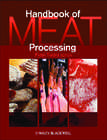
Handbook of Meat Processing Handbook of Meat Processing Fidel Toldrá EDITOR A John Wiley & Sons, Inc., Publication Edition first published 2010 © 2010 Blackwell Publishing Blackwell Publishing was acquired by John Wiley & Sons in February 2007. Blackwell’s publishing program has been merged with Wiley’s global Scientific, Technical, and Medical business to form Wiley-Blackwell. Editorial Office 2121 State Avenue, Ames, Iowa 50014-8300, USA For details of our global editorial offices, for customer services, and for information about how to apply for permission to reuse the copyright material in this book, please see our website at www.wiley.com/ wiley-blackwell. Authorization to photocopy items for internal or personal use, or the internal or personal use of specific clients, is granted by Blackwell Publishing, provided that the base fee is paid directly to the Copyright Clearance Center, 222 Rosewood Drive, Danvers, MA 01923. F
AMBER AND RUSSET - LATE COLOUR CHANGE GENES Copyright 2014, Sarah Hartwell The ancestors of the domestic cat were nondescript black/brown striped tabbies. Over the centuries, mutation produced a wide array of colours based on 2 different pigments. Eumelanin gives the blacks, browns and blues while phaeomelanin gives the reds, fawns and creams. A few other genes give further variations on those colours such silvers, colourpoints and solids/selfs. Mutations continue to occur and unexpected colours also turn up due to inbreeding where recessive genes, hidden for generations, start showing up. AMBER AND LIGHT AMBER During the 1990s, some purebred Norwegian Forest Cats in Sweden produced chocolate/lilac and cinnamon/fawn offspring. However, those colours are not found in the purebred Norwegian Forest Cat gene pool. Had the gene pool become polluted by someone, perhaps generations ago, breeding their Norwegian Forest Cat to another breed? Was it a spontaneous mutation? Crossing of those c
NEUROBIOLOGY AUXILLARY GLOSSARY ACETYLCHOLINE – A neurotransmitter in both the brain and peripheral nervous system* (PNS). In the brain it helps regulate memory, whilst it controls the actions of skeletal and smooth muscle within the PNS. ACTION POTENTIAL – An electrical phenomenon which occurs when a neurone is activated and temporarily reverses the electrical state of its interior membrane from negative to positive. An electrical charge travels along the axon to the neurone’s ending (terminal) where it triggers the release of a neurotransmitter* and then disappears. ADRENALINE (U.S. - Epinephrine) – A hormone released by the adrenal medulla* and a neurotransmitter acting at the level of the autonomic nervous system and the brain. ADRENAL CORTEX – The outer layer of the adrenal, a small endocrine gland located near the kidney. It produces and secretes several hormones* (corticosteroids) e.g. cortisol. I
The sunflower (Helianthus annuus) is an annual(iga aastane) plant in the family Asteraceae, with a large flower head (inflorescence(õiekobar, õisik, õitseaeg, õidumine)). The stem(tüvi) of the flower can grow up to 3 metres tall, with the flower head reaching 30 cm in diameter. The term "sunflower" is also used to refer(nimetama, viitama, üle andma) to all plants of the genus(perekond, sugu) Helianthus, many of which are perennial(alaline, aastaringne) plants. What is usually called the flower is actually a head (formally(ametlikult) composite(liit-, komposiit- ; korvõieline, komposiit) flower) of numerous flowers (florets) crowded(täistuubitud, tunglev, rahvarohke) together. The outer flowers are the ray florets(pähik (õisiku osa) and can be yellow, maroon, orange, or other colors, and are sterile(steriilne, viljatu). The florets inside the circular head are called disc florets. Sunflower head displaying florets in spirals of 34 and 55 around the outside The florets wi
PSYCHOLOGY PART 1: CORE Biological level of analysis Outline principles that define the biological level of analysis. 1) Behavior can be innate, because it is genetically based. Evolution may play a key role in behavior. 2) Animals may be studied as a means of understanding human behavior. 3) There are biological correlates of behavior. Cognitions, emotions and behaviors are products of the anatomy and physiology of our nervous and endocrine system. Explain how principles of the biological level of analysis may be demonstrated in research. 1) Correlational studies: Study by Buss, who hypothesized that across cultures, men will prefer to marry younger women because of greater reproductive capacity and women will place greater value on a potential mate's earning potential to provide survival advantages. This evolutionary hypothesis was tested in 37 cultures by sending out questioners. 2) Twin studies (type of correlational stud
 annaabi.ee






Kõik kommentaarid