Leidsid 33 sarnast õppematerjali, mis on seotud failiga "Terminid". Need materjalid aitavad sul teemat sügavamalt mõista.
genes, wheat, snap, koostoime, protein, patogeen, domain, contain, during, plant, genome, other, action, seen, leherooste, mock, väljend, patogeeni, sobivate, ortoloog, genoom, structures, both, species, response, defense, role, leaf, rust, lr28, domeen, odra, present, study, belong, helical, fold, analysis, diagram, wall, related, nils, nakkuse1. (a) (i) gene length of DNA; codes for a (specific), polypeptide / protein / RNA; max 1 allele alternative form of a gene; found at a, locus / particular position on, a chromosome; max 1 (ii) assume allele refers to coat colour allele (coat colour) gene / alleles, only on X chromosome; A no (coat colour), gene / allele, on Y chromosome male cats, XY / only have one X chromosome;
Intragenomic Profiling Using Multicopy Genes: The rDNA Internal Transcribed Spacer Sequences of the Freshwater Sponge Ephydatia fluviatilis Liisi Karlep, To~nu Reintamm, Merike Kelve* Department of Gene Technology, Tallinn University of Technology, Tallinn, Estonia Abstract Multicopy genes, like ribosomal RNA genes (rDNA), are widely used to describe and distinguish individuals. Despite concerted evolution that homogenizes a large number of rDNA gene copies, the presence of different gene variants within a genome has been reported. Characterization of an organism by defining every single variant of tens to thousands of rDNA repeat units present in a eukaryotic genome would be quite unreasonable. Here we provide an alternative approach for the
Transfektsioon on võõra DNA viimine rakku. Keemilised meetodid. Kaltsiumfosfaadi meetod, DEAE dekstraan Füüsikalised meetodid. Mikroinjektsioon ja elektroporatsioon Membraanide fusioonid. Liposoomid, katioonsed lipiidid ja DNA kompleks lipofektsioon (DNA) konstrukti sisestamine viiruste abil. DNA viirused= näit. SV 40 (simian virus) pôhinevad vektorid · Mis on GFP, milliseid konkreetseid ekspresioonikonstrukte praktikumis kasutati? GFP-green fluoroescent protein, GFP võib funktsioneerida kui proteiin tag, ta viiakse plasmiidse DNA sees rakku ning tänu temale seotud signaaljärjestusele, saab sisseviidud DNA-valk kompleks seostuda just spetsiifilisse kohta rakus, ning tänu fluoroessents-efektile on näha see spetsiifiline koht ka valgusmikroskoobis nähtav.Ekspressioonikonstruktid olid plasmiidid GFP järjestuse ja erinevate signaalidega, mille tõttu ekspresseerus GFP erinevates rakupiirkondades. PEI
vi Contents 12. Smoking 231 Zdzisław E. Sikorski and Edward Kol ´ akowski 13. Meat Packaging 247 Maurice G. O’Sullivan and Joseph P. Kerry 14. Novel Technologies for Microbial Spoilage Prevention 263 Oleksandr Tokarskyy and Douglas L. Marshall 15. Plant Cleaning and Sanitation 287 Stefania Quintavalla PART II. Products 299 16. Cooked Ham 301 Fidel Toldrá, Leticia Mora, and Mónica Flores 17. Cooked Sausages 313 Eero Puolanne 18. Bacon 327
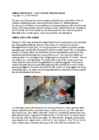
AMBER AND RUSSET - LATE COLOUR CHANGE GENES Copyright 2014, Sarah Hartwell The ancestors of the domestic cat were nondescript black/brown striped tabbies. Over the centuries, mutation produced a wide array of colours based on 2 different pigments. Eumelanin gives the blacks, browns and blues while phaeomelanin gives the reds, fawns and creams. A few other genes give further variations on those colours such silvers, colourpoints and solids/selfs. Mutations continue to occur and unexpected colours also turn up due to inbreeding where recessive genes, hidden for generations, start showing up. AMBER AND LIGHT AMBER During the 1990s, some purebred Norwegian Forest Cats in Sweden produced chocolate/lilac and cinnamon/fawn offspring. However, those colours are not found in the purebred Norwegian Forest Cat gene pool
EFFERENT – Carrying information away from a particular group of neurones ENDOCRINE GLAND – An organ which produces and secretes a hormone* directly to the bloodstream. ENDORPHINS - A group of neuropeptide transmitters which are produced in the CNS and bind to opioid receptors; they regulate the perception of pain ENKEPHALINS – A group of neuropeptide transmitters which are produced in the CNS and bind to opioid receptors; they regulate the perception of pain. ENZYME – A protein which has the ability to control a chemical reaction within a cell. EPINEPHRINE (SEE ADRENALINE) ESTROGENS – A group of sex hormones* more abundant in females than males. The brain contains numerous oestrogen receptors which is consistent with a hypothesis that estrogens play a neuroprotective role. EXCITATION – An influence of one neurone on another which facilitates an action potential. EXCITATORY POSTSYNAPTIC POTENTIAL (EPSP) – A change in local potential
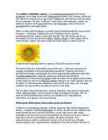
The sunflower (Helianthus annuus) is an annual(iga aastane) plant in the family Asteraceae, with a large flower head (inflorescence(õiekobar, õisik, õitseaeg, õidumine)). The stem(tüvi) of the flower can grow up to 3 metres tall, with the flower head reaching 30 cm in diameter. The term "sunflower" is also used to refer(nimetama, viitama, üle andma) to all plants of the genus(perekond, sugu) Helianthus, many of which are perennial(alaline, aastaringne) plants. What is usually called the flower is actually a head (formally(ametlikult) composite(liit-,
experiments by Rosenzweig and Bennett. Neurotransmission experiment by Martinez and Kesner. 4) Case studies: Phineas Gage studied by Dr John Harlow and Oliver Sack's study on Dr P. Discuss how and why particular research methods are used at the biological level of analysis. Biological researchers often adopt a reductionist approach to the study of human behavior. They work on a micro-level of research, breaking down complex behavior into its smallest parts (e.g. genes, neurotransmitters or proteins). This approach is sometimes criticized for being overly simplistic, but it is important to have detailed information of the components of human behavior in order to understand the interaction of several factors. Kasamatsu and Hirai studied a group of Buddhist monks who went on a 72-hour pilgrimage to a holy mountain in Japan. During this time the monks did not eat, drink or speak and were exposed to cold, autumn weather. About 48 hours later they started
DNA transkriptsiooni ühik, mis kodeerib valku, sisaldab peale otse valku transleeritava järjestuse (kodeeriva järjestuse) ka regulatoorseid järjestusi, mis juhivad ja reguleerivad antud valgusünteesi. Transkripti 5'-poolsed järjestused on ülesvoolu ja 3'-poolsed järjestused allavoolu RNA järjestused. · Transkriptsiooni faktori aktiivsuse tuvastamine - All organisms have ways to control when and where their genes can be transcribed. For instance, nearly all the cells in our bodies contain the full set of human genes, but in each cell type only some of these genes are active, or turned on, and used to make proteins. That's why liver cells produce some proteins that are not produced by kidney cells, and vice versa. Moreover, many cells can respond to external signals or changes in external conditions by turning specific genes on
ways. Light bulbs are measured in watts. Air conditioners and hot water heaters are measured in BTUs, while energy used by cars is measured in gallons of fuel. They used a spreadsheet to figure out how much energy they consumed for each of their activities. Each of the lights, car miles, games, and other appliances was converted to a common unit of power consumption called kilowatt-hours. The spreadsheet was used to determine how many kilowatt-hours were used during each day, each week, and each year for each energy consumption activity. The spreadsheet converted their energy consumption to show them the amount of money it costs for each energy consumption activity. In the end, they were shocked to see how much money Jules' energy using habits cost compared to Les' habits. USES OF ENERGY The United States is a highly developed and industrialized society. We use a lot of energy -
2013): 1. Bacteria a) Heterotrophic bacteria, eg. symbiotic and non - symbiotic N2 fixers, ammonifier, cellulose decomposers, denitrifiers b) Autrotrophic bacteria, eg. nitrosomonas, nitrobacter, sulphur oxidizers, etc; 2. Fungus; 3. Viruses 4. Actinomycetes and stretomyces; 5. Algae eg. BGA, yellow gree algae, golden brown algae. The soil microflora largely depends on the type of soil, temperature, moisture, plant growth, nutrients, pH, and many other factors which may vary between locations but also within a single plot and over very small distances (OECD, 2007). Nevertheless of the quantity of microflora, biomass of all microorganisms living in soil play an important role in the functioning of entire soil ecosystems because their enormous biochemical activity (Barabasz et al. 2002). Soil microflora cycles carbon, nitrogen, phosphorus, and sulfur, plays a role in soil structure
density rural areas which results in spreading of city over more and more rural land. Urban sprawl results in land degradation, increased traffic, environmental issues and health issues. FIND OUT 5 WAYS HOW TO FIX URBAN SPRAWL. 10. Genetic Engineering: Genetic modification of food using biotechnology is called genetic engineering. Genetic modification of food results in increased toxins and diseases as genes from an allergic plant can transfer to target plant. Genetically modified crops can cause serious environmental problems as an engineered gene may prove toxic to wildlife. Another drawback is that increased use of toxins to make insect resistant plant can cause resultant organisms to become resistant to antibiotics. FIND OUT 5 REASONS TO AVOID GM FOOD. If humans continue moving forward in such a harmful way towards the future, then there will be no future to consider
its low weight and high strength in both compression and tension. Therefore, the steel design and construction industry has been on the forefront of technical innovation. The purpose of this study is to determine how 3D and BIM are changing the design, fabrication and construction of complex steel structures. The thesis is qualitative in nature, in that it tries to determine the effects of virtual design and construction based on in-depth analysis of two case studies. Data were collected during 5 interviews with people who were intimately involved in the projects. Background information was obtained from professional journals, engineering articles and conference papers. During analysis, the data were compared to propositions that emerged from the literature review to determine whether a clear pattern was present. A comparison table was created to compare the effects of virtual design and construction of the two projects. Additionally, a schedule is
That's what this book is for. Diary of a Madman The spring of 2007 was an exciting time for me. My rst book, after being turned down by 26 out of 27 publishers, had just hit the New York Times bestseller list and seemed headed for #1 on the business list, where it landed several months later. No one was more dumbfounded than me. One particularly beautiful morning in San Jose, I had my rst major media phone interview with Clive Thompson of Wired magazine. During our pre-interview small chat, I apologized if I sounded buzzed. I was. I had just nished a 10-minute workout following a double espresso on an empty stomach. It was a new experiment that would take me to single-digit bodyfat with two such sessions per week. Clive wanted to talk to me about e-mail and websites like Twitter. Before we got started, and as a segue from the workout comment, I joked that the major fears of modern man could be
Has 2 address fields (source & destination) for multiaccess · Disable or select authentication stage (PAP, CHAP, EAP) stuffing (for bit-oriented protocols). >Bit oriented synchronous transmission: preferred scheme · transparent to either Lacks framing delimiters and CRC · Line quality monitoring during normal operation (the > Byte stuffing (STX, ETX, DLE) Transmit side: insert DLE before control characters 1. transmit printable characters or binary data · 3 general schemes that vary on how SOF, EOF · Byte oriented (bit orientation is rarely useful, and MAC ability to verify whether the line has a good enough quality start of frame send DLE STX 2. prior to transmission insert DLE for any inadvertent DLE 3
to see how things really are, must do what we can to help the less fortunate. Obligation to help. How can a rich person help a poor one? By giving some money? Well, can smart, or educated people give education to those needing it? Sometimes just taking the time to discuss things with troubled people is a great favor and aid. I don't have much surplus money to give to worthy causes, yet donate my time freely. I don't pretend to be able to educate in general -- but do know enough about plant life in Seattle to be valuable teaching that. I suppose I could share my plant knowledge with a single student, or several, and it wouldn't make much difference to me. The whole role of apprenticeship and master-apprentice needs to be expanded beyond its present confines of carpentry, masonry, electricity, and the like. It is true all of us are genetically capable of only so much; that our upbringing and education can be the same yet we turn out differently because of our genes
John Staley was the first publishing professional to recognize the project's potential. Jim Sherman, Al Goethals, John Keating, Dan Wagner, Dalmas Taylor, Wendy Wood, and David Wat- son provided early, positive reviews that encouraged author and editors alike. My editors at Allyn and Bacon, Michelle Limoges and Liz Napolitano, were consistently congenial, helpful, and insightful. I would like to thank the following users of the book for their feedback during a telephone survey: Emory Griffin, Wheaton Col- lege; Robert Levine, California State, Fresno; Jeffrey Lewin, Georgia State Univer- sity; David Miller, Daytona Beach Community College; Lois Mohr, Georgia State University; and Richard Rogers, Daytona Beach Community College. The past edi- tions benefited substantially from the reviews of Assaad Azzi, Yale University; Robert M. Brady, University of Arkansas; Brian M. Cohen, University of Texas at San Antonio; Christian B
Tallinn University Natural and exact sciences Molecular Biochemistry and Ecology Maria Gnidenko Capillary electrophoresis Essay Supervisor: Kert Martma Tallinn 2015 Table of contents Acronyms and symbols used Introduction History and development Physical basis and principle of separation Elektrophoresis Electroosmotic flow Separation process Electrodispersion Various methods of separation Capillary zone�
unpredictability. Tasks are put under someones (a sub-contractors) responsibility through contracts. But breaking down activities into smaller ones, the basic idea of conventional management, makes the links between tasks weaker. The release of works form one crew to another one is assumed, and the result is an even more unpredictable workflow. Of course, we can not claim that the conventionally accepted philosophy is not trying to deliver the value generated during the design phase. This is definitely the aim at the beginning of the project, but very often it is not achievable using existing management techniques, which push for early decisions and local optimization. The sources of that are usually risks that are shifted onto sub-contractors through contractual obligations, and the goals of the main contractor goals are unclear. So they are attempting to optimize their activities, and this leads to sub-optimal outcomes for the project, and these
passives, verb constraints, transitivity, characteristics of the personal passive, etc.) Vendler's classification of verbs + semelfactives (read Van Valin 2005); the characteristic features of these verb types and tests that can be used to identify them. Finite verb phrases: a) Finite VPs can occur as the VP of independent clauses b) Finite VPs have tense contrast c) There is a person concord and number concord between the subject of a clause and the finite VP. d) Finite VPs contain, as their first or only word, a finite verb form which may be either an operator or a simple present or past form. DO-support is used in forming negative and interrogative constructions. e) Finite VPs have mood, which indicates the factual, nonfactual, or counterfactual status of the predication. - the indicative mood - the imperative mood - the subjunctive mood Non-finite verb phrases: The infinitive ((to) walk), the ing participle (walking), and the
THE RISE OF ATTENTION TO HISTORY AND FOLKLORE: JUHAN AAVIK, EDUARD TUBIN, EUGEN KAPP. VII. FURTHER MATURING OF SYMPHONIC MUSIC: HEINO ELLER, EVALD AAV, EDUARD TUBIN. THE FIRST ESTONIAN BALLET. SUMMARY OF THE REPUBLICAN PERIOD. HALF A CENTURY UNDER SOVIET OCCUPATION. IDEOLOGY OVER MUSIC. EXTENSIVE INFLUX OF CONTEMPORARY TRENDS. VIII. THE FORTIES. TRANSFORMATION OF ESTONIAN LIFE. THE WAR-TIME SYMPHONIC OUTPUT. IX. THE PLANTING OF NEW CREATIVE PRINCIPLES DURING THE POST-WAR YEARS. X. THE SECOND HALF OF THE FIFTIES. TOWARDS A MODERN IDIOM: EINO TAMBERG AND VELJO TORMIS. XI. THE NEOCLASSICISM AND CONSTRUCTIVE THINKING OF JAAN RÄÄTS. XII. THE FIRST HALF OF THE SIXTIES. DODECAPHONY OF ARVO PÄRT. XIII. THE DRAMATIC PHILOSOPHICAL OUTPUT OF HELMUT ROSENVALD. XIV. THE ELEMENTS OF JAZZ, FOLK MUSIC AND DODECAPHONY IN THE SYMPHONISM OF ANTI MARGUSTE. XV. HEIMAR ILVES AND HIS MUSIC – DEEP IN THOUGHT AND FEELING. XVI
Peter Alward and Laura Morgan produced much of the early draft by transcribing many hours of lectures from very bad audio recordings. I thank them warmly and I hope that each of them will soon make a full recovery. Sean McKeever's months of editorial help and advice have been invaluable. (He suffered through some transcribing as well.) Thanks especially to Sean for suggesting some needed cuts, and for organizing the bibliography. The last few chapters of this book were completed during my tenure as a Fellow of the National Humanities Center, in 199899. I thank the Center and its wonderful staff for their generous support. For additional funding I am indebted to the National Endowment for the Humanities (#RA20169 95). Acknowledgements for the Second Edition Thanks to editor Kate Ahl for her patient help, and to Meg Wallace for a good deal of research as well as editing and indexing. Thanks also to many
sentence. If a separate sentence is patterned as one paragraph, it stands out as an emotionally prominent piece of information. From the rhythmical point of view, the alteration of long and short paragraphs adds to the rhythmical effect. Long paragraphs coming in succession create a monotonous rhythm. A sequence of short paragraphs creates a jerky rhythm. Capitalization is often used in personification and antonomasia. Words may also contain only capital letters, which adds emphasis to these words. (He is DEAD) It is a poetic tradition to begin each verse line with the capital letter. Nowadays it is often rejected. Even in titles. It adds intimacy. The arrangement of lines has become a significant feature of modern literature, particularly in poetry. Figure poems, for example, appeal more to the eye than to the ear. They have often the shapes of cross, heart, bird, etc.
species. Humans would increasingly be drawn to and fascinated by them. As the consciousness of human beings developed, flowers were most likely the first thing they came to value that had no utilitarian purpose for them, that is to say, was not linked in some way to survival. They provided inspiration to countless artists, poets, and mystics. Jesus tells us to contemplate the flowers and learn from then how to live. The Buddha is said to have given a “silent sermon” once during which he held up a flower and gazed at it. After a while, one of those present, a monk called Mahakasyapa, began to smile. He is said to have been the only one who had understood the sermon. According to legend, that smile (that is to say, realization) was handed down by twenty- eight successive masters and much later became the origin of Zen. Seeing beauty in a flower could awaken humans, however briefly, to the beauty that is an essential part of their own innermost being, their true
If a separate sentence is patterned as a paragraph it stands out as emotionally very prominent. From the rhythmical point of view alternation of long and short paragraphs adds to the rhythmical effect of the text. Long paragraphs in succession create a monotonous rhythmical effect. A sequence of very short paragraphs creates a jerky rhythm. 6. Capital letters are involved in antonomasia and personification. Words may contain capital letters only for emphasis or to suggest that they are pronounced loudly. In poetry it is a tradition to start every line with the capital letter. 7. The arrangement of lines on a page is a significant feature of modern poetry. The, so called, figure poems have appeared (e.g. poem has a shape of a star, a leaf, etc.) the shape depends on the poem's content. 8
meaning it is then called inherent connotation. Connotation is ever present when the word is used. Adherent connotation is the shade of meaning the word requires in a particular context only. Outside this context this shade of meaning is not present. Connotation is not uniform (even). On the one hand there are words that convey emotional or expressive overtones (e.g. OK fine - gorgeous "gorgeous" conveys emotional overtones). On the other hand they may contain evaluation (the speaker's or writer's negative or positive attitude) (e.g. famous (positive) notorious (negative). Arnold: "For example the words: "girl", "maiden", "lass", "lassie", "chick", "baby", and "young lady" have identical denotation and may be referred to one and the same person, but the use of this or that word depends not so much on the qualities of the girl herself as on the speaker's attitude to the girl and on the social situation
English literature is one of the oldest literatures in Europe; dates back to the 6th century AD. Oral literature, i.e. not written down, spread from person to person. In 449 AD Anglo-‐Saxon tribes invaded England – beginning of the Anglo-‐Saxon period in English literature. The first form of literature was folklore, carried by scops and gleemen, who sang in alliterative verse (a kind of simple poetry). Prose developed much later. The first form of recorded English literature was the epic Beowulf, which was produced sometime near the end of the 7th and beginning �
crisis. This is that film. It depicts OP-20-G and S.I.S. in the 24 hours preceding the Pearl Harbor attack, with the events of the past as prologue. It is the story of one day of MAGIC. The two American cryptanalytic agencies had not sprung full-blown into being like Athena from the brow of Zeus. The Navy had been solving at least the simpler Japanese diplomatic and naval codes in Rooms 1649 and 2646 on the "deck" above since the 1920s. The Army's cryptanalytical work during the 1920s was centered in the so-called American Black Chamber under Herbert O. Yardley, who had organized it as a cryptologic section of military intelligence in World War I. It was maintained in secrecy in New York jointly by the War and State departments, and perhaps its greatest achievement was its 1920 solution of Japanese diplomatic codes. At the same time, the Army's cryptologic research and code-compiling functions were handled by William
It all fit easily into the trunk of the cruiser. "I found a good car for you, really cheap," he announced when we were strapped in. "What kind of car?" I was suspicious of the way he said "good car for you" as opposed to just "good car." "Well, it's a truck actually, a Chevy." "Where did you find it?" "Do you remember Billy Black down at La Push?" La Push is the tiny Indian reservation on the coast. "No." "He used to go fishing with us during the summer," Charlie prompted. That would explain why I didn't remember him. I do a good job of blocking painful, unnecessary things from my memory. "He's in a wheelchair now," Charlie continued when I didn't respond, "so he can't drive anymore, and he offered to sell me his truck cheap." "What year is it?" I could see from his change of expression that this was the question he was hoping I wouldn't ask. "Well, Billy's done a lot of work on the engine -- it's only a few years old, really."
Comprehension 45 minutes Vocabulary 30 questions Reading Comprehension 30 questions SECTION 1: LISTENING COMPREHENSION This section of the TOEFL test your ability to understand spoken American English. You will hear taped conversations to which you will make responses. Part A and B contain samples of informal American English. Idiomatic expressions and two-word verbs are common in these parts. Single Statement In Part A you will hear a single statement made by a man or a woman. In your test booklet, there are four sentences. You must choose the sentence that is closest in meaning to the one you heard. YOU WILL HEAR: To get to the post office, cross the street, go three blocks, and you'll see it right on the corner. YOU WILL SEE: (A) The post office is right on the corner.
Acids, alcohols and gases are usually detected in these tests when bacteria are grown in selective liquid or solid media. The isolation of enzymes from infected tissue can also provide the basis of a biochemical diagnosis of an infectious disease. Serological methods are highly sensitive, specific and often extremely rapid tests used to identify microorganisms. These tests are based upon the ability of an antibody to bind specifically to an antigen. The antigen, usually a protein or carbohydrate made by an infectious agent, is bound by the antibody. This binding then sets off a chain of events that can be visibly obvious in various ways, dependent upon the test. Complex serological techniques have been developed into what are known as Immunoassays. Immunoassays can use the basic antibody antigen binding as the basis to produce an electro - magnetic or particle radiation signal, which can be detected by some form of instrumentation
стран мира. 6 INTRODUCTION Aspects of British History presents a brief outline of the most significant milestones in the long and eventful history of Great Britain, such as the five successful invasions of the island, the birth of Parliament and transformation of an absolute monarchy into a constitutional monarchy, the origin of the English language, the rise and fall of the British Empire. The units contain an informative reading text on an important issue, preceded by preparatory discussion questions and followed by notes offering some additional information, and a vocabulary with relevant language notes. The main reading text is accompanied by comprehension, vocabulary and grammar exercises and discussion activities. Some of the units include reading passages. The book is intended for university and school students as well as other English
4 1 let me down Leo Well, in some parts of Africa and 2 been thrown away Asia there are thousands of people 3 brought up suffering from blindness caused by a 4 to put up with lack of vitamin A. Now there's a new 5 be looked after type of rice which has been engineered to contain massive amounts of vitamin 6 drop me off A. So there you are ... problem solved! 7 to lay off Rosie Yeah, these are good 8 turned up intentions, but not if we end up poisoning people in the long run. I 1F Discussion page 9 don't know, I just find the whole thing
 annaabi.ee