Vajad kellegagi rääkida?
Küsi julgelt abi LasteAbi
Logi sisse

Gross domestic product (0)

1 Hindamata
Punktid
Gross Domestic Product (GDP)
The gross domestic product (GDP) or gross domestic income (GDI) is a measure of a country 's overall economic output.
It is the market value of all final goods and services made within the borders of a country in a year .
It is often positively correlated with the standard of living , alternative measures to GDP for that purpose.

Gross National Product
Gross national product (GNP), in economics , a quantitative measure of a nation 's total economic activity , generally assessed yearly or quarterly.
The GNP equals the gross domestic product plus income earned by domestic residents through foreign investments minus the income earned by foreign investors in the domestic market.
Gross Domestic Product
GDP can be determined in three ways , all of which should in principle give the same result .
  • They are the product (or output) approach , the income approach, and the expenditure approach.
The most direct of the three is the product approach, which sums the outputs of every class of enterprise to arrive at the total.
The expenditure approach works on the principle that all of the product must be bought by somebody, therefore the value of the total product must be equal to people's total expenditures in buying things.
The income approach works on the principle that the incomes of the productive factors (" producers ") must be equal to the value of their product, and determines GDP by finding the sum of all producers' incomes
"Gross" means that GDP measures production regardless of the various uses to which that production can be put.
Production can be used for immediate consumption , for investment in new fixed assets or inventories, or for replacing depreciated fixed assets.
"Domestic" means that GDP measures production that takes place within the country's borders.
  • In the expenditure- method equation, the exports-minus-imports term is necessary in order to null out expenditures on things not produced in the country (imports) and add in things produced but not sold in the country (exports).
Economists ( since Keynes ) have preferred to split the general consumption term into two parts; private consumption, and public sector (or government ) spending.
  • Two advantages of dividing total consumption this way in theoretical macroeconomics are:

  • Private consumption is a central concern of welfare economics.
    The private investment and trade portions of the economy are ultimately directed (in mainstream economic models) to increases in long-term private consumption.
    If separated from endogenous private consumption,
  • Government consumption can be treated as exogenous.
    Different government spending levels can be considered within a meaningful macroeconomic framework .
    Income Approach
    This method measures GDP by adding incomes that firms pay households for the factors of production they hire- wages for labor , interest for capital, rent for land and profits for entrepreneurship.
    The "National Income and Expenditure Accounts" divide incomes into five categories:
    • Wages, salaries, and supplementary labour income
    • Corporate profits
    • Interest and miscellaneous investment income
    • Farmers’ income
    • Income from non- farm unincorporated businesses
    These five income components sum to net domestic income at factor cost .
    Two adjustments must be made to get GDP:
    • Indirect taxes minus subsidies are added to get from factor cost to market prices.
    • Depreciation (or capital consumption) is added to get from net domestic product to gross domestic product.
    Components of GDP by Expenditure
    GDP (Y) is a sum
    • Consumption (C),
    • Investment (I),
    • Government Spending (G) and
    • Net Exports (X - M).
    Y = C + I + G + (X − M)
    C (consumption) is normally the largest GDP component in the economy, consisting of private (household final consumption expenditure) in the economy.
    These personal expenditures fall under one of the following categories: durable goods, non-durable goods, and services.
    Examples include food, rent, jewelry, gasoline and medical expenses but do not include the purchase of new housing .
    I (investment) includes business investment in equipments for example and does not include exchanges of existing assets.
    Examples include construction of a new mine, purchase of software, or purchase of machinery and equipment for a factory .
    Spending by households (not government) on new houses is also included in Investment.
    In contrast to its colloquial meaning , 'Investment' in GDP does not mean purchases of financial products .
    Buying financial products is classed as ‘ saving ', as opposed to investment.
    G (government spending) is the sum of government expenditures on final goods and services.
    Examples includes salaries of public servants, purchase of weapons for the military , and any investment expenditure by a government.
    It does not include any transfer payments, such as social security or unemployment benefits.
    X (exports) represents gross exports.
    GDP captures the amount a country produces, including goods and services produced for other nations' consumption, therefore exports are added.
    M (imports) represents gross imports.
    Imports are subtracted since imported goods will be included in the terms G, I, or C, and must be deducted to avoid counting foreign supply as domestic
    Income Approach
    Total factor income = Employee compensation + Corporate profits + Proprietor’s income + Rental income + Net interest
    Another formula for GDP by the income method is:
    GDP = R + I + P + SA + W
    Where
    • R: rents
    • I: interests
    • P: profits
    • SA: statistical adjustments (corporate income taxes, dividends, undistributed corporate profits)
    • W: wages
    Gross Domestic Product
    GDP can be contrasted with gross national product (GNP) or gross national income (GNI).
    The difference is that GDP defines its scope according to location , while GNP defines its scope according to ownership.
    In a global context , world GDP and world GNP are therefore equivalent terms.
    • GDP is product produced within a country's borders;
    • GNP is product produced by enterprises owned by a country's citizens.
    International Standards
    The international standard for measuring GDP is contained in the book System of National Accounts (1993), which was prepared by representatives of the International Monetary Fund, European Union, Organization for Economic Co-operation and Development , United Nations and World Bank .
    Nominal GDP and Real GDP
    The GDP calculation is distorted by inflation. This unadjusted GDP is known as the nominal GDP.
    In practice , GDP is adjusted by dividing the nominal GDP by a price deflator to arrive at the real GDP.
    • GDP usually is reported each quarter on a seasonally adjusted annualized basis
    In an inflationary environment, the nominal GDP is greater than the real GDP.
    If the price deflator is not known, an implicit price deflator can be calculated by dividing the nominal GDP by the real GDP:
    • Implicit Price Deflator   =   Nominal GDP   /   Real GDP
    The composition of this deflator is different from that of the consumer price index in that the GDP deflator includes government goods, investment goods, and exports rather than the traditional consumer-oriented basket of goods.
    GDP Growth
    Countries seek to increase their GDP in order to increase their standard of living.
    The growth in GDP does not result in increased purchasing power if the growth is due to inflation or population increase.
    While investment is an important factor in a nation’s GDP growth, even more important is greater respect for laws and contracts.
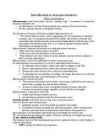
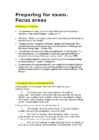
  • Gross domestic product #1 Gross domestic product #2 Gross domestic product #3 Gross domestic product #4
    Punktid 50 punkti Autor soovib selle materjali allalaadimise eest saada 50 punkti.
    Leheküljed ~ 4 lehte Lehekülgede arv dokumendis
    Aeg2011-11-30 Kuupäev, millal dokument üles laeti
    Allalaadimisi 12 laadimist Kokku alla laetud
    Kommentaarid 0 arvamust Teiste kasutajate poolt lisatud kommentaarid
    Autor meeryke Õppematerjali autor

    Sarnased õppematerjalid

    Introduction to macroeconomics
    3
    docx

    Introduction to macroeconomics

    The list of reasons why economies grow: · population increase, since more people can produce more output. · accumulation of means of production: plant and equipment, roads, communication networks, and other forms of infrastructure make workers more productive. Most important is the development and harnessing of knowledge to economic ends. The most frequently used measure of a nation's economic well-being is its output and income, the gross domestic product (GDP). The monetary value of all the finished goods and services produced within a country's borders in a specific time period, · GDP is usually calculated on an annual basis. It includes all of private and public consumption, government outlays, investments and exports less imports that occur within a defined territory. Business cycles. · refers to economy-wide fluctuations in production or economic activity over several months or years.

    Micro_macro ökonoomika
    Business peciliarities in Ukraine and Bealrus
    106
    pdf

    Business peciliarities in Ukraine and Bealrus

    banking sector comparable in relative size to that of many well-established market economies. Credit was at last available, and not only from state-controlled and other politically connected banks, but from reputable foreign banks channeling easy international liquidity to Ukraine as they did to other emerging economies. From 2000 to 2007, Ukraine's real growth averaged 7.4 percent and was thus very similar to Russia's. In both countries, this growth was driven by domestic demand: orientation toward consumption, other structural change, and financial development. In Ukraine, domestic demand grew in constant prices by almost 15 percent annually. It was supported by expansionary--pro-cyclical--fiscal policy generally driven by populism for perceived short- term political gain. Further, industrial capacity left idle in the 1990s was brought into use, capital inflows surged after 2005, and credit growth was fueled by external borrowing. In terms of markets, in

    Inglise keel
    International Ecomomics-by Hendrik Van den Berg
    5
    docx

    „International Ecomomics“ by Hendrik Van den Berg

    Its realy easier ofcours. I wrote to the Defence Forces library and asked to send me something about economi. Well , I got „International Economics“ by Hendrik Van den Berg. We had to read 100 pages. So I did. What I remmember about from 100 pages economics? There were a lot interesting what I didnt know before. It all started about U.S Economics. U. S Economy does not appear to be „globaal“ if look at its ratio of tarded otuput to GDP (Gross Domestic product, which is the total value added of production that occurs within a country-s borders, regardless of who owns the factors of production used in the production process.)U.S exports and imports only about 10% of its national output and consumption Services are difficult to export and import; if you need haircut or you want to go out tonight , you choose from among local suppliers. Rapidly growing ratio of manufacturing exports. Fact is, that manufacturing has

    Majandus
    Economic Country Review
    16
    docx

    Economic Country Review

    manufactured goods. Because of the climate, agricultural development is limited to maintaining selfsufficiency in basic products. Forestry, an important export earner, provides a secondary occupation for the rural population. Finland had been one of the best performing economies within the EU in recent years and its banks and financial markets avoided the worst of global financial crisis. However, the world slowdown hit exports and domestic demand hard in 2009, with Finland experiencing one of the deepest contractions in the euro zone. A recovery of exports, domestic trade, and household consumption stimulated economic growth in 2010. The recession left a deep mark on general government finances and the debt ratio, turning previously strong budget surpluses into deficits. In addition to marginal growth prospects, general government finances will remain in deficit during the next few years

    Majandusanalüüs
    Public Administration and Innovation
    26
    docx

    Public Administration and Innovation

    ● “An innovative business is one which lives and breathes “outside the box”. It is not just good ideas, it is a combination of good ideas, motivated staff and an instinctive understanding of what your customer wants” – (Branson 1998) ● “...novel implementation of an invention, discovery, new or existing knowledge in economic process” (Joseph A. Schumpeter) ● An innovation is the implementation of a new or significantly improved product (good or service), or process, a new marketing method, or a new organisational method in business practices, workplace organisation or external relations” (Oslo Manual). Innovation and entrepreneurship Schumpeter on innovation: the role of inventions and entrepreneurs ● Innovation as “new combinations” of existing resources: “Innovation is possible without anything we should identify as invention and invention does not necessarily induce

    Public Administration
    Mikro ja makroökonoomika terminid
    22
    doc

    Mikro ja makroökonoomika terminid

    kahaneva piirtootlikkuse law of diminishing marginal Закон убывающей предельной seadus productivity производительности kasvav mastaabiыээые increasing returns to scale Возрастающий доход масштаба keskmine kogukulu average (total) cost, AC Средние (совокупные) затраты keskmine kogutoodang average physical product, APP Средний продукт Ilmutatud kulu Explicit cost Явные затраты ilmutamata Implicit cost Неявные затраты keskmine muutuvkulu average variable cost, AVC Средние переменные затраты keskmine püsikulu average fixed cost, AFC Средние постоянные затраты

    Majandus
    Jamaica
    9
    doc

    Jamaica

    fiscal and monetary policies, has contributed to a controlled reduction in the rate of inflation. The annual inflation rate has decreased from a high of 80.2% in 1991 to 7.9% in 1998. inflation for FY1998/99 was 6.2% compared to 7.2% in the corresponding period in CUU1997/98. The Government remains committed to lowering inflation, with a long-term objective of bringing it in line with that of its major trading partners. After a period of steady growth from 1985 to 1995, real GDP (gross domestic product) decreased by 1.8% and 2.4% in 1996 and 1997, respectively. The decrease in GDP in 1996 and 1997 was largely due to significant problems in the financial sector and, in 1997, a severe island-wide drought (the worst in 70 years) that drastically reduced agricultural production. In 1997, nominal GDP was approximately J$220,556.2 million (US$6,198.9 million based on the average annual exchange rate of the period).

    Inglise keel
    INVESTBULGARIA AGENCY
    23
    pptx

    INVESTBULGARIA AGENCY

    INVESTBULGARIA AGENCY WHO ARE WE InvestBulgaria Agency (IBA) is a Government institution providing information, contacts and project management support to potential investors. IBA services: Macroeconomic data on Bulgaria Data on operational costs Regional information Personalized administrative servicing Legal advice Liaison with central and local governments Liaison with branch chambers and NGOs www.investbg.government.bg GENERAL INFORMATION Official name: Republic of Bulgaria Area: 110 994 sq.m. Population: 7.4 million Capital: Sofia Time zone: EET (UTC+2) Official language: Bulgarian Currency: Lev (BGN) Fixed exchange rate: 1 = BGN 1.95583 Type of government: Parliamentary Member of: EU, NATO, WTO

    Inglise keel


    Kommentaarid (0)

    Kommentaarid sellele materjalile puuduvad. Ole esimene ja kommenteeri


    Sellel veebilehel kasutatakse küpsiseid. Kasutamist jätkates nõustute küpsiste ja veebilehe üldtingimustega Nõustun