Vajad kellegagi rääkida?
Küsi julgelt abi LasteAbi
Logi sisse

Armenian Genocide (0)

1 Hindamata
Punktid

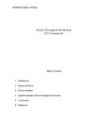
Armenian Genocide
Tallinn 2011
Contest
Introducion………………………………………………………..……………………………3
1. The Armenian Genocide and its causes ………………….………………………………….4
1.1. Armenian Genocide………………………………….…………………………………..4
1.2. The Armenian Massacre…………………………………………………………………4
1.3. Young Turks and the Young Turk Revolution …………………………………………..5
1.4. Armenian Genocide, 1905-1917 period …………………………………………………5
1.5. Death marches…………………………………………………………………………...5
1.6. Extermination camps…………………………………………………………………….6
2. The consequences of Armenian Genocide…………………………………………………..7
2.1. Death and migration ……………………………………………………………………..7
2.2. Cultural loss……………………………………………………………………………...7
2.3. Turkish denial……………………………………………………………………………7
Summary……………………………………………………………………………………….8
The list of used materials………………………………………………………………………9
Introduction
I chose this theme cause I think it is interesting and definitely it brodens my mind. I have heard about Armenian Genocide before and it always seemed interesting, but I have never read anything related to this subject , so I thought this is a good chance to acquaint myself with it.
The purpouse of my report is to give an overview of Armenian Genocid, its causes and consequences. In my report I also provide a brief overview of the Armenian Massacre, the Young Turks, the Young Turk Revolution and ordeals that Armenians had to go through .
1. The Amenian Genocide and its causes
  • Armenian Genocide
    Armenian Genocide (also known Armenian Holocaust) took place during World War I (1915-1917), when Armenian people of the Ottoman Empire were systematically exterminated and deported by the „Young Turk“ goverment. The Armenian Genocide was the first genocide of the 20th Century. During the genocide two million Armenians living in Turkey were eliminated from their historic homeland through forced deportations and massacres. One and a half million Armenians were killed , out of a total two and a half million Armenians in the Ottoman Empire. ( Fact Sheet: Armenian Genocide) (Wikipedia, 2011) (UHRC, 2011)
    First the Armenians in the army were disarmed, placed into labor battalions, and then killed and then the Armenian political and intellectual leaders were rounded up on April 24, 1915, and then killed. Finally , the remaining Armenians were called from their homes , told they would be relocated, and then marched off to concentration camps in the desert between Jerablus and Deir Ez-Zor where they starved and thirsted to death in the burning sun. (Fact Sheet: Armenian Genocide) (Wikipedia, 2011) (ANI, 2011)
    1.2. The Armenian Massacre
    The Armenian Massacre started in the early 1900's, when secret meetings began to be held by the Turks. It has been quoted that a man named Dr. Nazim had once said "If we are going to do something like the Adana massacre of 1909, here and there , the result will do us more harm than good." Dr. Nazim goes on to say that the Turks would alert the Arabs and the Kurds and that therefore the danger would be multiplied. In his final words at these meetings he had said that "We (the Turks) must not leave a single Armenian alive in our country , we must kill the Armenian name." The next thing that they did was take a vote regarding the extermination of the Armenians. The results were disastrous for the Armenians when they voted that not a single Armenian should be left alive. (Angelfire, 2011) (Wikipedia, 2011)
    1.3. Young Turks and the Young Turk Revolution
    Young Turk Revolution found place in 1908-1909, it was the first bourgeois revolution in Turkey. The Young Turks were a group of intellectuals of different ideological backgrounds who united against the authoritarian regime of Sultan Abdulhamid. (Stjepanovi, 2006)
    The main revolution struggles took place in the areas of ecclesiastic politics in Jerusalem. With its Armenian and Greek Patriarchates and the Chief Rabbinate, Jerusalem became a central point of the struggles among the Jews , Armenians, and Greeks in the Ottoman Empire. (Matossian, 1994)
    1.4. Armenian Genocide, 1905-1917 period
    On November 2, 1914, the Ottoman Empire entered World War I on the side of the Central Powers. The Middle Eastern became the center of action of World War I. The strugglers were the Ottoman Empire, with some help from the other Central Powers, and mainly the British and the Russians among the Allies of World War I. The conflicts at the Caucasus Campaign, the Persian Campaign and the Gallipoli Campaign affected seriously areas, where the Armenian people lived. Before the declaration of war at the Armenian congress at Erzurum the Ottoman government requested the Ottoman Armenians to contribute the conquest of Transcaucasia by inciting a rebellion with the Russian Armenians against the tsarist army in the event of a Caucasus front . (Wikipedia, 2011)
    1.5. Death marches
    The Armenians were marched out to the Syrian town of Deir Ez-Zor and the surrounding desert. Many evidences suggests that the Ottoman government did not provide any facilities or supplies to retain the Armenians during their deportation, nor when they arrived . Ottoman troops, who escorted the Armenians not only allowed others to rob, kill, and rape the Armenians, but often did these things themselves. Marching into the desert hundreds of thousands of Armenians died. (Wikipedia, 2011)
    1.6. Extermination camps
    I t is believed that 25 major concentration camps existed, under the command of Şükrü Kaya. Most of the camps were situated near Turkey's modern Iraqi and Syrian borders. Some camps were only temporary and mostly for transit . Others (Radjo, Katma and Azaz) were used only for mass graves. The camps Lale, Tefridje, Dipsi, Del-El and Ra's al-'Ain were built specifically for those who had a life expectancy of a few days . (Wikipedia, 2011)
    2. The consequences of Armenian Genocide
    2.1. Death and migration
    During the Armenian Genocide one and a half million Armenians were killed, out of a total two and a half million Armenians. Many Armenians ran away to survive and the others were eliminated from their historic homeland. Those who survived were forced into exile and have never been able to return . An entire people, and their history, were virtually erased within years . Because of the genocide the Armenian population decreased largely. (Dearborn, 1999) (UHRC, 2011) (Goldberg, 1998)
    It takes away the very existence of the victims, thereby making it impossible to mourn their loss and causing serious psychological consequences. (Hovannisan, 1999)
    2.2. Cultural loss
    The arranged destruction Armenian cultural objects, religious, historical and communal heritage was another purpose of both the genocide itself and the post-genocidal campaign of denial. Armenian churches and monasteries were destroyed or changed into mosques, Armenian cemeteries flattened, and in several cities (e.g. Van), Armenian quarters were destroyed. Beside from the deaths, Armenians lost their wealth and property without compensation. (Wikipedia, 2011) (UHRC, 2011)
    2.3. Turkish denial
    Today the Turkish government actively denies the Armenian Genocide and claims that Armenians were only removed from the eastern "war zone". The Armenian Genocide, however , occurred all over Anatolia (todays Turkey) and not just in the so-called "war zone". In recent years, it has faced repeated calls to accept the events as genocide. To date , twenty countries have officially recognized the events of the period as genocide and most historians accept this view. (Wikipedia, 2011) (UHRC, 2011) (Armaniapedia, 2011)
    Summary
    Armenian Genocide was an awful event. Because of it many people died or were tortured by the Turks. About ona and a half million Armenians were killed and others were eliminated from their historic homeland. Armenian people of the Ottoman Empire were systematically exterminated and deported by the „Young Turk“ goverment.
    Today Turkish goverment and many others does not even admit that Armenian Genocide really happened , although there is photos , documents and literature about it. However most of the historians accept that Armenian Genocide really took place and they confirm Turks guilt.
    The list on used materials
    ANI. 2011. Frequently Asked Questions about the Armenian Genocide. http://www.armenian-genocide.org/genocidefaq.html 27.04.2011
    Dearborn. 1999. Fact Sheet: Armenian Genocide. http://www.umd.umich.edu/dept/armenian/ facts/genocide.html 27.04.2011
    Wikipedia. Armenian Genocide. http://en.wikipedia.org/wiki/Armenian_Genocide #Hamidian_Massacres. 2C_1894.E2.80.931896 27.04.2011
    Wikipedia. Young Turk Revolution. http://en.wikipedia.org/wiki/Young_Turk_Revolution 27.04.2011
    Stjepanovi, D. The Young Turk Revolution and the 1908 Annexation of Bosnia -Herzegovina. Balkanalysis. http://www.balkanalysis.com/blog/2006/04/25/the-young-turk-revolution-and-the-1908-annexation-of-bosnia-herzegovina/ 27.04.2011
    Matossian, B, D. 1994. The Young Turk Revolution. Its Impact on Religious Politics of Jerusalem (1908-1912). Jerusalem quarterly. http://www.jerusalemquarterly.org/images /ArticlesPdf/40_The_Young_Turk.pdf 27.04.2011
    United Human Rights Council . Armenian Genocide. http://www.unitedhumanrights.org /genocide/armenian_genocide.htm 27.04.2011
    Angelfire. The Armenian Genocide. http://www.angelfire.com/ab/armeniangenocide/ 27.04.2011
    Hovannisan, R, G. 1999. The Reality and Relevance of the Armenian Genocide. UCLA. http://www.sscnet.ucla.edu/history/centers/armenian/source109.html 27.04.2011
    Armeniapedia. Turkish Denial of Armenian Genocide. http://www.armeniapedia.org/ index.php?title=Turkish_Denial_of_Armenian_Genocide 27.04.2011
    9
  • Vasakule Paremale
    Armenian Genocide #1 Armenian Genocide #2 Armenian Genocide #3 Armenian Genocide #4 Armenian Genocide #5 Armenian Genocide #6 Armenian Genocide #7 Armenian Genocide #8 Armenian Genocide #9
    Punktid 50 punkti Autor soovib selle materjali allalaadimise eest saada 50 punkti.
    Leheküljed ~ 9 lehte Lehekülgede arv dokumendis
    Aeg2012-04-20 Kuupäev, millal dokument üles laeti
    Allalaadimisi 8 laadimist Kokku alla laetud
    Kommentaarid 0 arvamust Teiste kasutajate poolt lisatud kommentaarid
    Autor s6stramari Õppematerjali autor
    Introduction

    I chose this theme cause I think it is interesting and definitely it brodens my mind. I have heard about Armenian Genocide before and it always seemed interesting, but I have never read anything related to this subject, so I thought this is a good chance to acquaint myself with it.

    The purpouse of my report is to give an overview of Armenian Genocid, its causes and consequences. In my report I also provide a brief overview of the Armenian Massacre, the Young Turks, the Young Turk Revolution and ordeals that Armenians had to go through...

    Kasutatud allikad

    Sarnased õppematerjalid

    Stalin s Russia-political-cultural
    12
    pptx

    Stalin's Russia: political, cultural

    but does not use established historiographical methods; especially one that uses disputed evidence and speculation rather than relying on the analysis of primary THE DENIAL OF HOLOCAUST real life situation of pseudohistory WHAT IS THE HOLOCAUST? the holocaust was a systematic elimination of a nation, in which approximately six million European Jews were killed during the period 1941-1945. Adolf Hitler's Nazi regime and it's collaborators were behind the genocide which took place throughout the Nazi Germany and other German- occupied territories. concentration camps (extreme work under starvation condition) & extermination camps (mass executions, primarily by gassing). THE DENIAL OF THE HOLOCAUST `'Holocaust denial'' negates the established facts of the happenings in the holocaust. There is an assumption by deniers that if they can just find one tiny crack in the Holocaust structure, it can all be disproved

    Inglise keel
    Public International Law is a system of law
    47
    docx

    Public International Law is a system of law

    There can be specific cases of PIL, e.g. nations fighting for their independence. These can be considered to be subjects of PIL. Also, some exceptions: International Committee of Red Cross, formerly it wasn't covered by PIL, but due to its unique status (covered by Geneva conventions etc), then it is a subject of PIL. PIL directly regulates private persons, e.g. punishment of international crimes (crimes against peace=crime of aggression, genocide, crimes against humanity, war crimes). This is if specific countries do not want to punish the criminals, specific international tribunals etc are created to do the job for them. Humanitarian doctrine ­ if a certain country violates human rights very severely and if other attempts have failed to prevent and stop this, then war can be used as a method to stop this stuff. Süüria ­ chemical weapons doctrine is one of the strongest doctrine ever, respected by almost

    Inglise keel
    Notes-Jews in the USSR-1917-2000
    11
    docx

    Notes, Jews in the USSR, 1917-2000

    Misappropriating funds, stealing products, assets, fruits of central econ system, funneling into pockets. Managing to acquire goods from abroad. Newspapers, disproportionate # of Jewish sounding names, many convicted, some killed. Was Khrushchev antisem? Not in classic way, but a boy from the village. Had absorbed at church a certain deg of judeophobia. Possibly antisem, but not his driving force. Party slogans. Absolutely refused to recognize J suffering. Ukraine today demanding recognition of genocide, famine of 30s, millions died, wanting indemnities, etc. New Uk govt see SU past as kind of bad dream to genocide. Disconcerting to Ru. Pop rel begins to bubble up again, esp Islam and Orthodoxy. Islamic fundamentalism didn't really exist outside of Egypt in this time. Concerned about dual loyalties. Ambivalence on part of many, animosity on other parts. W religion come all sorts of things. Synagogue becomes again a problematic place. Restriction on J rituals, from matzah to circumcision

    Inglise keel
    Revision Questions
    14
    pdf

    Revision Questions

    and today we know that he was no more the discoverer of America than Pocahontas was the discoverer of Great Britain. *On the contrary, they view the arrival of Christopher Columbus in 1492 as an occasion to be mourned. The politically correct view is that Columbus did not discover America, because people had lived here for thousands of years. Worse yet, it's claimed, the main legacy of Columbus is death and destruction. Columbus is routinely vilified as a symbol of slavery and genocide. Native Americans had built great civilizations with many millions of people long before Columbus wandered lost into the Caribbean. Columbus' voyage has even less meaning for North Americans than for South Americans because Columbus never set foot on our continent, nor did he open it to European trade. Scandinavian Vikings already had settlements here in the eleventh century, and British fisherman probably fished the shores of Canada for decades before Columbus. The first European explorer to

    Inglise keel
    Russian philology
    30
    docx

    Russian philology

    Russian philology The meaning of the word "philology" is "love for word". This is love that unites teachers and researchers of modern and Classical languages and literature, interpreters and diplomats, journalists and publishers, writers and poets. Russian philologis are highly demanded in various spheres of scholarly research and education, in the mass media, in civil service at the Ministry of Foreign Affairs, in archives, libraries, museums, in travel agencies, as well as Russian and international companies. Curriculum within in philological faculty includes courses of Russian and European languages and literature, courses of Linguistics and Theory of Literature for students to familiarize themselves with various schools and trends of Russian and foreign philology. The core curriculum also includes a number of Liberal Arts courses (Philosophy, History, Psychology, Pedagogy), as well as courses of basic mathematics and computer studies, and optional courses of science and the

    Inglise keel
    Prague praha
    18
    doc

    Prague(praha)

    Gümnaasium Prague referaat Autor: Klass: Juhendaja: 2010 CONTENTS 1. Contents 2. Introduction 3. Compendium about Prague 4. Important about Czech Republic and Prague 5.-7. History 8. Independence 9. Main sights 10. the Czech Republic 11. List of famous people from Prague 12. Geography 13. Weather and climate 14. Population 15. Culture 2 INTRODUCTION The Czech Republic lies at the heart of Central Europe and at its center is the beautiful and historic city of Prague. With a population of some 1.3 million residents, the city lies on either side of the Vltava River in the middle of Bohemia that is one of the three historic Czech territories; the others being Moravia and Silesia. The city has seven "Chapter Divisions" or districts.

    Inglise keel
    Inglise keelt kõnelevate maade ajaloo eksamiküsimused
    28
    doc

    Inglise keelt kõnelevate maade ajaloo eksamiküsimused

    History exam *Stonehenge - is a monument located in England. It is one of the most famous prehistoric sites in the world and is composed of earthworks surrounding a circular setting of large standing stones. The surrounding circular, earth bank and ditch, have been dated to about 3100 BC. Stonehenge was produced by a culture with no written language. Many aspects of Stonehenge remain subject to debate. There is little or no direct evidence for the construction techniques used by the Stonehenge builders. *The Celts in Britain and their legacy ­ The Cets lived in Britain in The Iron Age. They were warring tribes who were battleful amongst themselves as well as inter-tribal war. They were not centrally governed. The Celts brought iron working, iron ploughs and metal swords, horses, wheels and chariots - all these things gave them an instant superiority over the native tribes. The Celts built a number of hill forts throughout the region. The society

    Inglise keel kõnelevate maade ajalugu
    Russia Throughout the History
    10
    docx

    Russia Throughout the History

    republics. Over the years the number grew to 15 (Russian Soviet Federative Socialist Republic, Ukrainian Soviet Socialist Republic, Uzbek Soviet Socialist Republic, Kazakh Soviet Socialist Republic, Byelorussian Soviet Socialist Republic, Azerbaijan Soviet Socialist Republic, Georgian Soviet Socialist Republic, Tajik Soviet Socialist Republic, Moldavian Soviet Socialist Republic, Kirghiz Soviet Socialist Republic, Lithuanian Soviet Socialist Republic, Turkmen Soviet Socialist Republic, Armenian Soviet Socialist Republic, Latvian Soviet Socialist Republic, Estonian Soviet Socialist Republic) ( " T h e r i s e o f , " ) . Moscow regained its status as the capital soon after the revolution. It was now the centre of the country's power. The Soviet government was based on the one-party rule of the Bolsheviks who eventually turned into the Communist Party ( " T h e r i s e o f , " ) . In 1924 Lenin died and the next Communist leader who took over his job was Stalin.

    Inglise keel


    Kommentaarid (0)

    Kommentaarid sellele materjalile puuduvad. Ole esimene ja kommenteeri


    Sellel veebilehel kasutatakse küpsiseid. Kasutamist jätkates nõustute küpsiste ja veebilehe üldtingimustega Nõustun