 50 punkti
Autor soovib selle materjali allalaadimise eest saada 50 punkti.
50 punkti
Autor soovib selle materjali allalaadimise eest saada 50 punkti.
 ~ 3 lehte
Lehekülgede arv dokumendis
~ 3 lehte
Lehekülgede arv dokumendis
 2014-11-23
Kuupäev, millal dokument üles laeti
2014-11-23
Kuupäev, millal dokument üles laeti
 3 laadimist
Kokku alla laetud
3 laadimist
Kokku alla laetud
 0 arvamust
Teiste kasutajate poolt lisatud kommentaarid
0 arvamust
Teiste kasutajate poolt lisatud kommentaarid
 Janne123
Õppematerjali autor
Janne123
Õppematerjali autor
The environment in realtion to mobility/transport in Europe Air pollution is problem all over the world. Through some pollution comes from these natural sources, most pollution is the result of human activity. The biggest causes are the operation of fossil fuel- burning power plants and automobiles that combust fuel. Combined, these two sources are responsible for about 90% of all air pollution in the United States. All kind of pollutions can lead us to serious health problems. For example, air pollution is increasingly being cited as the main cause of lung conditions such as asthma - twice as many people suffer from asthma today compared to 20 years ago. Every year, 3.2m Europeans are diagnosed with cancer - the most common cause of death after heart disease. Most widespread are cancers of the lungs, breast and colon. Diseases such as bronchitis, lung
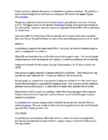
However, as our environment changes, so does the need to become increasingly aware of the problems that surround it. With a massive influx of natural disasters people need to be aware of what types of environmental problems our planet is facing. Current environmental problems make us vulnerable to disasters and tragedies, now and in the future. Unless we address the various issues seriously we are surely doomed for disaster. Current environmental problems require urgent attention. 1. Pollution: Pollution of air, water and soil require millions of years to recoup. Industry and motor vehicle exhaust are the number one pollutants. Heavy metals, nitrates and plastic are toxins responsible for pollution. While water pollution is caused by oil spill, acid rain, urban runoff; air pollution is caused by various gases and toxins released by industries and factories and burning of fossil fuels; soil pollution is majorly caused by industrial waste that deprives soil from essential nutrients.
Water pollution Attention for water pollution exploded in the 1980s. The oil spill of the Exxon Valdez showed many around the world just how horrible the effects of water pollution could be. However, even the Exxon Valdez spill barely touched the surface of the problem of water pollution. The ship spilt only 5% of the oil spilt that year, and oil is just one of many pollutants that people dump into the water every year. Every year, 14 billions pounds of sewage, sludge, and garbage are dumped into the world's oceans. 19 trillion gallons of waste also enter the water annually. The problem of ocean pollution affects every nation around the world. This is especially true because water is able to transport pollution from one location to another.
Acid rain and the dry deposition of acidic particles contribute to the corrosion of metals (such as bronze) and the deterioration of paint and stone (such as marble and limestone). These effects significantly reduce the societal value of buildings, bridges, cultural objects (such as statues, monuments, and tombstones), and cars. Famous buildings like the Statue of Liberty in New York, the Taj Mahal in India and St. Paul's Cathedral in London have all been damaged by this sort of air pollution. Acid rain can also damage stained glass windows in churches, railway lines and steel bridges. The acid rain slowly eats away them all. Building materials crumble away, metals are corroded, the colour of paint is spoiled, leather is weakened and crusts form on the surface of glass. Economic effects Acid rain causes more acidic water, which might kill the fishes. This would effect the fisherman, who would not get enough money, therefore less money would be spend and economy would be affected
to the ground as acid rain or other forms of precipitation. The gases responsible for acid deposition are normally a byproduct of electric power generation and the burning of coal. As such, it began entering the atmosphere in large amounts during the Industrial Revolution and was first discovered by a Scottish chemist, Robert Angus Smith, in 1852. In that year, he discovered the relationship between acid rain and atmospheric pollution in Manchester, England. Although it was discovered in the 1800s, acid deposition did not gain significant public attention until the 1960s and the term acid rain was coined in 1972. Public attention further increased in the 1970s when the New York Times published reports about problems occurring in the Hubbard Brook Experimental Forest in New Hampshire. Effects of Acid Rain Today there are several important impacts of acid deposition on both natural and man-made environments
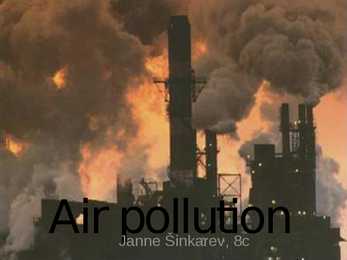
Air pollution Janne Sinkarev, 8c Air pollution · Natural sources such as: Dust,smoke, volcanic eruption and · What is it? also forest fire. · Air pollution is the introduction of · Anthropogenic sources such as: chemicals, particulate matter, or aerosol sprays, toxic biological materials that cause gases,rocketry and some more for harm or discomfort to humans or millitary use. Also chemicals and other living organisms, or dust. Also transport: cars, motor damages the natural environment vehickles, marine vessels, planes. into the atmosphere.
SISUKORD ENERGY STORY................................................................................................................4 USES OF ENERGY............................................................................................................. 4 2.1 Uses of energy in homes...............................................................................................5 2.2 Types of energy used in homes.................................................................................... 6 2.3 Energy use in different types of homes........................................................................ 6 2.4 Commercial Energy Use...............................................................................................9 2.5 Industrial and Manufacturing Energy Use..................................................................11 2.6 Transportation Energy Use.........................................................................................12 RENE
I'd like to present the main issues of our planet and today i'll name 5 of them. These are air pollution, water pollution, endangered animals, deforestation and rubbish. Air pollution Firstly, lets talk about air pollution, which endangeres our life in cities and also the forests near by. Cars and factories blow poisoned gas in the air and it mixes with the oxygen, so the air that we breathe, becomes dangerous to our health. The ozone layer around the Earth, there is a special type of oxygen called ,,ozone". Ozone is important because it stops ultraviolett radiation from the sun. Many aerosol sprays and factories destroy ozone and they have made a very big hole in the ozone layer
 annaabi.ee







Kõik kommentaarid