Vajad kellegagi rääkida?
Küsi julgelt abi LasteAbi
Logi sisse

Acid rain (0)

1 Hindamata
Punktid

Miina Härma Gymnasium
Acid Rain
Report
Compiler: Teisi Timma
8a
Teacher: Esther Linask
Tartu 2009
Acid Rain
Acid rain is rain consisting of water droplets that are unusually acidic because of atmospheric pollution - most notably the excessive amounts of sulfur and nitrogen released by cars and industrial processes. Acid rain is also called acid deposition because this term includes other forms of acidic precipitation such as snow.
Acidic deposition occurs in two ways : wet and dry. Wet deposition is any form of precipitation that removes acids from the atmosphere and deposits them on the Earth’s surface. Dry deposition polluting particles and gases stick to the ground via dust and smoke in the absence of precipitation. This form of deposition is dangerous however because precipitation can eventually wash pollutants into streams, lakes , and rivers .
Acidity itself is determined based on the pH level of the water droplets. PH is the scale measuring the amount of acid in the water and liquid . The pH scale ranges from 0 to 14 with lower pH being more acidic while a high pH is alkaline; seven is neutral . Normal rain water is slightly acidic and has a pH range of 5.3-6.0. Acid deposition is anything below that scale. It is also important to note that the pH scale is logarithmic and each whole number on the scale represents a 10- fold change.
Causes and History of Acid Rain
Acid deposition can occur via natural sources like volcanoes and rotting vegetation but it is mainly caused by the release of sulfur dioxide and nitrogen oxide during fossil fuel combustion. When these gases are discharged into the atmosphere they react with the water, oxygen, and other gases already present there to form sulfuric acid, ammonium nitrate, and nitric acid. These acids then disperse over large areas because of wind patterns and fall back to the ground as acid rain or other forms of precipitation.
Acid rain has many ecological effects, but none is greater than its impact on lakes, streams, wetlands, and other aquatic environments. Acid rain makes waters acidic and causes them to absorb the aluminum that makes its way from soil into lakes and streams. This combination makes waters toxic to crayfish, clams, fish, and other aquatic animals .
Some species can tolerate acidic waters better than others. However, in an interconnected ecosystem, what impacts some species eventually impacts many more throughout the food chain—including non-aquatic species such as birds.
Acid rain also damages forests , especially those at higher elevations. It robs the soil of essential nutrients and releases aluminum in the soil, which makes it hard for trees to take up water. Trees' leaves and needles are also harmed by acids.
The effects of acid rain, combined with other environmental stressors, leave trees and plants less able to withstand cold temperatures, insects , and disease . The pollutants may also inhibit trees' ability to reproduce. Some soils are better able to neutralize acids than others. In areas where the soil's "buffering capacity" is low, the harmful effects of acid rain are much greater.
The only way to fight acid rain is by curbing the release of the pollutants that cause it. This means burning fewer fossil fuels. Many governments have tried to curb emissions by cleaning up industry smokestacks and promoting alternative fuel sources. These efforts have met with mixed results . But even if acid rain could be stopped today , it would still take many years for its harmful effects to disappear.
Individuals can also help prevent acid rain by conserving energy. The less electricity people use in their homes, the fewer chemicals power plants will emit. Vehicles are also major fossil fuel users, so drivers can reduce emissions by using public transportation, carpooling, biking, or simply walking wherever possible.
The gases responsible for acid deposition are normally a byproduct of electric power generation and the burning of coal. As such, it began entering the atmosphere in large amounts during the Industrial Revolution and was first discovered by a Scottish chemist, Robert Angus Smith, in 1852. In that year, he discovered the relationship between acid rain and atmospheric pollution in Manchester , England.
Although it was discovered in the 1800s, acid deposition did not gain significant public attention until the 1960s and the term acid rain was coined in 1972. Public attention further increased in the 1970s when the New York Times published reports about problems occurring in the Hubbard Brook Experimental Forest in New Hampshire.
Effects of Acid Rain
Today there are several important impacts of acid deposition on both natural and man-made environments. Aquatic settings are the most clearly impacted by acid deposition though because acidic precipitation falls directly into them. Both dry and wet deposition also runs off of forests, fields, and roads and flows into lakes, rivers, and streams.
As this acidic liquid flows into larger bodies of water, it is diluted but over time, acids can accrue and lower the overall pH of the body . Acid deposition also causes clay soils to release aluminum and magnesium further lowering the pH in some areas. If the pH of a lake drops below 4.8, its plants and animals risk death and it is estimated that around 50,000 lakes in the United States and Canada have a pH below normal (about 5.3 for water). Several hundred of these have a pH too low to support any aquatic life.
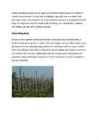
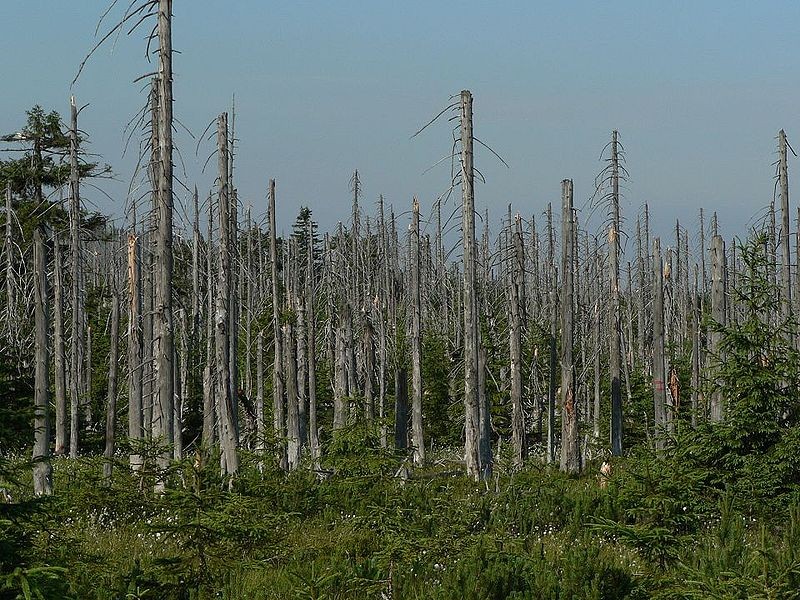
Aside from aquatic bodies, acid deposition can significantly impact forests. As acid rain falls on trees, it can make them lose their leaves, damage their bark, and stunt their growth . By damaging these parts of the tree, it makes them vulnerable to disease, extreme weather , and insects. Acid falling on a forest’s soil is also harmful because it disrupts soil nutrients, kills microorganisms in the soil, and can sometimes cause a calcium deficiency. Trees at high altitudes are also susceptible to problems induced by acidic cloud cover as the moisture in the clouds blankets them.
Damage to forests by acid rain is seen all over the world, but the most advanced cases are in Eastern Europe. It’s estimated that in Germany and Poland , half of the forests are damaged, while 30% in Switzerland have been affected.
Finally , acid deposition also has an impact on architecture and art because of its ability to corrode certain materials. As acid lands on buildings (especially those constructed with limestone) it reacts with minerals in the stones sometimes causing it to disintegrate and wash away . Acid deposition can also corrode modern buildings, cars, railroad tracks, airplanes, steel bridges, and pipes above and below ground.
What's Being Done ?
Because of these problems and the adverse effects air pollution has on human health, a number of steps are being taken to reduce sulfur and nitrogen emissions. Most notably, many governments are now requiring energy producers to clean smoke stacks by using scrubbers which trap pollutants before they are released into the atmosphere and catalytic converters in cars to reduce their emissions. Additionally, alternative energy sources are gaining more prominence today and funding is being given to the restoration of ecosystems damaged by acid rain worldwide.
References
http://environment.nationalgeographic.com/environment/global-warming/acid-rain-overview.html
http://en.wikipedia.org/wiki/Acid_rain
http://upload.wikimedia.org/wikipedia/commons/thumb/0/0c/Acid_rain_woods1.JPG/800px-Acid_rain_woods1.JPG
http://www.ypte.org.uk/environmental/acid-rain/1
Acid rain #1 Acid rain #2 Acid rain #3 Acid rain #4 Acid rain #5
Punktid 10 punkti Autor soovib selle materjali allalaadimise eest saada 10 punkti.
Leheküljed ~ 5 lehte Lehekülgede arv dokumendis
Aeg2011-03-19 Kuupäev, millal dokument üles laeti
Allalaadimisi 6 laadimist Kokku alla laetud
Kommentaarid 0 arvamust Teiste kasutajate poolt lisatud kommentaarid
Autor Teisi Timma Õppematerjali autor
Inglisekeelne referaat happevihmade kohta. Saab teada mis see on, miks tekib, tagajärjed ning mida selle muutmiseks tehakse.

Kasutatud allikad

Sarnased õppematerjalid

Acid rains üldine kokkuvõte
1
docx

Acid rains üldine kokkuvõte

Acid rain is rain or any other form of precipitation that is unusually acidic. It can have harmful effects on plants, aquatic animals, and infrastructure through the process of wet deposition. Acid rain is caused by emissions of compounds of ammonium, carbon, nitrogen, and sulfur which react with the water molecules in the atmosphere to produce acids. Governments have made efforts since the 1970s to reduce the production of sulfuric oxides into the Earth's atmosphere with positive results Since the Industrial Revolution, emissions of sulfur dioxide and nitrogen oxides to the atmosphere have increased.[2][3] In 1852, Robert Angus Smith was the first to show the relationship between acid

Inglise keel
Acid rains
8
pptx

Acid rains

Acid rains Stefani Nimtsuk What is acid rain? Rain or any other form of precipitation that is unusually acidic It can have harmful effects on plants, aquatic animals, and infrastructure through the process of wet deposition Acid rain is caused by emissions of compounds of ammonium, carbon, nitrogen, and sulfur which react with the water molecules in the atmosphere to produce acids History Since the Industrial Revolution, emissions of sulfur dioxide and nitrogen oxides to the atmosphere have increased In 1852, Robert Angus Smith was the first to show the relationship between acid rain and atmospheric pollution in Manchester, England Though acidic rain was discovered in 1852, it was not until the late 1960s that

Inglise keel
Acid Rain
3
docx

Acid Rain

Acid Rain Acid rain is any precipitation that is unusually acidic. It possesses elevated levels of hydrogen ions(it has low pH level). Acid rain is caused by emissions of carbon dioxide, sulfur dioxide and nitrogen oxides, which react with water molecules. Distilled water(doesn't contain CO 2), has pH level 7. Liquids with pH level less than 7 are acidic, liquids with pH level greater than 7 are alkaline. Unpolluted rain has a pH level over 5.7, so it is slightly acidic. Affected areas Places significantly impacted by acid rain around the globe include most of eastern Europe from Poland northward into Scandinavia, the eastern third of the United States and southeastern Canada. Other affected areas include the southeastern coast of China and Taiwan Causes · It is caused when sulfur dioxide and nitrogen oxides are released into the air. In the atmosphere they react with water, oxygen and other

Keemia
Essay on water pollution-global warming-acid rain-deforestation-intensive farming
8
docx

Essay on water pollution, global warming, acid rain, deforestation, intensive farming

While many countries have now banned such behavior, it continues to go on today. As the world has industrialized and its population has grown, the problem of water pollution has intensified. The simple fact that millions of people live along coastlines and near rivers means that these bodies of water are likely candidates for heavy and destructive pollution. It is hard to know now what our oceans will look like in the future. Just how damaged they will be by pollution is uncertain. Acid rain The term acid rain refers to what scientists call acid deposition. It is caused by airborne acidic pollutants and has highly destructive results. Scientists first discovered acid rain in 1852, when the English chemist Robert Agnus invented the term. From then until now, acid rain has been an issue of intense debate among scientists and policy makers. Acid rain, one of the most important environmental problems of all, cannot be seen. The invisible

Inglise keel
ENVIRONMENTAL PROBLEM
1
doc

ENVIRONMENTAL PROBLEM

ENVIRONMENTAL PROBLEM The term acid rain refers to what scientists call acid deposition. It is caused by airborne acidic pollutants and has highly destructive results. Scientists first discovered acid rain in 1852, when the English chemist Robert Agnus invented the term. From then until now, acid rain has been an issue of intense debate among scientists and policy makers. Acid rain, one of the most important environmental problems of all, cannot be seen. The invisible gases that cause acid rain usually come from automobiles or coal-burning power plants. Acid rain moves easily, affecting locations far beyond those that let out the pollution. As a result, this global pollution issue causes great debates between countries that fight over polluting each other's environments. For years, science studied the true causes of acid rain. Some scientists concluded that human production was primarily responsible, while others cited natural causes as well

Inglise keel
ENVIRONMENTAL PROBLEMS
12
pdf

ENVIRONMENTAL PROBLEMS

Unless we address the various issues seriously we are surely doomed for disaster. Current environmental problems require urgent attention. 1. Pollution: Pollution of air, water and soil require millions of years to recoup. Industry and motor vehicle exhaust are the number one pollutants. Heavy metals, nitrates and plastic are toxins responsible for pollution. While water pollution is caused by oil spill, acid rain, urban runoff; air pollution is caused by various gases and toxins released by industries and factories and burning of fossil fuels; soil pollution is majorly caused by industrial waste that deprives soil from essential nutrients. FIND OUT 5 WAYS HOW TO STOP POLLUTION. 2. Global Warming: Climate changes like global warming is the result of human practices like emission of Greenhouse gases. Global warming leads to rising temperatures of the oceans and the earth surface

Akadeemiline inglise keel
Environment
4
docx

Environment

air that we breathe, becomes dangerous to our health. The ozone layer around the Earth, there is a special type of oxygen called ,,ozone". Ozone is important because it stops ultraviolett radiation from the sun. Many aerosol sprays and factories destroy ozone and they have made a very big hole in the ozone layer. This means that too much ultraviolet radiation now enters the Earth. This is very dangerous because it can cause cancer. Poisonous chemicals also cause acid rain, that destroyes plants, rivers, lakes and buildings. Acid rain can travel thousands of miles, so pollution in one country can become acid rain for another country. So how to avoid the worst? Lets talk about cars, which are the main means of transport in our everyday life, they are useful and take us to the place, where we want to go. But lets be honest, they have also negative aspects. Like heavy traffic in the morning, while you are

Inglise keel
Soil microflora
10
docx

Soil microflora

manures and fertilizers, liming and gypsum application, pesticide/fungicide and weedicide application have their effect on soil organism. Ploughing and tillage operations facilitate aeration in soil and exposure of soil to sunshine and thereby increase the biological activity of organisms, particularly of bacteria. Crop rotation with legume maintains the favorable microbial population balance, particularly of N2 fixing bacteria and thereby improve soil fertility. Liming of acid soils increases activity of bacteria and actinomycetes and lowers the fungal population. Fertilizers and manures applied to the soil for increased crop production, supply food and nutrition not only to the crops but also to microorganisms in soil and thereby proliferate the activity of microbes. Foliar or soil application of different chemicals (pesticides, fungicides, nematicides etc.) in agriculture are either degraded by the soil organisms or are liable to leave toxic residues in

Inglise keel


Meedia

Kommentaarid (0)

Kommentaarid sellele materjalile puuduvad. Ole esimene ja kommenteeri


Sellel veebilehel kasutatakse küpsiseid. Kasutamist jätkates nõustute küpsiste ja veebilehe üldtingimustega Nõustun