Vajad kellegagi rääkida?
Küsi julgelt abi LasteAbi
Logi sisse

The Noble Savage in the 20th Century Fiction (0)

5 VÄGA HEA
Punktid

The Noble Savage in 20th Century Fiction
Pop culture has a important part in shaping the mind of today ’s people. A large part of pop culture consists of stories which have the ability to change a person – his take on life, taste in music and books , how to treat other people etc. It may seem simple and pointless but all the devoted fans, all the trekkies, warsies, twihards, potterheads and ringers ( there are many more, with crazier names ) prove us that stories can become more than entertainment. Of course , a story can change people without making them go to all sorts of conventions. Even the small ideas make a change.
The main part in a story, the one that seemingly makes the impact, who guides the consumer through its change, is the protagonist. The development in the reader or the watcher happens through the transformation of the hero . Usually the main character starts off as an outcast, somebody the society sees as unimportant or too strange . Then something happens that sends the hero on an adventure . The breaking point on his road is meeting a teacher – an encounter that gives him the ability to face the adversary of the story. In the end the hero faces his villain, emerges a winner , detaches himself from his outcast status and becomes a significant part of the society.
It could be said that the most important part of the hero’s progress is this teacher, someone who gives guidance and the knowledge how to defeat the antagonist. Commonly this guide is from a different world and a stranger to the main character. He has alien ways and an exotic nature . This mentor needs to be a stranger because nothing can be learned from something common and known . He provides the moral of the story and initiates the change in both the hero and the consumer. But it all happens behind the scenes. The consumer needs the hero to identify himself with someone but needs the mentor to get the big lesson in the end. This stock character has the noble savage effect – something strange shows us a new world with new ideas which alter our take on the world we have known so far.
In the beginning of colonialism, the term savage was defined by fear – natives in America and Africa were considered barbarians, who were inferior to the white man intended to be surpressed because for the difference in civilizations and traditions . Only with the arrival of the likes of Rousseau did the savage become something exciting and noble, a new and strange idea that could teach us a different way of living . Noble savage was sneaking its way into literature – Friday in Robinson Crusoe (1719), Uncas in Last of the Mohicans (1826); and with the arrival of television, into film an TV series – Tonto in The Lone Ranger (1949-1957), Pochahontas (1995) and Nobody in Dead Man (1995). Pop culture has defined the noble savage as a mentor to the modern man, a guide to the spiritual world and to the ways of the nature. In order to qualify as a mentor the character must give us a different perspective on what we are used to experiencing. A savage is perfect for the roll – alien traditions, differing appereances, different common knowledge and wisdom . He is something nobody has ever seen. He raises interest in the hero and in the consumer.
20th century literature and film has projected these traits to not only exotic beings but also to every mentor we see in pop culture. A guide in today’s story does not have to be a native of a completely different civilization but has to preserve its strange and alien nature. He is a relevant part of the hero’s adventure, keeping him on the right tracks and helping him reach his final goal. But he is not a savage in the common sense, he is just weird and new. The hero’s simple neighbour can not give new perspectives and ideas because he lives the same life the hero does. A mentor with the traits of a noble savage raises the interest for the hero to discover new worlds and philosophies and the consumer will leave his comfort zone with the protagonist.
The best example of a noble savage projected to a mentor is Yoda from the Star War ( first appearance in 1980) series. He’s a Jedi master and a teacher to Luke Skywalker in a time of a civil war between the Empire and the rebels in a galaxy far far away . In order to defeat the Empire, Luke must face his adversary Darth Vader . The only way to do that is to fullfill his destiny and become a jedi, and that is where Yoda steps in. He mentors Luke in the way of the Force , teaching him patience and the balance between the Light and the Dark side, how to restrain his anger and recklessness. Luke is the hero the consumer follows. Yoda is the mentor who gives the actual lessons. Luke does not teach us anything, we learn with him in course of the story. Yoda is the savage with the quirky apprearance, strange voice and grammatically incorrect sentences , bottomless wisdom and badass Force skills .
Mr. Miyagi from Karate Kid (1984) is another example. The hero here is Daniel LaRusso, an outcast who can not handle his bullies. He meets a handyman Mr. Miyagi who agrees to teach Daniel the tricks of karate so he could build his confidence , defeat his villain and get the girl he likes. Again we see Miyagi as something unusual – he’s japanese , has a weird teaching technique and uncommon philosophy. He is alien to the western consumer and therefore an etalon to a noble savage.
There are many more examples in the film indusrty – Morpheus from The Matrix (1999) and Pai Mei from Kill Bill vol.2 (2004) among others . Literature has also given us great mentors. Gandalf from The Hobbit (1937) and The Lord of the Rings (1954-1955), Dumbledore from the Harry Potter series (first book published in 1997) and even Tyler Durden in Fight Club (1996). They are all distinctive from the modern world, change the course of the journey for the main character and easily get our attention to give us the moral of the story.
The problem with the stock character of a mentor is sometimes they are defined by comic relief. Although we look up to them and greatly admire their teaching, their weirdness still freaks us out a bit and these quirky sides of the mentor are funny to us. Laughter makes things more acceptable, it lets us trust the guide and accept the moral of the story. It not a big issue in creating this character but it reduces the respect we should have to it.
The reason we do not learn anything from the hero lies with our need to identify ourselves with a character. The story would not be interesting if there were nobody we can relate to. The adventure our hero takes is the same we go through while reading a book or watching a film. So when the main character learns, we learn, while he suffers, we suffer and when he has a happy ending, we are also happy. The teacher our icon meets is also the teacher for us. Despite the alien nature, the mentor is where the moral lies. The characteristics of the noble savage are projected to the mentor character because it creates a person who is able to teach us something new from the world he is from. Nevertheless, a mentor in the 20th century fiction does not have to be different in appearance, just alien to the modern world and its habitants. Even the slightest fraction of an idea commonly known to us raises interest and opens a door to a new understanding of things.
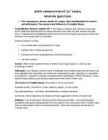
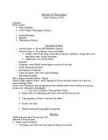
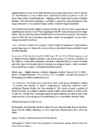
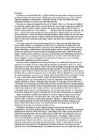
The Noble Savage in the 20th Century Fiction #1 The Noble Savage in the 20th Century Fiction #2 The Noble Savage in the 20th Century Fiction #3
Punktid 10 punkti Autor soovib selle materjali allalaadimise eest saada 10 punkti.
Leheküljed ~ 3 lehte Lehekülgede arv dokumendis
Aeg2013-04-26 Kuupäev, millal dokument üles laeti
Allalaadimisi 9 laadimist Kokku alla laetud
Kommentaarid 0 arvamust Teiste kasutajate poolt lisatud kommentaarid
Autor Paula Hiiemäe Õppematerjali autor

Sarnased õppematerjalid

Christopher Vogler The Writers Journey
904
pdf

Christopher Vogler The Writers Journey

M Y T H I C STRUCTURE FOR W R I T E R S THIRD EDITION CHRISTOPHER VOGLER S C R E E N W R I T I N G / W R I T I N G Christopher Vogler explores the powerful relationship between mythology and storytelling in his clear, concise style that's made i this book required reading for movie executives, screenwriters, playwrights, fiction and non-fiction writers, scholars, and fans of pop culture all over the world. Discover a set of useful myth-inspired storytelling paradigms like "The Hero's Journey," and step-by-step guidelines to plot and • character development. Based on the work of Joseph Campbell, The

Ingliskeelne kirjandus
Ameerika kirjandus alates I maailmasõjast kuni tänapäevani
29
docx

Ameerika kirjandus alates I maailmasõjast kuni tänapäevani.

01.13 Naturalism · France, Emile Zola · Put down his theory in 1879: Le Roman Experimental, attempt to explain the development of human society throuch biological laws · Outlook is deterministic, pessimistic, fatalistic (fate or biology) · Man as an animal-clever than other beasts, still explainable within the framework · Man is not a free agent, is govern by something · Unable to determine his own faith · Hereditary · Naturalists tried to apply in fiction the processes of natural sciences · Writers task is to record facts, systems of behaviour, living conditions, never revealing any natural unbiased (completely natural) · Point of view: amoral-outside the category of morality, neither good or bad · Naturalist find it absurd to blame the wicked. These criminals are doing what nature, environment, their unconscious tells them to do. Naturalists do not judge their characters, they simply report

Ameerika kirjandus
American Literature
10
docx

American Literature

The making of a new nation. The Enlightenment in America. The emergence of the notion of the American Dream. The great Enlighteners: Crèvecoeur, Jefferson, Paine, Franklin. The American Enlightenment is the intellectual thriving period in the United States in the midtolate 18th century (1715­1789), especially as it relates to American Revolution on the one hand and the European Enlightenment on the other. Influenced by the scientific revolution of the 17th century and the humanist period during the Renaissance, the Enlightenment took scientific reasoning and applied it to human nature, society, and religion. American Enlightenment a gradual but powerful awakening that established the ideals of democracy, liberty, and religious tolerance in the people of America.

Inglise keel
Briti kirjandus 20 -21-sajand kordamisküsimused vastustega
37
doc

Briti kirjandus 20.-21. sajand kordamisküsimused vastustega

British Literature in the 20th-21st Century REVISION QUESTIONS 1. The Contradictory, diverse, chaotic 20th century. New developments in science and philosophy. The essence and influence of Freudian theory. Contradictory, diverse, chaotic 20th c- simultaneous rejection and invocation of the past. While modernists apotheosized the creative geniuses of the past, they also rejected old poetic forms. Challenge old and established beliefs and more and more people had access to books and education more people went to universities. profound change in morals: · No universal value and perspective on things · Multiple truths, multiple perspectives · Nothing has inherent (kaasasündinud, sisemist) importance

Briti kirjandus 20.-21 sajand
History of philosophy
8
docx

History of philosophy

Flux constant change "By changing it rests" "Nature hides itself" · He is a philosopher of fire- all things are fire. Fire change, light, life, God. · He is a philosopher of the unity of opposites. The Eleatic School · Xenophanes 570-475 BC Nothing comes from nothing. Unchanging Being. - Against anthropomorphisms · Parmenides fl. Fifth Century BC Being beings - Thinking and Being are the same - One cannot think not-Being · Zeno of Elea 490-439 BC Student of Parmenides - Paradoxes We tend to interpret the moving in terms of the static (living/dead) Being/beings. Dialectics Reductio and absurdum. Showing that a proposition when taken to its logical conclusion is results in and absurdity. Empedocles 490-430 BC

Filosoofia
English literature summary
38
pdf

English literature summary

Cromwell’s  dictatorship.  In  1660,  monarchy  restored  under  Charles  II.  1668  the  Glorious   Revolution  +  constitutional  monarchy,  i.e.  constitution  added  to  restrict  the  power  of  the   monarch  and  divide  obligations  and  power  with  the  Parliament.       Beginning   of   the   century,   literature,   especially   drama   flourished.   Emergence   of   puritanism   –   poetry   becomes   leading   form.   Puritanism   –   purification   of   religion,   of   all   unnecessary  rituals  and  decorations,  in  essence,  all  pleasure  equals  sin.  Closed  theatres   and  denounced  all  drama,  dance,  rural  festivals,  even  country  sports

Inglise keel
Education
14
doc

Education

styles of life. Educational establishments in the USA could use and benefit more from hiring international students at the university and schools to acquire the best trends in educational system of different countries, and encourage international students to issue newsletters with their ideas valuable for developing education further, using the best from different systems. It could be the project of the century! Exchange programs with international scholars and students, especially those in education, can be very beneficial for both parties. WE are here and are ready to participate in educational projects designed to lead the USA in the first countries in the world. European educational system with its broad coverage of humanities, collective work, discipline, obligatory level of knowledge for an educated person can contribute to the American system of education.

Inglise keel
English literature from the Baroque to the Romanticism
21
docx

English literature from the Baroque to the Romanticism

importance of ritual, the mystery of the sacraments offering praise to the angels and so forth. Although the churches had fallen into disrepair by the 1620s, the state of the church as a holy place was resumed eventually by the movement which put importance on this aspect of “beauty of holiness”. Eventually, even a beautification and restoration programme was launched in which painting and sculpture returned as aids to the liturgy. (Coursebook, pp. 45-47) 7. 17th century philosophical writings (Burton, Browne, Hobbes) Robert Burton was an English writer, whose most famous work is considered to be The Anatomy of Melancholy. It discusses and tries to analyze the nature of melancholy, but also human emotion in general. It is written in a style that could also be described as poetic, filled with several references to Greek mythology. Regarding religion, Sir Thomas Browne’s Religio Medici holds an important place

Inglise kirjanduse ajalugu


Kommentaarid (0)

Kommentaarid sellele materjalile puuduvad. Ole esimene ja kommenteeri


Sellel veebilehel kasutatakse küpsiseid. Kasutamist jätkates nõustute küpsiste ja veebilehe üldtingimustega Nõustun