Leidsid 33 sarnast õppematerjali, mis on seotud failiga "The Noble Savage in the 20th Century Fiction". Need materjalid aitavad sul teemat sügavamalt mõista.
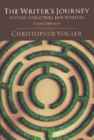
hero, mentor, savage, teach, character, noble, consumer, strange, something, here, part, change, different, alien, teacher, guide, idea, luke, there, nature, film, interest, anger, 20th, century, important, other, course, even, ideas, through, adventure, gives, face, could, defeat, needs, known, literature, series, nobody, weird, civil, lies, fictionplaywrights, fiction and non-fiction writers, scholars, and fans of pop culture all over the world. Discover a set of useful myth-inspired storytelling paradigms like "The Hero's Journey," and step-by-step guidelines to plot and • character development. Based on the work of Joseph Campbell, The Writers Journey is a must for all writers interested in further developing their craft. This updated and revised Third Edition provides new insights and observations from Vogler's ongoing work on mythology's influence on stories, movies, and man himself. In revealing new material, he explores key principles like polarity and catharsis, plus:
Ameerika Kirjandus 30.01.13 Naturalism · France, Emile Zola · Put down his theory in 1879: Le Roman Experimental, attempt to explain the development of human society throuch biological laws · Outlook is deterministic, pessimistic, fatalistic (fate or biology) · Man as an animal-clever than other beasts, still explainable within the framework · Man is not a free agent, is govern by something · Unable to determine his own faith · Hereditary · Naturalists tried to apply in fiction the processes of natural sciences · Writers task is to record facts, systems of behaviour, living conditions, never revealing any natural unbiased (completely natural) · Point of view: amoral-outside the category of morality, neither good or bad · Naturalist find it absurd to blame the wicked. These criminals are doing what nature,
He had traveled throughout New England and its coastal region before claiming his new identity, however, and before seriously embarking upon his life as a farmer in Orange County, New York, in 1778, Crevecoeur traveled extensively inland through the Ohio Valley and on to the banks of the Mississippi. Drawing upon his travel experiences and his life as a farmer, Crevecoeur was the first to seriously attempt a definition of American character with his Letters. The key word for Crevecoeur was "new," which separated and distinguished Americans from things European. In Letters, Crevecoeur thus blended his collection of facts and observations into a fictional portrait of an industrious farmer, one whose natural response to the land became identified with the general character of a new American people. Yet while Crevecoeur echoed Jefferson, Thomas's agrarian ideals, his letters also acknowledged
Like psychoanalysis, surrealistic painting and writing explores the inner depths of the unconscious mind. Freudian ideas have provided subject matter for authors and artists. Critics often analyze art and literature in Freudian terms. 2. Literary Modernism and its sub-movements. The influence of Structuralism and psychoanalysis. Main characteristic features of Modernism. Denial of conventions, traditional structure, plot and presentation of character. The stream of consciousness. Allusiveness. Virginia Woolf's Modern Fiction as a theoretical platform for Modernism. Criticism of Realist literary method. Literary modernism: end of the 19th century-1920 (reached its height) and ended 1940s. A self- conscious break with traditional aesthetic forms. Rejecting the sentiment and discursiveness typical of Romanticism and Victorian literature for poetry that instead favored precision (täppis) of imagery and clear, sharp language
History of Philosophy James Thurlow, Ph.D. 01.02.2012 Books to read · Plato's Republic · G.W.F. Hegel's Philosophy of History 1. Greek philosophy 2. Republic 3. Philosophy of History Ancient Greece - Ancient Greece vs. Persia (300-Herodotus) Salamis - Ancient Greece vs. Troy (Homer-screen writer)Iliad o Achilles- Hero of the heroes (main hero in Greece)- handsome, strong, brave, fast, anger(tema viga), young, bad temper o Agamemnon- son of King Atreus - Olympics - Sculptures- more lifelike, human figures come out of the stone - Greek liked physical beauty - Development of medicine - Greeks are pirates, they steal- high technology - Bad tempered people Men's progress towards freedom. (Hegel) Persia is under emperor Xerxes- slaves, fighting for Xerxes and their country, but it does not
English literature is one of the oldest literatures in Europe; dates back to the 6th century AD. Oral literature, i.e. not written down, spread from person to person. In 449 AD Anglo-‐Saxon tribes invaded England – beginning of the Anglo-‐Saxon period in English literature. The first form of literature was folklore, carried by scops and gleemen, who sang in alliterative verse (a kind of simple poetry). Prose developed much later. The first form of recorded English literature was the epic Beowulf, which was produced sometime near the end of the 7th and beginning �
In some cases it forces the mind to concentrate, as to understand. It can help build a moral or ethical framework, and help oneself form an individual worldview. Even an untraveled child, sitting at home, can be transported by a book into any place or time. Fantasy and facts weave together, but the result is almost an unmitigated improvement. If a bookworm grows up to be antisocial or worse, it is not because of too much reading, but because something else was lacking in the education or caregiving. Hands-on learning is another factor difficult to overrate. Imagine trying to learn to draw from listening to a lecture. You must draw, draw, draw, and with time and tutoring, will improve. This is a truism, just like saying "reading is valuable." I imagine nobody complains about children spending too much time working. If anything the contrary complaint rings loudly
musical field in a single book. Several questions connected with creativity, both of the musician (inducements, scope of ideas, intentions) and the listener-auditor (traditionalism, novelty, subjective wishes), can be answered most effectively by the music itself. Thus many unanswered questions remain. Therefore, this book should be considered as an attempt to convey a general picture. Moreover, I had to set limits in the treatment of the historical-cultural status forming an integral part of the whole. A book on this subject may be conceived in two different ways: 1) Laying the main emphasis on symphonism as the creative method and demonstrating how different composers in different periods have applied it individually. In this case the creative method would be the “axis” with the composer “spinning” around it. This is a deductive form of research. 2) Observing Estonian symphonic output both in an exact and broad sense and
Why should this be so? What can you do, if anything, to bring about or accelerate this inner shift? What is it that characterizes the old egoic state of consciousness, and by what signs is the new emerging consciousness recognized? These and other essential questions will be addressed in this book. More important, this book itself is a transformational device that has come out of the arising new consciousness. The ideas and concepts presented here may be important, but they are secondary. They are no more than signposts pointing toward awakening. As you read, a shift takes place within you. This book’s main purpose is not to add new information or beliefs to your mind or to try to convince you of anything, but to bring about a shift in consciousness; that is to say, to awaken. In that sense, this book is not “interesting”. Interesting means you can keep your distance, play around
1. A generalist is ignorant from the point of view of a specialist and a specialist is stupid from the point of view of a generalist. 2. All great stupidity is created by geniuses. 3. All stereotypes are true; the fact that you recognize a slur proves that it isn't. 4. Anything you're afraid is true is true. 5. Before most people get to the point of being able to tell their ass from a hole in the ground they're already assholes and it's too late. 6. Concentrating on something important can make you lose track of your soap opera. 7. Debunking the bunk is everyone's responsibility. 8. Don't ask me to pay for anyone else's mistakes. I make enough of my own. 9. Even those who possess real magic must beware of being misled by "magical thinking." 10. Everyone knows what shit tastes like. 11. Exclusive occupancy of a private room is a basic human right. 12. Fair compensation for genius is wealth. 13. God's not perfect, so it's a pretty good bet that you're not, either. 14
Medev.lit.in the rom. Mode. Sir Gawain and the Green Knight. Nothing is known about the author, except that he probably wrote the 3 religious poems- Pearl, Patience and Purity. The dialect points to an origin in provincial England. The author was a most sophisticated and urbane writer, must have been contemporary of Chauser. S.G combines two plots: the beheading contest, in which 2 parties agree to an exchange of blows with a sword or ax, and the temptation, an attempted seduction of the hero by a lady. The motif of the green man's decapitation originates in very ancient folklore, probably in a vegetation myth in which the beheading would have been a ritual death that insured the return of spring to the earth. The poet studies how successfully Gawain, as a man wholly dedicated to Christian ideals, maintains those ideals. Rare combination- a comedy- even a satire- of manners and a profoundly Christian view of character and destiny
Your thoughts can make you happy or sad, sometimes in an instant. They can make you alert and aware, or distracted and de- ccc_tracy_fm_i-xviii.qxd 7/7/03 3:23 PM Page xv Introduction ➤ xv pressed. They can make you popular or unpopular, confident or insecure, positive or negative. Your thoughts can make you feel powerful or powerless, a victim or a victor, a hero or a coward. In your material life, your thoughts can make you a success or a failure, prosperous or poverty-stricken, respected or ignored. Your thoughts, and the actions that they trigger, determine your whole life. And the best news of all is that they are completely under your own control. ■ THOUGHTS, FEELINGS, AND DESIRES You are a complex bundle of thoughts, feelings, attitudes, desires,
Shoes to his feet, or clothing worth six farthings, And who so far forgets his place, as now To censure everything, and rule the roost! MADAME PERNELLE Eh! Mercy sakes alive! Things would go better If all were governed by his pious orders. DORINE He passes for a saint in your opinion. In fact, he's nothing but a hypocrite. MADAME PERNELLE Just listen to her tongue! DORINE I wouldn't trust him, Nor yet his Lawrence, without bonds and surety. MADAME PERNELLE I don't know what the servant's character May be; but I can guarantee the master A holy man. You hate him and reject him Because he tells home truths to all of you. 'Tis sin alone that moves his heart to anger, And heaven's interest is his only motive. DORINE Of course. But why, especially of late, Can he let nobody come near the house? Is heaven offended at a civil call That he should make so great a fuss about it? I'll tell you, if you like, just what I think; (Pointing to Elmire) Upon my word, he's jealous of our mistress.
The memory model of levels of processing (Craik and Lockhart) was put forward partly as a result of the criticism leveled at the multi-store model. Instead of concentrating on the stores/structures involved, this theory concentrates on the processes involved in memory. The basic idea is that memory is just what happens as a result of processing information. There are three ways to process information: 1) Structural processing: we encode only the physical qualities of something. 2) Phonemic processing: we encode the sound of something. 3) Semantic processing: we encode the meaning of something and relate it to some other words that have the same (or a personal) meaning. Craik and Tulving investigated how the levels of processing influence memory. Participants were presented with a series of 60 words about which they had to answer one of three questions. Some questions required the participants to process the word
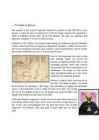
I The Birth of Batman The creation of the fictional superhero Batman is credited to artist Bob Kane, even though in reality he was cocreated with writer Bill Finger. Batman first appeared in 1939 in Detective Comics #27. Since then Batman has been an important and influential character in the comic book universe. Publisher of DC Comics, Vin Sullivan was looking for something new for Detective Comics, which would be as intriguing as Superman had been in Action Comics, but it had to be something completely new. Sullivan's ideas inspired Kane, and he credits the creation of Batman as much to Sullivan as to himself. Kane's first image was very much a hero with birdlike wings, but during the
All the world's a stage, And all the men and women merely players; They have their exits and their entrances, And one man in his time plays many parts, His acts being seven ages. At first, the infant, Mewling and puking in the nurse's arms. Then the whining schoolboy, with his satchel And shining morning face, creeping like snail Unwillingly to school. And then the lover, Sighing like furnace, with a woeful ballad Made to his mistress' eyebrow. Then a soldier, Full of strange oaths and bearded like the pard, Jealous in honor, sudden and quick in quarrel, Seeking the bubble reputation Even in the cannon's mouth. And then the justice, In fair round belly with good capon lined, With eyes severe and beard of formal cut, Full of wise saws and modern instances; And so he plays his part. The sixth age shifts Into the lean and slippered pantaloon, With spectacles on nose and pouch on side; His youthful hose, well saved, a world too wide
Executive Marketing Manager: Wendy Gordon Production Supervisor: Liz Napolitano Editorial Production Service: Modern Graphics, Inc. Manufacturing Buyer: JoAnne Sweeney Electronic Composition: Modern Graphics, Inc. Interior Design: Modern Graphics, Inc. Photo Researcher: Rachel Lucas Cover Design: Joel Gendron For related titles and support materials, visit our online catalog at www.pearsonhighered.com Copyright © 2009, 2001 Pearson Education, Inc. All rights reserved. No part of the material protected by this copyright notice may be reproduced or utilized in any form or by any means, electronic or mechanical, including photocopying, recording, or by any information storage and retrieval system, without written permiSSion from the copyright owner. To obtain permission(s) to use material from this work, please submit a written request to Pearson/Allyn and Bacon, Permissions Department, 501 Boylston Street, Suite 900,
He calls for a government with different branches, including a strong legislature, and an active executive who does not outstrip the lawmakers in power. Once the poeple hase given sovereginty to a monarc or elected body they have no right to take it away again or go against its legislation but they may set limits to the duration of a legislator's term in office And they may overthrow a goverment which has acted unjustly or failed to respect the laws of people (locke clearly has in mind here the illegal taking away property especially) Peple have a right to form a new government instead of an unfunctional one. The new government which will serve their best interests. Rousseau social contrackt A man is born free, yet everywhere he is in chains Rousseau theorized about the best way in which to set up a political community in the face of the
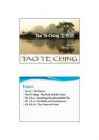
which Tao is not y If we say the source is Peter, then it can no longer be Wendy y But this source pervades all things, including Wendy, Peter, and Jane! y Forced to give this origin a name, we reluctantly call it "Tao", with the understanding that the origin which has no name is the true source y Forms are constantly changing shape, hence its name will change with it constantly y We call something that holds fluids a cup > y What do we call the cup is shattered? y So whatever name we choose for the source is not is everlasting name 1.2) Tao and Its Name y The nameless is the origin of Heaven and Earth y The nameless is this invisible force that existed before Heaven and Earth, or the universe, began y The source, or origin, or Tao y True Nature y The named is the mother of myriad things
French classical movement studied with the artist Joseph-Marie Vien. Although, he attained his real art education in Rome, where he was surrounded by ancient ruins and the masterpieces of great Italian painters. After returning to Paris in 1789 David started to shape his vision, connecting the themes from Antique with the themes of strict morality and heroic sacrifice. This was compatible with the new ideas of the French Republic and therefore David quickly turned into a national hero. When the French revolution started, Jacques-Louis David was as passionate towards politics as he was towards his art. He joined the National Convention, staged Republic marches and attacked the Royal Academy. His actions almost ended with him being guillotined but fortunately he was only sentenced a time in prison. Thereupon, with the rise of Napoleon, David was released from the prison and became the Emperors new personal painter. (Graham-Dixon, 2008, p.268)
Page |2 Reading: Read through the text, look up unknown words by J. K. Rowling In 1990, a British woman in her mid-twenties called Joanne Rowling was on a train in England when she suddenly had an idea for a story she could write. She had enjoyed writing ever since she was a young girl, but there was something about the main character in this story that seemed especially exciting. He was a thin, black-haired boy who wore glasses. He was also a wizard, but didn't yet know about his magical powers. His name was Harry Potter. Harry has since made Rowling (whose pen name is J.K. Rowling) the richest author in the world. Her six books about his adventures have sold more than 300 million copies worldwide and exist in more than 50 different languages. Most of the readers are children or young teenagers, but the books are
Many people will be angry, to say it mildly, when I question the intelligence of my people compared to the Asians (Indians, Pakistanis, Malaysians, Filipinos) and others who attained independence at the same time as most African countries. If the book generates the kind of dialogue, debate or argument for or against the position I have taken, so be it. But it would even be more relevant if in the process, solutions are offered to help extricate Africans from being a consumer to a productive race. I decided to write ‘Capitalist Nigger’ also as a doctrine of making money and creating wealth. I am not ashamed to say that I am also purely motivated by the same greed that motivates Caucasians with “killer-instincts” and “devil-may-care” convictions. I see myself as an Economic Warrior for my people and not a victim. As a predator and not a victim, I have decided to confront the truth of my misfortune
architecture. Tide towards absolute monarchy. Masque – linked poetry and moral philosophy into art. Music, dance, poetry, lavish illusionistic scenic display to express the doctrines of divine kingship. Great impact. Like gods come down to earth. 2. The Caroline masque Charles decided on subject matter, and acted and danced in masques. Now the regal divinity even more obvious. Ben Jonson. Divine minds of this incomparable pair. Arts role – to set a noble ideals, to strengthen practice of virtue. He and queen living incarnations of ideals. Visual style of his reign more classical than James’s. Thomas Carew „Coelum Britannicum”. King’s policy of peace (peace in every courtly celebration). Benefits to the isle by the union of divine couple. Henrietta Maria Love and Beauty and Charles – Heroic Virtue, together a great force. Masques centre of court life. Stuart divinity + now queen as a Platonic love goddess
The Death of the Author - Roland Barthes Source: UbuWeb | UbuWeb Papers 1 The Death of the Author In his story Sarrasine, Balzac, speaking of a castrato disguised as a woman, writes this sentence: “It was Woman, with her sudden fears, her irrational whims, her instinctive fears, her unprovoked bravado, her daring and her delicious delicacy of feeling” Who is speaking in this way? Is it the story’s hero, concerned to ignore the castrato con- cealed beneath the woman? Is it the man Balzac, endowed by his personal experience with a philosophy of Woman? Is it the author Balzac, professing certain “literary” ideas of femininity? Is it universal wisdom? or romantic psychology? It will always be impossible to know, for the good reason that all writing is itself this special voice, consisting of several indiscernible voices, and that literature is precisely the invention
Larkin came to be seen as a much more provocative, disquieting and ‘difficult’ writer than previously, and critics began to perceive in his work the impact of European modernism and symbolism”. It is highly suggestive that in the collection Regan edited five years later, Andrew Motion’s essay (previously entitled “The Poems” in his critical study on Larkin) is renamed as “Philip Larkin and Symbolism”. In the same book, Seamus Heaney also points out that “there is something Yeatsian in the way that Larkin, in High Windows, places his sun poem immediately opposite and in answer to his moon poem”. In Barbara Everett’s study (“Philip Larkin: After Symbolism”) one finds ample evidence for the influence of French symbolism upon Larkin. This is particularly important since Larkin denied being in any way influenced by what came from abroad. Today we have every reason to see this as a legend that he created about himself.
Brian de Palma is well known director, who is focused on noir area through his career (he was once considered as a Hitchcock imitator) ``The Black Dahlia" can be classified as Film Noir. The genre is called Film Noir due to the `serie noir` books, which were publised in France (bethween 1940s and 1950s). These books were translations of American novels by authors like Dashiel Hammet, Raimond Chandler and James M. Cain. The novels usually talked about a strong, violent hero (anti-hero?) who moves through a corrupt dangerous world. ``The Black Dahlia`` is based on a novel by James Ellroy and not on a true Black Dahlia (murder) case. The theme of murder/crime/violence is one of the most important themes in Film Noir. In Film Noir morality is less clear (than in Western, for example, where there are simply to sides: good vs evil). There exists a feeling of paranoia about society, as we can clearly see in this film. At first, there is not
five, for example, it is more convenient and less expensive to sit comfortably at home than to go out to find entertainment in other places. They don't have to pay for expensive seats at the theatre or cinema. They turn on the TV-set and can watch interesting films, concerts, football matches. But some people think that it's bad to watch TV. Those who watch TV need do nothing. We are passive when we watch TV. Television shows us many interesting programmes. But again there is a disadvantage here: we watch TV every evening, and it begins to dominate our lives. My friend told me that when his TV-set broke down, he and his family found that they had more time to do things and to talk to each other. There are other arguments for and against television. Very often the programmes are bad. Sometimes they show too much violence in films and news programmes. There is also too much pop music and ads. Ads on the whole are convenient for grown-ups
Maturita Solutions Advanced Workbook Key stand bananas and coffee! It's a bit 3 1 to 8 of Unit 1 uncanny really. Is it something she's 2 about 9 century passed on to me genetically, or is it 3 like 10 assumed / 1A Memories page 3 learned behaviour? Who knows? 4 of thought / 1 See exercise 2 2 5
wants her to think well of him. We find out about Stiva's history: he was lazy in school but nevertheless used his connections to achieve a distinguished government career. Stiva represents the worst aspects of the social world, since he hasn't earned his way through life. On his way out of the house, Stiva almost forgets to apologize to Dolly. When he does so, she becomes furious with him, humiliated by his pity. She realizes she wants his love but can never have it. It is important to note here that Dolly and Stiva are the product of an arranged, "French," marriage, in which romance was not a major element. Their marriage, modeled on those of 18th and 19th century France, was arranged to augment the families' social status. Russian nobility during this time often modeled their behavior after the French, who, they thought, lived a more stylish lifestyle. A man named Konstantin Levin arrives to see Stiva. This is the first appearance of one of the book's protagonists
It has an element of entertaining display, we expect literature to be in some sense entertaining, or, to afford pleasure. WHAT IS IT THAT MAKES LITERATURE PLEASANT? A literary work seizes our interest and more or less at least for a moment makes the rest of the world fade and vanish. A work of art has this power to catch us up momentarily and to delight us. TRUTH IN LITERATURE Art offers truth as well as pleasure. What kind of truth? WALTER SAVAGE LANDOR (17751864) THERE IS A FLOWER I WISH TO WEAR, BUT NOT UNTIL FIRST WORN BY YOU HEART'S EASE OF ALL EARTH'S FLOWERS MOST RARE BRING IT, AND BRING ENOUGH FOR TWO. Is it true that the flower is the earth's rarest flower? If we want to know about flowers hadn't we better listen to botanists than poets? Isn't it apparent that whatever value Landor's poem has is not in its botany? THE NATURE OF LITERATURE: THE IMITATIVE THEORY Art is an imitation of something.
(Readers who wish to press on into metaphysics or philosophy of mind should consult, respectively, Michael J. Loux's Metaphysics and John Heil's Philosophy of Mind, both in the Routledge Contemporary Introductions series.) Many of my chapters and sections will take the form of presenting data pertinent to a linguistic phenomenon, expounding someone's theory of that phenomenon, and then listing and assessing objections to that theory. I emphasize here, because I will not always have the space to do so in the text, that in each case what I will summarize for the reader will be only the opening moves made by the various theorists and their opponents and objectors. In particular, I doubt that any of the objections to any of the theories is fatal; champions of theories are remarkably good at avoiding or refuting objec- tions. The real theorizing begins where this book leaves off. x Preface
e. nature, astronomy, and poetry His best known work is "The Ecclesiastical History of the English People" Starting with the Roman invasion in the 5th century, he recorded the history of the English up to his own day Old English Cædmon ,,The Father of English Hymn" Cædmon's Hymn is the oldest recorded Old English poem, and also one of the oldest surviving samples of Germanic alliterative verse The Hymn itself was composed between 658 and 680, recorded in the earlier part of the 8th century Middle English Geoffrey Chaucer 13431400 Known as the ,,Father of English literature", the greatest English poet of the Middle Ages An author, philosopher, alchemist and astronomer, diplomat Wrote The Book of the Duchess, the House of Fame, the Legend of Good Women and Troilus and Criseyde Best known today for "The Canterbury Tales" Crucial figure in developing the legitimacy of the vernacular, Middle English, at a time when the dominant literary languages in England
Swans are Birds Therefore, Swans have Wings. This is a good argument, because the conclusion follows from the premises. Logically valid - good argument. Birds are animals Dogs are animals Therefore, dogs are birds. This is a bad argument, because the conclusion does not follow from the premises. Logic is the science of correct reasoning. Logic helps us in constructing and evaluating arguments. How to recognize an argument? Generally a passage contains an argument if it attemps to prove something. It requires evidence presented (premise(s)) and a claim that is said to follow from the alleged evidence (conclusion). This inferential relationship might be explicit or implicit. The relationship between the premises and the conclusion might be explicitly expressed thanks to words that serve as indicators to distinguish the premises from the conclusion. Conclusion indicators Swans are birds and birds have wings. Therefore, swans must have wings.
 annaabi.ee