 10 punkti
Autor soovib selle materjali allalaadimise eest saada 10 punkti.
10 punkti
Autor soovib selle materjali allalaadimise eest saada 10 punkti.
 ~ 10 lehte
Lehekülgede arv dokumendis
~ 10 lehte
Lehekülgede arv dokumendis
 2015-03-12
Kuupäev, millal dokument üles laeti
2015-03-12
Kuupäev, millal dokument üles laeti
 1 laadimist
Kokku alla laetud
1 laadimist
Kokku alla laetud
 0 arvamust
Teiste kasutajate poolt lisatud kommentaarid
0 arvamust
Teiste kasutajate poolt lisatud kommentaarid
 mrtnaulik
Õppematerjali autor
mrtnaulik
Õppematerjali autor
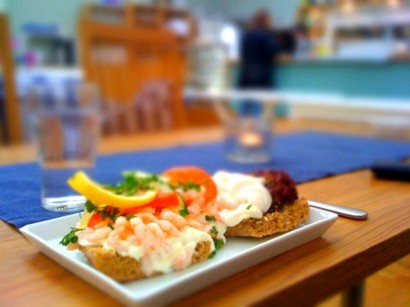
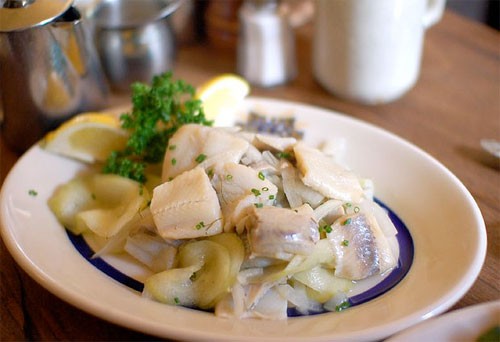
C u The Baltic Herring The Baltic herring has been the main fish dish on Estonians' table for centuries. It is the main fish that is caught in the Baltic Sea. The Baltic Herring ... has become the national fish of Estonia. ... is eaten fresh, marinated, smoked and tinned. ... with sauce is traditional fish meal Baltic Sprat A sprat sandwich is a traditional snack on Estonian food table. Sprats are usually salted with all kinds of spices. Typical Estonian black bread with sprat and egg Po r k Pork has been known in the national cuisine of Estonia for a long time. Meat was eaten mostly in autumn and in winter with vegetables and cereals. Beliefs and habits: The pig's snout was given to a child, because people believed that it helped the child to become a writer. Eating the heart gives strength.
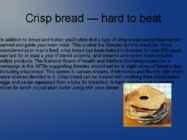
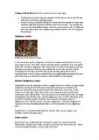
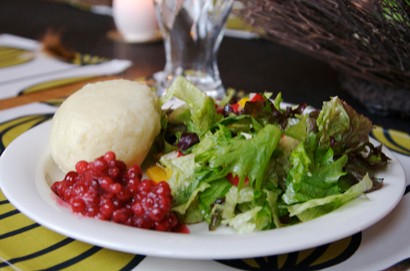
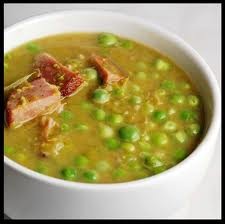
chicken stock mixed with a variety of vegetables. Soups are also blended with sour cream, milk and yogurt. The Main Course Pork and potatoes accompanied by a rich gravy and often served with sauerkraut or other vegetables has been the traditional Estonian main course. Pork has been the most important meat and is eaten roasted, cured as bacon, in the form of ham, or in pies and sausages.There are many other main dishes too. Black Bread Black rye bread accompanies almost every savory food in Estonia. Instead of wishing "bon appetit", Estonians are prone to say jätku leiba ("may your bread last"). Estonians continue to value their varieties of black rye-based bread. Estonia has not been a land of plenty. If a piece of bread was dropped on the floor, it was good form to pick it up, kiss it to show respect, and eat it.[citation needed] When Estonians live abroad, they often say that they miss black bread the most. Desserts Specific desserts include kissel, curd snack and kama
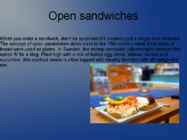
A sandwich is a food item consisting of one or more types of food placed on or between slices of bread. The sandwich has a long history, but it hasn’t always been as embraced as it is now. HISTORY The sandwich as we know it was popularized in England in 1762 by John Montagu, the 4th Earl of Sandwich. Legend sais, that Montagu had a gambling problem that led him to spend hours at the card table. During a very long game, he instructed a cook to prepare his food in such way that it would not interfere with his game
production, led black South Africans to rely more and more on comparatively expensive, industrially-processed foodstuffs like wheat flour, white rice, mealie (maize) meal and sugar. Often these foods were imported or processed by white wholesalers, mills and factories. The consequence was to drastically restrict the range of ingredients and cooking styles used by indigenous cooks. On the other hand, some imported food plants (maize, tomatoes) have expanded the dietary range of indigenous cooks. Of these maize is the most significant - it has been integrated to such an extent into the traditional diet that it is often assumed to be an indigenous plant. Popular foods in modern South Africa are chicken, limes, garlic, ginger, chili, tomatoes, onions and many spices. Settler cookery South Africa was settled from the seventeenth century by colonists from the
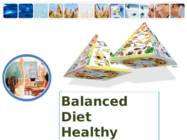
Balanced Diet Healthy What is Balanced Diet??? A diet that contains adequate amounts of all the necessary nutrients required for healthy growth and activity. A balanced diet contains sufficient amounts of fiber and the various nutrients to ensure good health. Food should also provide the appropriate amount of energy and adequate amounts of water. A balanced diet should be both Why is a balanced diet important??? It is essential for a healthy body and a healthy mind. You are what you consume! A balanced diet is important to maintain health and a sensible body weight. No single food will provide all nutrients it is essential for a balanced diet that it must contain sufficient amount of
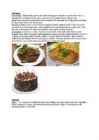
German Sauerbraten: Traditionally made with a beef roasting joint (topside or similar) the meat is marinated for 2-3 days in beer, spices such as cloves, juniper berries, allspice and peppercorns, bay leaves and onions and is braised in the marinade for a long period, resulting in very tender melt-in-the-mouth meat. The Black Forest: cake is one of the most popular German national foods. Cake consists of several layers of chocolate cake, with whipped cream and cherries between each layer. Then the cake is decorated with additional whipped cream and chocolate shavings. A Schnitzel in German is a slice of pork or veal haunch. Dish made with boneless meat thinned with a mallet (escalope-style preparation), coated in bread crumbs and fried. Only if it is made of veal and coated in bread crumbs is it called Wiener Schnitzel; a pork version is called Schnitzel Wiener Art (Viennese type schnitzel). These are served with a slice of lemon and without a sauce. Both often are referred to as simpl
The city of Pärnu has been organizing Hanseatic Days since 2006 with the aim of preparing for the International Hanseatic Days in 2010. The festival is one of the most festive events in the summer in Pärnu. Each year the festival has a historic theme. Those who wish to meet knights, try archery and horseriding have the chance to do so at the Hanseatic Days. The festival also features a mediaeval market and welcomes traders who sell handicraft, goods made from natural materials as well as food. The Hanseatic Days is a festival for the whole family with an emphasis on learning different techniques, taking part in a range of activities as well as workshops. IX Estonian Linedancing Festival June 14th 15th Linedancing festival, which was originally organised in Pärnu, is now taking place outside its borders in Sassi farm, Audru rural municipality. The festival set a Guinness record in 2006 for the longest line of dancers with 1,246 participants. The
Since the beginning of human life, enormous changes around us have taken us to a path of scientific progress, which in turn has benefited mankind in a number of ways. In every era, man has innovated many things in order to cater for his rising needs. Undoubtedly, the emergence of necessities has always led man to creative exploration. As time passed, primitive man realized other needs arising around him. After catering to his fundamental needs of food and shelter, man felt the need for acquiring goods which he could not produce himself. This led to the idea of the barter system under which goods were exchanged without the use of money, but a constraint to this mechanism was his limited movement. How far could a man travel, loaded with tons of wheat just for the sake of some kilos of meat? Then, man came up with the idea of the wheel.
 annaabi.ee








Kõik kommentaarid