Vajad kellegagi rääkida?
Küsi julgelt abi LasteAbi
Logi sisse

Stonehenge - lühikokkuvõte inglise keeles (0)

1 Hindamata
Punktid
Inglise keel - Kõik luuletused, mis on inglise keeles
STONEHENGE
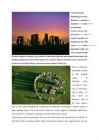
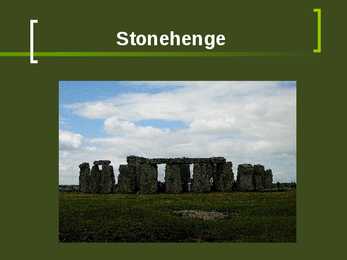
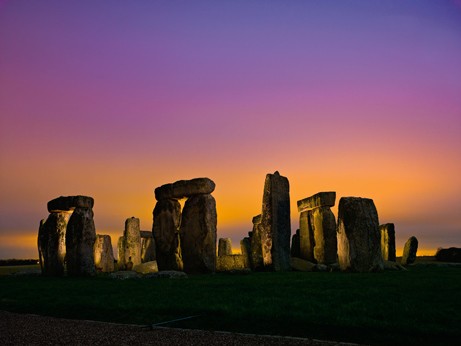
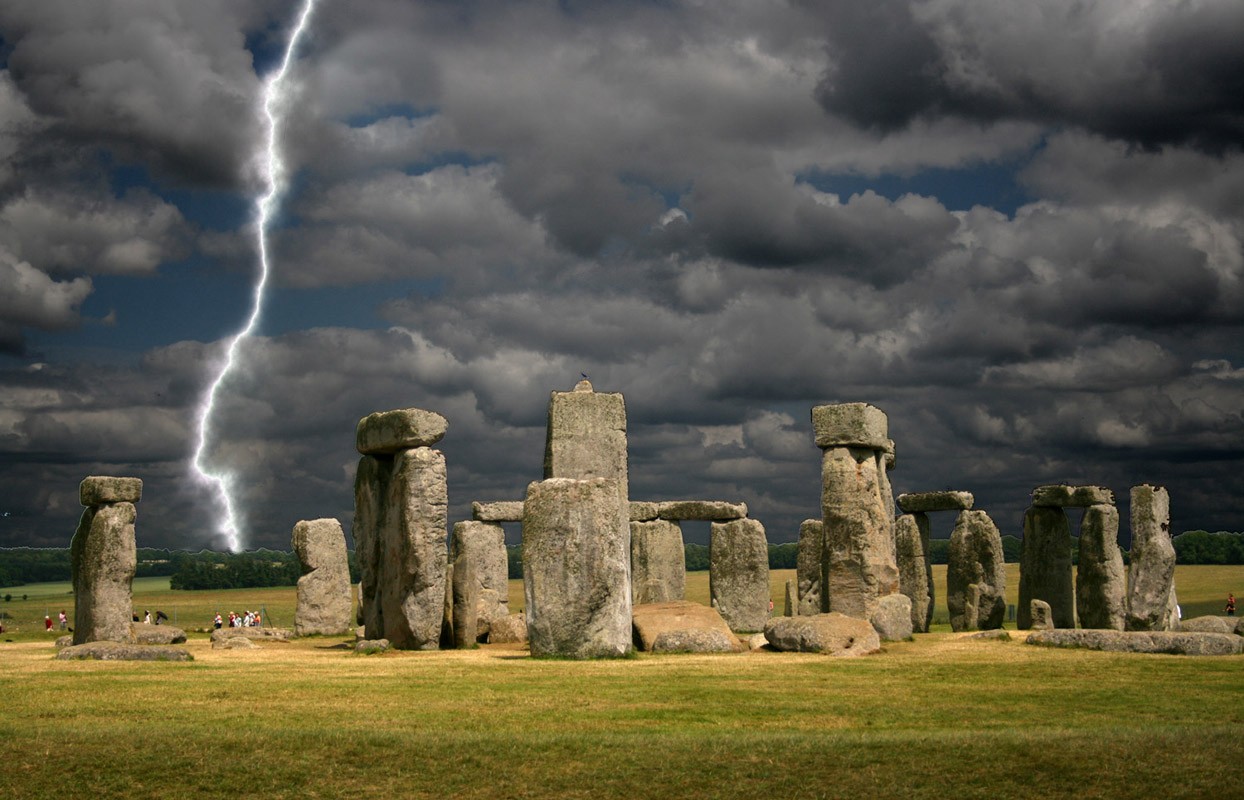
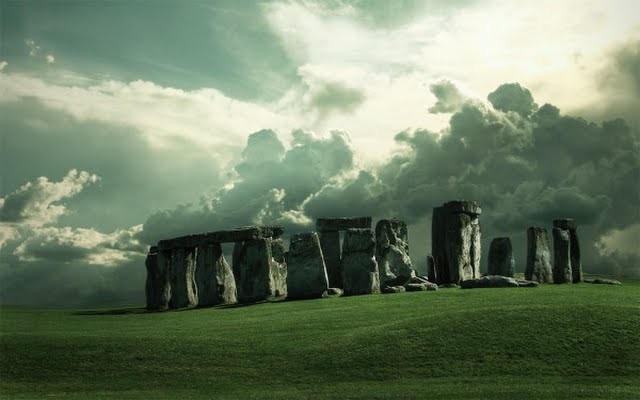
Stonehenge is surely Britain's greatest national icon , symbolizing mystery , power and endurance . Its original purpose is unclear to us, but some have speculated that it was a temple made for the worship of ancient earth deities. It has been called an astronomical observatory for marking significant events on the prehistoric calendar. Others claim that it was a sacred site for the burial of high-ranking citizens from the societies of long ago.
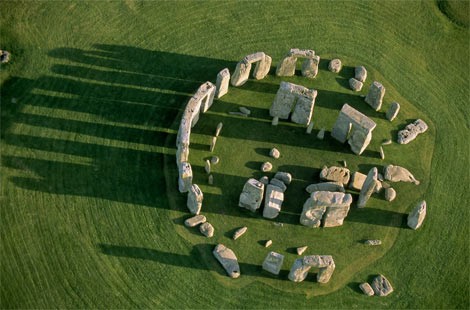
It is a prehistoric monument located in the English county of Wiltshire, about 2.0 miles (3.2 km) west of Amesbury and 8 miles (13 km) north of Salisbury. One of the most famous sites in the world, Stonehenge is composed of earthworks surrounding a circular setting of large standing stones . It is at the centre of the most dense complex of Neolithic and Bronze Age monuments in England, including several hundred burial mound.
Archaeologists have believed that the iconic stone monument was erected around 2500 BC, as described in the chronology below. One recent theory however , has suggested that the first stones were not erected until 2400 –2200 BC, whilst another suggests that bluestones may have been erected at the site as early as 3000 BC (see phase 1 below).
The surrounding circular earth bank and ditch, which constitute the earliest phase of the monument, have been dated to about 3100 BC. The site and its surroundings were added to the UNESCO 's list of World Heritage Sites in 1986 in a co-listing with Avebury Henge monument. It is a national legally protected Scheduled Ancient Monument. Stonehenge is owned by the Crown and managed by English Heritage, while the surrounding land is owned by the National Trust.
Archaeological evidence found by the Stonehenge Riverside Project in 2008 indicates that Stonehenge could possibly have served as a burial ground from its earliest beginning. The dating of cremated remains found on the site indicate that deposits contain human bone material from as early as 3000 BC, when the initial ditch and bank were first dug. Such deposits continued at Stonehenge for at least another 500 years .
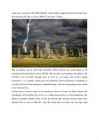
The stones we see today represent Stonehenge in ruin. Many of the original stones have fallen or been removed by previous generations for home construction or road repair. There has been serious damage to some of the smaller bluestones resulting from close visitor contact (prohibited since 1978) and the prehistoric carvings on the larger sarsen stones show signs of significant wear.
Stonehenge was produced by a culture that left no written records. Many aspects of Stonehenge remain subject to debate. This multiplicity of theories, some of them very colourful, are often called the "mystery of Stonehenge".
There is little or no direct evidence for the construction techniques used by the Stonehenge builders. Over the years, various authors have suggested that supernatural or anachronistic methods were used, usually asserting that the stones were impossible to move otherwise. However, conventional techniques using Neolithic technology have been demonstrably effective at moving and placing stones of a similar size. Proposed functions for the site include usage as an astronomical observatory, or as a religious site.
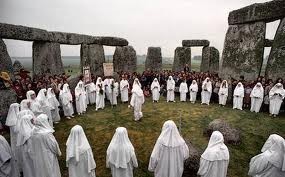
More recently two major new theories have been proposed. Professor Geoffery Wainwright OBE, FSA, president of the Society of Antiquaries of London, and Professor Timothy Darvill, OBE of Bournemouth University have suggested that Stonehenge was a place of healing – the primeval equivalent of Lourdes . They argue that this accounts for the high number of burials in the area and for the evidence of trauma deformity in some of the graves . However they do concede that the site was probably multifunctional and used for ancestor worship as well. Isotope analysis indicates that some of the buried individuals were from other regions. A teenage boy buried approximately 1550 BC was raised near the Mediterranean Sea; a metal worker from 2300 BC dubbed the "Amesbury Archer" grew up near the alpine foothills of Germany ; and the "Boscombe Bowmen" probably arrived from Wales or Brittany , France. On the other hand, Professor Mike Parker Pearson of Sheffield University has suggested that Stonehenge was part of a ritual landscape and was joined to Durrington Walls by their corresponding avenues and the River Avon . He suggests that the area around Durrington Walls Henge was a place of the living , whilst Stonehenge was a domain of the dead. A journey along the Avon to reach Stonehenge was part of a ritual passage from life to death, to celebrate past ancestors and the recently deceased.] Whatever religious, mystical or spiritual elements were central to Stonehenge, its design includes a celestial observatory function , which might have allowed prediction of eclipse , solstice, equinox and other celestial events important to a contemporary religion.
As motorised traffic increased, the setting of the monument began to be affected by the proximity of the two roads on either side – the A344 to Shrewton on the north side, and the A303 to Winterbourne Stoke to the south . Plans to upgrade the A303 and close the A344 to restore the vista from the stones have been considered since the monument became a World Heritage Site. However, the controversy surrounding expensive re-routing of the roads have led to the scheme being cancelled on multiple occasions. On 6 December 2007, it was announced that extensive plans to build Stonehenge road tunnel under the landscape and create a permanent visitors' centre had been cancelleD. On 13 May 2009, the government gave approval for a £25 million scheme to create a smaller visitors' centre and close the A344, although this was dependent on funding and local authority planning consent. On 20 January 2010 Wiltshire Council granted planning permission for a centre 2.4 km (1.5 miles) to the west and English Heritage confirmed that funds to build it would be available, supported by a £10m grant from the Heritage Lottery Fund. Approval is still needed for the closure of the A344 and two nearby byways, which are popular with off-road enthusiasts and whose objections may further jeopardise the scheme.
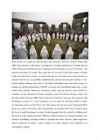
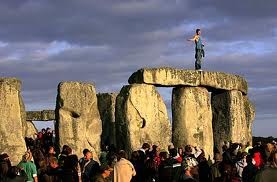
When Stonehenge was first opened to the public it was possible to walk amongst and even climb on the stones, but the stones were roped off in 1977 as a result of serious erosion. Visitors are no longer permitted to touch the stones, but are able to walk around the monument from a short distance away . English Heritage does, however, permit access during the summer and winter solstice, and the spring and autumn equinox. Additionally, visitors can make special bookings to access the stones throughout the year .
The current access situation and the proximity of the two roads has drawn widespread criticism, highlighted by a 2006 National Geographic survey . In the survey of conditions at 94 leading World Heritage Sites, 400 conservation and tourism experts ranked Stonehenge 75th in the list of destinations, declaring it to be "in moderate trouble.
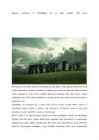
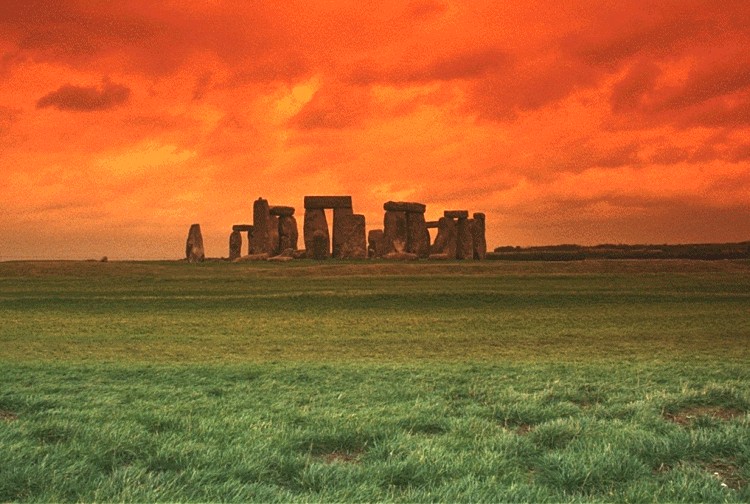
Situated in a vast plain, surrounded by hundreds of round barrows, or burial mounds, the Stonehenge site is truly impressive, and all the more so, the closer you approach . It is a place where much human effort was expended for a purpose we can only guess at. Some people see it as a place steeped in magic and mystery, some as a place where their imaginations of the past can be fired and others hold it to be a sacred place. But whatever viewpoint is brought to it and whatever its original purpose was, it should be treated as the ancients treated it, as a place of honor.
The modern age has not been altogether kind to Stonehenge, despite the lip service it pays to the preservation of heritage sites. There is a major highway running no more than 100 yards away from the stones, and a commercial circus has sprung up around it, complete with parking lots, gift shops and ice cream stands. The organization, English Heritage, is committed to righting these wrongs, and in the coming years, we may get to see Stonehenge in the setting for which it was originally created. Despite all its dilapidation and the encroachment of the modern world, Stonehenge, today, is an awe-inspiring sight, and no travel itinerary around Britain should omit it.
Used websites:

Vasakule Paremale
Stonehenge - lühikokkuvõte inglise keeles #1 Stonehenge - lühikokkuvõte inglise keeles #2 Stonehenge - lühikokkuvõte inglise keeles #3 Stonehenge - lühikokkuvõte inglise keeles #4 Stonehenge - lühikokkuvõte inglise keeles #5 Stonehenge - lühikokkuvõte inglise keeles #6 Stonehenge - lühikokkuvõte inglise keeles #7 Stonehenge - lühikokkuvõte inglise keeles #8
Punktid 50 punkti Autor soovib selle materjali allalaadimise eest saada 50 punkti.
Leheküljed ~ 8 lehte Lehekülgede arv dokumendis
Aeg2011-09-12 Kuupäev, millal dokument üles laeti
Allalaadimisi 22 laadimist Kokku alla laetud
Kommentaarid 0 arvamust Teiste kasutajate poolt lisatud kommentaarid
Autor Alice Edel Õppematerjali autor
konspekt

Kasutatud allikad

Sarnased õppematerjalid

Stonehenge
4
doc

Stonehenge

Stonehenge Stonehenge is a prehistoric monument located in the English county of Wiltshire, about 3.2 kilometres (2.0 mi) west of Amesbury and 13 kilometres (8.1 mi) north of Salisbury. One of the most famous prehistoric sites in the world, Stonehenge is composed of earthworks surrounding a circular setting of large standing stones. Archaeologists had believed that the iconic stone monument was erected around 2500 BC, as described in the chronology below. However one recent theory has suggested that the first stones were not erected until 2400-2200 BC,[1] whilst another suggests that bluestones may have been erected at the site as early as 3000 BC (see phase 1 below). The surrounding circular earth bank and ditch, which constitute the

Inglise keel
Stonehenge powerpoint
14
ppt

Stonehenge powerpoint

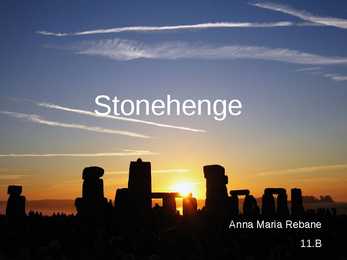
Stonehenge Anna Maria Rebane 11.B Facts about Stonehenge · 5000 year old prehistoric ritual monument · the most famous prehistoric monument in Europe · one of the most ancient and mysterious structures in the world · 3.2 kilometers west of Amesbury and 13 kilometers north of Salisbury · south-western England; in the English county of Wiltshire · built in the late Stone Age (Neolithic) and the Bronze Age The History of Stonehenge · "The Mystery of Stonehenge" · the building began in 3000 BC by semi-nomadic peoples · The first stone to be placed - Heel Stone. · some stones weigh about 45 tons each and are 7m high · the largest stone weights as much as 50 tons · no wheels and no metals · their tools - stones, bones and wood · built in several stages

Inglise keel
Stonehenge kromlehh
23
ppt

Stonehenge kromlehh

Stonehenge Hort 4000 Mary Laine What is Stonehenge? Derived from words that mean hanging stones, circle of stones, or stone hinges 162 stones originally and about half remain today Southern England, eight miles north of Salisbury and 30 miles north of the English Channel Nearby hillsides are covered with hundreds of burial pits known as barrows 80% of the barrows face east towards where the sun rises on the horizon There are at least 900 circles in Wales, Scotland, England, and Ireland. Most are made of stone, but wood was also used. Soil was also piled up to

Inglise keel
Topics-step 8-kokkuvõtted mõnedest peatükkidest
14
doc

Topics, step 8, kokkuvõtted mõnedest peatükkidest

1) INDIAN ROCK ART: A NATIONAL TREASURE IN DANGER Unrecognized, unprotected, this priceless legacy of primitive art has endured the ravages of nature only to fall victim to wanton destruction by ,,civilized" man. Like the huge stone statues of Easter Island and prehistoric cave paintings of Altamira and Lascaux, North American Indian rock art is surrounded by an atmosphere of mystery. Although examples of rock art exist at some 15000 sites in canyons, deserts, caves and river gorges. Nowadays, however, primitive rock art in the United States has become a new field of scientific study. Klaus F Wellmann wrote two books about rock art. He is a professor of medicine. Rock art represents the history of aboriginal Americans

Inglise keel
England Sightseeing
3
doc

England Sightseeing

Stonehenge Is a prehistoric monument located in the English county of Wiltshire, about 3.2 kilometres (2.0 mi) west of Amesbury and 13 kilometres (8.1 mi) north of Salisbury. The dating of cremated remains found that burials took place as early as 3000 B.C, when the first ditches were being built around the monument. One of the most famous prehistoric sites in the world. The site and its surroundings were added to the UNESCO's list of World Heritage Sites in 1986 in a co-listing with Avebury henge monument, and it is also a legally protected Scheduled Ancient Monument. Biggest stone is press 26 ton. Cambridge'is College was founded in the 13.century. this is world oldest ang the best collage. Oxford college Is founded in 1379. The College's motto, created by William of Wykeham, is "Manners Makyth Man" Lake District Also known as The Lakes or Lakeland, is a rural area in North West England. A popular holiday destination, it is famous for its lakes and its mountains.

Inglise keel
Ingliskeelsete maade ühiskond ja kultuur-eksamiküsimused
26
docx

Ingliskeelsete maade ühiskond ja kultuur, eksamiküsimused

Make up your list of 5 top British people. Give your motivation. The Queen, Adele, Elton John, Shakespeare, JK Rowling. 5. Which 5 places attract visitors in Wales and Scotland? Edinburgh, Loch Ness, The Highlands, Snowdonia, Cardiff. 6. Name 6 islands, 5 rivers, 3 lakes, 3 mountains in UK. Isle of Man, Isle of Wight, Isle of Lewis, Island of Mull, Island of Arran, Anglesey Island Severn, Thames, Tweed, Avon, Trent, Dove Ben Nevis, Snowdon, Ben Macdui 7. Stonehenge. Stonehenge was produced by a culture that left no written records. Built on Salisbury Plain, in Wiltshire, England some time between 5,000-4,300 years ago. One of the most famous megaliths in the world, dating from prehistoric times. Stonehenge consists of circles of stone arranged in complex patterns, and their origin is still being explored. Some of the stones come from over 200 miles away in Wales

Ingliskeelsete maade ühiskond ja kultuur
Cultural history
1
doc

Cultural history

Study questions on chapter 1 Stonehenge - is pre-historical moument located in the English county of Wiltshire. 2400 BC ­ 22 000 BC. It is composed of a circular setting of large standing stones. The site and its surroundings were added to the UNESCO's list of World Heritage Sites in 1986 Celtic Invasion ­ It begun about 500 years BC. Celts brought iron with them to Britain (and pagan traditions). But it is belived that there was never an organized Celtic invasion.(Celts were too fragmented to make it happen) Iron ­ Celts brought iron with them into Great Britain which made some big changes. Iron is stronger then bronze and iron ore is more common(it made tools and weapons better). One of the interesting innovations that they brough to Britain was the iron plough which changed a lot about the farming(made it easier). Iron changed trade and fostered local independence. Hadrian's wall ­ was a defensive fortification in Roman Britain. Buliding of the wal

British culture (briti kultuur)
Stonehenge kohta inglise keelne powerpointi esitlus
7
ppt

Stonehenge kohta inglise keelne powerpointi esitlus!

Stonehenge About Stonehenge History "Mystery of Stonehenge" Construction Location Stonehenge Tour Location South-England 90 miles west of London 3.2 kilometres west of Amesbury, 13 kilometers north of Salisbury. History Evolved between 3,050BC and 1,600BC Constructed in three main phases: 3050BC, circular ditch and bank 2600BC, wooden structure constructed at centre 2500-1500BC, monument constructed, arranged and re- arranged "Mystery of Stonehenge" Multiplicity of theories:

Inglisekeelne geograafia


Meedia

Kommentaarid (0)

Kommentaarid sellele materjalile puuduvad. Ole esimene ja kommenteeri


Sellel veebilehel kasutatakse küpsiseid. Kasutamist jätkates nõustute küpsiste ja veebilehe üldtingimustega Nõustun