 50 punkti
Autor soovib selle materjali allalaadimise eest saada 50 punkti.
50 punkti
Autor soovib selle materjali allalaadimise eest saada 50 punkti.
 ~ 23 lehte
Lehekülgede arv dokumendis
~ 23 lehte
Lehekülgede arv dokumendis
 2008-09-15
Kuupäev, millal dokument üles laeti
2008-09-15
Kuupäev, millal dokument üles laeti
 18 laadimist
Kokku alla laetud
18 laadimist
Kokku alla laetud
 0 arvamust
Teiste kasutajate poolt lisatud kommentaarid
0 arvamust
Teiste kasutajate poolt lisatud kommentaarid
 kunutokk
Õppematerjali autor
kunutokk
Õppematerjali autor
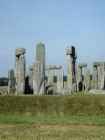
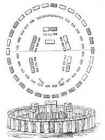
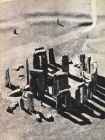
Stonehenge Stonehenge is a prehistoric monument located in the English county of Wiltshire, about 3.2 kilometres (2.0 mi) west of Amesbury and 13 kilometres (8.1 mi) north of Salisbury. One of the most famous prehistoric sites in the world, Stonehenge is composed of earthworks surrounding a circular setting of large standing stones. Archaeologists had believed that the iconic stone monument was erected around 2500 BC, as described in the chronology below. However one recent theory has suggested that the first stones were not erected until 2400-2200 BC,[1] whilst another suggests that bluestones may have been erected at the site as early as 3000 BC (see phase 1 below). The surrounding circular earth bank and ditch, which constitute the
STONEHENGE Stonehenge is surely Britain's greatest national icon, symbolizing mystery, power and endurance
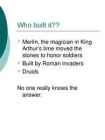
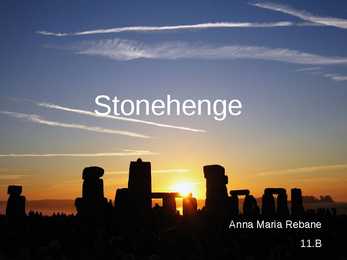
Stonehenge Anna Maria Rebane 11.B Facts about Stonehenge · 5000 year old prehistoric ritual monument · the most famous prehistoric monument in Europe · one of the most ancient and mysterious structures in the world · 3.2 kilometers west of Amesbury and 13 kilometers north of Salisbury · south-western England; in the English county of Wiltshire · built in the late Stone Age (Neolithic) and the Bronze Age The History of Stonehenge · "The Mystery of Stonehenge" · the building began in 3000 BC by semi-nomadic peoples · The first stone to be placed - Heel Stone. · some stones weigh about 45 tons each and are 7m high · the largest stone weights as much as 50 tons · no wheels and no metals · their tools - stones, bones and wood · built in several stages
1) INDIAN ROCK ART: A NATIONAL TREASURE IN DANGER Unrecognized, unprotected, this priceless legacy of primitive art has endured the ravages of nature only to fall victim to wanton destruction by ,,civilized" man. Like the huge stone statues of Easter Island and prehistoric cave paintings of Altamira and Lascaux, North American Indian rock art is surrounded by an atmosphere of mystery. Although examples of rock art exist at some 15000 sites in canyons, deserts, caves and river gorges. Nowadays, however, primitive rock art in the United States has become a new field of scientific study. Klaus F Wellmann wrote two books about rock art. He is a professor of medicine. Rock art represents the history of aboriginal Americans
Romans in Britain".[1] Sections of Hadrian's Wall remain near Greenhead and along the route, though other large sections have been dismantled over the years to use the stones for various nearby construction projects. Dimensions Hadrian's Wall was 80 Roman miles (73 and a half Modern miles or 117 kilometres) long, its width and height dependent on the construction materials which were available nearby: east of the river Irthing the wall was made from brick shaped stone and measured 10 Roman feet (9.7 ft or 3 m) wide and 5 to 6 metres (1620 ft) tall; west of the river the wall was made from turf and measured 6 metres (20 ft) wide and 3.5 metres (11.5 ft) high. This doesent include the wall's ditches, berms, and forts. The central section measured 8 Roman feet wide (7.8 ft or 2.4 m) on a 10 foot base. Route Hadrian's Wall extendedtfrom the west from Wallsend on the River Tyne to the shore of the Solway Firth
Romans. The Roman Londinium grew up on the northern side of the "London Bridge" in the past. Products such as olive oil, wines and fruit were brought by ships from different parts of the Roman Empire and unloaded onto wooden quays along the river. In AD 61 the native Celtic Iceni tribe, led by Queen Boudicca, rose up against The Romans. They burnt Londinium to the ground but Roman armies eventually defeated Boudicca. The city was rebuilt and was gradually surrounded with a wall of stone and brick which lasted for many centuries. During the archeological excavations in 1954 the Roman Temple of Mithras was revealed. It was a pagan temple dedicated to the Persian Sun-god. The Temple was later reconstructed only a short way from its original site and the relics are displayed in the Museum of London in the Barbican. At the end of the fourth century AD the Roman Empire began to crumble and the Roman armies were recalled from Britain to defend Rome itself. Once they had
The home of the London Bridge as it appeared in Roman times was in virtually the same spot as the home of the London Bridge today, suspended over the Thames River. The Romans were not the only people in London Bridge history to construct a wooden bridge. After the fall of the Roman Empire, the Saxons were known to have built at least one, if not many (due to destruction by fire and other calamities) timber bridges. The first stone structure in London Bridge history was built in the 12th century and took 33 years to complete. King John was in power when the bridge was finally completed, and it was King John who had the idea to build houses on the bridge itself. The history of the London Bridge goes on to reflect that scores of houses and shops quickly built up on the bridge. The number of people residing on the bridge eventually became so high that the bridge became its own district in London. Each side of the
primitive ingenuity and craft technology that is important to recognize. Since some of their materials cannot be original, these structures will have to pass the test of authenticity. In 51 BC, during the Gallic War, Caesar attested to the construction of narrow wooden bridges by Gallic builders over wide rivers as the Loire, Seine, and Allier of 600ft (200m) span, used by pedestrians and domestic animals. The stone vault probably first sprang forth in Anatolia and the Aegean region of Asia Minor (central and western Turkey) in the 2nd millennium BC for short spans in civic construction. The Mesopotamian civilizations introduced the first major development of brick vaulting in the royal palaces, and also probably the first important arch bridges in the 6th century BC. Roman bridges Figure 1 Ponte Saint-Martin (c 25 BC) near Torino (Italy)
 annaabi.ee


















Kõik kommentaarid