 5 punkti
Autor soovib selle materjali allalaadimise eest saada 5 punkti.
5 punkti
Autor soovib selle materjali allalaadimise eest saada 5 punkti.
 ~ 14 lehte
Lehekülgede arv dokumendis
~ 14 lehte
Lehekülgede arv dokumendis
 2009-12-17
Kuupäev, millal dokument üles laeti
2009-12-17
Kuupäev, millal dokument üles laeti
 16 laadimist
Kokku alla laetud
16 laadimist
Kokku alla laetud
 0 arvamust
Teiste kasutajate poolt lisatud kommentaarid
0 arvamust
Teiste kasutajate poolt lisatud kommentaarid
 Karl Karl
Õppematerjali autor
Karl Karl
Õppematerjali autor
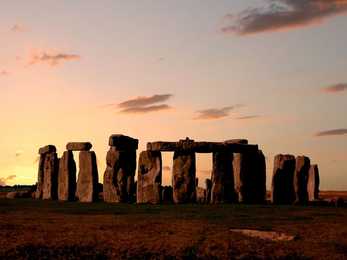
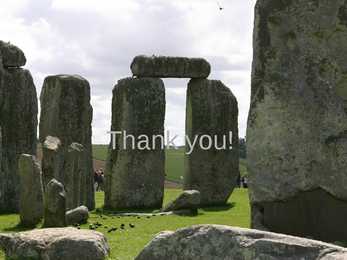
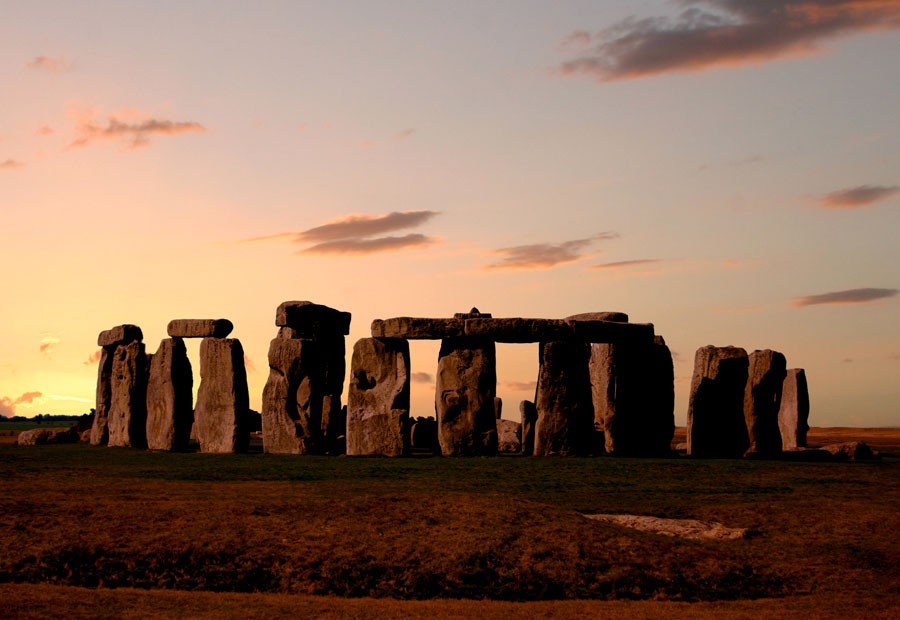
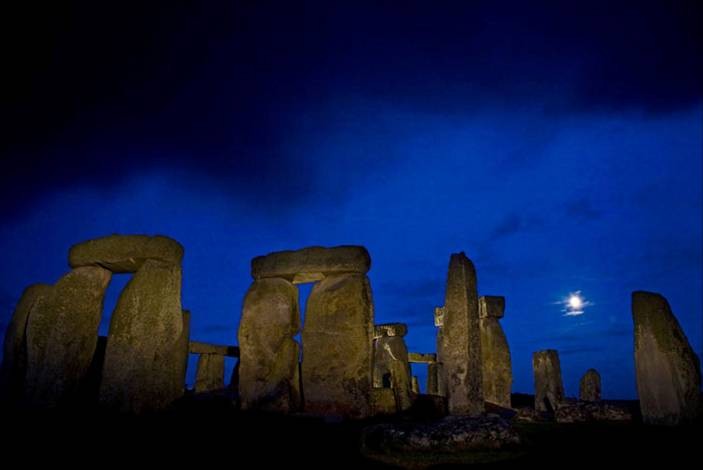
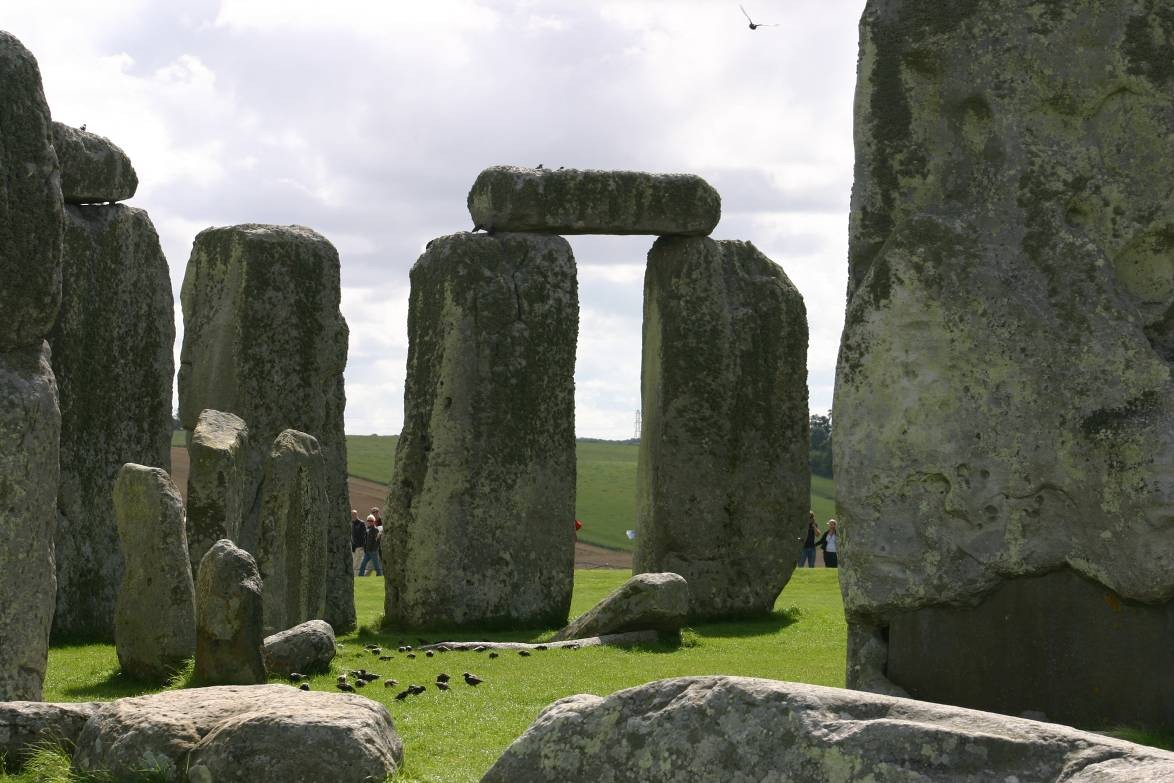
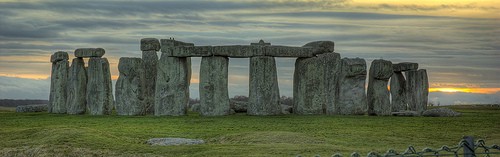
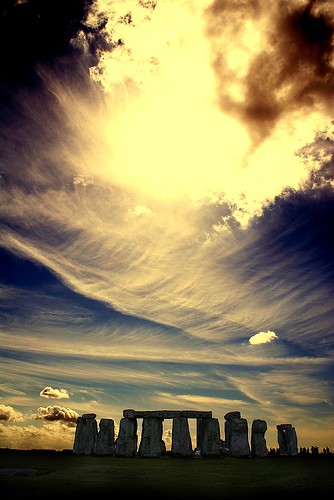
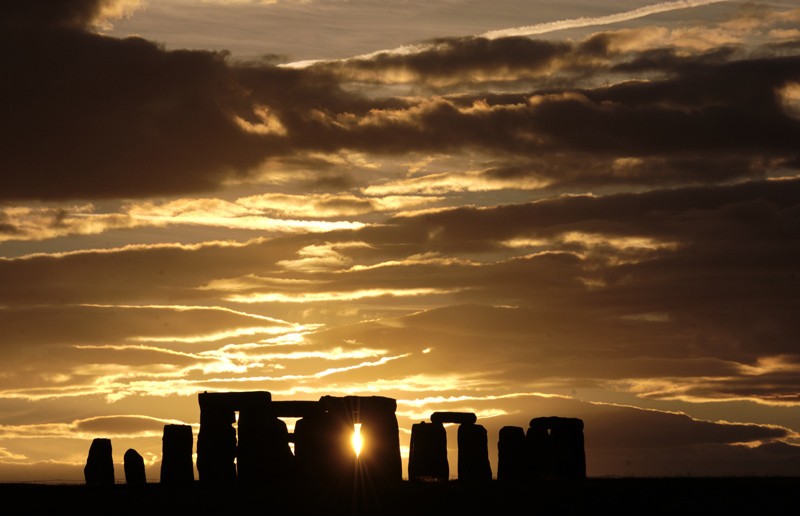
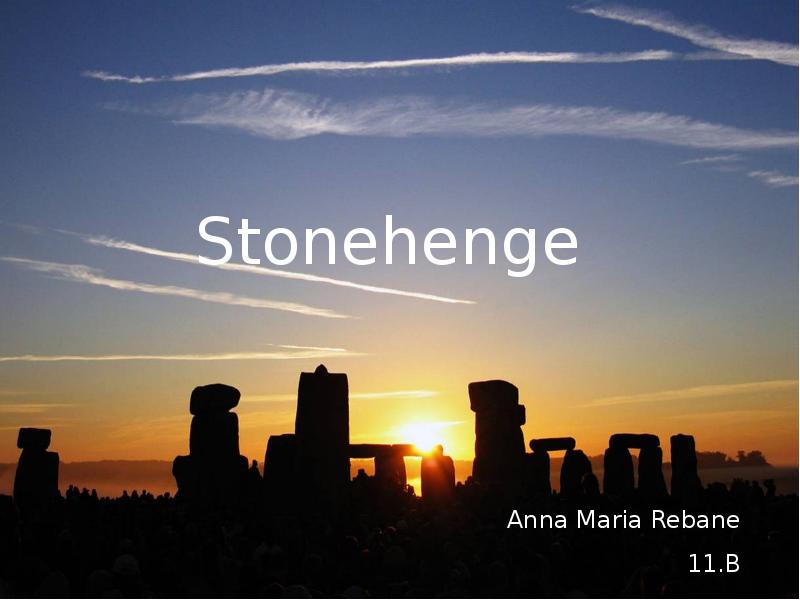
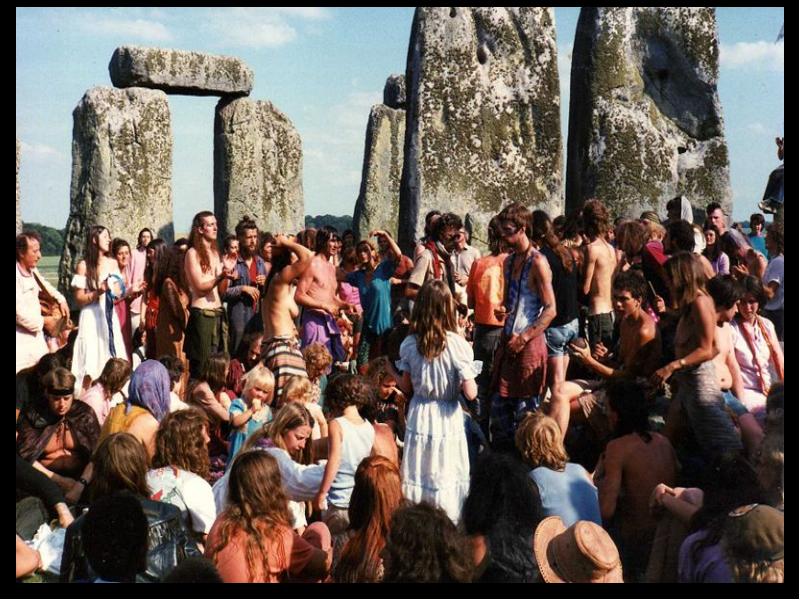
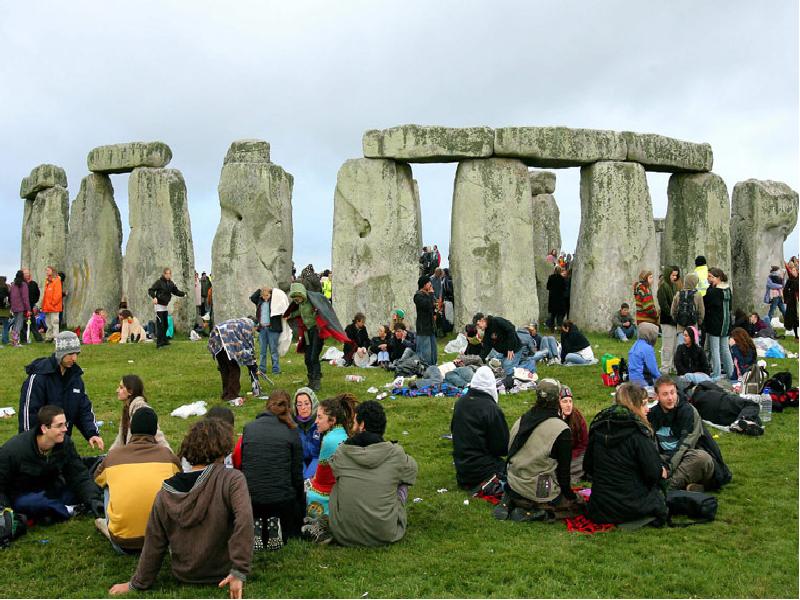
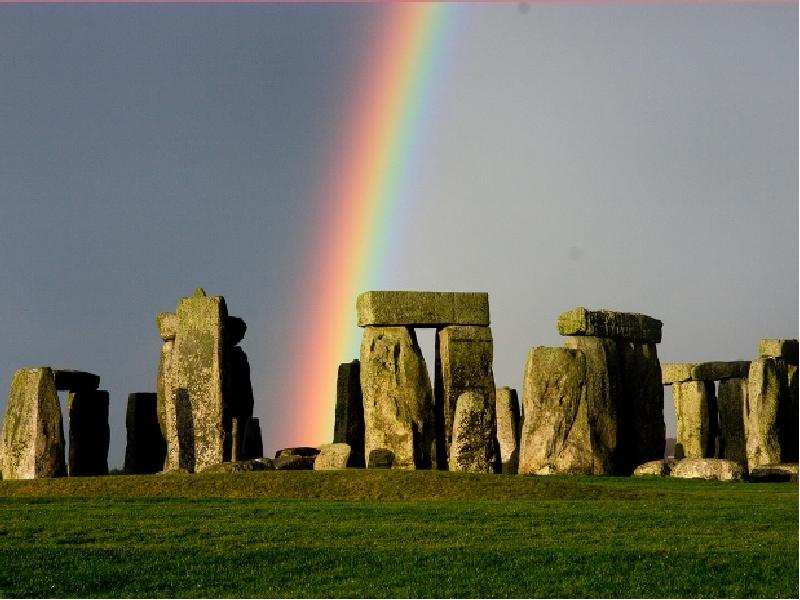
STONEHENGE Stonehenge is surely Britain's greatest national icon, symbolizing mystery, power and endurance
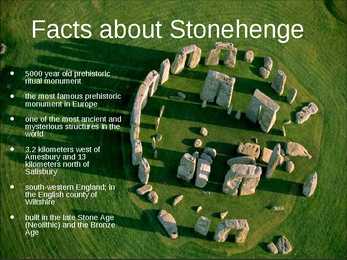
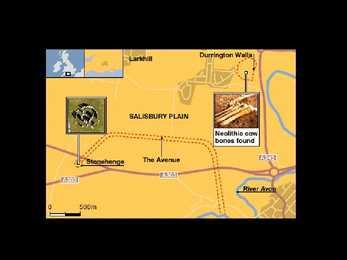
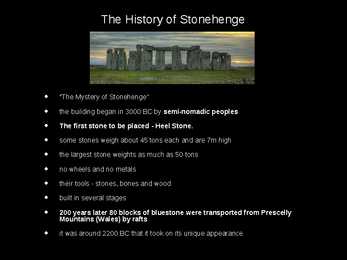
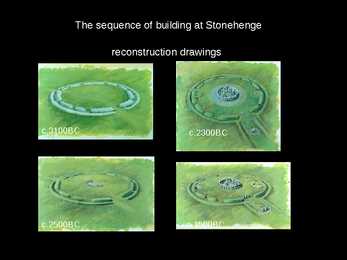
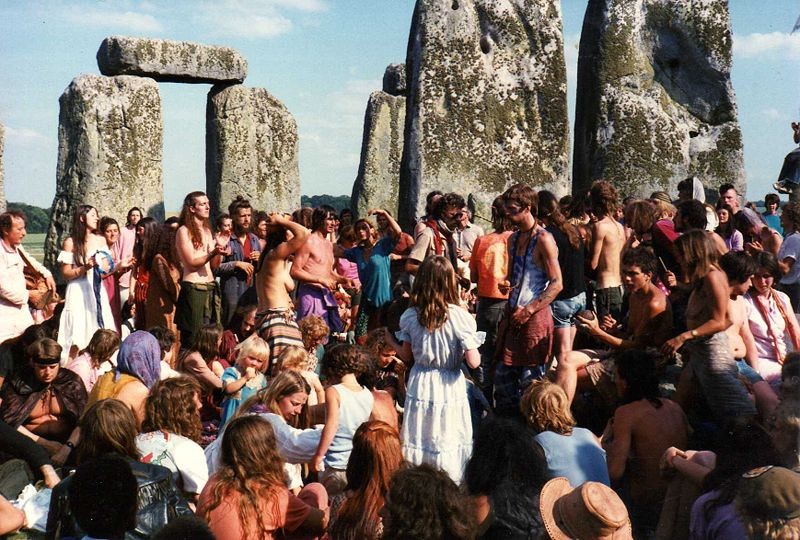
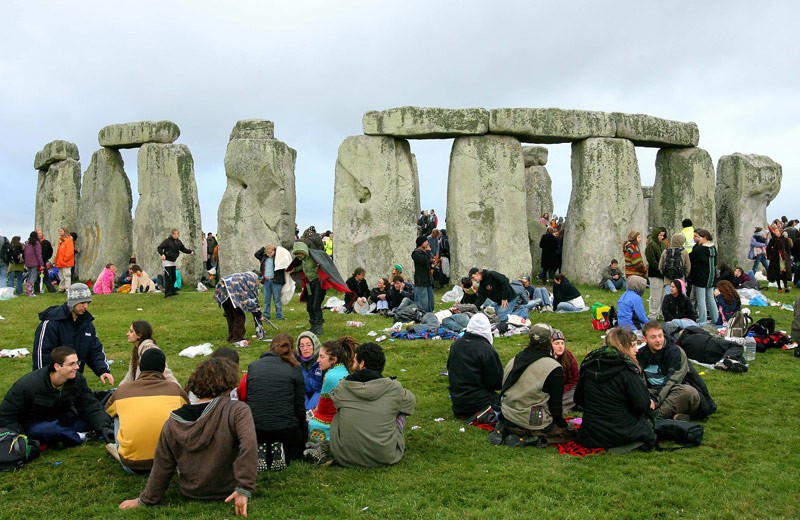
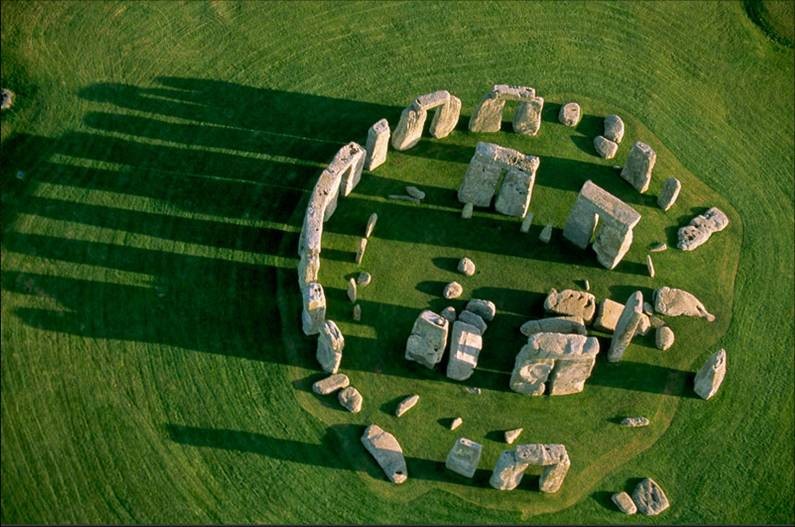
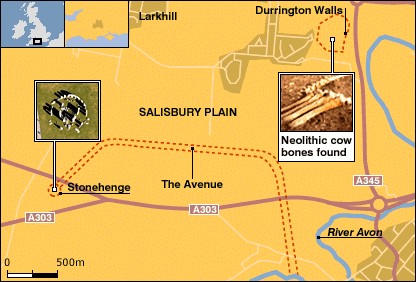
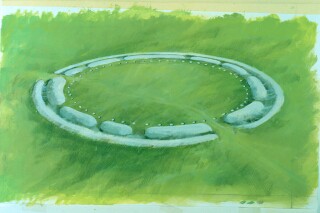
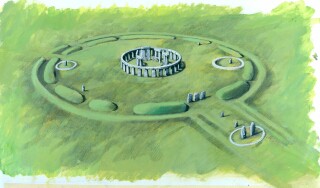
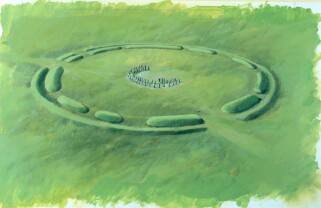
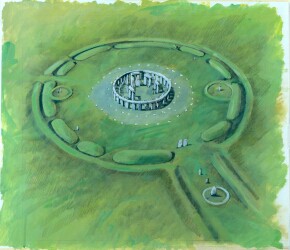
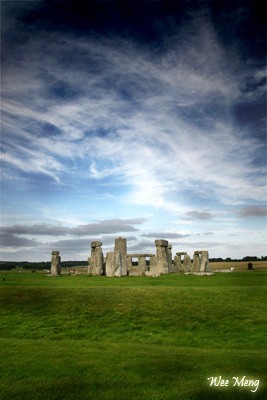
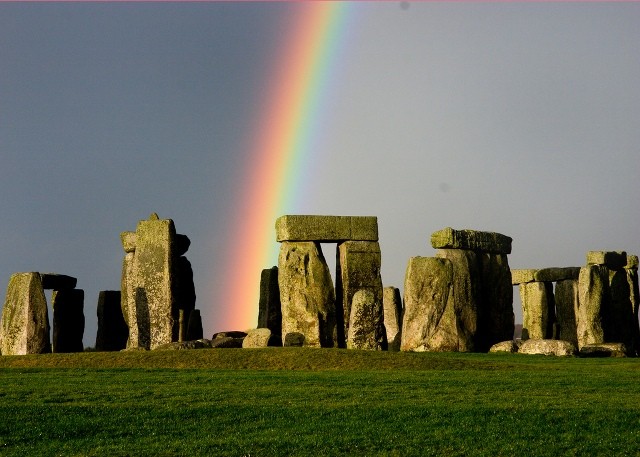
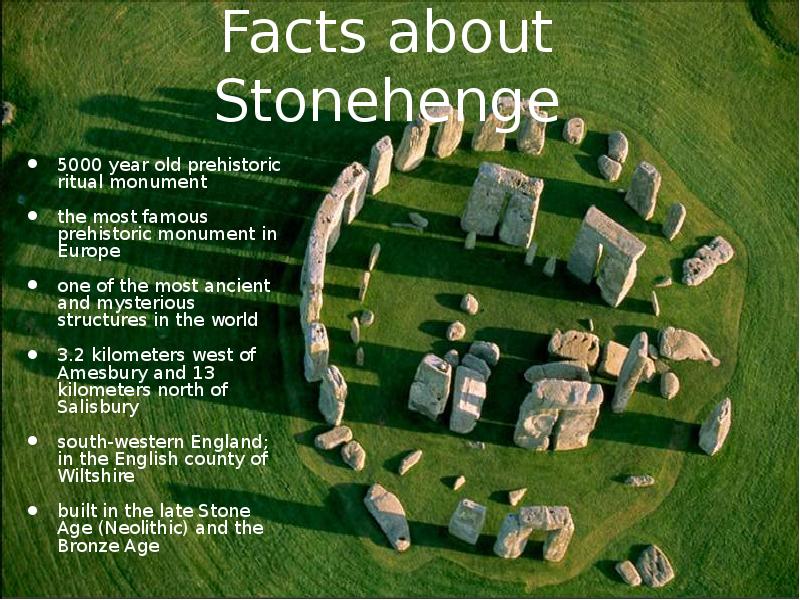
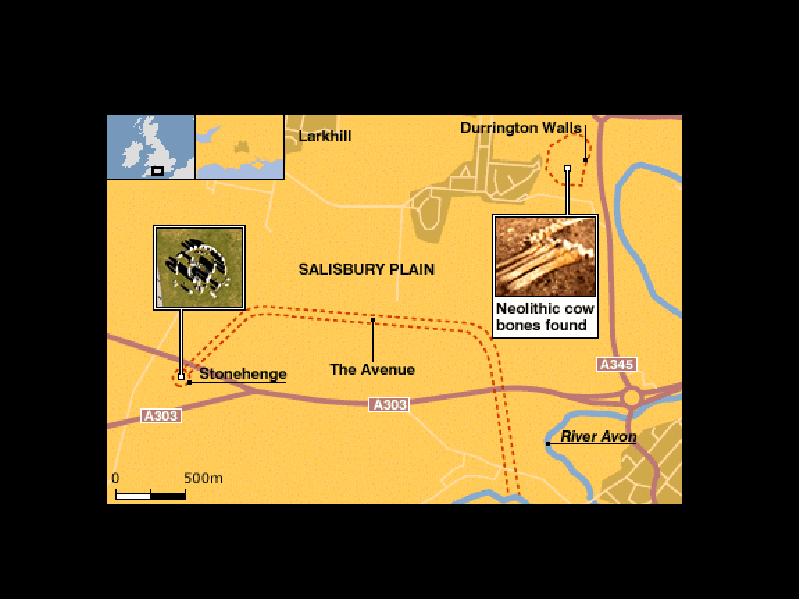
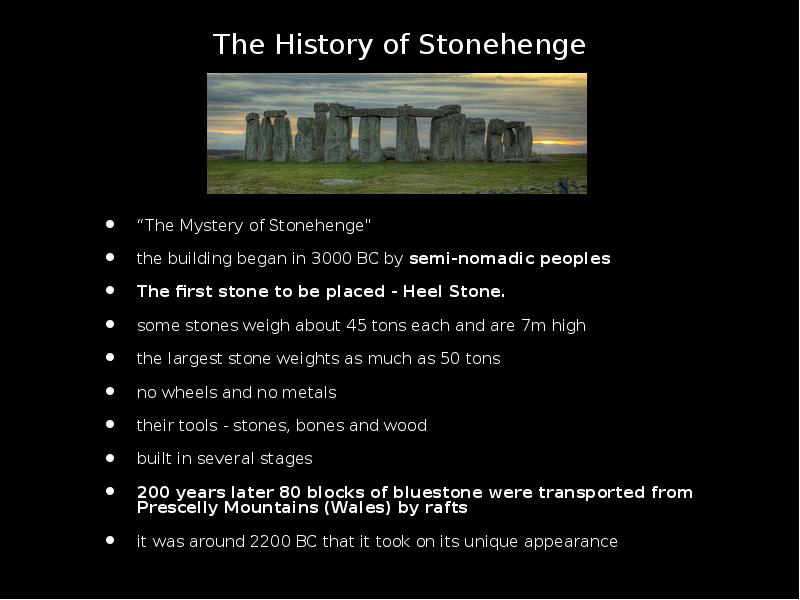
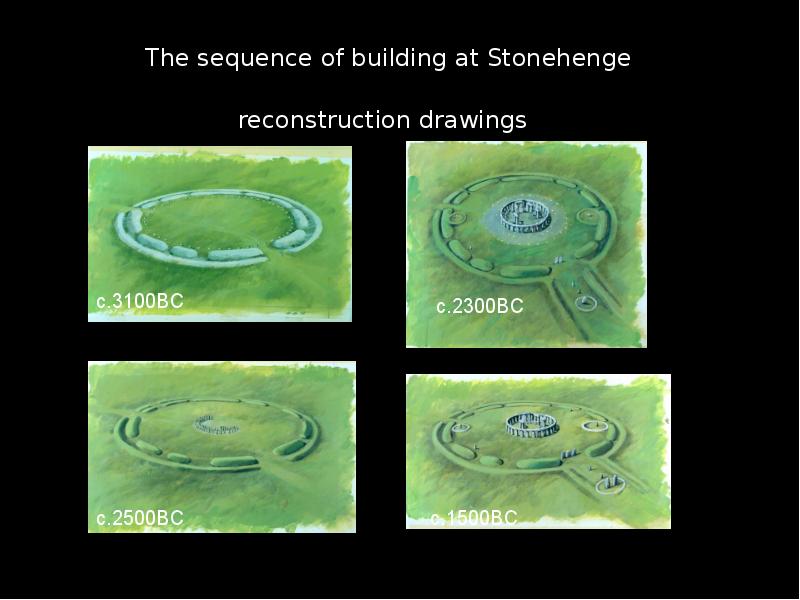
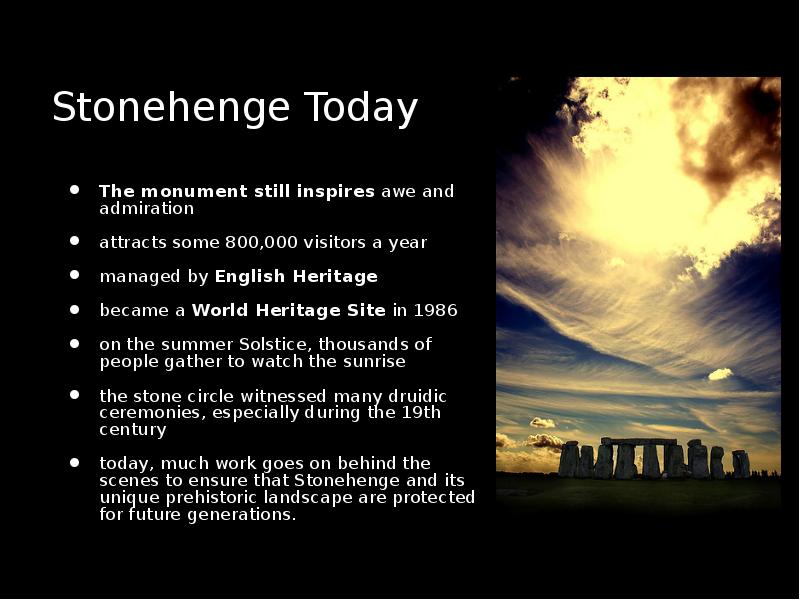
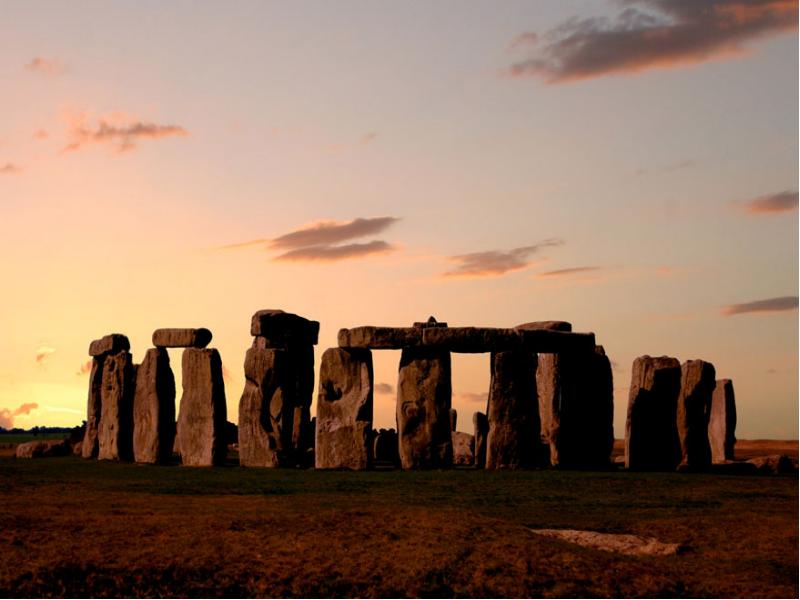
Stonehenge Stonehenge is a prehistoric monument located in the English county of Wiltshire, about 3.2 kilometres (2.0 mi) west of Amesbury and 13 kilometres (8.1 mi) north of Salisbury. One of the most famous prehistoric sites in the world, Stonehenge is composed of earthworks surrounding a circular setting of large standing stones. Archaeologists had believed that the iconic stone monument was erected around 2500 BC, as described in the chronology below. However one recent theory has suggested that the first stones were not erected until 2400-2200 BC,[1] whilst another suggests that bluestones may have been erected at the site as early as 3000 BC (see phase 1 below). The surrounding circular earth bank and ditch, which constitute the
Stonehenge Hort 4000 Mary Laine What is Stonehenge? Derived from words that mean hanging stones, circle of stones, or stone hinges 162 stones originally and about half remain today Southern England, eight miles north of Salisbury and 30 miles north of the English Channel Nearby hillsides are covered with hundreds of burial pits known as barrows 80% of the barrows face east towards where the sun rises on the horizon There are at least 900 circles in Wales, Scotland, England, and Ireland. Most are made of stone, but wood was also used. Soil was also piled up to
2 kilometres (2.0 mi) west of Amesbury and 13 kilometres (8.1 mi) north of Salisbury. The dating of cremated remains found that burials took place as early as 3000 B.C, when the first ditches were being built around the monument. One of the most famous prehistoric sites in the world. The site and its surroundings were added to the UNESCO's list of World Heritage Sites in 1986 in a co-listing with Avebury henge monument, and it is also a legally protected Scheduled Ancient Monument. Biggest stone is press 26 ton. Cambridge'is College was founded in the 13.century. this is world oldest ang the best collage. Oxford college Is founded in 1379. The College's motto, created by William of Wykeham, is "Manners Makyth Man" Lake District Also known as The Lakes or Lakeland, is a rural area in North West England. A popular holiday destination, it is famous for its lakes and its mountains. The central and most-visited part of the area is contained in the Lake District National Park--
· When the English Channel was pro-tected them with ditches and formed by meltic ice(around 6000 BC), ramparts. Britain was part of the European land mass. · The earliest inhabitants lived in limestone caves. · About 3000 BC the British Isles were inhabited by a people as known as the Iberians. · Celts and Iberians both lived under · They used stone axes and made the primitive system: there was no antlers and bones into leather-working private property, no classes and tools. exploitation. · Inhabitants put up buildings of · They caught fish, grew wheat and stone and wood, built the first roads.
1) INDIAN ROCK ART: A NATIONAL TREASURE IN DANGER Unrecognized, unprotected, this priceless legacy of primitive art has endured the ravages of nature only to fall victim to wanton destruction by ,,civilized" man. Like the huge stone statues of Easter Island and prehistoric cave paintings of Altamira and Lascaux, North American Indian rock art is surrounded by an atmosphere of mystery. Although examples of rock art exist at some 15000 sites in canyons, deserts, caves and river gorges. Nowadays, however, primitive rock art in the United States has become a new field of scientific study. Klaus F Wellmann wrote two books about rock art. He is a professor of medicine. Rock art represents the history of aboriginal Americans
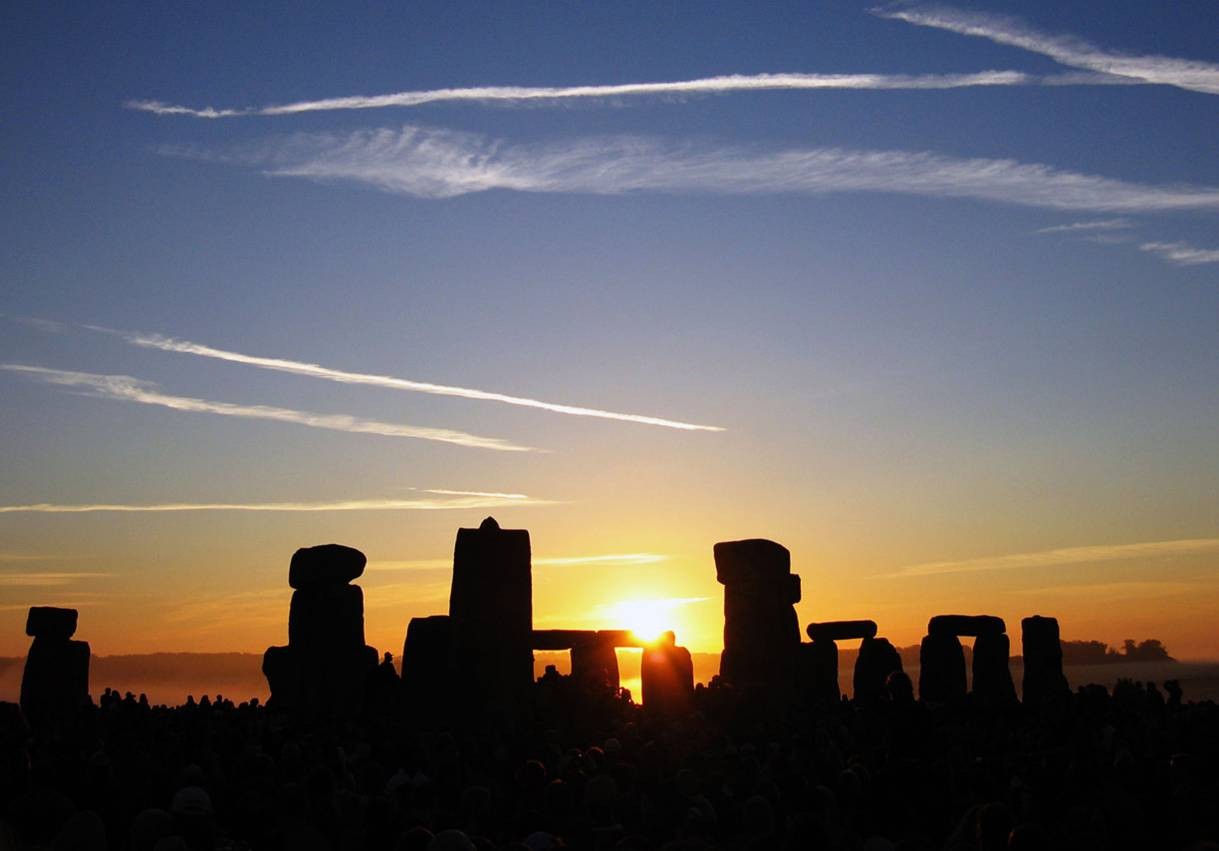
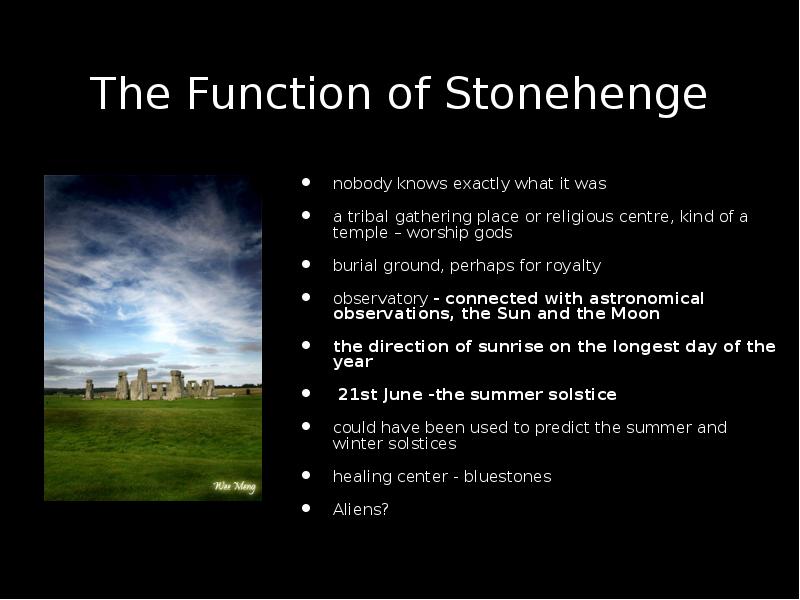
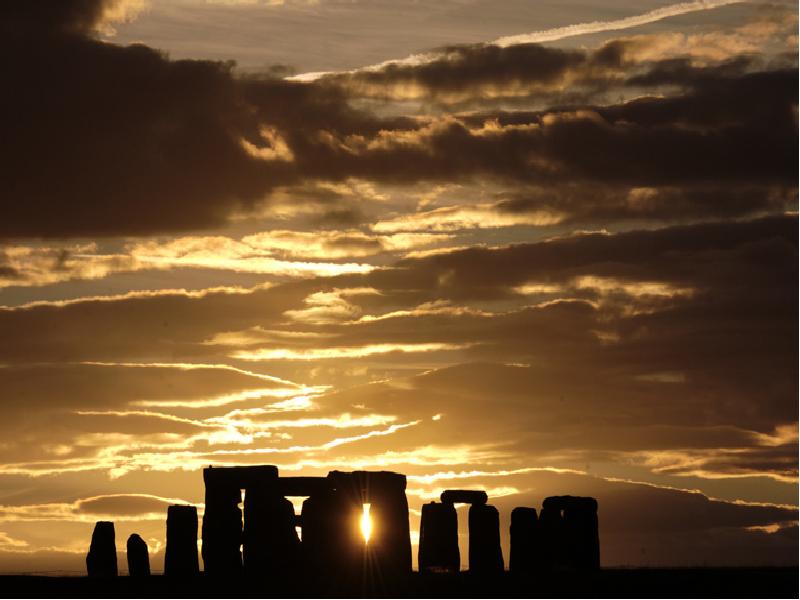
Main Sights England is known for its many world-famous sightseeings and people all around the world come to see them. Some of them are even like symbols of England. The most famous ones are: Stonehenge is one of the greatest national icons of Britain. That prehistoric monument is located in the plain of Salisbury, in the county of Wiltshire in the south-west of England. It is built of 150 enormous stones which are set in a purposive circular pattern. Stonehenge was probably built to mark the longest and shortest day of the year because it lies on the line of the midsummer sunrise and the midsummer sunset. That would have enabled people to keep a record of changing of seasons. Although it is still unclear who built it. Hadrian’s Wall is an ancient wall which was built in 2nd century by Hadrian, the emperor of Rome from AD 117 to 138, and it marked the northern border of the Roman Empire in Britain
Study questions on chapter 1 Stonehenge - is pre-historical moument located in the English county of Wiltshire. 2400 BC 22 000 BC. It is composed of a circular setting of large standing stones. The site and its surroundings were added to the UNESCO's list of World Heritage Sites in 1986 Celtic Invasion It begun about 500 years BC. Celts brought iron with them to Britain (and pagan traditions). But it is belived that there was never an organized Celtic invasion.(Celts were too fragmented to make it happen) Iron Celts brought iron with them into Great Britain which made some big changes. Iron is stronger then bronze and iron ore is more common(it made tools and weapons better). One of the interesting innovations that they brough to Britain was the iron plough which changed a lot about the farming(made it easier). Iron changed trade and fostered local independence. Hadrian's wall was a defensive fortification in Roman Britain. Buliding of the wal
 annaabi.ee






Kõik kommentaarid