Vajad kellegagi rääkida?
Küsi julgelt abi LasteAbi
Logi sisse

Conditionals (0)

1 Hindamata
Punktid
Inglise keel - Kõik luuletused, mis on inglise keeles


Conditionals  
 
 
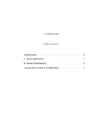
Table of Contents 
 
 
Conditionals ......................................................................... 2 
A. Real Conditionals ............................................................. 2 
B. Unreal Conditionals ......................................................... 3 
Linking words used in Conditionals ...................................... 4 
 
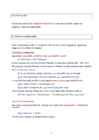
Conditionals 
 
Conditions deal with imagined situations: some are possible, some are 
unlikely, some are impossible.  
  
A. Real Conditionals   
 
Real Conditionals refer to situations that are true, have happened , generally 
happen or are likely to happen.  
The First Conditional 
expresses a possible condition  and a probable result: 
If I have time, I will help you. 
In the if- clause we use the  Present Simple , in the main clause will + the verb
We can also use the Present Continuous  or  Perfect  in the if-clause and a  Modal  
Verb  in the main clause. 
If we are having  a  party tomorrow , we shouldn’t go out  tonight
If you have finished  with the computer, you should turn  it off. 
 It can also be used in  offers  and suggestions, or warnings and threats
 
If you need a ticket, I can get you one.  
 If 
you 
don’t study  harder, you won’t pass  the  exam
The if-clause usually comes first, but it can come after the main clause. 
 
If hear  any news, I’ll phone you. / I’ll phone you if I hear any news. 
  
The Zero Conditional 
expresses conditions that are always true and have automatic or habitual 
results

  
If you  heat  ice, it melts
The Present Simple is used in both clauses


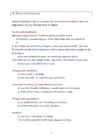
 B. Unreal Conditionals 
 
Unreal Conditionals refer to situations that are untrue or imagined, have not 
happened or are only remotely likely to happen.  
  
The Second Conditional 
expresses a hypothetical condition  and its probable result
       If I had time, I would help you. (=but I don’t have time, so I cannot do   
       it) 
In the if-clause we use the Past Simple, in the main clause would + the verb
We can also use the Past Continuous in the if-clause and  could  or might in the 
main clause: 
 
If Jim was  playing  his guitar, we could not enjoy the silence. 
Sometimes were is used instead of was, especially in the clause if I were you
 
If I were you, I wouldn’t eat so much. 
  
1) Impossible conditions:  
If I were a bird , I could fly. 
If John was taller, he could become a policeman. 
  
2) Possible in theory, but improbable in practice : 
If I were the President  of Estonia, I would make a lot of  changes
If I had a lot of  money , I would go to the  Amazon  Jungle. 
  
3) Impossible speculation:  
If we could travel  in time, I would go to the future. 
If we knew the future, we could change  it. 
  
4) Advice :  
If I were you, I would go on holiday
You would enjoy better health if you stopped smoking. 
 

 The Third Conditional  
expresses imaginary situations and regrets about the past; 
  
If I had had time, I would have helped you. 
In the if-clause we use the Past Perfect, in the main clause we use would have 
+ the Past Participle. 
We can also use could have or might have in the main clause: 
If I had known  about it, I could have phoned you yesterday
The short form -‘d can be either had or would: 
If you’d called me, I’have come to see you. (= If you had called me, I   
would have come to see you.)  
It can sometimes be used to criticize people or point out their mistakes. 
 
If you’d been more careful, you wouldn’t have caused the accident
  
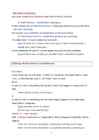
Linking words used in Conditionals 
  
if or when  
If and when are not the sameif refers to conditions and when refers to time. 
Thus, in Conditionals, only if, not ‘when’, may be used.   
when  
is used to refer to something the speaker knows will happen at some point in 
time:    
When I finish cooking, I will call you. 
if  
is used to refer to something that we think might happen or for something 
impossible or imaginary: 
 
If you see Ann,  tell her to call me. 
If I were you, I wouldn’t do that.  
unless , if … not, except if  
refer to things which have not happened or did not happen or probably will not 
happen:  
Come over tomorrow  around   fiveunless my  secretary contacts you.  
Come over tomorrow around five, except if my secretary contacts you.  
 

otherwise 
expresses an outcome which is likely if a condition is not met:  
   
Take the  umbrellaotherwise you’ll get soaked. 
in case  
refers to situations involving a risk which has to be avoided: 
  
I’ll take these   shoes  with me in case it  rains 
in case of 
has a negative connotation and is used for real conditions in formal contexts 
such as warning notices: 
 
In case of  fire , do not use the lift . (= If there is fire, ...)  
but for followed by a  noun phrase  
is used in more formal contexts as a fixed expression meaning  ‘if it were not 
for’ 
  
But for Sandra, we’d all have got  lost   ages  ago.  
          But for you, we would be there  already . 
as long as = but only if: 
   
As long as it doesn’t rain, we’ll have a great time. 
 
I don’t mind her leaving as long as she’s coming   back .  
providing , provided that = but only if: 
This article may be freely distributed provided that our copyright  is fully 
acknowledged.   
on condition that, in the event that/of = if 
  
I will come  along  on condition that you promise to behave. 
In the event that the plane lands on water, life-jackets are located under 
every seat. 
In the event of a sudden loss of cabin pressure , oxygen masks will be 
lowered automatically. 
 

I wish  and if only  
can be used use to express  a wish
1) I wish or if only + Past Simple  express wishful thinking
 
 
I wish I wasn’t so fat (, so I would be able to get into this tight-fitting 
          dress )!   
         If only John came on time (, so we could catch  the last  train )! 
         I wish I lived in a big city. 
         We all wish we had more time. 
If only I was taller, I could be a  super -model. 
I wish you did not bother me with your stupid questions
I wish you were  here
We cannot use would in these sentences , but we can use could
 
wish I could fly to the  Moon
 
If only I could speak  the language of this country
      
2) I wish or if only ... + would expresses a wish for something to happen or stop 
happening: 
 
I wish you would clean up your room
 
If only you’d be more helpful. 
           
3) wish or if only ... + a Past Perfect  tense expresses a wish about the past:  
 
wish you had told  me about the problem. 
If only I had been more careful! 
Jennifer wished she had told the  truth  to her  father
wish had been informed about your arrival. 
We do not use would have  here , but we can use could have: 
wish I could have been at the party. 
Peter wished he could have participated in the  meeting


Vasakule Paremale
Conditionals #1 Conditionals #2 Conditionals #3 Conditionals #4 Conditionals #5 Conditionals #6
Punktid 50 punkti Autor soovib selle materjali allalaadimise eest saada 50 punkti.
Leheküljed ~ 6 lehte Lehekülgede arv dokumendis
Aeg2014-12-14 Kuupäev, millal dokument üles laeti
Allalaadimisi 25 laadimist Kokku alla laetud
Kommentaarid 0 arvamust Teiste kasutajate poolt lisatud kommentaarid
Autor 213757 Õppematerjali autor
Reeglid Akadeemilises inglise keeles teemal Conditionals

Sarnased õppematerjalid

Contitional sentences
4
doc

Contitional sentences

Conditionals Sentences with if are used to express possibilities. 0 Zero conditional If-clause present (past) simple Main clause present (past) simple Sometimes sentences with if express certainty rather than possibility. The zero conditional is used to talk about sth. that is always true (such as a scientific fact), or that was always true in the past. In this type of conditional we can use when instead of if. E.g., If/When you mix blue and red, you get purple. If/When you don't water flowers, they die. (present simple in both parts of the sentence) If/When I asked her to come with us, she always said no. (past simple in both parts of the sentence) 1 First conditional If-clause present simple; Main clause future tense (or: can, must, may, etc., + bare infinitive) Used to talk about the consequences of a possible action (a real or very probable situation in the

inglise teaduskeel
Inglise keele grammatika
2
docx

Inglise keele grammatika

First Conditional: A real possibility in the future A First Conditional sentence is for future actions dependent on the result of another future action or event, where there is a reasonable possibility of the conditions for the action being satisfied. Formation: if + present simple, + will For example: If she gets good grades, she will go to university. We are talking about the future, but we use a present tense for the condition and will for the result. In this case, the person is sure about going to university. We can use other modal verbs in the result part of the sentence. For example: I Condition Result Possibility F she gets good she will go to If the condition is met, then she definitely If grades, university. will go he gets good he may go to

Inglise keel
Conditionals
13
ppt

Conditionals

CONDITIONALS ZERO CONDITIONAL If you don't water flowers, they die. If you have a headache, stop watching TV. If clause: Main clause: PRESENT SIMPLE PRESENT SIMPLE or IMPERATIVE With zero conditional we express a general truth or we give advice. FIRST CONDITIONAL If the weather is nice, we will go for a walk. If you don't apologize, she will never trust you again. If clause: Main clause: PRESENT SIMPLE FUTURE SIMPLE The first conditional refers to the present and future. It expresses a possible condition and its probable result in the future. SECOND CONDITIONAL Jack wants to buy a house but he can't do this because he doesn't have any money. If I had a lo t o f m o ne y,

Inglise keel
Big grammar theory 2
5
doc

Big grammar theory 2

The house has been cleaned since you left. Past perfect: The house had been cleaned before their arrival. Future: The house will be cleaned next week. Future continuous: The house will be being cleaned tomorrow. 11. Conditional sentences: Three types of conditional sentences: 1.) First Conditional Type 1: if + present + future The first conditional (also called conditional type 1) is a structure used for talking about possibilities in the present or in the future. If I have time, I will travel to London Kui mul on aega, reisin ma Londonisse 2.) Second Conditional Type 2: if + past + conditional The second conditional (also called conditional type 2) is a structure used for talking about unreal

Inglise keel
Future Forms- slaidid-
28
ppt

Future Forms ( slaidid )

actions which will definitely happen in the future as a result of routine or arrangement 10) We will have returned home by Sunday afternoon. actions which will be finished before a stated future time 11) By the end of this week, she will have been working to emphasise the duration of an action up to a certain here for 6 years. future time Conditionals · Type 0 If you boil water, it evaporates. (Loodusseadus) · Type 1 If you study more, you will get better marks. (Kui õpid rohkem, saad paremaid hindeid.) · Type 2 If you studied more, you would get better marks. (Kui õpiksid, saaksid) · Type 3 If you had studied more, you would have got better marks. (Kui oleksid õppinud, oleksid saanud) Mixed conditionals If-Clause Main Clause Type 2 Type 1

Inglise keel
Inglise keele kordamine
4
doc

Inglise keele kordamine

(When they were younger they walked/used to walk to school; NOT I used to walk to work yesterday) Be going to · Plans, intentions, ambitions for the future (I'm going to be a doctor, when I grow up) · Actions already decided to do in near future (Steve is going to work with his dad..) · Predictions based on wht we see, or know, especially if there's evidence (The sky is very clear, it's going to be cold tonight) CONDITIONALS Type 0 ­ general truth or scientific fact: If/when + present simple > present simple (If you mix red and white, you get pink) Type 1 ­ real or very probable situation: If + present simple > future simple, imperative, can/must/may etc + bare infinitive (If I finish the essay, I will/might go out tonight) NB! Unless + affirmative verb = if + negative verb (Unless he gives me..= if he does not give..)

Inglise keel
Inglise keele struktuur
29
docx

Inglise keele struktuur

The mandative subjunctive. It occurs in subordinate that-clauses, and consists of the base form of the verb only. There is no regular concord of the indicative mood between the subject and the finite verb, and there is no back shifting of tense. The committee proposes/proposed that Mr Day be elected. His sole requirement is/was that the system work. - productive: it can be used with any verb in a that-clause when the superordinate clause satisfies the requisite semantic condition that the that-clause be introduced by an expression of demand, recommendation, proposal, resolution, intention, etc. Verbs: decide, insist, move, order, prefer, request Adjectives: advisable, desirable, fitting, imperative Nouns: decision, decree, order, requirement, resolution The employees have demanded that the manager resign. AmE should resign. BrE

Inglise keel
Golden Grammar rules
10
doc

Golden Grammar rules

Golden Grammar rules 1. Don't use an with own. Sue needs her own room. (NOT Sue needs an own room.) I'd like a phone line of my own. (NOT ... an own phone line.) 2. Use or rather to correct yourself. She's German ­ or rather, Austrian. (NOT She's German ­ or better, Austrian.) I'll see you on Friday ­ or rather, Saturday. 3. Use the simple present ­ play(s), rain(s) etc ­ to talk about habits and repeated actions. I play tennis every Saturday. (NOT I am playing tennis every Saturday.) It usually rains a lot in November. 4. Use will ..., not the present, for offers and promises. I'll cook you supper this evening. (NOT I cook you supper this evening.) I promise I'll phone you tomorrow. (NOT I promise I phone you tomorrow.) 5. Don't drop prepositions with passive verbs. I don't like to be shouted at. (NOT I don't like to be shouted.) This needs to be thought about some more. (NOT This needs to be thought some more.) 6. Don't use a present tense after It's time. It's t

Inglise keel


Kommentaarid (0)

Kommentaarid sellele materjalile puuduvad. Ole esimene ja kommenteeri


Sellel veebilehel kasutatakse küpsiseid. Kasutamist jätkates nõustute küpsiste ja veebilehe üldtingimustega Nõustun