Vajad kellegagi rääkida?
Küsi julgelt abi LasteAbi
Logi sisse

Carl Lewis (0)

1 Hindamata
Punktid
Carl Lewis
The greatest and most famous athlete of the last century, who formerly won about 20 gold medals in four different events (100 m, 200 m, long jump and 4x100 relay), is called Carl, which is a nick that hides his true identity: Frederick Carlton Lewis.
He was born on 1st July 1961 in Birmingham, Alabama, the same country of Jesse Owens for the will of doom: in fact his parents lived there fleetingly owing to their job. Third of five sons , he spent his childhood in Willingboro together with his younger sister Carol , Bill, his dad and Evelyn , his mother . Since his first years of life he could breath the soft and clean air of sport : his father used to train athletes at university and his mother was 6th at 80 m hurdles in the Pan-American games of 1951.He saw the Olympic games of 1968 on TV and could admire Bob Beamon: he was so impressed that after the jump of 8,90 m he went out with a friend to take the length of a limousine in order to realize how far Bob flied! But for the moment Carl was really thin , so thin that the doctor suggested to make him do sports . His education, beyond studies , embraced a lot of fields. He learnt to play musical instruments , to dance, to sing and applied himself to a large variety of sports: football, soccer (he played with his brother Cleveland as a forward !), diving and, obviously, athletics. As he himself tells, he wasn't good at sport. A lot of boys did better at the same age and he was regularly beaten by his sister Carol in the track his parents constructed for them around the garden of their house!
Amazingly his father was a friend of Jesse Owens and so Carl grew up under the legend of this man who won four gold medals in the Olympic games of Berlin 1936. Carl begun with long jump and after a competition, at the age of 10, he was awarded by Owens himself. But a sad episode made people worry for his career . When he was 12, after having sung in the chorus of the church , he went to play with other children but, not paying the right attention, he stumbled and got a deep wound in the right knee. What worried the most was that his tendon was about to be cut and doctors stated he would have never jumped like before . Fortunately he could go on practicing long jump and at the age of 13 he jumped 5,51 m. Then in the years after he realized a nice progression in this event: 6,07 m, 6,93 m, 7,26 m and 7,85 m when he was 17. Trainers pointed out him as a young promise. In fact in 1979 he was allowed to enter the national team and to take part to the Pan-American games in San Juan , Portorico. He arrived 1 hour late (because trainers gave him the wrong program of the games) but judges made him jump anyway after Carl's explanation. And it was really a worthy decision : he placed third with 8,13 m at the last jump. A prophetic measure as it was formerly Owens' world record (which lasted 25 years). Meanwhile he spent part of his time even to train in 100 m and in 1979 he run 10"67.
Only boycott prevented him to be at the Olympic games of Moscow the following year . In Eugene he gained the ticket for the long jump (2nd with 8,01 m) and 4x100 m relay (4th in 100 m). He improved a lot in 100 m, running 10"21 s while in the long jump he landed at 8,11 m.
Then in 1981, the year of his great explosion, a lot of things changed. He settled to Houston, accepting the invite of Tom Tellez, who was among the most famous trainers, and frequents a course of telecommunications at university. At Dallas, in the same day, he wins 100 m stopping chronometers on 10"00, the best time at sea level of ever, and then wins 200 m (20"73) and long jump (8,25)! Then he becomes the national champion at Sacramento in 100 m (beating Sanford and Floyd ) and long jump, where with the measure of 8,62 m sets the new the universitary record. Towards the end of the season at Zurich he still has the energies to jump 8,52 m against an opposite wind of 2,2 m/s. Then at Rome, after winning long jump he loses the 100 m thanks to an injury. This was a particular defeat for Carl as trainers told him he couldn't practice sprint and jumping at the same time. So he should have renounced to follow the footprints of Jesse Owens. Carl is stubborn and in 1982 improves in the long jump (8,76 m) and becomes more constant in 100 m. So in 1983 he was ready to do the general attempts for the Olympic games of the following year. 
In fact the first edition of the world championship was expected and he qualified for 100 m, 200 m and long jump. He showed all his powerful qualities. On 19th June he runs the semi- final of 200 m in 20"15 s. Then he goes for the long jump. First jump: 8,71 m. Second jump: 8,79 m, leaving at least 20 centimetres before the limit ! Carl got dressed again and went away. Two hours later he's ready for the final of 200 m. His acceleration burns the track and, twenty meters far from the goal , raises his arms and greets the spectators. Final time: 19"75!! Journalists, who were astounded, asked him why he didn't try to break the world record (19"72): "I run against opponents not against absents" he replied. So the world championships of Helsinki confirmed his supremacy: three golds.
It wasn't a secret Carl planned to win four gold medals at Los Angeles and he was at top during trials. He won all the competitions running 100 m in 10"06 (-2,2 m/s), 200 m in 19"86 (-0,2 m/s) and jumping 8,71 (+0,1 m/s). Two months later he's successful in winning four golds ( 100m ,200 m, long jump and 4x100 m relay). Equalizing Jesse Owens he becomes the "son of the wind" and " King Carl", two nicks which will take him up to the end of career. During the outdoor season he was unbeaten, except for a race of 300 m.  
In 1985 and 1986 Carl's races are rather poor except a 9"98 and a 8,62 in 1985. Then he had even a row with U.S. federation and didn't take part to U.S. championships. He works , together with Jeffrey Marx , on his biography ("Inside the track") and tries to sing. In 1986 he knows a new opponent: Ben Johnson , who humiliated him at Goodwill games running 9"95 against 10"06. In 1987 his father died of cancer .
At Rome, in the second edition of the world championships he achieved two golds (long jump and 4x100 relay) and a silver in 100 m behind Ben Johnson. The Canadian sprinter was his opposite: ugly, short, poor, awful in the running style. But he was powerful: at start he always earned two - three meters of advantage on Carl. So 1988, year of The Olympic games of Seoul, opened under the challenge of these two men. When Carl won the trials with a windy 9"78 and then beat Johnson at Zurich he seemed to be a dangerous rival for the Canadian. However Johnson won again with 9"79 and Carl finished really far with 9"92. Then, while attaining his first gold in the long jump, Johnson was disqualified for drug abuse and so Carl became automatically Olympic champion and owner of the world record (9"92). When Olympic games finished Carl came back home with two golds and one silver. A fact that makes notice for anyone else, but not for Carl Lewis. So, since the following year, Carl tried again to sing and continued to draw suits for his club . Meanwhile a sprinter of his clan, Leroy Burrell, brushed against his world record: 9"94 and beats him at Goodwill games. In the long jump Mike Powell becomes dangerous, and Carl won long jump just for 4 centimeters in the same games.
In 1991 he faced these ones at the world championships of Tokyo . He arrived in Japan as the number two of the sprint and the best of the long jump for 1 centimeters. Well, he came out from Japan as the number one of the sprint through a fantastic world record (9"86) and the number two of long jump, as the 8,95 of Mike Powell didn't give him any chance though e reached the measure of 8,91 (windy)! And so finished his record of victories in a row: 65.
In 1992 Carl prepared the Olympic games but a strange thyroid's problem made him become weaker during trials and failed the qualifications in the 100 m and 200 m. So he had just the time to beat Powell for three centimeters (but with a set of jumps rather better) and win 4x100 relay achieving the 8th gold medal in the Olympic games.Then the last years before the Olympic games of Atlanta showed his poorest figures of the career. At Stuttgart he's third in 200 m and 4th in 100 m (he lost , in that season, all the races on 100 m). His apparitions are few and an injury, in 1995, avoided to get a strong defeat at Goeteborg. Meanwhile he's protagonist of successful spots for Pirelli and Citroen . Carl didn't want to effort his body in order to save it for the Olympic games of 1996. But, like four years before, he got injured in 100 m and failed the qualification. In the 200 meters he didn't show a good form. So, for another time, his Olympic games concerned only long jump. In the last competition before the games he jumped only 8,00 m in an awful race and his trainers got a little disappointed for the performance . In fact, looking his high speed, he would have jumped at least 8,50 m. For the first time Carl Lewis really suffers. He's not the robot of Los Angeles. He's afraid. In fact in the qualifications of the long jump brushes against the elimination. Then, the third jump of the final is a human masterpiece : 8,50 although the wind blew against him. Now he's a legend in the legend: he joined the record of Al Oerter with the fourth gold in the same event. His professional career finished that day, with his terms of joy which revealed his hidden humanity. 
In 1997 he just run some races to greet his fan and officially closed his career at Berlin, winning a relay together with Bailey, Fredericks and Burrell, the fastest men, with him, of ever in 100 m. Some weeks later he hailed his fans of Houston and concluded his history in the field which saw his trainings for 16 years. With a total of 17 golds between Olympic games and World championships he's the best athlete of every time. Someone could hardly do better in the future.Now Carl Lewis works as a stylist and manage his society, the "King Carl" always showing the diligence which made him the "son of the wind". He's even trying a successful actor 's career and he's going to shoot his first movie.
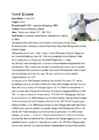
Carl Lewis #1 Carl Lewis #2 Carl Lewis #3
Punktid 50 punkti Autor soovib selle materjali allalaadimise eest saada 50 punkti.
Leheküljed ~ 3 lehte Lehekülgede arv dokumendis
Aeg2008-04-22 Kuupäev, millal dokument üles laeti
Allalaadimisi 6 laadimist Kokku alla laetud
Kommentaarid 0 arvamust Teiste kasutajate poolt lisatud kommentaarid
Autor vusserdaja Õppematerjali autor

Sarnased õppematerjalid

Sports
5
doc

Sports

independence. Though the most diverse sporting event in the world, the Olympics are perhaps not the most popular. The football World Cup attracts more global interest, as measured by the larger television audience. In ancient Olympic Games the Olympic flame was ignited and it burnt until the end of the games. In modern Olympics the flame appeared in 1928. The flame represents purity, endeavor of perfection etc. In 1936 Carl Diem suggested what is now the modern Olympic Torch Relay. It is lit in Olympia by women wearing ancient-style robes using a curved mirror and the sun. It is given from runner to runner until the games have begun. The Olympic flag was created by Pierre de Coubertin in 1914. There are five rings on a white background. The rings are blue, white, yellow, green and red. They represent the five continents of the world.

Inglise keel
Gerd Kanter-inglise keeles
4
docx

Gerd Kanter-inglise keeles

Gerd Kanter Date of birth: 6. May 1979 Lenght: 196 cm Personal record 73.38 (4. september Helsingborg, 2006) Trainer: Vésteinn Hafsteinsson (Island) Other: Estonian male athlete (2007, 2008, 2011) Gerd Kanter is an Estonian discus thrower. Gerd spent his childhood in Tallinn. After graduating the first class he went with parents from Tallinn to Vana-Vigala. He started to study in elementary school in Vana-Vigala. High school Gerd graduated already in Pärnu-Jaagupi. After graduating it he went to study to Higher School of Economics, Business Management and received his diploma in June 2001. Now he is completing Estonian Business School. Kanter residences are in Tallinn and in the field of Vigala Tiduvere village. His first coach was Ando Palginõmm. In the time of studies business management his coach was Helgi Parts. Their collaboration was short, because the coach's health was deteriorated. Then he practiced alone for about six months. In the end of 1998 Aleksander Tammert senior st

Inglise keel
Shaun White
8
rtf

Shaun White

Shaun White Shaun Roger White (born September 3, 1986) is an American professional snowboarder and skateboarder. He is a two-time Olympic gold medalist. He rides regular stance, twelve and negative three degrees on his board. Addressing his perception of the nickname "The Flying Tomato", Rolling Stone wrote, "he used to embrace it, even wearing headbands with a flying- tomato logo, but he has grown tired of it." He has also been nicknamed as "animal", a reference to a character from the satirical puppet show The Muppet Show. Early life White was born in San Diego, California. His ancestry includes Irish and Italian. He was born with a Tetralogy of Fallot, a congenital heart defect for which he endured two open-heart operations before the age of one. He stands 5'8" (1.73 m) tall. White spent his formative years riding Okemo Mountain and Bear Mountain, small ski resorts found in Ludlow, Vermont, and the San Bernardino Mountains of

Inglise keel
Boston Celtics
10
pptx

Boston Celtics

The Boston Celtics Jürgen Ulla Introduction The Boston Celtics are a National Basketball Association team situated in Boston, Massachusets. They play in the Atlantic Division of the Eastern Conference. Boston Celtics was founded in 1946. They play their home games at the TD Garden, which they share with the Boston Bruins of the NHL. Their mascot is "Lucky the Leprechaun". Rivalries Los Angeles Lakers The rivalry between the Boston Celtics and Los Angeles Lakers involves the two most storied basketball franchises in NBA history. It has been called the best rivalry in the NBA. The two teams have met a record twelve times in the NBA Finals, starting with their first Finals meeting in 1959. Philadelphia 76ers The Celtics­76ers rivalry is a rivalry between the Celtics and Philadelphia 76ers. The two teams have the most meetings in the NBA Playoffs, playing each other in 19 series with the Celtics winning 12 of them. Boston Celtics Legen

Inglise keel
Rootsi kuningapere
11
doc

Rootsi kuningapere

(school) The Royal Family Of Sweden Report (name) (your location and year) Contents Introduction.................................................................................................................................3 King Carl XVI Gustaf.................................................................................................................4 Hobbies:................................................................................................................................. 4 The Queen Silvia.........................................................................................................................5 Hobbies:..................................................................................

Inglise keel
Shaun White
2
doc

Shaun White

My favourite sportsmen Shaun White Shaun White won the gold medal in halfpipe at the 2006 winter Olympics. The boarder, sometimes called the flying tomato, sor his wild red hair, won the event by beating his fellow a famous snowboarder Danny Cass. White is an athlete who does two thing: snowboarding and skateboarding. He was the first person to won at both Summer and Winter X Games in two different sports. Shaun White was born September 3, 1986 in California. Shaun started snowboarding when he was six years old after watchin his bigger brother Jesse White trying it. Shaun started to compete in amateur competitions a year later. After winning almost every snowboard competition he took part, he was became sponsored by Burton, the worlds most famous snowboarding company, and became a pro when he was only 13. Shaun was given a nickname Future Boy, when he first started as a pro. He was only 13 but he

Inglise keel
Ender s game
9
rtf

"Ender's game"

Book Report on "Ender's Game" By Taavo Allik March 23, 2009 Book Report on "Ender's Game".................................................................................................. Orson Scott Card....................................................................................................................... The Setting................................................................................................................................ Main Characters........................................................................................................................ Ender..................................................................................................................................... Valentine............................................................................................................................... Peter..........................................................................

Inglise keel
Videvik kogu raamat Inglise keeles
274
docx

Videvik(kogu raamat Inglise keeles)

Color-- -1- -2- -3- -4- -5- -6- -7- -8- -9- Text Size-- 10-- 11-- 12-- 13-- 14-- 15-- 16-- 17-- 18-- 19-- 20-- 21-- 22-- 23-- 24 TWILIGHT By Stephenie Meyer Contents PREFACE 1. FIRST SIGHT 2. OPEN BOOK 3. PHENOMENON 4. INVITATIONS 5. BLOOD TYPE 6. SCARY STORIES 7. NIGHTMARE 8. PORT ANGELES 9. THEORY 10. INTERROGATIONS 11. COMPLICATIONS 12. BALANCING 13. CONFESSIONS 14. MIND OVER MATTER 15. THE CULLENS 16. CARLISLE 17. THE GAME 18. THE HUNT 19. GOODBYES 20. IMPATIENCE 21. PHONE CALL 22. HIDE-AND-SEEK 23. THE ANGEL 24. AN IMPASSE EPILOGUE: AN OCCASION twilight STEPHENIE MEYER LITTLE, BROWN AND COMPANY New York Boston Text copyright © 2005 by Stephenie Meyer All rights reserved. Little, Brown and Company Time Warner Book Group 1271 Avenue of the Americas, New York, NY 10020 Visit our Web site at www.lb-teens.com First Edition: September 2005 The characters and events portrayed in this book are fictitious. Any similarity to real persons, living or dead, is coincidental and not intende

Kirjandus


Meedia

Kommentaarid (0)

Kommentaarid sellele materjalile puuduvad. Ole esimene ja kommenteeri


Sellel veebilehel kasutatakse küpsiseid. Kasutamist jätkates nõustute küpsiste ja veebilehe üldtingimustega Nõustun