Vajad kellegagi rääkida?
Küsi julgelt abi LasteAbi
Logi sisse

Useful language (2)

5 VÄGA HEA
Punktid
Useful language
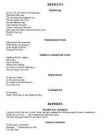
FORMAL LETTERS
Letters objecting to someone 's plans
I am writing to express my concern /disappointment / alarm at hearing ...
I was extremely alarmed/ sorry /distressed to hear about your plans to ...
As I think you know , …
May I point out that …
I feel I really must object to ...
I am extremely concerned at the thought that ...
It must be very clear that ...
If these proposals go ahead , ... will happen .
Another threat to ... , if these proposals go ahead, would come from ...
I dread to imagine what damage this will cause.
May I respectfully suggest that you ...
I was wondering if you had considered this alternative ?
Would it not be possible to ... ?
Letters of complaint
I am writing to complain about ...
I am writing to tell you how disappointed/annoyed I feel about ...
I was amazed/distressed/horrified to find that ...
As you must realise, ...
I am sure you know that ...
I am sure you can imagine ...
I am sure you will appreciate that ...
It goes without saying that ...
At the very least , I look forward to receiving ...
Unless you ... , I am afraid that I will have to take this matter further .
Letters of recommendation
I am writing to you on behalf of ...
I have known X for ... years .
She / He has shown herself/ himself to be extremely ...
X would seem to fit the requirements of this job perfectly.
I have no hesitation in recommending X as a ...
Letters to the editor
I am writing about the article on ... , which appeared (in last night 's paper).
I am writing with reference to the article you published (in last month 's issue).
I have just read your article on ... and I feel I must ...
You raised some issues which I feel strongly about.
At the start of your article, you appear to claim that ...
I am afraid I totally disagree.
I am completely in agreement.
I am sure readers will agree with me when I say that ...
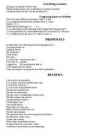
ARTICLES
Sequencing
At first / To start with/In the beginning , ...
Then/Next/After that, ...
The next thing that happened was ...
The next thing I knew was ...
Seconds /Minutes later ,
Late on/Some time later,
It wasn't until much later that ...
After some time/After what seemed like years, ...
Finally /In the end, ...
At last, ...
Simultaneous events
Meanwhile/In the meantime,
While all this was going on,
In the middle of all this, ...
During all this time, ...
Sudden or unexpected events
Suddenly/All of a sudden, ...
All at once , ...
Out of the blue , ...
Without any warning, ...
Just when I was least expecting it, ...
The next thing I knew was ...
Rapid events
As quick as a flash, ...
In the wink of an eye, ...
In a matter of seconds/minutes, ...
In no time at all, ...
Looking back
In retrospect, ...
When I think back to what happened then, ...
REPORTS
Introductory comments
I recently visited (the new Leisure Centre) and have prepared the following report for your consideration.
Further to my visit to ... , I have prepared the following report.
The following report relates to my recent visit to ...
General comments
On the whole , I found that ...
Although ... , I should point out that ...
It is a fact that ...
Concluding comments
All things considered, I believe that ...
Taking all these points into consideration, I would recommend ...
I recommend that we look into the possibility of ...
Comparing places or facilities
One of the main differences between X and Y is that …
X is completely/entirely/totally different from Y in that …
Unlike X, Y is ...
While/Whereas/Although X is ... , Y is ...
X is a little/ slightly /somewhat/a great deal (bigger/more elegant than Y.
X is not quite /nearly as (comfortable/expensive/ convenient ) as Y because ...
X is virtually/exactly the same as Y when it comes to ...
PROPOSALS
As requested , I am submitting the following proposal on ...
I recommend that we ...
I propose that we ...
We should also ...
I believe that ...
We could ...
It is a fact that , which means that ...
If we were to , it would ...
I suggest we… .We would then be able to ...
I feel strongly that we should ...
I trust you will give my proposal your full consideration.
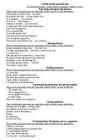
REVIEWS
x has much to recommend it.
X is, at heart , a(n) love/spy/ adventure story.
It is based on a book by ...
It is set in the countryside /the future.
The film has a quality cast.
The film was directed by ...
The film score is enchanting/evocative/ scary .
The film captures the spirit of ...
The hero /heroine/villain is ...
I felt/thought it was …
I was impressed by …
What struck me most was ...
What I liked most/didn't like was ...
The plot was gripping.
The characters were very convincing/very well drawn.
On reflection, I think it was ...
It struck me as being ...
What I didn't understand was how ...
In spite of these few criticisms, I think ...
I would have no hesitation in recommending …
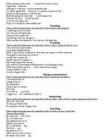
Useful words and phrases
To write about Letters, essays , articles, proposals, reports, reviews
Expressing and supporting opinions
These words and expressions are especially useful in letters, essays and articles.
I believe/do not believe that ... (because) ...
Personally I feel that ... Let me explain why.
In my opinion, ... Just consider ...
As I see it, … The reason is ...
It seems to me that… This is because ...
I would argue that for the following reasons .
I feel very strongly that ...
I am convinced that ...
I am of the opinion that ...
I am very much in favour of/against ...
I am completely opposed to ...
The reasons why I believe that ... are as follows.
Opening phrases
These words and expressions are especially useful in letters, essays and articles.
People (sometimes) claim that … but I feel that ...
It is often said/argued that ... However , it seems to me that ...
It is a fact that ...
Over the past few months/years, it seems that …
Recently, we have all become concerned that …
Nowadays, we are all realising that ...
In the past, people used to …, but now ...
These days, it seems that ….
Making statements
These words and expressions are especially useful in letters, essays and articles.
It is clear that ...
On the whole, it appears /seems that ...
We must take into account the fact that ....
It goes without saying that ...
It is important to remember that ...
Explaining/Expanding ideas and giving examples
These words and expressions are especially useful in letters, essays and articles.
... This means that ...
... This is largely due to ...
…For example/For instance , ...
…In other words, ...
Take, for example, the situation in ...
Listing arguments
These words and expressions are especially useful in letters, essays and articles.
Firstly/In the first place / To begin with, …
Secondly/A second area to consider is …
Another point to remember is ...
Finally, ...
In conclusion , ..
Last but not least, ...
Evaluating ideas, Dismissing contrary arguments
These words and expressions are especially useful in letters, essays and articles.
I think it is true that ...
I totally disagree/agree with the point that…
It is questionable whether …
I am sure/I doubt whether …
It is true that ... On the other hand, ...
While nobody can deny that ... , I would like to point out that …
I agree that …However, ...
Although it is true that , we must remember that ...
It could be argued that … However, I would like to point out that ...
Despite all the arguments, I still feel that ...
Notwithstanding the claim that ... , I would argue that…
It may be true that ... , but all too often ...
In no way can I agree that ...
Surely it is completely unacceptable that ...
Persuading
These words and expressions are especially useful in letters and proposals.
I would urge you to consider…
I am sure you will agree that…
Surely you must agree that…
I would urge you very strongly to ...
When you hear the arguments, I am sure you will agree that ...
Evaluating
These words and expressions are especially useful in reports, proposals and reviews.
I was extremely impressed by…
I was rather disappointed by…
While X has much to commend it, I feel that some aspects could be improved.
The problem could easily be solved if ...
I would like to praise the ...
Another area for complaint is …
My overall impression was that …
I am sure that visitors/readers/holidaymakers will thoroughly enjoy ...
While some people will love ... , others may feel less happy .
A major problem is that ...
I was less happy with ...
Making recommendations
These words and expressions are especially useful in proposals and reports.
I recommend that we ...
I propose that we ...
We should also ...
I believe that we should ...
We could ...
If we were to… , we could ...
I suggest we… We would then be able to ...
Summarising
These words and expressions are especially useful in letters, essays, articles, reports, proposals and reviews.
All in all, I think that ...
To sum up, I believe that ...
In conclusion, the facts suggest that ...
Describing
These words and expressions are especially useful in articles, reviews, and letters.
Character/Personality
He tends to be ... She can be ...
He is inclined to be ...
She appears/seems to be ...
Hobbies and interests
He is crazy about ... -ing.
She loves ... -ing.
His greatest love is ...
What she loves most in life is ...
He spends all his time ... -ing.
Useful language #1 Useful language #2 Useful language #3 Useful language #4 Useful language #5
Punktid 50 punkti Autor soovib selle materjali allalaadimise eest saada 50 punkti.
Leheküljed ~ 5 lehte Lehekülgede arv dokumendis
Aeg2010-03-04 Kuupäev, millal dokument üles laeti
Allalaadimisi 58 laadimist Kokku alla laetud
Kommentaarid 2 arvamust Teiste kasutajate poolt lisatud kommentaarid
Autor lvjonokkk Õppematerjali autor

Sarnased õppematerjalid

Letters
38
doc

Letters

· salutation · Paragraph 1 reasons for writing · Paragraphs 2, 3 development · Final paragraph closing remarks · Name · Letters are divided into two categories, formal and informal. There are various types of formal and informal letters . · It is important to think about the person who you are writing to before you begin writing a letter. If the wrong style is used, the letter will look impolite, silly or odd. For example, if you used formal language to write to a close friend, the letter would look odd, or if you used informal language to write a letter to a company, the letter would look impolite. · There are certain characteristics which allow us to distinguish between formal and informal letters. These are: ~ The salutation (e.g. Dear Sir/Madam, Dear Bill) ~ The style or language (e.g. use of formal language for formal letters, or the use of slang and idioms for informal letters) ~ The closing remarks (e.g

Inglise keel
Inglise keele riigieksami kirjutamise spikker- suur kokkuvõte
8
doc

Inglise keele riigieksami kirjutamise spikker / suur kokkuvõte

endiltteisele. Viimane lõik moodustab kokkuvõtte ja peaks esimeseslauses võtma eelpoolt oodud arutluse kokku ning seejärel lisamasellest tuleneva lõpumärkuse. · Expressing opinions Introduction State the topic and your own opinion clearly without using too many personal opinion words Main body (para. 2 - 4) Give the first, second and third argument and examples or reasons to support your opinion Conclusion Re-state your opinion, using different words Useful language To list points ­ firstly, in the first place, first of all, to start with, secondly, thirdly, finally, last but not least To add more points to the same topic ­ what is more, furthermore, also, apart from this, in addition to, moreover, besides, too, not to mention the fact that, another major reason To introduce conflicting viewpoints ­ a lot of people believe/think, many people are in favour of/against, peopleoften claim that, it is popularly believed that, it is argued that,

Inglise keel
600976-teacher-guide-for-writing-c1-advanced
26
pdf

600976-teacher-guide-for- writing-c1-advanced

 Key terminology Key terminology Language assessment is a specialist field and there is some common terminology which might be These terms are commonly used to refer to Cambridge English Qualifications. There are also some unfamiliar to you. Learning to recognise these terms will help you to understand this guide. other terms in this guide which are more widely used in the field of assessment. When these terms

Kategoriseerimata
Presentation vocabulary
11
doc

Presentation vocabulary

future I will refer to this later this will be referred to later Personal pronouns Active verbs use more personal pronouns: I think ... We are working on ... Be careful not to overuse I. We is a good alternative for talking about companies: We will launch the product in June. Reference to the audience As I'm sure you know ... We have all experienced ... You may remember ... As I'm sure we'd all agree ... Everyday language Using slang and everyday expressions can make an impact on the audience and add drama: Where's the caring side of employment gone? I'll tell you where. It's hiding behind a damned set of targets and objectives that's where it is! You need to know your audience very well to use this kind of language. Emphasising and minimising Emphasising Strong adverbs intensify adjectives: We've had an extremely good year.

Inglise keel
Solutions Advanced Workbook key
24
pdf

Solutions Advanced Workbook key

· In a weaker class, work on the first have a huge amount of luggage with representing the consonants of the statement together and then ask the him. I imagine he is planning to stay language. The first true alphabet was students to work individually. for a long time. He looks bewildered the Semitic alphabet which appeared and rather disorientated. It must feel · Use of English: Encourage the students to read the whole text around 1700 BC, followed, about 700

Inglise keel
Inglise keele jaotusmaterjal
37
doc

Inglise keele jaotusmaterjal

/ So and so, thanks. · Not so good, actually 1 The English alphabet Spelling Work with your partner and spell out first your name and then some names of places. Write down each letter as you hear it, and then say the word. The English alphabet on the phone: You might find the following alphabet (used by international airlines) useful when trying to spell a word on the telephone. A Alpha O Oscar Ä Alpha-Echo Ö Oscar-Echo B Bravo P Papa C Charlie Q Quebec D Delta R Romeo E Echo S Sierra F Foxtrot Sch Sierra Charlie Hotel G Golf T Tango

Inglise keel
Jane Austen
234
pdf

Jane Austen

The Project Gutenberg EBook of Pride and Prejudice, by Jane Austen This eBook is for the use of anyone anywhere at no cost and with almost no restrictions whatsoever. You may copy it, give it away or re-use it under the terms of the Project Gutenberg License included with this eBook or online at www.gutenberg.org Title: Pride and Prejudice Author: Jane Austen Release Date: August 26, 2008 [EBook #1342] [Last updated: August 11, 2011] Language: English Character set encoding: ASCII *** START OF THIS PROJECT GUTENBERG EBOOK PRIDE AND PREJUDICE *** Produced by Anonymous Volunteers, and David Widger PRIDE AND PREJUDICE By Jane Austen Contents Chapter 1 Chapter 22 Chapter 2 Chapter 23 Chapter 43 Chapter 3 Chapter 24 Chapter 44 Chapter 4 Chapter 25 Chapter 45

Kirjandus
Writing in the Business World
9
doc

Writing in the Business World

their contractual obligations. By reversing the order in which the two problems are described, the secretary ensures that this piece of information receives the maximum amount of emphasis, or focus, and thus leads logically into the recommendation. We will be looking again at the idea of linguistic focus in Unit 6. 3 Grammar, Spelling and Sentence Construction As well as reorganizing the information in the report the secretary also made a number of changes to the language which the writer had used. You probably noticed that Text 1 contained a number of grammatical and spelling mistakes. If not, look for them now before continuing with this Discussion section. Grammar `AMC's works have gone down' AMC's work has really gone down. (Work is a singular, uncountable noun.) `since five days' for five days (Since is used only with a

Inglise keel


Kommentaarid (2)

timps16 profiilipilt
timps16: not exactly what i was looking for, but (anna)ABIKS IKKA!!!

16:09 01-05-2011
Cheithlyn profiilipilt
Cheithlyn: Kasutasin seda järelikult aitas:)
22:35 09-03-2011


Sellel veebilehel kasutatakse küpsiseid. Kasutamist jätkates nõustute küpsiste ja veebilehe üldtingimustega Nõustun