Vajad kellegagi rääkida?
Küsi julgelt abi LasteAbi
Logi sisse

Present simple and continious (0)

5 VÄGA HEA
Punktid


Present Simple and Continuous  
 
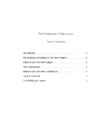
Table of Contents 
 
 
Present Simple ..................................................................... 2 
The spelling of endings in the Present Simple ....................... 2 
When to use the Present Simple ........................................... 3 
The verb ’be’ ......................................................................... 4 
Present Continuous.............................................................. 5 
The spelling of endings in the Present Continuous................ 5 
When to use the Present Continuous.................................... 6 
State verbs and event ( action or dynamic ) verbs ................... 7 
 
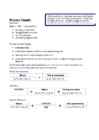
Present Simple  
 
In the Present Simple we use the verb without an ending 
 
 
work  
 
 
you  live  
 
 
we think 
they dance 
NB! In the third person singular  (he, she, it, Mary , my friend, etc.) the verb ends 
in -or -es. he sings 
she sleeps 
it catches 
Negative  
I/you/we/they do not work   
I/you/we/they don’t work 
 
 
he/she/it does not sleep  
 
he/she/it doesn’t sleep 
Question  Do I/you/we/they study
 
 
Does he/she/it work
 
The spelling of endings in the Present Simple 
 
In the third person singular (he/she/it), a present simple verb ends in -s
  I 
know  he 
knows 
  I 
work she 
works 
1 After sshch and x we add -es
  I 
pass  
 it 
passes 
  I 
wash  she 
washes 
  I 
catch he 
catches 
  I 
mix 
 he 
mixes 
2 Some verbs ending in o have -es
  I 
go 
 he 
goes 
  I 
do 
 she 
does 
3 When a verb ends in a  consonant + y, the y  changes to -ies
  I 
hurry he 
hurries 
 
 
I copy 
she copies 
 

Whe do not change  y after a vowel
 
 
I stay  
he stays 
  I 
enjoy he 
enjoys 
  
 
When to use the Present Simple 
 
The Present simple generally refers to: 
•  Facts that are always true 
  
  Water 
boils at 100 degrees Celsius. 
•   Habits and repeated actions  
  
   British  
people  drink  a lot of tea. 
  
  I 
get up at  sevenhave  breakfast  and go to  university . 
•  States, thoughts and feelings  
  
  I 
don't like gangster  films
The Present Simple is also used in 
•   Making declarations 
  Verbs describing opinions and feelings tend to be state verbs. 
  
  I 
hope  you'll come  to my party. 
  
  I 
bet you don't know the  answer ! 
•  Headlines 
These are written in a 'telegram' style, and references to the past are usually  
simplified to present simple. 
            
Big family loses home in fire 
•  Instructions and itineraries 
Instructions and recipes can be written in present simple instead of in imperative 
forms. This style is more personal. 
  
   First  
you 
roll out the pastry. 
Itineraries are descriptions of travel arrangements
  
  On 
day 
three 
we 
visit  Stratford -upon- Avon . 
•   Summaries of events  
Plots of stories , films etc, and summaries of historical events use present (and 
present perfect) tenses
 

           May 1945: The war in  Europe  comes to an end. 
           ... At the end of the play both  families  realise that their hatred had caused 
the deaths of the lovers... 
•   Historic present in narrative and 'funny stories' 
In informal speech, it is possible to use the 'historic present' to describe past 
events, especially to make the narration seem more immediate and dramatic.  
            
... So then the second man asks the first one why he has a banana in 
his ear and the first one  says ... 
•  Timetables 
We use the present simple for the future when we are talking about a timetable, 
usually a public one. 
 
 
The  train  leaves at six twenty tomorrow  morning . 
The  match  starts at  half  past seven. 


The verb ’be’ 
 
The verb ’be’ has  irregular forms in the present simple. 
 
 
am   
 
 
/I’m 
you/we/they are   
/you’re/we’re/they’re 
he/she/it is 
 
/he’s/she’s/it’s 
The verb ’be’ is also used in negatives and questions
Negative I 
am not 
 
 
/I’m not 
  you/we/they 
are not 
/ aren ’t 
  he/she/it 
is not   
/isn’t  
 
Question  Am I? 
Are you/we/they? 
Is he/she/it? 


Present Continuous 
 
The present continuous is the present tense of be + an ing-form
 
 
am looking  
 
 
I’ m looking  
  you/we/they 
are working  you/we/they’re working 
  he/she/it 
is moving    he/she/it’s moving 
Negative  
I’m 
not watching  
   you/we/they 
aren’t driving  
   he/she/it 
isn’t opening 
Question   
Am I looking


Are you/we/they singing


Is he/she/it  travelling
 
 
The spelling of endings in the Present Continuous 
 
1 We normally leave out when we add -ing to a verb. 
 take  
taking  
 drive  
driving 
argue  arguing 
But we keep a double  e  before -ing
 see 
 seeing 
 agree 
 agreeing 
2 When a verb ends in -ie, it changes to -ying
 
die   
dying 
 
lie 
 
lying 
But only -y does not change 
 hurry 
 hurrying 
3 If a one- syllable verb ends with one vowel and one consonant, we double the 
consonant. 
 
win  
winning 
 
put  
putting 
 

We also double the consonant in words of more than one syllable, if the last 
syllable is stressed. 
 permit permitting 
 prefer  preferring 
In British English  l is usually doubled , even if the syllable is unstressed. 
 travel  
travelling 
 
When to use the Present Continuous 
 
The Present continuous generally refers to:  
•  Actions which are in progress at the moment.  
These can be temporary: 
  
  I'm staying in a  hotel  until I  find a flat. 
   They 
can 
be 
actually in progress: 
  
  The 
dog 
is sleeping on our bed! 
   
Or they can be generally in progress but not actually happening at the 
moment: 
I'm learning to  drive . 
The Present Continuous is also used for 
•  Temporary or repeated actions 
  This use emphasises a temporary or repeated habitual action. 
 
   
My car has broken down, so I am walking  to work these days. 
 
   
Are you enjoying your stay  here? 
•  Complaints about bad habits 
  
  You 
are always complaining about my cooking! 
   Other possible adverbs are: constantly, continually,  forever  
Describing change and development  
            
Things are getting  worse! 
            
More and more people are giving up smoking. 
•  Future arrangements 
We use the present continuous for what someone has arranged to do in the 
future.  
I’m meeting Harriet at six o’ clock . 
 Sarah 
is going to Paris next week. 
 

State verbs and event (action or dynamic) verbs 
  
State verbs describe a continuing state, so do not usually have a continuous 
form. Typical examples are: 
 believe, belong, consist, contain, doubt , fit, have, know, like, love, matter , mean
own, prefer , understand , seem, suppose, suspect, want,  wish  
 2 Some verbs have a stative meaning and a different active meaning. 
  Typical examples are: 
 be, dependfeel , have, measure, see,  taste , think, weigh  
Compare these uses: 
 State 
Event 
Jack is noisy. 
Jill  is being noisy. 
Deirdre has a Porsche
We are having  an interesting conversation !  
think I like you! 
David is thinking about getting a new job. 
This fish tastes awful! 
I am just tasting the soup
feel that you are wrong
am feeling terrible. 
This bag weighs a ton! 
We are weighing the baby. 
It depends what you mean.   I am depending on you. 
The differences in the meaning apply to all tenses, not just to present tenses. 
 

Vasakule Paremale
Present simple and continious #1 Present simple and continious #2 Present simple and continious #3 Present simple and continious #4 Present simple and continious #5 Present simple and continious #6 Present simple and continious #7
Punktid 100 punkti Autor soovib selle materjali allalaadimise eest saada 100 punkti.
Leheküljed ~ 7 lehte Lehekülgede arv dokumendis
Aeg2013-12-02 Kuupäev, millal dokument üles laeti
Allalaadimisi 7 laadimist Kokku alla laetud
Kommentaarid 0 arvamust Teiste kasutajate poolt lisatud kommentaarid
Autor 213757 Õppematerjali autor

Sarnased õppematerjalid

Past simple and continious
10
pdf

Past simple and continious

Past Simple and Continuous Table of Contents Past Simple .......................................................................... 2 The spelling of endings in the Past Simple ............................ 3 When to use the Past Simple ................................................ 3 Past Continuous .................................................................. 4 When to use the Past Continuous......................................... 4 Used to & would................................................................... 5 Unfulfilled past events.......................................................... 5 Past Simple Regular Past Simple forms end in -ed. I worked he danced

Inglise keel
Present Tenses
10
docx

Present Tenses.

The Present Simple is the most basic tense in the English language. It is an interesting tense because it can be used Present Simple to express the future. Generally, though, we use it to Basic form describe the present activities or to talk about routines or Subject + Verb + -s (present form)  John lives in New York.  We play football every day.  You are really kind.  The meeting starts at 3 PM. Use the Present Simple:  with state verbs.  to talk about situations in life that last a relatively long time.  when an event is certain to happen in the future.

Inglise keel
Inglise keele ajavormid
10
odt

Inglise keele ajavormid

Will + infinitive (will go) Am/is/are going to + infinitive (is going to rain) 1.A decision at the moment of 1.Future plans made before the speaking: moment of speaking: A: 'I'm cold'. A: 'We've run out of milk.' B: 'I'll close the window'. B: 'I know, I'm going to buy some.' 2.Prediction based on opinion: 2.Prediction based on present I think the Conservatives will win the evidence: next election. Look at those boys playing football! 3.A future fact: They're going to break the window. He will be ten next year. 4.Promises / requests / refusal / willingness: I'll help you with your homework. Will you give me a hand? 5.In the same way as the future continuous, but with state verbs: I'll be at the station when you arrive. 'Shall' is used mainly in the forms 'shall I

Inglise keel
Inglise keele põhitõed algajale
42
pptx

Inglise keele põhitõed algajale

  on Christmas Day (but at Christmas) We use at in these expressions:     at night - at Christmas - at the moment / at present - at the     same time - at weekends - at the age of...       IN   DURING

Inglise keel
Ways of expressing the Future
16
pdf

Ways of expressing the Future

Ways of expressing the Future Table of Contents Future Simple ...................................................................... 2 Be going to ........................................................................... 3 Present Continuous .............................................................. 3 Present Simple ..................................................................... 4 Future Continuous ............................................................... 4 Future Perfect....................................................................... 6 Other ways of referring to the future ..................................... 7 Other future references......................................................... 8 Future Simple In Future Simple we use the modal verb will + the verb

Inglise keel
English Grammar Book 1
159
pdf

English Grammar Book 1

sentences. All students of English, be they native speakers or those who are studying English as a second language, will profit from the fundamental introduction and review of grammar provided by SADDLEBACK'S BASIC ENGLISH GRAMMAR 1 and 2. Helpful marginal notes throughout the books have been provided to reinforce existing skills and call attention to common problem areas. We wish you every success in your pursuit of English proficiency. 1 What is Grammar? 5 The Simple Past Tense 98 Regular and Irregular Verbs 99 Was and Were 104 2 The Capital Letter 6 The Past Progressive Tense 106 The Future Tense 108 Can and Could 112

Inglise keel
Chpt 12 Verb Tenses
38
ppt

Chpt 12 Verb Tenses

Cali 2005 Was Born Traveled to Europe Husband 1978 School graduates @ Oxford 1999 Started Got married School 1983 2008 2 The Six English Verb Tenses Three Simple Tenses Simple continuous Present ­ You walk. You are walking I run. I am running. Past ­ You Walked You were walking. I ran. I was running. Future ­ You will walk. You will be walking. I will run. I will be running. Three Perfect Tenses Perfect continuous Present perfect ­ you have walked

Inglise keel
Ajavormide teooria
18
doc

Ajavormide teooria

Windows are not made of wood. Simple Present · · New York is a small city. It is not important that this fact is untrue. [VERB] + s/es in third person USE 3 Scheduled Events in the Near Examples: Future · You speak English. · Do you speak English?

Inglise keel


Kommentaarid (0)

Kommentaarid sellele materjalile puuduvad. Ole esimene ja kommenteeri


Sellel veebilehel kasutatakse küpsiseid. Kasutamist jätkates nõustute küpsiste ja veebilehe üldtingimustega Nõustun