 5 punkti
Autor soovib selle materjali allalaadimise eest saada 5 punkti.
5 punkti
Autor soovib selle materjali allalaadimise eest saada 5 punkti.
 ~ 7 lehte
Lehekülgede arv dokumendis
~ 7 lehte
Lehekülgede arv dokumendis
 2013-05-02
Kuupäev, millal dokument üles laeti
2013-05-02
Kuupäev, millal dokument üles laeti
 4 laadimist
Kokku alla laetud
4 laadimist
Kokku alla laetud
 0 arvamust
Teiste kasutajate poolt lisatud kommentaarid
0 arvamust
Teiste kasutajate poolt lisatud kommentaarid
 hewlett228
Õppematerjali autor
hewlett228
Õppematerjali autor
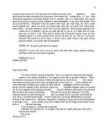
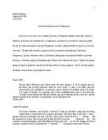
1 Ryker Huffman Spanish 432.001 4-15-2013 La Celestina Ejercicio de Traducción Esta cita es en el auto uno, cuando Celestina y Sempronio hablan en privado. Calisto y Pármeno se acercan, de la habitación, y empiezan a escuchar la conversación. Celestina puede oír que se están acercando e instruye Sempronio "escucha y déjame hablar lo que a ti y a mí me conviene." Después de escuchar a algunos de la conversación diseñada por Celestina y Sempronio, Calisto y Pármeno salen y Celestina y Sempronio continúan de hablar en privado. Entonces, Celestina explica a Sempronio que Calisto está "enfermo del amor." Eligio este pasaje porque explica la punta de vista de la Celestina sobre el "amor impervio." En la cita ella explica de dónde viene el amor y qué podemos hacer. Finch, 2003 Has de saber, Pármeno, que Calisto anda
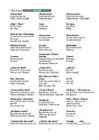
Alfabeto A/a Ee / ee J/j N/n R/r W/w B/b Ff / ff K/k Ñ/ñ S/s X/x C/c Gg / gg L/l O/o T/t Y/y Ch / ch Hh / hh Ll / ll P/p U/u Z/z Dd / dd I/i M/m Q/q V/v - Saludos y despedidas ¡Hola! ¡Hasta pronto! ¡Buenos días! ¡Hasta luego! ¡Buenas tardes! ¡Hasta mañana! ¡Buenas noches! ¡A
proceso es lento y encuentra mucha resistencia tanto por parte de los científicos como de los legos. A lo largo de la historia, la humanidad siempre se ha resistido al cambio y a la aceptación de ideas nuevas. Los textos históricos están llenos de ejemplos. Cuando Galileo descubrió las lunas de Júpiter, los astrónomos de su época se negaron a aceptar su existencia e incluso a mirar esos satélites, pues estaban en conflicto con las creencias aceptadas. Así ocurre ahora entre los psiquiatras y otros terapeutas, que se 3 niegan a examinar y evaluar las considerables pruebas reunidas acerca de la supervivencia tras la muerte física y sobre los recuerdos de vidas pasadas. Mantienen los ojos bien cerrados. Este libro es mi pequeña contribución a la investigación en el campo de la parapsicología, sobre todo en la rama que se refiere a nuestras experiencias antes del nacimiento y después de la muerte
capacidad para lograr una armonía de contrarios. Pese a ser tan novedosa como inesperada, cobró la forma del acontecimiento con el que tanto habían fantaseado, o que tanto habían temido, sus coetáneos. Pese a ser una revolución propiamente rusa –que contradecía los pronósticos de la tradición socialista europea acerca de dónde y cómo habría de producirse el acceso al poder del proletariado–, se expresó en códigos ya entonces universales. Entre otras cosas, porque bebió de una larga tradición popular y plebeya desde la cual el asalto al Palacio de Invierno se prestaba automáticamente a analogías y paralelismos con las imágenes, tan bien impresas en la memoria popular, de la Toma de la Bastilla en 1789, del ascenso al poder de los jacobinos en 1792, de la Revolución de Marzo en la Prusia de 1848 o de la Comuna de París de 1871. En este sentido la Revolución rusa puso de manifiesto lo que Reinhart
This is because there is more than one meaning to "you" in Spanish (as well as in many other languages.) The informal you is used when talking to close friends, relatives, animals or children. The formal you is used when talking to someone you just met, do not know well, or someone for whom you would like to show respect (a professor, for example.) Encantado, cansado, enfermo, and aburrido are the masculine forms of the words. If the words refer to a woman or are spoken by a woman, then the final o changes to a: encantada, cansada, enferma, and aburrida In Spain, as well as Argentina, Bolivia, Chile, Paraguay, Peru, Uruguay and Venezuela, the Spanish language is called castellano instead of español. 2. Pronunciation Spanish Letter English Sound a ah e ay i ee o oh u oo ll y
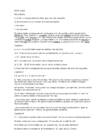
Adiós, papa! Actividades. 1. a) De la desaparición un chico que vive con su padre b) en un barrio de una ciudad al norte de España c) Policíaca 2. Un resumen. El padre estaba preocupado por la desaparición de su hijo y pidió ayuda de la detective. Él no quería ir a la policía porque sabía que amigos de Javier asociados con drogas. Para rescate a su hijo, entrega Fernández tiene que pagar dinero o ellos cortaron los dedos de Javier, y luego matarlo. Al final resulta que esto es engaño a causa del odio de su padre. Y Javier no ha muerto, y se pasó a vivir con una novia. Capítulo I 4. a) 3 la acción tiene lugar en martes 3 de octubre b) 6 6 de la tarde, Javier sale de su habitación con una bolsa en la mano. c) 17 Javier tiene 17 años d) 9 La cena es a las nueve, como todas las noches e) 11.30 11.30 de la noche, Javier no ha venido a cenar 6. Razones: Se ha escapado de casa porque está cansado de vivir con su padre.
es la ciencia que estudia la producción, transmisión y recepción de los sonidos. La lengua es un sistema de signos que se usa para la comunicación. Los signos se componen de sonidos. Son unidades que se producen mediante la acción de los órganos articulatorios. La función de los elementos fónicos del lenguaje es, pues, la de distinguir la significación de las palabras o de las frases y asegurar así la comunicación entre el hablante y su interlocutor. fonética articulatoria → la acción de los órganos articulatorios fonética acústica → medición de las ondas sonoras que se crean en el aire fonética auditiva → la acción del oído Entendemos por fonología la disciplina lingüística que se ocupa del estudio de la función de los elementos fónicos de las lenguas, es decir, que estudia los sonidos desde el punto de vista de su
actual, la competencia es global. Japón implementa plan de estudios de lenguas extranjeras en el sistema escolar público ya tiene la escuela primaria. Esto permite a los estudiantes a ser más atractivos para los clientes extranjeros. Si un cliente extranjero puede obtener el mismo producto de una empresa americana como pueden una empresa japonesa, que trata de la empresa japonesa será mucho más fácil para el cliente. Esta idea también significa que cuantos más idiomas de una empresa es capaz de operar en, y luego los clientes más que el negocio puede atraer. La fluidez en una segunda lengua no sólo ayuda a la empresa, sino también a las personas que desean aplicar para un trabajo en la compañía que pueda poner conocimiento de un segundo idioma en su currículum. Aunque muchos beneficios relacionados con los negocios se han mencionado, esos no son los únicos beneficios de una segunda lengua. En un diario de 1967 comparando dos grupos
 annaabi.ee











Kõik kommentaarid