Vajad kellegagi rääkida?
Küsi julgelt abi LasteAbi
Logi sisse

La Celestina Ejercicio de Traducción (0)

5 VÄGA HEA
Punktid
5
Ryker Huffman
Spanish 432.001
4-15-2013
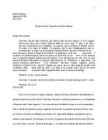
La Celestina Ejercicio de Traducción
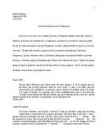
Esta cita es en el auto uno, cuando Celestina y Sempronio hablan en privado. Calisto y Pármeno se acercan, de la habitación, y empiezan a escuchar la conversación. Celestina puede oír que se están acercando e instruye Sempronio “escucha y déjame hablar lo que a ti y a mí me conviene.” Después de escuchar a algunos de la conversación diseñada por Celestina y Sempronio, Calisto y Pármeno salen y Celestina y Sempronio continúan de hablar en privado. Entonces, Celestina explica a Sempronio que Calisto está "enfermo del amor." Eligio este pasaje porque explica la punta de vista de la Celestina sobre el “amor impervio.” En la cita ella explica de dónde viene el amor y qué podemos hacer.
Finch , 2003
Has de saber, Pármeno, que Calisto anda ‘de amor quejoso. Y no lo juzgues por eso por flaco, que el amor impervio todas las cosas vence. Y sabe, si no sabes, que dos conclusiones son verdaderas. La primera, que es forzoso el hombre amar a la mujer y la mujer al hombre. La segunda, que el que verdaderamente ama es necesario que ‘se turbe con la dulzura del soberano deleite, que por el Hacedor de las cosas fue puesto, porque el linaje de los hombres ‘se perpetuase, sin lo cual perescería.
(Finch p 36)
Literal Translation
You know , Pármeno, that Calisto is lovesick°. And you shouldn’t judge him for being weaker than it; undaunted° love conquers all things. And know that, if you don’t know already , that two conclusions are true. The first , that a man is forced to love a woman and the woman love a man. The second, that he that truly loves must be bothered by the sweetness of natural delight , which the Maker of things put onto us, for the lineage of men to continue , without which it would perish°. ( ° Denotes translations taken from Finch)
Literary Translation (that I would write in a book which keeps the spirit of Rojas)
It’s easy to see, Parmeno, that Calisto is lovesick. You shouldn’t blame him for succumbing to such a strong force ; true love conquers all. And you should, know, if you don’t already, that there are two universal truths about love. First, is that it is in man’s nature to love a woman, and in women ’s to love a man. Secondly, those who are truly in love must be driven mad by the force of the erotic fantasies that come so naturally, which God gave us in order for humanity to continue; we would perish without this driving force.
Literary Translation ( even more evolved, that way I would speak)
Calisto is obviously falling for her Parmeno. Don’t be mad at him for it, real love is too much to handle. There are two things about love: One, it’s natural, and two, the sexual fantasies it causes us to have make us crazy. God made it this way so that humans can continue populating… without these fantasies that make us crazy, we would all die.
James Mabbe, Ed. Dorothy Severin, 1631
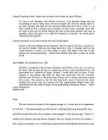
CELEST. I would have thee to know, Parmeno, that Calisto is love-sick, sick even to the death . Nor art thou for this to censure him to be a weak and foolish man: for unresistable love subdueth all things. Besides, I would have thee to know, if thou knowest it not already, that there are these two conclusions that are evermore infallibly true. The first is, that every man of force love a woman, and every woman love a man. The second is, that he who truly loves, must of necessity be much troubled and moved with the sweetness of that superexcellent delight which was ordained by Him that made all things, for the perpetuating of mankind, without which it must needs perish.
(Mabbe p 63)
Prose
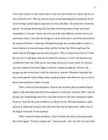
The most distinctive element of the original passage is it’s sexual tone in its explanation of “true love.” Celestina basically says that Calisto is suffering from being horny all the time, and that God made them that way so humans could propagate. In the same passage, “forzoso” is related to love between man and woman. Somehow men are, literally , forced to love women. I have a major in biophysics, so I’m thinking of a physical force that hypothetically pushes a man to love some woman. It’s also curious that he writes men are forced to love women, and not just men are forced to love. When he wrote this novel, his dad had already been burned alive for his Jewish heritage, and the Spanish Inquisition was still in full effect . The entire book is extremely agnostic; this passage referencing God ( Christian ) and the requirement of man and woman (homophobic) is very rare. I believe this to be one of the main differences between the first act and the next twenty . I also think that the agnostic nature of the work is one of the reasons behind the mystery of the book’s authorship. Although the passage has a sexually explicit overtone, it makes references to man and woman (only), and the Christian God. Which might leave the reader confused. My biggest question about this part is: Why is everyone forced to love? I think that most of us would agree, when you’re attracted to someone , or in love with someone, you would bend to there will. There may be some things that are out of your control; be it because you want so badly to make them happy , or that you so badly want pleasure . However , the passage says that we are forced to feel this attraction, to someone. What about the people that don’t want a partner ? I believe Rojas makes a good point about what effect love has on us, but it doesn’t necessarily have to affect everyone.
When I wrote my literal translation, I tried to write something that any modern English speaker could understand , and still feel the compassion in Celestina’s statement . When I read the passage, I get strong feelings about love, and I tried to preserve that when switching to English. However, I think that this came out better in my literary version . My literal translation is plain and easy to understand, but doesn’t have the lovely flow that the Spanish does ( really , none of the English versions do. For me anyways).
When I wrote the literary translation, I tried to reinstate that artistic and compassionate flow of the original. “True love conquers all”, “universal truths”, and “ succumb ” are some of the compassionate phrases that I feel demonstrate the feeling of the original. The last statement, about God and him putting that force in place , was tricky. I handled it by modifying the entire sentence structure and using key words to tie ideas together. I went back and add the word force to the previous sentence, and made sure driven was in the right spot as well. I wanted to make sure the readers understood what exactly god put into place. I think I did a good job of that, but if you didn’t get it the first time please read it again as in my “more evolved” translation. I want the connection to be drawn between the irresistible force caused by love that drives us mad and the force caused by the “soberano” part in our pants that God put there.
The most interesting words for me to translate were soberano and impervio. I translated them to mean natural, as in born with it, and amor impervio as true love. There is an entire essay dedicated to the word impervio and it’s meaning in La Celestina at http://www.ai-camineria.com/congresos/celestina.ht m, it’s very interesting.
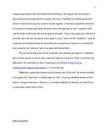
Mabbe does a great job of preserving the romantic part of the work. He invents and adds a lot of parts, but I think that it is helpful, and can’t hurt . I chose his translation because of this, and for it being so well known . However, it is severely outdated and, honestly, was hard for me to understand without Finch’s book.
BIBLIOGRAPHY
BOOKS
Rojas, Fernando De. Celestina. Trans. James Mabbe. Ed. Dorothy Severin. Warminster:
Aris & Phillips, 1987.
La Celestina Ejercicio de Traducción #1 La Celestina Ejercicio de Traducción #2 La Celestina Ejercicio de Traducción #3 La Celestina Ejercicio de Traducción #4 La Celestina Ejercicio de Traducción #5
Punktid 5 punkti Autor soovib selle materjali allalaadimise eest saada 5 punkti.
Leheküljed ~ 5 lehte Lehekülgede arv dokumendis
Aeg2013-05-02 Kuupäev, millal dokument üles laeti
Allalaadimisi 5 laadimist Kokku alla laetud
Kommentaarid 0 arvamust Teiste kasutajate poolt lisatud kommentaarid
Autor hewlett228 Õppematerjali autor

Sarnased õppematerjalid

Proyecto Final-Transducción Entre Idiomas
7
doc

Proyecto Final: Transducción Entre Idiomas

1 Ryker Huffman Spanish 432.001 29-4-2013 Proyecto Final: Transducción Entre Idiomas Pasaje seleccionado Celestina: Has de saber, Pármeno, que Calisto anda `de amor quejoso. Y no lo juzgues por eso por flaco, que el amor impervio todas las cosas vence. Y sabe, si no sabes, que dos conclusiones son verdaderas. La primera, que es forzoso el hombre amar a la mujer y la mujer al hombre. La segunda, que el que verdaderamente ama es necesario que `se turbe con la dulzura del soberano deleite, que por el Hacedor de las

Hispaania keel
TARTUFFE-inglise keelne
64
docx

TARTUFFE (inglise keelne)

TARTUFFE A COMEDY CHARACTERS MADAME PERNELLE, mother of Orgon ORGON, husband of Elmire ELMIRE, wife of Orgon DAMIS, son of Orgon MARIANE, daughter of Orgon, in love with Valere CLEANTE, brother-in-law of Orgon TARTUFFE, a hypocrite DORINE, Mariane's maid M. LOYAL, a bailiff A Police Officer FLIPOTTE, Madame Pernelle's servant The Scene is at Paris ACT I SCENE I MADAME PERNELLE and FLIPOTTE, her servant; ELMIRE, MARIANE, CLEANTE, DAMIS, DORINE MADAME PERNELLE Come, come, Flipotte, and let me get away. ELMIRE You hurry so, I hardly can attend you. MADAME PERNELLE Then don't, my daughter-in law. Stay where you are. I can dispense with your polite attentions. ELMIRE We're only paying what is due you, mother. Why must you go away in such a hurry? MADAME PERNELLE Because I can't endure your carryings-on, And no one takes the slightest pains to please me. I leave your house, I tell you, quite disgusted; You do the opposi

Inglise keel
Aforismid-inglise keeles
9
doc

Aforismid (inglise keeles)

1. A generalist is ignorant from the point of view of a specialist and a specialist is stupid from the point of view of a generalist. 2. All great stupidity is created by geniuses. 3. All stereotypes are true; the fact that you recognize a slur proves that it isn't. 4. Anything you're afraid is true is true. 5. Before most people get to the point of being able to tell their ass from a hole in the ground they're already assholes and it's too late. 6. Concentrating on something important can make you lose track of your soap opera. 7. Debunking the bunk is everyone's responsibility. 8. Don't ask me to pay for anyone else's mistakes. I make enough of my own. 9. Even those who possess real magic must beware of being misled by "magical thinking." 10. Everyone knows what shit tastes like. 11. Exclusive occupancy of a private room is a basic human right. 12. Fair compensation for genius is wealth. 13. God's not perfect, so it's a pretty good bet that you're not, either. 14. Good instit

Inglise kirjandus
Some Love Poems and English Phrases
14
odt

Some Love Poems and English Phrases

Some Love Poems and English Phrases!!! 1. A kiss is just a kiss until you find the one you love. A hug is just a hug until you find the one you're thinking of. A dream is just a dream until it comes true. Love was just a word until the day I saw you. 2. You are my sun, my moon you're my words, my tune. My earth, my sky, my sea you're everything to me! You're my light in the darkness you're my peace and happiness. You're ma hope and you put my above you are my forever love. 3. Love is an energy, love is a mystery love is meant to be true. Love is a part of me, love is the harmony love is going to be me and you. Love is patient, love is kind. It always protects, always trusts, always hopes. That what you are (name)...My love! 4. There's only 1 thing 2 do 3 words 4 you. I LOVE YOU! 5. I wrote you're name in the sky the wind blew it away. I wrote you're

Inglise keel
William Shakespeare - Hamlet
406
pdf

William Shakespeare - Hamlet

Hamlet Shakespeare, William Published: 1599 Categorie(s): Fiction, Drama Source: Feedbooks 1 About Shakespeare: William Shakespeare (baptised 26 April 1564 – died 23 April 1616) was an English poet and playwright, widely regarded as the greatest writer in the English language and the world's pre-eminent dramatist. He is often called England's national poet and the "Bard of Avon" (or simply "The Bard"). His surviv- ing works consist of 38 plays, 154 sonnets, two long narrative poems, and several other poems. His plays have been trans- lated into every major living language, and are performed more often than those of any other playwright. Shakespeare was born and raised in Stratford-upon-Avon. At the age of 18 he married Anne Hathaway, who bore him three children: Susanna, and twins Hamnet and Judith. Between 1585 and 1592 he began a successful career in London as an actor, writer, and part ow

Inglise keel
Hispaania keel kirjapilt- audio allalaadimise lingid 53lk
53
pdf

Hispaania keel kirjapilt + audio allalaadimise lingid 53lk

1. Basic Phrases ¡Buenos días! ¡Buenas tardes! ¡Buenas noches! bway-nohs dee-ahs bway-nahs tard-ays bway-nahs noh-chays Hello! / Good morning! Good afternoon! Good evening! / Good night! ¡Hola! / ¡Chao! Adiós. Por favor. oh-lah / chow ah-dee-ohs por fah-bor Hi! / Bye! Good bye. Please. Hasta la vista / Hasta luego. Hasta pronto. Hasta mañana. ah-stah lah vees-tah / ah-stah ah-stah prohn-toh ah-stah mahn-yahn-ah loo-ay-go See you soon. See you tomorrow. See you / See you later. (Muchas) Gracias. De nada. Bienvenidos (moo-chahs) grah-see-ahs day nah-dah

Hispaania keel
Aforismid tsitaadid
5
docx

Aforismid,tsitaadid

· And when you begin to miss me, dont forget it was you who let me go. · There is an end to things no matter how much we want to hold into them. · Otsisin keset seda pimedust, sind ja loodetud vabadust,kui mu käed su poole, tegid alguse loole, printsessist ja printsist, ühest kaunist kandist, kus oleme meie kaks, kus lõbutseme, kuni otsas jaks. Sa ei pea muinasmaad looma, sa ei pea tähti taevast tooma. Ole vaid minu kõrval, kui tõuseb päike. Ole vaid mu kõrval kui mind piinab meeleheide. Ole mu kõrval, kui kumab kuu, kui su nime hüüab mu suu, ära tõota mulle, et armastad mind, kui ei ole valmis ohverdama end. Luba, et printsess jääb printsiga, kuni nad veel siin ilmas elavad. Unustame hetkeks kõik muu me, tunnetame üksteise kiireid südamelööke, kas tunned, kuidas süda jätab lööke vahele, see kõik on midagi uut, meile kahele. · Women are stronger than men, because they can walk in a 12 cm stilettos without showing t

Inglise keel
Dey Bared to You RuLit Net
163
rtf

Dey Bared to You RuLit Net

Sylvia Day Bared to You Sylvia Day Bared to You The first book in the Crossfire series, 2012 This one is for Dr. David Allen Goodwin. My love and gratitude are boundless. Thank you, Dave. You saved my life. Acknowledgments My deepest gratitude to my editor, Hilary Sares, who really dug into this story and made me work for it. Basically, she kicked my ass. By not pulling her punches or letting me shortchange the details, she made me work harder and because of that, this story is a much, much better book. BARED TO YOU wouldn't be what it is without you, Hilary. Thank you so much! To Martha Trachtenberg, copy editor extraordinaire. This book is an important one for me and she treated it that way. Thank you, Martha! To Victoria Colotta, for all her hard work on the i

inglise teaduskeel


Kommentaarid (0)

Kommentaarid sellele materjalile puuduvad. Ole esimene ja kommenteeri


Sellel veebilehel kasutatakse küpsiseid. Kasutamist jätkates nõustute küpsiste ja veebilehe üldtingimustega Nõustun