 10 punkti
Autor soovib selle materjali allalaadimise eest saada 10 punkti.
10 punkti
Autor soovib selle materjali allalaadimise eest saada 10 punkti.
 ~ 4 lehte
Lehekülgede arv dokumendis
~ 4 lehte
Lehekülgede arv dokumendis
 2018-02-12
Kuupäev, millal dokument üles laeti
2018-02-12
Kuupäev, millal dokument üles laeti
 8 laadimist
Kokku alla laetud
8 laadimist
Kokku alla laetud
 0 arvamust
Teiste kasutajate poolt lisatud kommentaarid
0 arvamust
Teiste kasutajate poolt lisatud kommentaarid
 syleem
Õppematerjali autor
syleem
Õppematerjali autor
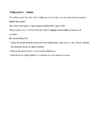
The late 19th century and early 20th century saw the appearance of the pragmatic approach to stylistics: the tendency to regard stylistics as an applied science. It was believed that the chief aim of the stylistics is to improve the style of the reader, to teach him to express his thoughts better. In the 50s and 60s there was a rapid growth of interest in stylistics. The methods of structural linguistics were most popular in 70s and 80s. Present day stylistic studies have gradually taken a more systematic course. Computer assisted stylistic analysis seems quite promising (e.g. the study of cases of disputed authorship). Although still somewhat chaotic and unorganized stylistics is a vigorous young science with wide potential and prospects. 2. INHERENT CONNOTATION Meaning of a word has: a denotation (meaning proper, we find it in dictionaries) and a connotation (an additional shade of meaning)
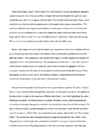
g. FGI 1081 Stylistics (I. Ladusseva) 4 G. H. Vallins books: "Good English", "Better English", "Best English"). The other prominent trend was to regard style as pure form divorced from thought (ideas, message). Speaking of foreign linguists it is the French Ch. Bally and J. Marouseau who have in th 20 century made a definite contribution, this was due to old tradition of interest in style in France. The classical words of classic stylistics are those by German scholars Ph. Aronstein and W. Deutschbein. In the 50s and 60s there was a rapid growth of interest in stylistics. Various conferences were held (e.g. USA 1958, GDR 1959, USSR 1961, 1963, etc.). The methods of structural linguistics were most popular in 70s and 80s
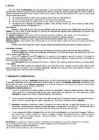
outside this context connotation is not present. AC may be positive or negative--any part of speech may acquire this connotation, the exact shade of meaning depending on the context. Negative adherent connotation: · (Grammatical negation (science has no soul)) · The proximity of words carrying inherent negative connotations (vulgar and working-class) · The context of the sentence of the words that have a strong vulgar colouring (your bloody principles) · The use of certain intensifiers (too, too much, horribly, perfectly, so, only) (too clean, too new) · We may have a repetition of a word in a sentence (always preaching, preaching, quietly, quietly) · Graphical presentation: in the inverted commas (this "sweet" lady is a killer); uncommon use of punctuation.
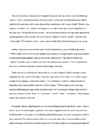
definite contribution. This happened because of the centuries-old tradition in France of interest in style. The classical works on english stylistics are those by the german scholars: Ph.Aronstein, M.Deutschbein, I.Galperin. In the 50's and 60's of the previous century there was a rapid growth of interest in stylistics throughout the word. In the 70's and 80's, the methods of structural linguistics were very popular in stylistics. Present stylistic studies have become quite systematic. Computer-assisted stylistic analysis appears to be quite promising, e.g the study of cases of disputed authorship (I may claim I have written Othello) which may study the influence of one author to another. Although still somewhat chaotic stylistic is a vigorous, young science with vast prospects. Stylistician- a scholar who studies style. Stylist- a writer or speaker skilled in a literary style. Linguistic style
NT: In some places there are yellow tulips, slender, spicky and Chinese-looking. POOLELI LK 33 DETACHMENT DETACHMENT means a syntactic separation of a word or phrase from the rest of the sentence to emphasise the isolated part. Isolation is signalled by punctuation (comma, dot, dash, semicolon, full stop) that are not actually needed according to rules of punctuation. The effect is strongest when the full stop is used. NT: I saw him. In his car. NT: I have to break you for money daily. NT: They were heard again, immediately. SSD-s that are based on SYNTACTIC STRUCTURES BEYOND ON SENTENCE The term is not too adequate (accurate) because the devices discussed in this group may occur within on sentence as well. PARALLELISM Syntactic PARALLELISM means repeating the same order of words within sentence or sentences to add to the rhythmical features of the text. NT: In the garden, under the table, behind the car. NT: Came fast, spoke slowly,
deliberately translated the Bible into the style of Latin that was actually spoken and written by the majority of persons in his own time. This kind of Latin is known as Vulgate Latin (meaning the Latin of the common people), and accordingly Jerome's translation is called the Vulgate. Cicero – Lived during the 1st century BC. Roman politician, philosopher & translator. Theory ‘‘word-for-word’’ & ‘‘sense-for-sense’’. • Martin Luther – his role in the history of translation studies. Lived during the 15th century. He was a priest, theologian & translator. During that time, the Bible’s were only available in either Latin or Hebrew, which made it very difficult for common people to understand. He came out with a radical plan to translate the Bible into local languages (the first language was German – translated by Martin Luther). This inspired many other translators during that period.
The examples throughout are delightful and students will love them." Edwin Mares, Victoria University of Wellington William G. Lycan is William Rand Kenan Professor of Philosophy at the University of North Carolina. He is the author of over 150 articles as well as seven books. Routledge Contemporary Introductions to Philosophy Series Editor: Paul K. Moser Loyola University of Chicago This innovative, well-structured series is for students who have already done an introductory course in philosophy. Each book introduces a core general subject in contemporary philosophy and offers students an accessible but substantial transition from introductory to higher-level college work in that subject. The series is accessible to non-specialists and each book clearly motivates and expounds the problems and positions introduced. An orientating chapter briefly introduces its topic and reminds readers of any crucial material they need to
The making of a new nation. The Enlightenment in America. The emergence of the notion of the American Dream. The great Enlighteners: Crèvecoeur, Jefferson, Paine, Franklin. The American Enlightenment is the intellectual thriving period in the United States in the midtolate 18th century (17151789), especially as it relates to American Revolution on the one hand and the European Enlightenment on the other. Influenced by the scientific revolution of the 17th
 annaabi.ee







Kõik kommentaarid