Vajad kellegagi rääkida?
Küsi julgelt abi LasteAbi
Logi sisse

Past and Present tenses (0)

1 Hindamata
Punktid
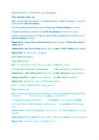
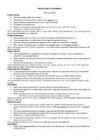
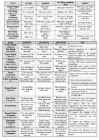
PRESENT SIMPLE ( lihtolevik )
Form: 1st form (+s)
Use: 1. Things in general. Nurses look after patients in hospitals.
2. Things that happen all the time or repeatedly. She usually goes away at weekends.
3. Laws of nature (things that are true in general). The sun rises in the east .
4. Timetable events . The train leaves at 6.50 p.m.
Negative form: I don’t (do not) normally eat my lunch here . He doesn’t (does not) like this film at all.
Question form: Do you live here? How often does it rain around here?
Signal words : always, every day/ month , never , normally, often, seldom, sometimes, usually etc.
PRESENT CONTINUOUS /PROGRESSIVE (kestev olevik )
Form: am/is/are + ing
Use: 1. Unfinished actions happening at or around the time of speaking. Listen ! Somebody is crying. They are building a new bridge in our town.
2. Changes happening around now. The population of the world is increasing fast .
3. Arrangements for the future. I am flying to Toronto next Friday .
Negative form: We aren’t (are not) working at the moment. I am not enjoying this show very much.
Question form: Are they playing football in the park right now? Why is she laughing?
Signal words: at the moment, now, right now, Listen!, Look! etc.
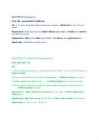
PRESENT PERFECT (täisminevik)
Form: have/has + past participle (3. põhivorm)
Use: 1. An action in the past, where the fact , not the time, is important. I have been to England four times .
2. An action in the past that has a result now. She has lost her keys.
3. Something that began in the past and still continues now. He has been in hospital since Monday.
Negative form: We haven ’t (have not) done our homework yet. He hasn’t (has not) visited his granny since August.
Question form: Have we met before ? How much of that book has she read?
Signal words: already , ever, just, yet, so far, till now, up to now, never, since, etc.
PRESENT PERFECT CONTINUOUS (kestev täisminevik)
Form: have/has + been + ing
Use: 1. An activity that has recently or just stopped (the result is visible in the present). I am out of breath, because I have been running .
2. An activity that started in the past and is still happening. It has been raining for two hours .
3. Actions repeated over a period of time. She has been playing tennis since she was eight .
4. We are interested in the activity. It does not matter whether something has been finished or not I have been painting the ceiling .
Negative form: I haven’t (have not) been learning Spanish very long. He hasn’t (has not) been eating properly.
Question form: Has it been snowing recently? How long have you been working on the computer?
Signal words: for 2 hours, since..., all day, etc.
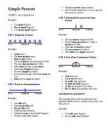
PAST SIMPLE ( lihtminevik )
Form: 2nd form (-ed)
Use: 1. A finished time in the past. We can ask when? I visited John yesterday.
2. Finished actions taking place one after another. I woke up, ate breakfast and went to work .
Negative form: I didn’t (did not) enjoy the film much. He didn’t (did not) go to school yesterday.
Question form: Did you watch the match yesterday? What did you do at the weekend ?
Signal words: yesterday, last..., ago, in 1979, the other day, etc.
PAST CONTINUOUS/PROGRESSIVE (kestev minevik )
Form: was/were + ing
Use: 1. An action going on at a certain time in the past. The action started before that time, but was not finished. This time last year I was lying on a beach in Mali .
2. Actions taking place at the same time. I was listening to music while she was reading .
3. An action in the past that is interrupted by another action. We were eating when the doorbell rang
Negative form: I wasn’t (was not) trying to impress anyone . They weren’t playing tennis at 10.30 yesterday.
Question form: Was he watching TV when I called? What were you doing at 10 o’clock last night ?
Signal words: when, while, as long as, yesterday at 5, etc.
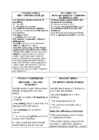
PAST PERFECT (enneminevik)
Form: had + past participle (3. põhivorm)
Use: 1. An action taking place before a certain time in the past. I had finished the work when you arrived .
Negative form: I liked the film because I hadn’t (had not) seen it before. He hadn’t even started the work before we arrived.
Question form: Had you ever ridden a horse before? Why had they never performed before?
Signal words: until that day, already, just, etc.
PAST PERFECT CONTINUOUS (kestev enneminevik)
Form: had+ been + ing
Use:
1. An activity that had recently or just stopped (the result was visible). I was out of breath, because I had been running.
2. An activity that started in the past and was still happening. It had been raining for two hours.
3. Actions repeated over a period of time. She had been playing tennis since she was eight.
4. We are interested in the activity. It does not matter whether something had been finished or not. I had been painting the ceiling.
Negative form: I hadn’t (had not) been learning Spanish very long. He hadn’t (had not) been eating properly.
Question form: Had it been snowing recently? How long had you been working on the computer?
Signal words: for 2 hours, since..., all day, etc.

Past and Present tenses #1 Past and Present tenses #2 Past and Present tenses #3 Past and Present tenses #4
Punktid 50 punkti Autor soovib selle materjali allalaadimise eest saada 50 punkti.
Leheküljed ~ 4 lehte Lehekülgede arv dokumendis
Aeg2011-02-13 Kuupäev, millal dokument üles laeti
Allalaadimisi 25 laadimist Kokku alla laetud
Kommentaarid 0 arvamust Teiste kasutajate poolt lisatud kommentaarid
Autor Markus Lomann Õppematerjali autor
Konspekt

Sarnased õppematerjalid

Inglise keele põhitõed algajale
42
pptx

Inglise keele põhitõed algajale

  on Christmas Day (but at Christmas) We use at in these expressions:     at night - at Christmas - at the moment / at present - at the     same time - at weekends - at the age of...       IN   DURING

Inglise keel
Tenses tabel
5
pdf

Tenses tabel

do it (a fixed plan, date) Listen! He's going. He isn't going. Is he going? last ... I worked. I didn't work. Did I work? regular: ... ago action took place in the past, Infinitive + -ed He worked. He didn't work. Did he work? Simple mostly connected with an Past expression of time (no connection in 1990 to the present) irregular: I went. I didn't go. Did I go? 2. Spalte

Inglise keel
Ajavormide teooria
18
doc

Ajavormide teooria

Windows are not made of wood. Simple Present · · New York is a small city. It is not important that this fact is untrue. [VERB] + s/es in third person USE 3 Scheduled Events in the Near Examples: Future · You speak English. · Do you speak English?

Inglise keel
Inglise keele ajavormid
10
odt

Inglise keele ajavormid

Will + infinitive (will go) Am/is/are going to + infinitive (is going to rain) 1.A decision at the moment of 1.Future plans made before the speaking: moment of speaking: A: 'I'm cold'. A: 'We've run out of milk.' B: 'I'll close the window'. B: 'I know, I'm going to buy some.' 2.Prediction based on opinion: 2.Prediction based on present I think the Conservatives will win the evidence: next election. Look at those boys playing football! 3.A future fact: They're going to break the window. He will be ten next year. 4.Promises / requests / refusal / willingness: I'll help you with your homework. Will you give me a hand? 5.In the same way as the future continuous, but with state verbs: I'll be at the station when you arrive. 'Shall' is used mainly in the forms 'shall I

Inglise keel
Inglise keele kordamine
4
doc

Inglise keele kordamine

TIME CLAUSES Present Simple · Permanent states, facts (Tom works..) · Repeated and habitual actions, routines (She usually goes..) · Laws of nature and general truths (The sun sets in the west) · Timetables and programmes · Sporting commentaries, rewiews (Beckham wins the ball, crosses and Owen scores) · Feelings and emotions (I love Tallinn..) TIME EXPRESSIONS USED WITH PRESENT SIMPLE: usually, often, always, every day/week etc, in the morning/evening etc, at night/the weekend, on Fridays etc. Present Continuous · Actions taking place at or arount the moment of speaking (The kids are watching TV..) · Fixed arrangements in the near future (I'm going to the dentist tomorrow) · Currently changing ang developing situations (The number of burgularies is increasing)

Inglise keel
Table of tenses
1
doc

Table of tenses

Get/ Have something TENSE ACTIVE PASSIVE WHEN? done Present Simple Am/is/are + Every day, year, often, I pv + do/does Have/ get + sth+ III pv Lihtolevik III pv usually, always Past Simple Yesterday, last year,

Inglise keel
Inglise keele ajavormid
8
docx

Inglise keele ajavormid

Simple Present Present Progressive/Continious (99%) infinitive form of 'be' and verb + ing (3rd person singular: infinitive + 's') I speak I am speaking you speak you are speaking he / she / it speaks he / she / it is speaking we speak we are speaking

Inglise keel
Inglise keele jaotusmaterjal
37
doc

Inglise keele jaotusmaterjal

MODULE 1 Greeting. Introducing oneself and the others. The alphabet. Spelling. The tenses. How to introduce yourself and others Formal introductions How to respond and reply to an May I introduce myself? I am John introduction Smith. How do you do. Allow me to introduce John Smith to Pleased to meet you. you. Standard introduction Nice to meet you. I'd like you to meet John Smith. Hello. I want you to meet John Smith. I'm so pleased to meet you.

Inglise keel


Kommentaarid (0)

Kommentaarid sellele materjalile puuduvad. Ole esimene ja kommenteeri


Sellel veebilehel kasutatakse küpsiseid. Kasutamist jätkates nõustute küpsiste ja veebilehe üldtingimustega Nõustun