Vajad kellegagi rääkida?
Küsi julgelt abi LasteAbi
Logi sisse

Edward the Confessor & Westminster Abbey (0)

1 Hindamata
Punktid
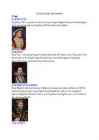
Edward the Confessor (1003-1066)
Edward was the oldest son of Ethelred II (Ethelred the Unready http://en.wikipedia.org/wiki/Ethelred_the_Unready ) and Emma of Normandy ( http://en.wikipedia.org/wiki/Emma_of_Normandy ). He wast he penultimate Anglo- Saxon king of England .
The family was exiled in Normandy after the Danish invasion of 1013 so Edward spent the first part of his life in Normandy. He grew up in deep religious views and gained the nickname ’’Confessor’’. As Edward was seperated from his family and grew up in a strange land , it is said that his childhood wasn’t a happy one.
After Ethelred’s death in 1016 the Danes again took control of England. The throne of England passed to Canute the Great. The new king married Emma of Normandy and the couple had a son, Hardicanute. Edward lived in exile until 1041. At the death of Canute in 1035 , Edward led an abortive attempt to capture the crown for himself . He was recalled, for some reason, to the court of Hardicanute.
Edward was crowned at the cathedral of Winchester, the royal seat of the West Saxons on 3 April 1043. According to those who compiled the Anglo-Saxon Chronicle, the first thing Edward did, despite his religious views, was to deprive his mother of all of her estates and reduce her to relative poverty. It is said that Edward blamed her for his miserable and lonely childhood.
For the first eleven years of Edward's reign the real ruler of England was Godwin , Earl of Wessex . In 1045 , he married Godwin's only daughter, Edith . Godwin was the most important nobleman in England. They had no children as Edward had taken a vow of celibacy. Even this marriage couldn’t prevent a breach between Godwin and Edward in 1049.
A number on Normans were killed in a scrap in Dover and Kent in 1051. Edward still had influential friends in Normandy and he wanted the people of Dover punhised for this. Edward asked Earl Godwin to be the punisher. After saying no to king he raised an army against Edward instead. The other two senior noblemen, the earls of Mercia and Northumbria , remained loyal to Edward. Later Edward outlawed Godwin and his family in Flanders.
Between 1051 and 1052 , Edward increased the number of Normans who advised him at court. Edward’s continued favouritism caused problems with his nobles. In 1052 Godwin and his sons returned to England with an army. The army was commanded by his two sons – Harold and Tostig. Godwin's lands were returned to him and many of Edward's Norman favourites were exiled. In 1053 Godwin died. His title was taken by Harold who became known as Harold of Wessex. He was the most powerful nobleman in England.
It was Harold who subjugated Wales in 1063 and negotiated with the rebellious Northumbrians in 1065. Thereof, shortly before his death, Edward named Harold as his successor even though he may already have promised the crown to a distant cousin, William – Duke of Normandy.
Edward's greatest achievement was the construction of a new cathedral, where virtually all English monarchs from William the Conqueror onward would be crowned. It was determined that the minster should not be built in London, and so a place was found to the west of the city (hence " Westminster "). The new church was consecrated at Christmas, 1065, but Edward could not attend due to illness .
Some say, probably correctly, that Edward was a weak , but violent man and that his reputation for saintliness was overstated, possibly a sham perpetrated by the monks of Westminster in the twelfth century . Others seem to think that he was deeply religious man and a patient and peaceable ruler.
Having warded off political threats, England during the last 15 years of Edward's reign was peaceful and prosperous with a growing population. He died at the age of 64 and was buried in the Abbery he had constructed at Westminster. Edward was canonized in 1161 by Pope Alexander III. His feast day is October 13.
He died on 4 January 1066 and was buried in the Abbey he had constructed at Westminster.
Find the meaning of these words in estonian:
Achievement -
Penultimate -
Influential -
Threat -
Prosperous -
Breach –
To oulaw –
A vow of celibacy -
To deprive –
To consecrate –
To canonize –
Feast -
Additional reading :
http://www.catholic-forum.com/saints/golden291.ht m (The Life of Saint Edward the Confessor, The Golden Legend)
Sources :
http://en.wikipedia.org/wiki/Edward_the_Confessor
http://www.britannia.com/history/monarchs/mon20.html
http://www.spartacus.schoolnet.co.uk/MEDedward.ht m
http://www.historylearningsite.co.uk/edward_the_confessor.ht m
http://www.bbc.co.uk/history/historic_figures/edward_confessor.shtml
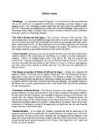
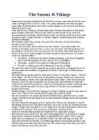
http://www.sacred-destinations.com/england/images/london/westminster-abbey/isaac-newton-tomb-paradox.jpg (third picture )
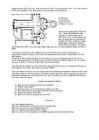
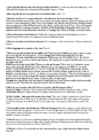
http://cache.eb.com/eb/image?id=97433&rendTypeId=4 (second picture)
Westminster Abbey
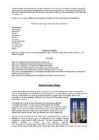
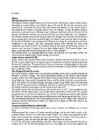
Around 1045-1065, Edward the Confessor built a church for the Benedictine monks in the Norman form of Romanesque. He intended it to be his burial place. The Westminster Abbey is located near the Houses of Parliament. It is more a historical site than a religious site. Since 1066, every royal coronation , with the exception of Edward V and Eward VIII has taken place in Westminster Abbey.
The abbey also serves as the burial ground for numerous politicians, sovereigns and artists . It is also a final resting place of seventeen monarchs.The abbey is stuffed with graves, statues and monuments. Many coffins even stand upright due to the lack of space. In total approximately 3300 people are buried in the Church and cloisters. Some of the most famous are Charles Darwin , Sir Isaac Newton and David Livingstone.
The history of the abbey starts in 1050, when King Edward The Confessor decided to build an abbey. Only a small part of this original Norman monastery , consecrated in 1065, survived. The only representation of this original building is shown on the Bayeux Tapestry.
Most of the present building dates from 1245 to 1272 when Henry III decided to rebuild the abbey in the gothic style. Large parts were later added: the Chapel of Henry VII was added between 1503 and 1512, while the two West Front Towers date from 1745. The North entrance which was completed in the 19th century, is the youngest part of the abbey.
1) The Nave
2) The Cloyster
3) Chapter House
4) Henry VII Chapel
The most fascinating part is the fourth one – Henry VII Chapel aka Lady Chapel. It is built during the years 1503-1512. It has a magnificient vault and it is one of the most outstanding chapels of its time. It features a large stained glass window , the Battle of Britain memorial window. The window, which dates from 1947, commemorates fighter pilots and crew who died during the Battle of Britain in 1940.
The Abbey's formal title is The Collegiate Church of St Peter, Westminster. The popular title ‘Westminster Abbey' continues to be used, even though there have been no monks here since the 16th century.
The Dean of Westminster must give his permission for all burials and monuments in the Church. Ashes only are permitted. People who have served the Abbey in an official capacity , such as a Dean, a Canon, Organist or Surveyor of the Fabric may be buried there.
The ‘Westminster chimes’ are of the bells in the clocktower of the Houses of Parliament (or Palace of Westminster). The chimes are set out to music by Handel.
Money to maintain the fabric and deal with the day-to-day running of Westminster Abbey is raised from entry fees, donations and investments. The Abbey receives about one million paying visitors per year and derives about 80 per cent of its funds in this way. The Abbey receives no funds from the State or from the Church of England.
Answer the questions below :
  • Who decided to build the Westminster of Abbey?
  • What is Lady Chapel?
  • By whose music are the ’Westminster chimes’ set out?
  • How may monarchs are buried in the Westminster of Abbey?
  • What is the Abbey’s formal title?
  • Who can be buried nowadays in the Abbey?
    Sources:
    www.westminster-abbey.org
    http://www.aviewoncities.com/london/westminsterabbey.ht m
    http://www.westminster.org.uk/study/theabbey.asp
    http://en.wikipedia.org/wiki/Westminster_Abbey
    http://www.tripwolf.com/en/guide/show/243989/England/London/Westminster-Abbey
  • Edward the Confessor & Westminster Abbey #1 Edward the Confessor & Westminster Abbey #2 Edward the Confessor & Westminster Abbey #3
    Punktid 50 punkti Autor soovib selle materjali allalaadimise eest saada 50 punkti.
    Leheküljed ~ 3 lehte Lehekülgede arv dokumendis
    Aeg2009-05-12 Kuupäev, millal dokument üles laeti
    Allalaadimisi 10 laadimist Kokku alla laetud
    Kommentaarid 0 arvamust Teiste kasutajate poolt lisatud kommentaarid
    Autor liiskristiin Õppematerjali autor
    hea materjal Edward the Confessorist ja Westminster Abbeyst. Koosneb tekstist, ülesannetest, piltidest ja allikatest.

    Kasutatud allikad

    Sarnased õppematerjalid

    Inglise keelt kõnelevate maade ajaloo eksamiküsimused
    28
    doc

    Inglise keelt kõnelevate maade ajaloo eksamiküsimused

    of the first missionary from Rome. Bede's writings are considered the best summary of this period of history ever prepared. Some have called it "the finest historical work of the early Middle Ages." *The coming ofe the Angles, Saxons, Jutes, Frisians to Britain ­ Very little is known about the first several hundred years of the Anglo-Saxon era, primarily because the invaders were an illiterate people. It is known that they established separate kingdoms: the Saxons settled in the South and West, the Angles in the East Anglia, Mercia, Northumbria and the Jutes in Kent. They probably thought of themselves as separate peoples, but they shared a common language and similar customs. *The 7 Anglo-Saxon kingdoms ­ The first of the Anglo-Saxon kingdoms, which was popularly known as the Heptarchy (or the Seven Kingdoms), was founded in the latter half of the 5th century. Englan was divided into seven ancient kingdoms: Northumbria, Mercia, East Anglia, Essex, Kent, Sussex and Wessex

    Inglise keel kõnelevate maade ajalugu
    London
    10
    doc

    London

    A massive wall was built to protect the city from further attacks. The Roman Empire came under increasing attack across Europe and in AD 410 they retreated. The Romans gave us a language based on Latin, the calendar, law and legal system, the census and also straight roads, central heating and concrete. Anglo- Saxons around AD 400 Anglo- Saxons were warrior farmers from Germany, Denmark and the Netherlands. Later in the 5th century, Anglo-Saxons settled just west of Londinium, around the Strand, and formed the town of Lundenwic. The area of the old Roman city became a landing-place for ships and a centre for trade.The first English King to convert to Christianity, King Ethelbert, founded St Paul's Cathedral in 604. The Vikings 8th and 9th century By the 9th century, London was a very prosperous trading centre, and its wealth attracted the attention of Danish Vikings. The Danes periodically sailed up the Thames and attacked London

    Inglise keel
    British kings and queens
    10
    docx

    British kings and queens

    wives, of which he had six, King Henry VIII also had several children. King James I King James I was already King of Scotland when he got the English crown. King James I was the first ruler to call himself King of Great Britain, as he ruled England, Scotland and Wales. King James was the first King of Great Britain. King William I, the Conqueror King William I, otherwise known as William the Conqueror was born in France on 1028. He became friendly with the current English King, Edward the Confessor. He invaded and attacked England on Edward's death, as he was promised the English crown, but then denied it by the Saxon Harold. King George VI King George VI did not expect to become king, he was the shy brother of Edward VIII who only took the thrown when Edward abdicated. King George VI ruled during World War two and bravely refused to leave London during the blitz. The two princesses; Elizabeth and Margaret, spent the war years in Windsor Castle away from harm. King Henry VI

    Inglise keel
    Normannid-inglise kirjandus
    2
    pdf

    Normannid (inglise kirjandus)

    1.Who were the Normans and what did they bring with them? The normans were the people who in the 10th and 11th centuries gave their name to Normandy, a region in France. 2.How long did the Norman period last in the British Isles? 1066-1154 3.How did the Norman Conquest take place and what were the events leading to this? Edward the Confessor died and the throne was seized by his leading aristocrat, Harold Godwinson, who was crowned. Almost immediately, Harold faced two invasions - one from the king of Norway, Harald Hardrada, who was supported by Harold Godwinson's brother Tostig, and the other from William, Duke of Normandy. Harold defeated the Norwegian invasion at the Battle of Stamford Bridge in September 1066, but he was defeated and killed shortly afterwards at the Battle of Hastings. The victorious William claimed the throne

    Inglise keel
    The Saxons & Vikings
    5
    docx

    The Saxons & Vikings

    · The Jutes ­ settled mainly in Kent, Hampshire & the Isle of Wight The name Jutes died out & the conquerors are generally referred to as the Anglo-Saxons. At first they spoke various dialects, but gradually the dialect of the Angles of Mercia became predominant. The Anglo-Saxon migration gave the larger part of Britain its new name, England, ,,The land of the Angles". The British Celts were slowly pushed westwards. Finally most were driven into the mountains in the far west, which the Saxons called ,,Wales". Some were driven into Cornwall, where they later accepted the rule of Saxon lords and northward to Strathclyde. Further north lived the Picts and Scots. Some Celts crossed the sea & settled in the north-west of France called Brittany after the Celtic tribes of Britons. The Celts who stayed behind became mostly slaves. Hardly anything is left of the Celtic language or culture in England, except for some names of

    British history (suurbritannia ajalugu)
    Suurbritannia ühiskond ja kultuur konspekt
    14
    doc

    Suurbritannia ühiskond ja kultuur konspekt

    8. Beowulf Beowulf is the most famous heroic poem (written down 8-9cc) Beowulf is a war-leader from Scandinavia.He rescued the land of the Danes from a man-like monster Grendel. The monster kills the hero.The poet describes the funeral and how warriors mourned their king. 9. The Vikings, their way of life. Sutton Hoo In 789 three ships carrying Northmen (Vikings ­ vikingr = pirate, raider in the old Norwegian) landed on the coast of the kingdom of the West Saxon. Many were sailors who sailed looking for plunder, trade and land for new settlements. Their craftworkers made beautiful objects. Most of the written evidence about the Vikings in England comes from ANGLO-SAXON CHRONICLE (892) Vikings lived in country settlements, grew crops, vegetables, kept animals, hunted animals, birds, fish. Vikings were great traders in town markets. JORVIK ­ typical Viking town 9th c. V. moved to the islands of Shetland, Orkneys, the Hebrides, Ireland

    Suurbritannia ühiskond ja kultuur
    The Norman Conquest
    3
    doc

    The Norman Conquest

    The Norman Conquest William I (the Conqueror) (1066 - 1087) On October 14, in the fateful Battle of Hastings, William defeated and killed Harold and seized the English throne. Two months after the Battle of Hastings, William I was crowned king in Westminster Abbey. The service was held on Christmas Day 1066, with all the traditional ceremonies associated with the coronation of English kings since the time of Edgar. William had gained his throne by accepting the English form of coronation, William emphasised his claim to be legitimate successor to Edward the Confessor. William I was a strong king and a man of immense determination. He was stern to people who opposed his will, but kindly disposed to those who did not.

    British history (suurbritannia ajalugu)
    London History
    3
    doc

    London History

    London in ruins. King Egbert ­ one Flourishing. Attacks by Vikings. kingdom England (the 9th century) King Albert the Great ­ London is the capital Edward the Confessor ­ London began to develope Westminster Abbey and royal palace. 2 parts: Westminster and the City.. The Normans (1066 ­ the 14th William the Conqueror ­

    Inglise keel


    Meedia

    Kommentaarid (0)

    Kommentaarid sellele materjalile puuduvad. Ole esimene ja kommenteeri


    Sellel veebilehel kasutatakse küpsiseid. Kasutamist jätkates nõustute küpsiste ja veebilehe üldtingimustega Nõustun