 Tasuta
Faili alla laadimine on tasuta
Tasuta
Faili alla laadimine on tasuta
 ~ 7 lehte
Lehekülgede arv dokumendis
~ 7 lehte
Lehekülgede arv dokumendis
 2016-01-24
Kuupäev, millal dokument üles laeti
2016-01-24
Kuupäev, millal dokument üles laeti
 4 laadimist
Kokku alla laetud
4 laadimist
Kokku alla laetud
 0 arvamust
Teiste kasutajate poolt lisatud kommentaarid
0 arvamust
Teiste kasutajate poolt lisatud kommentaarid
 madlitammel
Õppematerjali autor
madlitammel
Õppematerjali autor
Süüria chemical weapons doctrine is one of the strongest doctrine ever, respected by almost everyone, that's why people are so shocked about the events there. It's a grave violation of PIL. If there's enough evidence that chemical weapons were used, then war is basically a legal method, but not fully, because it isn't one of the reasons that allows war as a method to resolve conflict. Differences: Public International Law Private International Law = conflict of laws Subjects States, intergovernmental Regulates relations between organisations and some specific private persons and legal stuff (Red Cross; nations persons (person vs person,
Tallinn English College English Sergo Vainumäe 9A TALLINN Report Supervisor: Inge Välja Tallinn 2006 Order of contents: 1.Introduction 2.Toompea 3.Lower Town 4.Kadriorg and Pirita 5.Museums 1. Introduction Tallinn, the capital of Estonia, lies on the Baltic Sea. It is on almost the same latitude east St. Petersburg in Russia, Stockholm in Sweden and Stavanger in Norway, and covers 158 sq km. Tallinn was first marked on a map of the world by the Arab geographer al-Idrisi in 1154, its name then being Kolyvan (probably derived from the name Kalev). In the 13th-century Chronicle of Henricus de Lettis the town was called Lyndanise. Later came Reval (presumably after the old county of Rävala), the name used by the Germans who ruled the country for seven centuries. Russians then modified Reval to Revel. For Estonians, the town came to be c
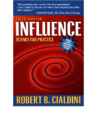
Rejecting the Rule 45 Smoking Out the Enemy 47 Summary 49 Study Questions 50 CHAPTER 3 Commitment and Consistency: Hobgoblins of the Mind 51 Whirring Along 53 The Quick Fix 54 The Foolish Fortress 54 Seek and Hide 56 _CONTENTS Commitment Is the Key 59 Hearts and Minds 66 The Magic Act 67 The Public Eye 71" The Effort Extra 73 The Inner Choice 79 Growing Legs to Stand On 83 Standing Up for the Public Good 86 Defense 89 Stomach Signs 89 Heart-of-Hearts Signs 91 Special Vulnerabilities 93 Summary 95 Study Questions 96 CHAPTER 4 Social Proof: Truths Are Us 97 The Principle of Social Proof 99 People Power 99
The answer is a resounding NO! Do we even have a factory owned by a Black person where these musical products are assembled? The answer is a resounding NO! In fact, Africans consume more Japanese products percentage wise than any other group, yet the Japanese have nothing but scorn for the African. Even two of their former Prime Ministers publicly made the observation that Black people were inferior in intelligence. If they said this in public, you wonder what they were saying in private. Mind you, these are Prime Ministers – heads of Japanese government, a reflection of the totality of the Japanese mind. Yet, when you enter the New York Subway, the people you see with walkmans on their heads and ears are 95 percent Black people. It a shame and a crime. It does not happen only in the subway system of New York. It happens in Africa, it happens in the Caribbean
The decision to prosecute · Who? General rule any private individual can bring a prosecution o `private prosecutions' o 2.4% o Domestic assaults o Shoplifting o · Actions instigated by the police o Greatest nr of prosecutions o Police officels advocates (some cases) (tõid tõendied ise väja) o Wasn't ideal o Erinevad kuriteod: Arson, public theft, robbery, computer crimes, reckless driving, DUI, espionage, kidnapping, homicide, terrorism, littering, loitering, rape, manhandling, abuse, murder, hijacking, blackmail, stabbing, hit and drive accidents, trespassing, poisoning, WORDS Explain without the word itself, describe it, if possible, give synonym and example. Vald rural municipality Kihelkond - parish Come/enter into force - jõustuma Legislative bodys seadusandlikud organid
children should have the time for play and innocence and henceforth `must be protected because they are children and as children they lack competence and autonomy presumed by the idea of a right.30 Moreover, rights also threaten the stability and harmony of family life in which too much freedom of choice in making decisions about the matters that affect children is considered to be fatal to adult authority. Laura Purdy`s argument greatly illustrates the deep concern over the idea of losing control over children and failing to meet their basic needs if granting children rights. She is a fierce opponent to the liberal education and proponent of child development. She contends that children do not have equal status with adults as they do not possess the virtues of rationality and capability of making reasonable decisions about their lives.31 Purdy believes that `there are morally relevant differences between children and
impact in anxious times, it can make the diplomatic relationships between states more complex. The CNN effect ensures that news, as they happen, is seen by everybody, leaving the politicians time to analyze the implications of what everybody is seeing. I think that the CNN effect has an exceptional impact on foreign policy, with its international aspect. In everyday life, media as a whole might not influence foreign policymakers directly, but I think it happens through public opinions. It happens when media is shaping and affecting public opinions- what people believe and know about the policy. It takes place when people delegate their power to decision-makers through elections. Media has the part of the process to influence people for who to give their vote, and then the elected officials have the power to formulate foreign politics. Also, electors have their preferences about foreign policy and
.............................16 In Chelsea Flower Show have everyday different........................................................18 The Chelsea Flower Show Gala Dinner...................................................................18 The first day - by invitation only..............................................................................18 Two Days for Members Only...................................................................................18 Two Days for the public...........................................................................................18 The Chelsea Plant Sell-Off.......................................................................................18 Judgment Days.............................................................................................................20 .....................................................................................................................................21
 annaabi.ee








Kõik kommentaarid