Leidsid 33 sarnast õppematerjali, mis on seotud failiga "CLOSING KALARAND FOR PUBLIC". Need materjalid aitavad sul teemat sügavamalt mõista.
kapital, kalarand, fence, there, beach, property, council, access, kalamaja, kalaranna, build, round, clear, action, local, president, locals, still, open, developing, interest, thing, close, order, place, built, around, permission, them, parthile, enjoy, real, losing, developer, stand, district, views, known, kalasadam, spend, taken, idea, residentialPIL regulates relations between states. Thats why PIL is important for international relation students. PIL influences the life of everybody, it doesn't regulate people directly but indirectly (through the decisions of the states), because it's everywhere. It's like air. E.g. when you want to send a letter to Brazil, you put a stamp from your own country and send it from your post office and the letter gets delivered. Why is this so easy, because there are certain international conventions that regulate postal services. E.g. traffic signs are almost the same everywhere, why? Because of certain int conventions that require the states to have more or less unified traffic signs. States apply international regulations to national regulations and they have to be in accordance with each other, the states can always specify these regulations. Therefore, PIL regulates people indirectly.
Tallinn is said to be built on salt, as it was an important trading commodity. In the 16th century Tallinn had a population of about 7,000 8,000 making it one of the biggest cities in northern Europe. In 1629 Sweden took control of the whole of Estonia. Though hard times continued, the period that followed is known as the "good old Swedish era": foundations were laid for the Estonian school system, the privileges of the nobility were curtailed, local peasants were granted the right to own property, and so on. Peter the Great wanted to open a window onto Europe for Russia so he started the Northern War in 1700. Estonia remained under Russian rule and the Baltic-German nobility vowed allegiance to the Tsar; the barons were restored their former privileges. In 1870 a railway line was opened from St. Petersburg to Tallinn. Tallinn grew into a major port and an industrial centre. Estonians became conscious of their national identity. Tartu was the centre of the movement of national awakening
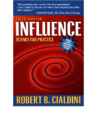
I have also expanded a fea- ture that was stimulated by the responses of prior readers. This feature highlights the experiences of individuals who have read Influence, recognized how one of the principles worked on (or for) them in a particular in- stance, and wrote to me describing the event. Their descriptions, which appear in the "Reader's Reports" in each chapter, illustrate how easily and frequently we can fall victim to the influence process in our everyday lives. There are now twice as many firsthand accounts of how the book's principles apply to business and personal lives. An array of people deserve and have my appreciation for their aid in making In- fluence possible. Several of my academic colleagues read and provided perceptive comments on the entire manuscript in its initial draft form, greatly strengthening the subsequent versions. They are Gus Levine, Doug Kenrick, Art Beaman, and Mark Zanna
Harold McMillan articulated his now famous “winds of change” sweeping Africa. We had high hopes for Africa, for the Black race, that the insidious imposition of foreign rule on us, the looting of Africa’s natural resources by our colonial masters accorded us would be things of history. That is more than forty years ago. Unfortunately, the promise of independence has not been fulfilled. Today, Africa has become more desolate; there is more starvation, diseases and non-provision of essential services than when we got our independence. There are all kinds of wars in Africa than the rest of world put together. The majority of so-called Africans leaders want to stay in power until the day their bodies are put in the grave. Through buffoonery, utter mismanagement and downright stealing of the wealth of the masses, these leaders have so impoverished Africa that we are now nothing but a beggar continent. We beg for
Väldime I-vormi, vaid kasutame passive-vormi. Lõhikesi vorme ei kasutata! (don't) 150 sõna Teema "should mery-killing be punished?" HOMEWORK Terms to explain: Nation - a country, especially when thought of as a large group of people living in one area with their own government, language, traditions, etc: Stranger someone whom you do not know Citizen - a person who is a member of a particular country and who has rights and obligations because of being born there or because of being given them Penalty - a punishment for doing something that is against a law Government - the group of people who officially control a country System of courts - a set of connected positions which operate together to ensure ... ? To commit a crime to do sth that is forbidden by law Corruption - illegal, immoral or dishonest behaviour, especially by people in positions of power Fine (trahv) - an amount of money that has to be paid as a punishment for not obeying a rule
prevalent in the Western society. The purpose of this dissertation is to critically explore this hotly debated tension between these two conflicting salient features that have often prevented the recognition of children as active citizens, entitled to respect and participation. With a particular interest in Wales, the following research project analyses the development of children`s active participation both in the Welsh Government and the County and Council of Swansea as they both have regarded the UNCRC on the basis of all its activity. Finally, the Cadle Primary School in Swansea has been used as a case study to investigate the potential change in attitudes in children after the school placed the UNCRC at the heart of its ethos and curriculum across all areas of the school. The primary goal is to critically analyse the commitment of the Cadle towards children`s participation within school and explore the
Foreword "I think that the Great Marquee had a sense of excitement: visitors would enter it expectantly, as if they were unwrapping a Christmas present." Head of Shows Development Bob Sweet Chelsea is, definitely, an event most gardeners love to visit and remember long afterwards. But why it is so? I have read lot about that Show. Everybody seems to be like this, even if there are lots of not so good things. First I thought it could be very nice way to spend day with family but Chelsea is not a family day out and they take care in targeting the garnering market. There is no discount for children, no family tickets, no children's play areas. Exhibitions want customers and our job is to manage the balance between the needs of exhibitors and those of the visitors. It's important to have the right number of exhibitors in each
children—Christina, Michael, David, and Catherine—for their sup- port and patience during the long hours away from them to finish this book. xi ccc_tracy_fm_i-xviii.qxd 7/7/03 3:23 PM Page xii ccc_tracy_fm_i-xviii.qxd 7/7/03 3:23 PM Page xiii Introduction There is nothing on earth that you cannot have once you have mentally accepted the fact that you can have it. —Robert Collier ■ THE TRUTH ABOUT YOU You are a thoroughly good person.You deserve a wonderful life, full of success, happiness, joy, and excitement. You are entitled to have happy relationships, excellent health, meaningful work, and finan-
I think graffiti, by the way, is also a great and invaluable work. Trends are changing. Now, young artists are moving from an endless unthinking tagging to a more conceptual and rich sense, abstract and volumetric work. Street art has become popular among the general public, because it is more accessible to him both in content and in location: for art, now you do not need to go to a museum or gallery, and the meaning of the work is often clear at a glance. In our environment there are not enough professional critics and theorists who could competently evaluate and describe the work of street artists. This is very bad, because the viewer needs a certain benchmark, according to which he could assess the quality of the works presented. 1. THEORETICAL PART Any type of history is a discourse in its own right. What is more, when talking about art history, the discourses seem to flourish immensely from one into another, and so on into many more. In
as books the way we understand the word today. Centuries went before paper replaced parchment and papyri. In the 15 th century Johann Gutenberg invented a mechanical process of duplicating texts, which we today call book printing. The first book was printed between 1444 and 1446, so these years can be considered as the beginning years of book printing. His most important preserved printings are the 40 copies of the Bible. By the end of the 15 th century there were about 1000 print-shops in Europe already. The oldest Estonian book dates back to 1535. Libraries form a vital part of education. They make available-through books, films, recordings and other media- knowledge that has been accumulated through the ages. People in all walks of life use libraries to get information for their work. Libraries also play an important role in preserving people's cultural heritage.
Union. That history partly explains Ukraine's voting patterns, political sympathies, and outlook on the future. Population of Western Ukraine largely supports politics paying EU card (Yusteshenko, Tymoshenko), while industrial Eastern regions support Yanukovych as Politian closely associated with better relation / integration with Russia. 1.1.2. Post-Independent Ukraine. Economy and politics 1990-s When Ukraine became independent in 1991, there were expectations that it would in the near future become a wealthy free market democracy and a full member of the European and Euro-Atlantic communities. Ukraine never fulfilled those expectations. Instead, it is seen as an underachiever, sometimes as a sick man of Europe, and perhaps even as a potentially failed state thanks to its geopolitical situation, historical burdens, and the mistakes made in institutional development and policy. Economically, Ukraine has grown along with the region
lose a bloody battle, the sky suddenly opened and a red flag with a white cross on it dropped down upon them from the heaven. This is how the Danes obtained their national flag. In 1346 the Danish king sold his Estonian lands to the Teutonic Order, who a year later resold them to the Livonian Order. The Germans renamed Tallinn and called it Reval. Toompea became the seat of the German-born gentry. A fortified wall was built between Toompea (the Upper Town) and the Lower Town, as there were conflicts between the two. The Lower Town was the home of simple people, the artisans and the merchants. The doors and gates in the wall were locked at night. Tallinn joined the German-dominated Hanseatic League in 1285 and became a junction of trade between East and West: furs, honey, leather and seal fat moved west, while salt, cloth, herring and wine moved east. Its geographical position was very favourable, with
Silicon Valley Could you reproduce Silicon Valley elsewhere, or is there something unique about it? It wouldn't be surprising if it were hard to reproduce in other countries, because you couldn't reproduce it in most of the US either. What does it take to make a silicon valley even here? What it takes is the right people. If you could get the right ten thousand people to move from Silicon Valley to Buffalo, Buffalo would become Silicon Valley. That's a striking departure from the past
A century ago communication across any distance was dependent upon the telegraph or letters. No jets crossed the ocean, no television pictures enabled us instantly to see events in any part of the world, there were no worldwide telephone networks and no computers. It is just a short lifetime since humanity first travelled into space and discovered how fragile our planet looks. FROM FIREWORKS TO THE MOON At first glance you might think that there couldn't possibly be anything common between a 13 th century festival in China and the Apollo 11 moon landing in 1969. However, there is a link and that is that they both relied on the use of rockets. The Chinese first developed rockets by filling bamboo tubes with an explosive made from saltpetre, charcoal, and sulphur. The sealed tubes would be thrown onto fires during celebrations because it was thought that the loud explosions would protect them
combating terrorism and will present the reasons for why this controversial behaviour that democratic governments have been proven to conduct and still are being accused of until the current day is irrational and dangerous. Theoretical justification of torture The utilitarian view that a political leader should allow torture to rescue civilians’ lives is justified by that this would result in maximum happiness for the greatest number of people. It is said that in case of a moral dilemma there is never the possibility of 2 complete justification. Torture is illegal but if human lives can be saved, it is worth it. This disregards the act itself and only looks at the result (Driver, 2014). Hedonism supposes that a decision is ethically correct if the consequence brings maximal satisfaction to the individual. Eudemonism replaces the word satisfaction by happiness
whether a clear pattern was present. A comparison table was created to compare the effects of virtual design and construction of the two projects. Additionally, a schedule is presented to explain the deadline slippage on one of the case studies. The schedule is accompanied with a data exchange diagram to illustrate how collaboration can affect the project deadline. From this analysis, it was discovered that one of the reasons why there has been an increase in the design and construction of buildings with highly complicated geometry is the advent of 3D and BIM tools. The main themes that emerged were: • 3D and BIM increase collaboration between different project participants; • A reduction in construction time is evident only when the building models are openly shared; • Intelligent models help to find clashes and reduce re-work; • Models increase accuracy during fabrication and construction;
g. law of gravity Prescriptive law – prescribe how people ought to behave e.g. speed limits In all societies relations between people are regulated by prescriptive law; customs (informal rules of social and moral behaviour); rules we accept if we belong to a particular institution (religion, organization); laws imposed on people by a government Penalties for breaking the rules are different. For not following the customs there may not be a punishment, or a person may be criticized by the society; rules of a social institution tend to carry precise penalties but they are not enforceable by any political authority; however governments use a system of courts backed by the power of the police to enforce the laws they have made. The relations between people are regulated by a combination of all these rules. One of the ways to classify laws is to separate them into prescriprive and descriptive law.
us. I once asked a woman who's raised about a dozen kids if she had happy returns with all. "No," she replied, "some did well, others didn't." Same with the kids I grew up with. Isn't it fairly obvious? I say do the best you are able in raising your kids, as in anything else, but don't expect miracles, nor expect that it is a simple formula like in logic. Alas, with educational matters and child-rearing, it is possible to give love, nurturing, superb tutoring or library access, and still end up with an unresponsive child. Such is life. As for class size, I think kids in quantity learn better, on average, than isolated children. I would like my children to have many friends, not few. This, too, I see as obvious. I'd rather have a house full of mess-making kids, than just one, lonely and uninspired. On the other hand, perhaps a student could learn enormously more from a tutor than in a classroom packed with other students
It is a truly modernist level in any sense, tries to imitate devices used by cinema. Late 1920's the cinema was already very popular and two great directiors-Griffith and Eisenstein. The greatest innovators of the cinema and they used the devices of montage and collage. He also uses a lot of fragmentation and rapid cutting. The novel is dominated by the high rise city, by the crowds, by the masses of people, passing by the skyscrapers, mechanisation and destructiveness. There is a multitude of characters. Two characters, ellen Thatcher-beatiful and talented Broadway actress and Jimmy Horf-newspaper reporter with and ambition to become a writer. Ellen is a success as an actress, while Jimmys main success in life is his marriage to Helen-their marriage is doomed, he fails as a writer. Ellen becomes the writer in the family, because he is succesful writer of womens magazine. Anti human values of the city. Sacco and Vanzetti-two Americans of
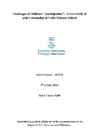
ACCESS ASSESSMENT COVER SHEET Student Name: Alex Callaghan EC1305063 Course: Access to Humanities Tutor: John Gordon Assessment Title: Critically evaluate Locke's theory of limited government Number of Words 1616 NOTE: The ESSAY should be 1500 words in length. Student signature - Alex Callaghan Date - 24/04/2014 Critically evaluate Locke's theory of limited government The end of law is not to abolish or restrain, but to preserve and enlarge freedom. For in all the states of created beings, capable of laws, where there is no law there is no freedom. John Locke
75 per cent of the students surveyed eat three or more slices of brown bread per day, with only a quarter of respondents restricting themselves to one or two slices. Eating fat As regards fat consumption, the majority of the students eat margarine. Four students prefer butter, and another four eat neither. Conclusion It is noticeable that the eating habits of students in their final year at Freedonian Secondary School are not very healthy. Moreover, there are no students who have both breakfast and school lunch, eat more than four slices of brown bread per day, and avoid fat. In this essay, I will discuss whether prevention is better than trying to treat people who are ill and whether or not this is possible in all cases. I will divide the subject into illnesses caused by lifestyle, and illnesses caused by other factors such as genetic factors.
On October 13th, 1917, the construction team received an order to suspend all construction due to the war. Fortunately the hangars were almost ready by that time (only short of large-scale sliding doors, ramps for launching the planes and the floors had no wood cover). These seaplane hangars are unique shell concrete structures, which demonstrate engineering 20 years ahead of its time. The Post-War Years On January 24th, 1945, the secret decision No 010 of the ESSR National Economy Council granted the military a 14.2 ha premises in the area located on Küti and Noole streets. From then on until the end of the 1980s, the whole territory was under the control of the Baltic Shipping Administration and other Soviet military contingents. In addition, the roadstead fleet was based at the harbour. For decades the area remained closed off for regular citizens. In 1951 a new pier No 36A was constructed on the former piers No 36 and 37 which were built
53. To one destined for purgatory, God says, "You try again." To one destined for hell, He says, "I'll try again." 54. Unless he's more intelligent than himself, there's no hope for a man. 55. Wants should subsidize needs. 56. We need to expand our sense of the possible and contract our sense of the probable. 57. What good is it to be able to read someone else's mind if you can't read your own? 58. When a moron meets a lesson, they annihilate one another. 59. While there is only one human race, there are lots of human losers. 60. Willingness to volunteer and suitability for the job to be done are two completely different things. 61. You can remember that you are only if you forget who you are. 62. You can't answer someone who asks you to shoulder your burden of proof by asking him to prove something else. 63. Your thought must become more rigorous; otherwise you won't be able to be sufficiently skeptical. 64. Abandon your ego to its fate. 65
say that they can see a strong family coat. 4 mistake for 8 come up with resemblance between my dad and me. I can't see it myself, not facially anyway 3 Well, she would keep driving too 2 1 bring about 5 go ahead although there are certain similarities fast in the town. 2 fall through 6 go down with in our physical build. I also seem to 4 Well, he would keep misbehaving 3 tip off 7 come to have inherited his big feet, unluckily in class. 4 come up with 8 mistake for for me. It was the first thing my parents 5 Well, you would keep eating too noticed when I was born
ability to participate in making decisions that affect them civil war (kodusõda) - (armed) conflict between politicalfactions or religions within same county industrialization (industrialiseerimine) - a large-scale introduction of manufacturing occupation (okupatsioon) - permanent trade, profession, empouement, bussiness or means of livelihood or possession of real property or use of a thing court ruling (kohtumäärtus) - a decision made by court precendent (pretsedent) - judicial decision that serves as an authority for deciding a later (similar) case equity (õiglus) - system of jurisprudence founded on principals of natural justice and fair conduct to appeal (edasi kaebama) - application or proceeding for review by higher court to change precious decision to solve a dispute (konflikti lahendama) - finding a solution to a conflict
Taanilinn (Danish town) after the Danish conquest in the 13th century. The Knights of the Sword took Tallinn from the Danes in 1227 and made Toompea their fortress. In the middle of the 14th century Denmark sold its possessions in Estonia to the German Teutonic Order; Toompea became the seat of German-born gentry. A fortified wall was built between the Toompea (the Upper Town) and the Lower Town (inhabited by people of a lower social standing), as there were conflicts between the two. The doors and the gates of the wall were locked at night, a procedure which carried on until the end of the 19th century. Tallinn joined the German-dominated Hanseatic League in 1285 and became a junction of trade between East and West: furs, honey, leather and seal fat moved west, while salt, cloth, herring and wine moved 'in the opposite direction. As salt was an important trading commodity, Tallinn is said to have been built on it. Its geographical
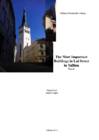
Street that runs parallel to it is not. The aim of the report is to be helpful for the students of Tallinna Mustamäe College who study the history of Tallinn and would like to get additional information about Lai Street, as they need to pass the guide practice exam in form eleven. The report is divided into chapters so that each chapter deals with one of the important houses in Lai Street. In the beginning there are also two introductory chapters about Lai Street in general and the origin of the name "Lai". 3 Lai Street in general Lai Street is 520 m long and begins at a small green patch below the Toompea slope, where a graceful bronze statue of a Roe Deer by Jaan Koort (1883-1935), one of the best-known Estonian sculptors, has been standing for several decades. Lai Street stretches from Nunne Street to Pikk Street. Parallel with Pikk Street, Lai Street, too, ends at the Great Coast Gate
1 Questions: 1. Can the PB&R Company successfully claim any violation of the EU law related rights? 1.1. Goods? Yes, Articles 34 and 35 TFEU cover all types of imports and exports of goods and products. The range of goods covered is as wide as the range of goods in existence, so long as they have economic value: ‘by goods, within the meaning of the … Treaty, there must be understood products which can be valued in money and which are capable, as such, of forming the subject of commercial transactions’1 In this case, dogs are classed as goods, because they have economic value and are subject of sale and import. Short overview: The German government banned the breeding of fighting dogs after the June 6th, 2001, when the pit bull tore up to a pieces a six-year-old boy in Hamburg. German Chancellor
Prior to this momentous event that heralds an evolutionary transformation in the life of plants, the planet had already been covered in vegetation for millions of years. The first flower probably did not survive for long, and flowers must have remained rare and isolated phenomena, since conditions were most likely not yet favorable for a widespread flowering to occur. One day, however, a critical threshold was reached, and suddenly there would have been an explosion of color and scent all over the planet – if a perceiving consciousness had been there to witness it. Much later, those delicate and fragrant beings we call flowers would come to play an essential part in the evolution of consciousness of another species. Humans would increasingly be drawn to and fascinated by them. As the consciousness of human beings developed, flowers were most likely the
1651 Hobbes' Leviathan(1588-1679) 1660 The Restoration of Charels 2. as king of England 1688 The Glorious Revolution of Willim and Mary in England 1689 John Locke publishes Two Treatises of Goverment 1707 formation of the British Parliament Social Contract philosophy: The reasons for entering a social contract and the responsibilities of the goverment *Hobbes: To preserve one's safety *Locke: To preserve one's safety and property *Rosseau: To preserve one's safety, property and freedom, but to guarantee the latter, the goverment also has the responsoility of improving/educating the citizens. Laws are historical conventions, people can be forsed to be free. State of nature Hobes: state of nature is a state of conflict, a state of war. Locke: state of nature is peaceful, all men are equal. They treat others as themselves. Rousseau - people in the state of nature were neither good or bad. Man was like an animal not posessing any needs besides the primary ones
Australia Australia is the smallest continent in the world. It is 7.6 million square kilometres big. It is often called the island continent because it is rather small for a continent and very big for an island. There are only five countries bigger than Australia in the World. There are five states in the mainland. Tasmania is also considered as a state so there are six states. The Northern Territory and Canberra are also independent but they are not states. Canberra is the capital of Australia and it is situated between Sydney and Melbourne because both of these cities wanted to be the capital. The population is about 19 million people and growing. New South Wales is the most populated state and Victoria is the most densely populated state. The national language is English. It is English because British settlers came to live in Australia in
economies of sales which maximizes consumer welfare and ensures the most efficient use of world-wide resources. 4 Economic Union D Approach to attaining a common market underpinned by the principles of non-discrimination, market access and concept of comparative federalism. States retain power to regulate as long as national regulation does not interfere with `federal` law. 5 Free trade E Common foreign and security policies first appear at the
Konstantin Dmitrievich Levin ("Kostya") arrives in Moscow with the aim of proposing to Dolly's youngest sister Princess Ekaterina Alexandrovna Shcherbatskaya, "Kitty". Levin is a passionate, restless but shy aristocratic landowner who, unlike his Moscow friends, chooses to live in the country on his large estate. He discovers that Kitty is also being pursued by Count Alexei Kirillovich Vronsky, an army officer. At the railway station to meet Anna, Stiva bumps into Vronsky. Vronsky is there to meet his mother. It surmises that Anna and the Countess Vronskaya have travelled together in the same carriage and talked together. As the family members are reunited, and Vronsky sees Anna for the first time, a railway worker accidentally falls in front of a train and is killed. Anna interprets this as an "evil omen." Vronsky is infatuated with Anna. Anna, who is uneasy about leaving her young son, Seryozha, alone for
 annaabi.ee