Vajad kellegagi rääkida?
Küsi julgelt abi LasteAbi
Logi sisse

Acverbs and adverbial phrases (0)

1 Hindamata
Punktid
Inglise keel - Kõik luuletused, mis on inglise keeles


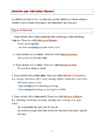
Adverbs and Adverbial Phrases  
 
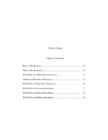
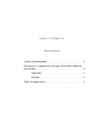
Table of Contents 
 
Adverbs and Adverbial Phrases ........................................................... 2 
Types  of Adverbs ..................................................................................... 2 
Position  of Adverbs.................................................................................. 4 
Yet, stil ,  already ....................................................................................... 6 
 
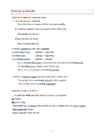
Adverbs and Adverbial Phrases 
  
An adverb describes a verb , an adjective , another adverb or a whole sentence. 
Adverbs can be divided according to the information that they give. 
  
Types of Adverbs 
  
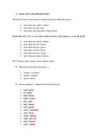
1. Some adverbs tell us how somebody does something or how something   
happens. These are called Adverbs of Manner
Please  speak  quietly
Tom drove carefully  along  the  narrow  road
  
2. Some adverbs tell us where. These are called Adverbs of Place
She put the book on the table
  
3. Some adverbs tell us when. These are called Adverbs of Time
We met  them  at fiveclock
  
4. Some adverbs tell us how often. These are called Adverbs of Frequency
       E.g. always, sometimes, often,  neverusually , seldom, hardly ever, and rarely
She never  comes on time. 
They usually  work  on Saturday mornings. 
I have always loved plays written by Oscar  Wilde
  
5. Some adverbs tell us how much. These are called Adverbs of Degree .     
E.g. definitely, absolutely, obviously, possibly, just,  certainly , very,  quite ,   
rather
   He 
is definitely the right man for the job. 
 He 
would certainly have been chosen for the team if he hadn’t injured  
         his knee. 


6. Some adverbs have the same form as the adjective. This is the case with   
hard , fast,  late
  
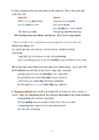
Adjective   


Adverb 
Jack is a very fast  runner
 
Jack can run very fast
                        Ann 
is 

hard worker. 
  Ann 
works  hard.                    
                                                                        Ann 
hardly ever works hard.   
 The 
train  
was 
late
  Tom 
got 
up 
late this  morning
                         NB! hardly  means  very little , nearly nothard means very much            


7. Many adverbs end in -ly, because many adjectives can be made into    
adverbs by adding –ly.     
       E.g.  quick /quickly, slow /slowly, brave/bravely, careful/carefully,   
       bad/badly
        
They didn’t go out because it was raining heavily
 
 
Colin  was disappointed to see how badly his son had done at the  exam
  
NB! At the same time there are some adjectives which end in –ly as well. The 
most common are  friendly , lively, lovely, ugly, silly, cowardly
Nobody  has ever been so friendly to me. (adjective) 
He greeted me in a most friendly manner. (adverb) 
I don’t like your cowardly behaviour. (adjective) 
He betrayed me in a most cowardly way. (adverb) 
 
8. Sentence Adverbs are words or phrases like certainly, perhaps , luckily, of  
course . They say something about the situation described in the whole sentence. 
 
 
Fortunately, the weather  stayed fine. 
   We’ll 
probably have to wait for another bus. This one is  full
   I 
certainly didn’t expect  such a beautiful present
He was late, of course


Position of Adverbs 
  
Adverbs of Manner normally come  
 1.  1) at the end of a statement
 
    
Since  then I have answered all the  letters  personally
             2) in shorter sentences they can stand  in front of the verb: 
           
He quietly  shut  the  door
             3) but after the verb to be 
          
Mary is frequently late.   
       2. before  Adjectives and other  Adverbs:
reasonably cheap  
(adverb + adjective) 
terribly  sorry  
 
(adverb + adjective) 
incredibly quickly 
(adverb + adverb) 
It’s a reasonably cheap  restaurant  and the food is extremely  good
I’m terribly sorry. I didn’t want to hurt you. 
Maria learns  languages  incredibly quickly. 
  
       3. before a Past Participle (injured/organised/written etc.): 
Two people were seriously injured in the accident
The meeting  was very badly organised.  
  
Adverbs of Place (where?) 
       1. Usually the verb and the adverb of place go together: 
go home 
live  in a city 
        If the verb has an  object , the adverb of place comes after the verb + object: 
 take somebody home 
 meet a friend  in the street  


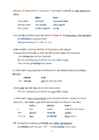
Adverbs of Time (when? /how often? /how long?) normally go after adverbs of 
place: 


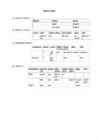
place 
  time 
Tom walks   
to work 
 
every morning. 
She has been 
in Canada  
since April
We arrived    
at the airport  
early . 
  
It is usually possible to put the adverb of time at the  beginning of the sentence: 
On Monday I’m  going to  Paris
Every morning Tom walks to work
  
Some adverbs, such as Adverbs of Frequency and Degree 
(always/also/probably) go with the verb in the  middle of a sentence: 
Tom always  goes  to work by train. 
We were  feeling  very tired and we were also hungry. 
Your car has probably been stolen
  
a)  If the verb is one word (goes/ fell /cooked), the adverb usually goes before   
the verb: 


adverb   verb 
Tom  always 
 
goes to work by train
  
b) but after the verb ‘be’ (am/is/are/was/were)
We were feeling very tired and we were also hungry
  
c) if the verb is two or more words (can remember /doesn’t  smoke /has been 
stolen etc.), the adverb goes after the first verb (can/doesn’t/has etc.): 
verb 
1  adverb  verb 

I   can   
 
never  
 
remember his name. 
Ann  
doesn’t 
 
usually 
 
smoke.
Your car  
has   
 
probably   
been stolen. 
 
NB! In negative sentences probably goes before the negative: 
probably won’t see you.  OR    I will probably not see you


We also use all and  both  in these positions
We all  felt  ill after the  meal
My  parents  are both teachers. 
Sarah and  Jane  have both applied for the job
  
Sometimes we use is/will/did etc. instead of repeating part of a sentence. Note  
the position of always/never/ etc. in these sentences: 
He always says he won’t be late but he always is. (= he is always late) 
I’ve never done it and I never will. (= I will never do it) 
  
Phrases like every day once a week or most evenings go in front or end 
position. 
 
 
Every day we go jogging. We go jogging every day
 
 
I have driving lessons three times a week
  
Also usually goes in mid position, but too and as well go in end position. 
Ann bakes lovely cakes. She also  makes bread . /She makes bread too/as 
well
  
Yet, still , already 
  
Yet means that something is expected to happen
 
 
Have you had a  holiday  yet? (It’s time to have a holiday.) 
  
Still means ‘going on longer than expected’. 
I’m still  working on my project. (There is no time for a holiday yet.) 
  
Already means ‘sooner than expected’. 
 
 
I’ve already  passed  all the exams . (Long before the deadline .) 
  
Yet usually goes at the end of a negative statement or question. 
 
 
Kate has received  a present, but she hasn’t opened it yet
 
 
Have they  sent  you the tickets  yet? – No, not yet


In a  positive statement, still and already usually go in mid position, like adverbs 
of degree and frequency. 
 
 
I sent her an e-mail a week ago, and am still  waiting  for a  reply
 
 
You don’t have to tell me that horrible news, I already  know
  
Still can be used in a negative statement, where it goes before  haven ’t, can’t, etc. 
It’s nearly bed-time, and you still haven’t  finished your homework . (Hurry 
up!) 
 
 
Alison is fifteen and she still can’t  swim . (High time to learn!) 
  
Still is more emotional than yet. It usually expresses surprise or anger at the 
fact that something is taking longer than expected. 
Rita hasn’t booked our holiday yet. ( neutral  – it’s OK; there’s still plenty of 
time) 
Rita still hasn’t booked our holiday. (emotional – soon it may be too late!) 
  
In a question still and already usually go after the subject
 
 
Are you still waiting after all this time? 
   Has 
John already applied for the job? 


Document Outline

  •  
  •  Adverbs and Adverbial Phrases 
  • Types of Adverbs 
  •  Position of Adverbs 
  • Yet, still, already 
Vasakule Paremale
Acverbs and adverbial phrases #1 Acverbs and adverbial phrases #2 Acverbs and adverbial phrases #3 Acverbs and adverbial phrases #4 Acverbs and adverbial phrases #5 Acverbs and adverbial phrases #6 Acverbs and adverbial phrases #7
Punktid 50 punkti Autor soovib selle materjali allalaadimise eest saada 50 punkti.
Leheküljed ~ 7 lehte Lehekülgede arv dokumendis
Aeg2014-12-14 Kuupäev, millal dokument üles laeti
Allalaadimisi 24 laadimist Kokku alla laetud
Kommentaarid 0 arvamust Teiste kasutajate poolt lisatud kommentaarid
Autor 213757 Õppematerjali autor
Reeglid Akadeemilises inglise keeles teemal Acverbs and adverbial phrases

Sarnased õppematerjalid

English structure revision for the exam
40
docx

English structure revision for the exam

these words are most commonly nouns, verbs (not auxiliaries), adjectives and adverbs. Closed class words (function words) → These are words that do not take in any new words. In English the word classes are prepositions, pronouns, determiners and conjunctions.  Syntax is the study of how sentences are formed in a language. For example what is the word order ( in English it’s usually subject, verb object) or how words relate to each other in sentences etc. Germanic languages → Belong to the Indo-European language family. Germanic languages divide into West Germanic and North Germanic languages. There used to be East Germanic languages also but they are now extinct.  North Germanic languages → Swedish, Norwegian, Danish, Icelandic and Faroese.

Inglise keel
Word order
18
pdf

Word order

mark ( ! ) : What a beautiful day! Do your homework at once! Parts of the Sentence The basic parts of the sentence are: THE SUBJECT (WHO? WHAT?) , THE PREDICATE (does, is doing, has done, etc – action/statement), THE OBJECT (WHO/WHAT is the action/statement directed at?) : Marion (who?) has a boy-friend (who?). She (who?) likes to read books (what?). The earth (what?) is a planet (what?). Besides, there are: THE ATTRIBUTE (WHAT?/WHAT KIND?) and THE ADVERBIAL (WHEN? - adverbial modifier of time/WHERE? – adverbial modifier of place/ HOW? – adverbial modifier of manner) Attributes modify nouns and stand in front of them. Adverbials modify verbs and usually stand behind them: This girl has a beautiful smile. This girl smiles beautifully. Attributes are usually adjectives but sometimes nouns as well: This is an interesting (adjective) story. The kitchen ( noun) door is locked. 2

Akadeemiline inglise keel
Inglise keele struktuur
29
docx

Inglise keele struktuur

number of items. Typical closed classes found in many languages are adpositions (prepositions and postpositions), determiners, conjunctions, and pronouns.[1] Contrastingly, an open class offers possibilities for expansion. Typical open classes such as nouns and verbs can and do get new words often, through the usual means such as compounding,derivation, coining, borrowing, etc. [2] Syntax: studies how words group together to make phrases and sentences. Sentences are not simply random strings of words; they conform to specific patterns determined by the syntactic rules of the language. The syntactic rules in a grammar must account for the grammaticality of sentences, word order, structural ambiguity, the meaning relations between words in a sentence, the similarity of meaning of sentences with different structures, the speaker's creative ability to produce and understand any of an infinite set of possible sentences.

Inglise keel
Word order-articles-prepositions-adverb-adjective
5
odt

Word order, articles, prepositions, adverb, adjective

I will you the story at school tomorrow. tell because I don´t time now. have Questions interrogative auxiliary subject other indirect direct place time verb verb(s) object object What would you like to me tell Did you have a party in your yester flat day? When were you here?

inglise teaduskeel
English Grammar Book 1
159
pdf

English Grammar Book 1

All rights reserved. No part of this book may be reproduced in any form or by any means, electronic or mechanical, including photocopying, recording, or by any information storage and retrieval system, without the written permission of the publisher. ISBN 1-59905-201-6 Printed in the United States of America 13 12 11 10 09 08 07 9 8 7 6 5 4 3 2 1 Introduction Grammar is a very old field of study. Did you know that the sentence was first divided into subject and verb by Plato, the famed philosopher from ancient Greece? That was about 2,400 years ago! Ever since then, students all over the world have found it worthwhile to study the structure of words and sentences. Why? Because skill in speaking and writing is the hallmark of all educated people. Lesson by lesson, this book provides basic instruction in the eight parts of speech--nouns, pronouns, verbs, adjectives, adverbs, prepositions, conjunctions, and

Inglise keel
Big grammar theory
8
doc

Big grammar theory

Much More The most Many More The most 5. Pronouns: Subjective personal pronouns: A subjective personal pronoun indicates that the pronoun is acting as the subject of the sentence. The subjective personal pronouns are "I," "you," "she," "he," "it," "we," "you," "they." You are surely the strangest child I have ever met. Objective personal pronouns: An objective personal pronoun indicates that the pronoun is acting as an object of a verb, compound verb, preposition, or infinitive phrase. The objective personal pronouns are: "me," "you," "her," "him," "it," "us," "you," and "them." Seamus stole the selkie's skin and forced her to live with him. Persons P. Adjectives P. Pronouns 1st person (singular) (I) MY MINE 2nd person (singular) (You) YOUR YOURS

Inglise keel
Inglise keele praktilise grammatika mõisted
22
pdf

Inglise keele praktilise grammatika mõisted

adjective + preposition omadussõna + eessõna proud of, good at, married to adverb particle Some verbs are followed by adverb particles. Examples are: put on, take off, give away, bring up, call in. Sometimes the particle is detached from the verb and put after the object. •He took his boots off. •They called the doctor in. apposition a grammatical construction in which two usually adjacent nouns having the same referent stand in the same syntactical relation to the rest of a sentence (as the poet and Burns in “a biography of the poet Burns”) back-reference In grammatical analysis, the term reference is often used to state a relationship of identity which exists between grammatical units, e.g

Inglise keel
Degrees of comparison
12
pdf

Degrees of comparison

Degrees of Comparison Table of Contents Degrees of Comparison ......................................................... 2 Formation of comparatives and superlatives from adjectives and adverbs:......................................................................... 2 Adjectives ................................................................. 2 Adverbs .................................................................... 4 Types of comparisons ........................................................... 4 Degrees of Comparison Degrees of Comparison are used to compare things (living beings, actions, phenomena, etc). We use the comparative degree to compare two things: She’s shorter than me. John works harder than Jim. After a comparative we use than. We use the superlative degree to compare more than two things: Mary is shorter than Jane but Judy is the shortest of the three

Akadeemiline inglise keel


Kommentaarid (0)

Kommentaarid sellele materjalile puuduvad. Ole esimene ja kommenteeri


Sellel veebilehel kasutatakse küpsiseid. Kasutamist jätkates nõustute küpsiste ja veebilehe üldtingimustega Nõustun