Vajad kellegagi rääkida?
Küsi julgelt abi LasteAbi
Logi sisse

Degrees of comparison (0)

1 Hindamata
Punktid
Inglise keel - Kõik luuletused, mis on inglise keeles


Degrees of Comparison  


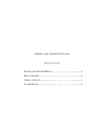
Table of Contents 
 
 
Degrees of Comparison ......................................................... 2 
Formation of comparatives and superlatives from adjectives 
and adverbs :......................................................................... 2 
Adjectives ................................................................. 2 
Adverbs .................................................................... 4 
Types of comparisons  ........................................................... 4 
 
 
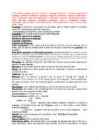
Degrees of Comparison 
  
Degrees of Comparison are used to compare things (living beings, actions, 
phenomena, etc). 
We use the  comparative degree  to compare two things: 
 She’s 
shorter  than  me. 
 John 
works  
harder than Jim. 
After a comparative we use than
  
We use the superlative degree to compare more than two things: 
Mary is shorter than Jane but Judy is the shortest of the three   
sisters. 
Ben is the shortest boy in his class
The  superlative degree is usually used with the definite article the
 
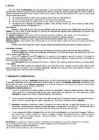
Formation of comparatives and superlatives from adjectives and 
adverbs: 
  
Adjectives 
  
1) one- syllable Adjectives 
  
•  for one-syllable adjectives, add –er to form the comparative and -est to 
form the superlative:  
sweet   
sweeter   
the sweetest 
If an adjective ends with a  mute  –e, it is omitted: 
         late            later           the latest 
NOTE ! For one-syllable adjectives ending in a vowel + consonant , we double the 
consonant: 
big    
bigger   
the biggest 
•  with one-syllable adjectives ending in –ed we use more and most  
pleased 
more pleased 
most pleased 
 

2) two-syllable Adjectives 
  
•  with two-syllable adjectives ending in –ly, -y, -w, we also add –er/-est  
narrow  
 
narrower    
the narrowest 
NOTE! For adjectives ending in a consonant + y we replace  –y with –i
happy  
happier  
the happiest 
•  with some two-syllable adjectives we can use either –er, -est or more and 
most, e.g. clever, common, friendy, gentle, pleasant,  polite , shallow,  simple
stupid, quiet  (consult the dictionary, but, to be on the  safe side, you can always use -er, -est): 
 simple simpler   the 
simplest 
OR simple 
more simple 
most simple 
  
•  with other two-syllable adjectives comparatives and superlatives are formed  
with more/most:  
A) adjectives ending in –ful or -less 
  
 
careful  more careful 
most careful 
  
 
hopeless  more hopeless 
most hopeless 
B) words ending in –ing or –ed 
  
 
boring 
more boring 
most boring 
  
 
surprised more surprised  most surprised  
C) many others, e.g.  afraid , certain, correct , eager, exact, famous, 
foolish, frequent, modern, nervous, normal, recent 
   
 
exact  
more exact  
most exact 
  
3) three-syllable and longer Adjectives 
  
With three-syllable and longer adjectives we use more/most
interesting   
more interesting   
most interesting 


Adverbs 
  
With adverbs that have the same form as their adjectives ( hard , fast, free,  early
late , high, few,  deep , long, near , right,  straight ) we add –er or -est
hard   
harder    the 
hardest 
Two-syllable or compound adverbs take more/most: 
 
often  
more often   
most often   
easily  
more easily  
most easily 
  
Irregular forms of Adjectives and Adverbs: 
good /well 
 better 
  best  
bad/badly 
 worse 
  worst 
much 
  more 
  most 
many   
          more   
 
most 
little  
  less 
  least  
far  
 
farther/further  farthest/furthest 
 
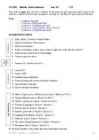
Types of comparisons 
  
we use more/most and their opposites less/least to compare quantities  
  
I haven ’t got many friends; you’ve got more than I have. 
Tom spends less  money  on food than I do, but Peter spends the least
  
as + Adjective + as shows that people or things are similar in some way. In 
negative statements we use not as/so ... as  
  
Kate is as tall as Mary
  
more/less + Adjective + than expresses the difference between people or things  
  

find that  Philosophy  is less interesting than Psychology


much/a lot/far/ slightly + comparative expresses the degree of difference 
between two people or things  
  
Paul is slightly taller than  Richard
  
the most/least + Adjective + of/in compares one person or thing to two or 
more people or things in the same group  
  
Rebecca  is the least athletic girl in my class
  
by far + the + superlative emphasizes the difference between one person or 
thing and other people or things in the same group  
  
Helen is by far the most attractive girl in the beauty  contest
  
comparative + and + comparative shows that something is increasing or 
decreasing.  
  
The climate in Estonia is getting  warmer and warmer
  
the + comparative, the + comparative is used to say that a change in one 
thing goes with a change in another  
  
The sooner we leave, the sooner we’ll get  there
The faster you drive , the better
The more you study , the more you know . 
  
So and such a  
  
So is followed by adjectives - be + so + adjective
The soup  was so hot that I couldn’t eat it. 
You are so beautiful
 

Such a(n)  is followed by a noun or an adjective plus noun – be+ such + a(n)  
(+ Adjective) + noun:  
 It 
was 
such an awful day! 
 
He is such a  fool
With singular countable nouns such a(n) is used 
It was such a slow train  that I arrived  late for the  meeting
With uncountable or plural countable nouns such is used. 
They were such large tablets  that I couldn’t swallow  them
It was such poor quality  oil that it damaged my car engine .  
 
Adjectives ending in –ly 
  

Although many adjectives form adverbs by adding  –ly ( quick , quickly), there are 
some adjectives which end in –ly. The most common are: 
friendly , lively, lovely, ugly, silly, cowardly, motherly
To use these words adverbially, you have to say ‘in a friendly way’, etc.  
He was very friendly. (Adjective) 
He spoke to me in a friendly way. ( Adverb ) 


Document Outline

  • Table of Contents
  •  Degrees of Comparison 
  • Formation of comparatives and superlatives from: 
    • Adjectives 
    •  Adverbs 
  • Types of comparisons 
Vasakule Paremale
Degrees of comparison #1 Degrees of comparison #2 Degrees of comparison #3 Degrees of comparison #4 Degrees of comparison #5 Degrees of comparison #6
Punktid 50 punkti Autor soovib selle materjali allalaadimise eest saada 50 punkti.
Leheküljed ~ 6 lehte Lehekülgede arv dokumendis
Aeg2014-12-14 Kuupäev, millal dokument üles laeti
Allalaadimisi 17 laadimist Kokku alla laetud
Kommentaarid 0 arvamust Teiste kasutajate poolt lisatud kommentaarid
Autor 213757 Õppematerjali autor
Reeglid Akadeemilises inglise keeles teemal Degrees of comparison

Sarnased õppematerjalid

English structure revision for the exam
40
docx

English structure revision for the exam

mechanical object.  Kim seems engine 3) A formal test → With nouns we can test if it contains morphemes which makes word a noun. For example:  Noun can have a plural ending s  Noun can have a possessive form. Boys’  Nouns usually go with determiners: an apple, a ball, the red car  We can determine an adjective if it has a degree of comparison. For example: most beautiful, smaller. 4) A morphological test → What are the different forms a word can have. 5) A function test → What work does the word perform in a phrase or sentence. 2.3 Grammatical categories Grammatical categories divide into  Inherent categories → are the properties that a word naturally has or does not have.

Inglise keel
Big grammar theory
8
doc

Big grammar theory

Languages: · English; Chinese Ballgames: · volleyball Of- forms: · The Republic of Estonia Meals: · Lunch; dinner Air, sky, earth, moon: · The moon Musical instruments: · The violin; the guitar Academic subjects: · Biology; history Go to------ school, university, sea, bed, work, hospital: · - Nationalities: · Dutch; Spanish 4. Comparison of adjectives: Adjectives with one syllable: clean cleaner cleanest new newer newest cheap cheaper cheapest Adjectives with two syllables and the following endings: Adjectives with two syllables, ending in -y dirty dirtier dirtiest easy easier easiest happy happier happiest

Inglise keel
English Grammar Book 1
159
pdf

English Grammar Book 1

4 Pronouns 44 Personal Pronouns 44 10 Prepositions 132 Reflexive Pronouns 47 Interrogative Pronouns 48 Demonstrative Pronouns 49 11 Conjunctions 135 5 Adjectives 52 12 Interjections 138 Adjective Endings 54 Kinds of Adjectives 58 Comparison of Adjectives 65 13 Sentences 139 What is a Sentence? 139 6 Determiners 71 Kinds of Sentences 140 The Imperative 141 The Articles 71 The Subject and the Object 143 Demonstrative Determiners 73 Direct and Indirect Objects 144

Inglise keel
Inglise keele struktuur
29
docx

Inglise keele struktuur

II. Relational categories for verbs: voice The workers painted the house. The house was painted by the workers. Das Buch wird von zwei Autoren geschrieben. `The book is being written by two authors.' Heute Abend wird viel getanzt. `There will be a lot of dancing tonight.' III. Agreement categories for verbs: I am/he is/they are sleeping he sleeps Grammatical categories for adjectives I. Inherent categories for adjectives: degree of comparison (comparative, superlative): cold ­ colder ­ coldest II. Agreement categories for adjectives: agreement of attributive adjectives with the head noun, and of predicative adjectives with the subject French: le vin blanc `the white wine' la porte blanch `the white door' German: Ein klein-es Kind sah einen reich-en Mann `A small child saw a rich man' 3. Nouns and noun phrases, the structure and functions of noun phrases; lexical subclasses

Inglise keel
Exami kysimused-vastused
13
doc

Exami kysimused-vastused

g. "This `sweet' lady has killed five husbands."). 7. Uncommon use of punctuation. 8. Exclamatory and interrogatory sentences (e.g. "Women and votes!). 9. The writer may indicate the quality of the character's voice (e.g. "Society," she said blackly (shows speaker's negative attitude). "Society" becomes negatively because of "blackly"). Positive adherent connotation 1. The closeness and neighbourhood of words with inherent positive overtones. 2. We may have comparison a part of which the word becomes. 3. Words "hope", "wish", etc. may affect a word in the context. 4. Repetition of a word. 5. Complementary words. 6. Character's voice (e.g. "Hatred", she said, her voice trembling with pleasure." ­ "pleasure" turns "hatred" into positive). 4. STYLISTIC MORPHOLOGY NOUNS: the expressive features of nouns are based on non-typical use of the number, the case, and pronoun substitution. On a transposition of nouns this is

Stilistika (inglise)
Stilistika loeng
31
doc

Stilistika loeng

English we have a great number of words for conveying positive attitude and not so many of those expressing negative evaluation. Positive adherent connotation 1. The closeness and neighbourhood of words with inherent positive overtones (e.g. "She kissed my hands. They are beautiful, she said, big, and red, and brutal." ­ "beautiful" is positively charged and so it influences "big" and "brutal"). 2. We may have comparison a part of which the word becomes (e.g. O. Wilde "Youth is so much valuable than the experience: it is much so far intelligent." ­ "youth" becomes positive, it is compared to "experience"). 3. Words "hope", "wish", etc. may affect a word in the context (e.g. O. Wilde "You cannot go anywhere without meeting clever (negative here) people. . . . I wish to goodness we had a few fools (positive here) left

Stilistika (inglise)
Acverbs and adverbial phrases
14
pdf

Acverbs and adverbial phrases

She put the book on the table. 3. Some adverbs tell us when. These are called Adverbs of Time. We met them at five o´clock. 4. Some adverbs tell us how often. These are called Adverbs of Frequency. E.g. always, sometimes, often, never, usually, seldom, hardly ever, and rarely: She never comes on time. They usually work on Saturday mornings. I have always loved plays written by Oscar Wilde. 5. Some adverbs tell us how much. These are called Adverbs of Degree. E.g. definitely, absolutely, obviously, possibly, just, certainly, very, quite, rather: He is definitely the right man for the job. He would certainly have been chosen for the team if he hadn’t injured his knee. 2 6. Some adverbs have the same form as the adjective. This is the case with hard, fast, late. Adjective Adverb Jack is a very fast runner. Jack can run very fast.

Akadeemiline inglise keel
Grammar Terminology
22
docx

Grammar Terminology

adjective omadussõna, Describes the qualities, features or states attributed to a a nice room, a happy girl, the blue adjektiiv noun or pronoun. sky 2 Grammatical Terminology adverb määrsõna, adverb Indicates the time, place, manner, degree, frequency, beautifully, angrily, now, yesterday, duration, viewpoint, etc. of an event, action or process. never It is mostly realised by the -ly suffix added to an adjective. numeral arvsõna, numeraal one, ninety-eight, tenth

Inglise keel


Kommentaarid (0)

Kommentaarid sellele materjalile puuduvad. Ole esimene ja kommenteeri


Sellel veebilehel kasutatakse küpsiseid. Kasutamist jätkates nõustute küpsiste ja veebilehe üldtingimustega Nõustun