Manual regarding the Customs Treatment
of Gifts and
Items of Negligible
Value Customs Procedures Branch Nenagh Date of
Issue : December 2008
Date Updated March 2010
Queries: customsreliefs@
revenue .ie
VPN 63229/63234/63235
This manual provides a guide to the interpretation of the legislation governing
the Customs treatment of gifts and items of negligible value and should be read
in conjunction with that legislation.
(Previously O. I. 107 of 2005, replaced by O.I. 69 of 2008 as amended by O.I. 64
of 2009) 1
CONTENTS
1. INTRODUCTION ..............................................................................................3 2. LAW.....................................................................................................................3
3. DE MINIMUS LIMITS .....................................................................................4
4. CONSIGNMENTS CONTAINING ITEMS OF NEGLIGIBLE VALUE....4
5. GIFTS ..................................................................................................................4 6. PROCEDURE AT IMPORTATION................................................................7
7. ENTRY ON THE AEP SYSTEM .....................................................................7
8. HOW VARIOUS TYPES OF DUTY , CHARGEABLE AT
IMPORTATION, ARE CALCULATED .........................................................8
9. REFUND CLAIMS ............................................................................................8
10. CASES OF DOUBT OR DIFFICULTY...........................................................9
2
1. INTRODUCTION When
goods are imported into
Ireland , from a
country outside the European
Community (EC) they are normally liable to
import charges (Customs Duty, Anti-
Dumping, Countervailing and Excise Duties where
applicable plus VAT) at the point of
importation. Paragraph 8
below sets out how
these charges are calculated.
However, in certain cases relief from import charges arises because
1. the
amount of import charges is below a de minimus
limit 2. the item being imported is of negligible value; or
3. the goods are Gifts, which are consigned to a private
individual living in
Ireland.
This Instruction outlines the relief
available in these three situations, how it may be
obtained and the Customs procedures involved.
It is
important to
note that
there are separate Reliefs (for
different amounts) available
for travellers who import goods with
them on
return from
abroad .
Full details of those
Reliefs are available in the Baggage Control and Examination Manual and in the
Information leaflet for Travellers arriving in Ireland from non-EC Countries who are
importing goods
purchased for personal use.
Definitions Throughout this instruction the
following definitions
apply :
•
Customs Value: This is the value of the goods plus
insurance and freight
(which includes postage)
costs (CIF value).
•
Intrinsic Value: This is this is the value of the goods alone, and does not
include insurance and freight.
2. LAW Provision for relief from
payment of Customs Duty in respect of consignments of
negligible value and
gift consignments is made under Article 868 of the Customs Code
Implementing Provisions.
2.1 Customs Duty: Council Regulation (EC) No.
1186 /2009,
setting up a Community system of reliefs
from Customs duty.
2.2 VAT: Council Directive 2006/79/EC, on the exemption from
taxes of imports of small
consignments of goods of a non-commercial
character from third countries,
given the
force of law in Ireland by S.I. No. 549 of 2007, and Council Directive (EEC) 181 of
1983, determining the
scope of Article 14 (1) (d) of Directive 77/388/EEC as regards
exemption from value added tax on the
final importation of certain goods, as amended
by Council Directive 88/331/EEC.
3
2.3 Flat rate of duty: Provision is made under the following Legislation for the charging of Customs Duty at
a flat rate of 2.5% on gift consignments valued in
excess of €45, where the value of the
dutiable goods in the consignment does not exceed €700:
Point D1 of Annex I, Part One, Section II of Commission Regulation (EC) No.
1214/2007 amending Annex I to Council Regulation (EEC) No. 2658/87 on the
tariff and statistical nomenclature and on the Common Customs Tariff as
amended by Council Regulation (EC) No. 275/2008. 3. DE MINIMUS LIMITS Where the customs duty on any consignment amounts to less
than €10 it should not be
collected. Similarly, VAT
liability amounting to less than or equal to €6 should not be
collected. No de minimus
rule applies in the
case of excise duty which should always
be collected if the goods are liable to excise duty.
4. CONSIGNMENTS CONTAINING ITEMS OF NEGLIGIBLE VALUE Consignments of item(s) not exceeding an intrinsic value of €150 may be imported
without payment of Customs Duty. Consignments of item(s) not exceeding a
total intrinsic value of €22 may be imported without payment of VAT. The
practical effect
of the different monetary limits is that consignments where the intrinsic value is
between €22.01 and €150 will qualify for relief from Customs Duty but VAT will
still be chargeable.
However, it should be noted in particular that there is no relief (from
Customs Duty, VAT or excise duty) under this negligible value provision for
importations of tobacco products , alcohol products, perfumes or toilet waters
irrespective of their value.
While this exemption is not confined to private importations, care should be
taken to ensure that relief is not
granted in respect of
single parcels which form part of a
larger consignment exceeding the monetary limits.
5. GIFTS
5.1 General Relief from payment of Customs Duty and VAT is
allowed on gifts consigned to an
individual living in Ireland, from outside of the EC,
provided the Customs value of the
goods does not exceed €45. (In the case of tobacco products, alcohol products,
perfumes or toilet waters the relief is confined to Customs Duty only and only provided
a quantitative limit is not
exceeded – see paragraph 5.3).
5.2 Conditions In all cases, gift relief is
subject to the following conditions being met:
(a) The Customs value of the gift does not exceed €45 (and for tobacco products,
alcohol products, perfumes or toilet waters the item is
within the quantitative limits set
out in paragraph 5.3).
(b) The gift is correctly declared (see paragraphs 6 and 7).
(c) It has been
sent from a private individual abroad to a private individual within the
EC.
4
(d) The gift is for the personal or family use of a private individual within the EC.
(e) There is no commercial or trade element i.e. the goods have not been
paid for.
(f) The gift is of an occasional
nature only,
such as a
present for a
birthday or
anniversary.
5.3 Gift relief – quantitative restriction on gifts of tobacco products, alcohol, perfume and toilet waters. Relief from
Customs Duty only
(i.e. no excise duty relief and no VAT relief) is allowed
on gifts comprising tobacco products, alcohol, perfumes or toilet waters, provided the
value of the gift does not exceed €45. However, the relief is only available for the
quantities set out in the table below and is subject to the conditions in paragraph 5.2
being fulfilled.
Anything in excess of the quantities specified in the table is liable to
Customs Duty.
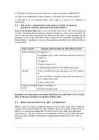
Type of Goods Quantity allowed under the Gift relief provision Tobacco Products 50 cigarettes; or
25 cigarillos (cigars with a maximum individual
weight of
3 gms); or
10 cigars; or
50 gms of tobacco; or
A proportional assortment of the different products.
Alcohol
1 litre of distilled beverages and spirits over 22%
volume ;
or
1 litre of fortified or sparkling
wine , and some liqueurs of
22% volume or less; and
2 litres of still wines.
Perfume and toilet 50 gms of perfume; or
waters
0.25 litres of toilet water.
Reminder: It is important to remember that there is no relief from VAT or Excise
duty on the above products, irrespective of their value.
5.4 More than one item in a “gift” consignment Where a “gift” in a single consignment
consists of two or more items with a combined
customs value of
greater than €45, relief should be given for as many of those items as
add up to a value not exceeding the €45 limit. However, the value of an individual
item
cannot be “
split up” in
order to
arrive precisely at the €45 cut off limit. The table
below provides a number of illustrative
examples demonstrating how this works in
practice :
5
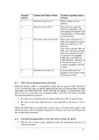
Example Number and Value of Items Position regarding import number charges 1
One item valued at €45
Relief granted on total
amount.
2
One item valued at €55
Gift relief not applicable.
However, negligible value
relief applies in relation to the
Customs Duty. VAT payable
on total amount.
3
Five items valued at €10 each
Four items relieved in full.
One item subject to Customs
Duty (normal rate or 2.5%
flat rate)
and VAT on its full value (in
this case, €10). The importer
may opt to declare the items
as an import of negligible
value and avail of the duty
relief afforded. However, in
such circumstances, VAT
would be payable on the full
amount.
4
One item valued at €710
Customs Duty and VAT
payable on full amount at the
normal rate of duty.
5.5 Flat rate of Customs Duty for gifts Where the intrinsic value of a consignment of gifts does not exceed €700, a flat rate of
2.5% Customs Duty may be applied
rather than the rates of Customs Duty normally
applicable to the individual items. (Note: This flat rate applies to Customs Duty only,
not to VAT or to excise duty). In calculating whether or not the €700 limit is exceeded
the following should be excluded
• the value of any individual item(s) which qualify under the €45 gift relief and
• the value of any items where the rate of duty applicable to the item is “free” or
zero .
Where the €700 limit is exceeded the “normal” rates of Customs Duty apply to the
individual items in the consignment (subject to exclusion of any items qualifying under
the €45 gift relief provision).
5.6 Conditions applicable to the flat-rate of duty for gifts • The flat rate of duty is only applicable where the importations are not of a
commercial nature.
6
• When
assessing a consignment of goods, a flat rate
assessment should not be
applied to goods for which the rate of duty is “free” or zero, and such goods
must be excluded when calculating whether the €700 limit has been exceeded.
• The importer may opt to have the goods charged at the
relevant tariff rate(s)
applicable to the individual items (
although in practice this is unlikely to
arise ,
as the 2.5% rate will normally be more
beneficial to the importer).
6. PROCEDURE AT IMPORTATION 6.1 De minimus limits. No
special arrangements apply. If a
quick calculation
shows the amounts payable to be
below the de minimus limits the goods should be
released without
charge .
6.2 Consignments of Negligible Value The Customs Declaration form on the relative parcel, if sent by post, should be marked
“Negligible Value” or state the value of the goods in question, in
addition to
giving the
details normally
required . If imported using a SAD, the goods should be declared as a
consignment of negligible value.
Please see paragraph 7 regarding Entry on the AEP
System.
6.3 Gifts The Customs Declaration form on the relative parcel, if sent by post, should be marked
“Gift” or “present” in addition to giving the details normally required.
If imported
other than by post, the goods should be declared as a gift at importation on
the Customs Entry (SAD). Please see paragraph 7 regarding Entry on the AEP System.
7. ENTRY ON THE AEP SYSTEM 7.1 De minimus limits No special
claim is needed. AEP is programmed not to
collect the charges where the
de minimus amounts are not exceeded.
7.2 Consignments of Negligible Value In cases where an exemption from duties is claimed for goods of negligible
value, the following codes should be inserted in Box 37b:
-
C07 - Customs duty exemption and VAT exemption
7.3 Gifts In cases where an exemption from duties is claimed for Gift consignments, the value in
box 46 must be less than or equal to €45. The following codes should be inserted in
Box 37b:
7
-
C08 – Customs Duty exemption and VAT exemption
7.4 Gifts – flat rate of duty In cases where the flat rate of duty is claimed, the dutiable value of the consignment
must be less than or equal to €700 in value. The following codes should be inserted in
box 37b:
-
1C1 – flat rate of duty
8. HOW VARIOUS TYPES OF DUTY, CHARGEABLE AT
IMPORTATION, ARE CALCULATED The rate and type of duty charged will
depend on the type of goods being
imported and will include one or more of the following:
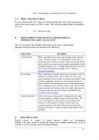
Type of Duty Description Customs Duty This is normally charged as a percentage of the customs
value. The percentage varies depending on the type of
goods and their country of origin . Duty is charged on the
price paid for the goods plus insurance and freight (which
includes postage) costs. Further information on rates of
duty can be obtained from TARIC or by e-mailing
[email protected] Excise DutyThis is charged on alcohol and tobacco products and is in
addition to Customs Duty. Excise Duty on wines and
spirits depends on the volume of alcohol and whether wine
is still or sparkling. In the case of cigarettes the Excise
Duty is based on a percentage of the recommended retail
price combined with a quantity charge while that on other
tobacco products is based on the net weight. Information
on the current rates of Excise Duty is available in the
Schedule of Excise duties. Value Added Tax VAT at the point of importation is charged at the same
rate that applies to similar goods sold in the State. The
value of the goods for the purpose of calculating the
amount of VAT payable at import is their value for
customs purposes, described above, increased by the
amount of any duty or other tax (but not including VAT)
payable. 9. REFUND CLAIMS Refund claims in respect of postal packets, which are subsequently
claimed to be gifts, should be dealt with locally under standing instructions set out in
Section 11 of the Customs Import Procedures Manual.
8
10. CASES OF DOUBT OR DIFFICULTY Any cases of doubt or difficulty which cannot be resolved locally should be
referred to
Customs Procedures Branch, Customs Division VPN 63234 or 63235 or 63229 or
[email protected] 9
- CONTENTS
- 1. INTRODUCTION
- 2. LAW
- 2.1 Customs Duty:
- 2.2 VAT:
- 2.3 Flat rate of duty:
- Point D1 of Annex I, Part One, Section II of Commission Regulation (EC) No. 1214/2007 amending Annex I to Council Regulation (EEC) No. 2658/87 on the tariff and statistical nomenclature and on the Common Customs Tariff as amended by Council Regulation (EC) No. 275/2008.
- 3. DE MINIMUS LIMITS
- 4. CONSIGNMENTS CONTAINING ITEMS OF NEGLIGIBLE VALUE
- 5. GIFTS
- 5.1 General
- 5.2 Conditions
- 5.3 Gift relief – quantitative restriction on gifts of tobacco products, alcohol, perfume and toilet waters.
- 5.4 More than one item in a “gift” consignment
- Where a “gift” in a single consignment consists of two or more items with a combined customs value of greater than €45, relief should be given for as many of those items as add up to a value not exceeding the €45 limit. However, the value of an individual item cannot be “split up” in order to arrive precisely at the €45 cut off limit. The table below provides a number of illustrative examples demonstrating how this works in practice:
- 5.5 Flat rate of Customs Duty for gifts
- 5.6 Conditions applicable to the flat-rate of duty for gifts
- 6. PROCEDURE AT IMPORTATION
- 6.1 De minimus limits.
- 6.2 Consignments of Negligible Value
- 6.3 Gifts
- 7. ENTRY ON THE AEP SYSTEM
- 7.1 De minimus limits
- 7.2 Consignments of Negligible Value
- 7.3 Gifts
- 7.4 Gifts – flat rate of duty
- 8. HOW VARIOUS TYPES OF DUTY, CHARGEABLE AT IMPORTATION, ARE CALCULATED
- 9. REFUND CLAIMS
- 10. CASES OF DOUBT OR DIFFICULTY
 50 punkti
Autor soovib selle materjali allalaadimise eest saada 50 punkti.
50 punkti
Autor soovib selle materjali allalaadimise eest saada 50 punkti.
 ~ 9 lehte
Lehekülgede arv dokumendis
~ 9 lehte
Lehekülgede arv dokumendis
 2012-12-19
Kuupäev, millal dokument üles laeti
2012-12-19
Kuupäev, millal dokument üles laeti
 5 laadimist
Kokku alla laetud
5 laadimist
Kokku alla laetud
 0 arvamust
Teiste kasutajate poolt lisatud kommentaarid
0 arvamust
Teiste kasutajate poolt lisatud kommentaarid
 pratrydo
Õppematerjali autor
pratrydo
Õppematerjali autor
 annaabi.ee








Kõik kommentaarid