Vajad kellegagi rääkida?
Küsi julgelt abi LasteAbi
Logi sisse

Terrorism and fighting against it (0)

1 Hindamata
Punktid
Terrorism and fighting against it
Terrorism is not new and even though it has been used since the beginning of recorded history it can be relatively hard to define . Terrorism has been described differently as both a tactic and strategy ; a crime and a holy duty; a justified reaction to oppression and an unforgivable abomination. Obviously, a lot depends on whose point of view it is being represented. Terrorism has often been an effective tactic for the weaker side in a conflict.
Terrorism is most common in nations with the average political freedom , and is least common in the most democratic nations.
In some cases , terrorism has been a means to carry on a conflict without the antagonist realizing the nature of the threat , mistaking terrorism for criminal activity. Because of these characteristics , terrorism has become increasingly common among those extreme goals throughout the world. But despite its popularity , terrorism can be a confusing concept. Even within the U.S. Government , agencies responsible for different functions in the ongoing fight against terrorism use different definitions.
The United States Department of Defense defines terrorism as "the calculated use of unlawful violence or threat of unlawful violence to inculcate fear ; intended to coerce or to intimidate governments or societies in the pursuit of goals that are generally political, religious , or ideological." The FBI uses this: "Terrorism is the unlawful use of force and violence against persons or property to intimidate or coerce a government, the civilian population, or any segment thereof, in furtherance of political or social objectives." The U.S. Department of State defines "terrorism" to be "premeditated politically- motivated violence perpetrated against non-combatant targets by sub-national groups or clandestine agents, usually intended to influence an audience ."
Terrorism is a criminal act that influences an audience beyond the direct victim. The strategy of terrorists is to commit acts of violence that draws the attention of the local population, the government, and the world to their cause . The terrorists plan their attack to achieve the greatest publicity, choosing targets that symbolize what they oppose. The effectivity of the terrorist act lies not in the act itself, but in the public’s or government’s reaction to the act. For example, in 1972 at the Munich Olympics , the Black September Organization killed 11 Israelis. The Israelis were the immediate victims. But the true target was the estimated 1 billion people watching the Olympics from TV. The Black September Organization used the high popularity of the Olympics to show its views on the bad situation of the Palestinian refugees.
Similarly , in October 1983, Middle Eastern terrorists bombed the Marine Battalion Landing Team Headquarters at Beirut International Airport. Their immediate victims were the 241 U.S. military men who were killed and over 100 others who were wounded. Their true target was the American people and the U.S. Congress . Their one act of violence influenced the U.S. decision to indicate the Marines from Beirut and it was therefore considered a terrorist success.
There are three perspectives of terrorism: the terrorist’s, the victim’s, and the general public’s. The phrase “one man’s terrorist is another man’s freedom fighter” is a view terrorists themselves would accept . Terrorists do not see themselves as evil. They believe they are rightful combatants, fighting for what they believe in, by whatever means possible. A victim of a terrorist act sees the terrorist as a criminal with no caring for human life. The general public’s view is the most unstable. His sympathetic view of terrorism has become an integral part of their psychological warfare.
Terrorism is a criminal act. So, whether the terrorist chooses to identify himself with military terminology, or with civilian term , he is a criminal either way.
Terrorism is classified into six categories: civil disorder , political terrorism, non-political terrorism, quasi -terrorism, limited politival terrorist, official or state terrorism. These categories are further divided into different types . For example, Germany’s bombing of London and the U.S. atomic destruction of Hiroshima during World War II are called state terrorism.
Nowadays, cyberterrorism becomes more and more common and in consideration the importance of IT today (for example if we watch how important have IT became in Estonia), it’s dangerous for all of us.
Since the September 11, 2001 terrorist attack in U.S., there have been so called War on Terror . The War on Terror is an international military campaign led by the United States and the United Kingdom with the support of other NATO and non-NATO countries. The campaign was started in 2001 with the US/UK invasion of Afghanistan in response to the September 11 attack. Since then, other operations have got started, the largest being the War in Iraq , beginning with a 2003 invasion. Originally, it was funded against al- Qaeda and other terrorist organizations with the purpose to depose them .
The phrase War on Terror was first used by former U.S. President George W. Bush and other higher U.S. officials to designate a global military, political, legal and ideological battle against organizations designated as terrorist and against the people who were accused of having a connection to them, offer them support or were presented as providing a threat to the U.S. or to the other countries. It was typically used paying particular attention on militant Islamists and al-Qaeda.
Although the term is not officially used by the administration of U.S. President Barack Obama, it is still commonly used by politicians, in the media and officially by some aspects of government, such as the Army 's Global War on Terrorism Service Medal .
In the meantime, the "war on terror" has seriously damaged the United States internationally. For Muslims , the similarity between the rough treatment of Iraqi civilians by the U.S. military and of the Palestinians by the Israelis has prompted a widespread sense of hostility toward the United States in general. It's not the "war on terror" that angers Muslims watching the news on television, it is the victimization of Arab civilians. And the anger is not limited to Muslims. A recent BBC questioning of 28,000 people in 27 countries which seeks respondents judgement of the role of states in international affairs results in Israel, Iran and the United States was being rated as the stat with "the most negative influence on the world."
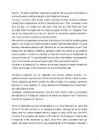
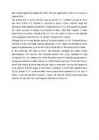
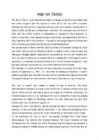
Terrorism and fighting against it #1 Terrorism and fighting against it #2 Terrorism and fighting against it #3
Punktid 50 punkti Autor soovib selle materjali allalaadimise eest saada 50 punkti.
Leheküljed ~ 3 lehte Lehekülgede arv dokumendis
Aeg2012-04-20 Kuupäev, millal dokument üles laeti
Allalaadimisi 5 laadimist Kokku alla laetud
Kommentaarid 0 arvamust Teiste kasutajate poolt lisatud kommentaarid
Autor s6stramari Õppematerjali autor
Terrorism is not new and even though it has been used since the beginning of recorded history it can be relatively hard to define. Terrorism has been described differently as both a tactic and strategy; a crime and a holy duty; a justified reaction to oppression and an unforgivable abomination. Obviously, a lot depends on whose point of view it is being represented. Terrorism has often been an effective tactic for the weaker side in a conflict....

Sarnased õppematerjalid

War on terror
2
docx

War on terror

War on Terror The War on Terror is an international military campaign led by the United States and the United Kingdom with the support of other NATO and non-NATO countries. Officially, the War on Terror label has not been used since Barack Obama came to office in 2009, but the war in Afghanistan continues. The campaign was launched in 2001 with the US/UK invasion of Afghanistan in response to the September 11 attacks. Since then, other operations have commenced, the largest being the War in Iraq, beginning with a 2003 invasion. Originally, it was waged against al-Qaeda and other terrorist organizations with the purpose of eliminating them.

Inglise keel
The Relations Between The USA and Iraq
11
odt

The Relations Between The USA and Iraq

.........................................................................................9 6. Resources..............................................................................................................................10 Introduction I chose this theme because I'm interested in the world politics, especially in the dangerous hot spots in the world, and also in the contemporary history. Due to the facts that Iraq is closely related to terrorism and many Estonian soldiers took part in the Iraq war I think it is important to know how did those countries became enemies. In this report I'm going to write about relations between Iraq and the USA. First of all I am going to write about the common history between those countries. Because they do not share long history, I'm going to characterize every decade from 1980. Many people think that the U.S and Iraq have been enemies forever, but it is not so

Geograafia
Law-makers breaking the law-torture as a justified interrogation technique
26
docx

Law-makers breaking the law: torture as a justified interrogation technique?

Law-makers breaking the law: torture as a justified interrogation technique? 1 Introduction It was Jeremy Bentham who thought of a famous method to give ethics a rational basis. He was fed up with the penal laws where offenders met corporate punishment and together with Cesario Beccaria he stood up to torture, corporal punishment, and the death penalty. He resisted against irrational moral emotions as the instigation for ethical conduct, saying only reasonable grounds could justify the moral decisions of individuals and legislators. And now his theory of is the one that is known for justifying torture (Verplaetse, 2008). Since 9/11 and the following fight against terrorism it became clear that the Bush administration thought of torture as something justifiable while it goes against all possible agreed upon treaties and conventions

Õiguse filosoofia
Public International Law is a system of law
47
docx

Public International Law is a system of law

fundamental principles (legally binding). PIL= system of (legally binding) norms and principles, written or customary, regulates the conduct of states and intergovernmental international organizations. Also known as International Law, but called PIL to distinguish from private international law, i.e. solution for conflict of laws. Only intergovernmental organizations are also subject of PIL, non-governmental organizations are not. There can be specific cases of PIL, e.g. nations fighting for their independence. These can be considered to be subjects of PIL. Also, some exceptions: International Committee of Red Cross, formerly it wasn't covered by PIL, but due to its unique status (covered by Geneva conventions etc), then it is a subject of PIL. PIL directly regulates private persons, e.g. punishment of international crimes (crimes against peace=crime of aggression, genocide, crimes against humanity, war crimes). This is if

Inglise keel
Terrorism
1
doc

Terrorism

Terrorism, is violent or destructive acts (as bombing) committed by groups in order to intimidate a population or government into granting their demands Mass mediaMedia exposure may be a primary goal of those carrying out terrorism, to expose issues that would otherwise be ignored by the media. Some consider this to be manipulation and exploitation of the media.[62] Others consider terrorism itself to be a symptom of a highly controlled mass media, which does not otherwise give voice to alternative viewpoints, a view expressed by Paul Watson who has stated that controlled media is responsible for terrorism, because "you cannot get your information across any other way". Paul Watson's organization Sea Shepherd has itself been branded "eco-terrorist", although it claims to have not caused any casualties

Inglise keel
Links between Estonia and English speaking countries
11
doc

Links between Estonia and English speaking countries

20th century Regular documented contacts between Estonia and English speaking countries begun after Estonia gained its independence in 1918. At that time, England with her colonies was the biggest and the strongest sea power in the world. During the First World War England dominated the high seas and the Baltic Sea. So it is quite obvious that after the Bolsheviks gained power in St. Petersburg, The English navy came to aid the newly formed government of Estonia in their war efforts against the Bolshevik invaders. The Royal Navy detachment blocked Bolshevik attempts to land troops behind Estonian lines. British sailors were among those who gave their lives defending Estonia's freedom during the conflict. Some of these men are laid to rest in Tallinn. The aid came not only in the military presence of the war ships, but also in technical, financial and moral support. The technical expertise of the military advisers 5

Inglise keel
Syria-Helimun-
8
doc

Syria (Helimun)

1. UN as a world organization The United Nations officially came into existence on 24 October 1945, when the UN Charter had been ratified by a majority of the original 51 Member States. The day is now celebrated each year around the world as United Nations Day. The purpose of the United Nations is to bring all nations of the world together to work for peace and development, based on the principles of justice, human dignity and the well-being of all people. It affords the opportunity for countries to balance global interdependence and national interests when addressing international problems. There are currently 192 Members of the United Nations. The Aims of the United Nations: -To keep peace throughout the world. -To develop friendly relations between nations. -To work together to help people live better lives, to eliminate poverty, disease and illiteracy in the world, to stop environmental destruction and to encourage respect for each other's rights and freedoms. -To be a centre fo

Inglise keel
Konspekt USA history
17
docx

Konspekt USA history

Mexiacan origin California Gold Rush of 1849 (80,000) · Manifest Destiny is a term that was used in the 19th century to designate the belief that the United States was destined, even divinely ordained, to expand across the North American continent, from the Atlantic seaboard to the Pacific Ocean. · The influence of frontier on the development of American character Thanksgiving Religious freedom Obsession with business and wealth Green cards ´´No´´ discrimination Men hunt and fight for new land, women raise children IV Independence · The origin and essence of the conflict between England and the colony Stamp act- Americans in the British colonies had to pay more than brits. No taxation without representation in parliament => we eant to run our own affairs · Boston Tea Party of 1773 4 Price stayed same but Americans didn't like the principle of having to buy from brit merchandise and pay tax. Dartmouth, Beacer and Elanor were not allowed to port

Inglise keel


Kommentaarid (0)

Kommentaarid sellele materjalile puuduvad. Ole esimene ja kommenteeri


Sellel veebilehel kasutatakse küpsiseid. Kasutamist jätkates nõustute küpsiste ja veebilehe üldtingimustega Nõustun