Vajad kellegagi rääkida?
Küsi julgelt abi LasteAbi
Logi sisse

Nimetu (1)

5 VÄGA HEA
Punktid
Tallinn Lillekyla Gymnasium
Report
Legends of Tallinn
Tallinn 2009


Table of Contents


Introduction 2
Legends of Tallinn 3
How Ülemiste Elder will drown the town 4
How did the medieval Tallinn get its name Reval 4
How the Toompea hill came into being 4
How the Lake Ülemiste was formed 5
How was St. Olaf ’s Church built 5
How did the weather vane Old Thomas get its name 5
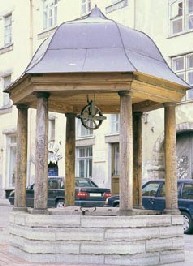
How did Wheel ’s Well get the name Cat’s Well 6
How did Kiek in de Kök get its name 6
References 7


Introduction


I chose the topic „Legends of Tallinn“, because I had heard some splendid myths about Tallinn from my history lessons and I was eager to widen my horizon . I am quite interested in history in general and I especially love tales about medieval Tallinn. I hope that I will find out some entertaining stories to tell my friends .

Legends of Tallinn


There are many interesting legends about buildings or sights in Tallinn. Nobody can tell, if they are all true or not, but at least they make the medieval capital much more intriguing and attractive for tourists as for the locals.

How Ülemiste Elder will drown the town


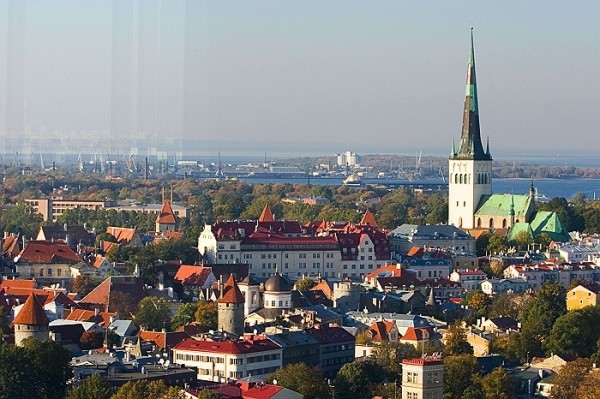
The most known legend of Tallinn is probably about the mythological Ülemiste Elder, who is believed to live in the Lake Ülemiste. Every autumn he is said to come to the Viru Gates and asks the guard, if the town is completed yet. The guard shall always answer that there is much to be done. If he would say that the town is completed, the Ülemiste Elder would flood Tallinn.


How did the medieval Tallinn get its name Reval


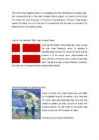
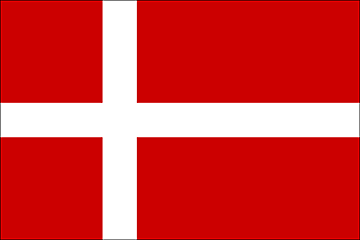
One day the Danish King Valdemar II was hunting for deer near Toompea, when he spotted a beautiful stag. He liked the animal so much, that he ordered it to be caught alive. Unfortunately the deer fell from a limestone bank , broke its neck and died. The fall of a dear is called Reh-fall in German, so that’s where the name Reval probably derives from.


How the Toompea hill came into being


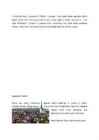
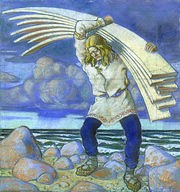
Kalev, the father of the hero Kalevipoeg, was killed by his greatest enemy. His widow , Linda , mourned for seven days and eventually dug his grave and started to gather up large boulders to make him tumulus mound. So the tomb of the great King Kalev is what we call Toompea hill today .

How the Lake Ülemiste was formed


It is believed that once Linda was carrying boulders to make his husband a tomb, she got tired and one of the boulders fell from her apron. She sat on it and wept , thus creating the lake.

How was St. Olaf’s Church built


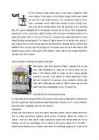
According to a legend the people of Tallinn were searching for ways to make their hometown famous . Someone got the idea of building a high church, so the merchants would see the town from far away . But soon there was a problem- they couldn’t find a man to build this gargantuan house of worship. Finally a stranger offered himself to build the church for a big cost , but he said he would do it for free, if the townspeople would guess his name. Once the sanctuary was almost finished, the citizen started to worry that where would they get that much gold for the architect. So they tried to be friends with the stranger and find out his name, but builder would not give in. So they sent a spy to find out his name. The architect was just fixing the cross on the steeple, when the espionage shouted out that is was Olev. The poor man realized that he had lost his fee, slipped and fell to death from atop the tower.


How did the weather vane Old Thomas get its name


In the medieval times , there was a hand bow competition held every spring . It took place in the Parrot ’s Garden and it was meant for only the most skilful archers. The competitors had to shoot down a wooden parrot, which was placed on top of a high pole. One year all the vying knights were all gathered at the shooting line, the parrot suddenly fell to the ground , pierced by an arrow . The sharpshooter turned out to be a poor boy called Toomas. The annoyed contestants told him to place the parrot back on the top of the pole. Everyone was impressed and the story about Toomas spread quickly. The major of Tallinn asked him to be the town-guard. It was a great honor for the young man and he proved his reliability several times in the battles of the Livonian war. At old age his looks were very similar to the man on the weather vane on top of the spire of the Tallinn’s Town Hall, so the people started to call the vane Old Thomas.

How did Wheel’s Well get the name Cat’s Well


The legend says that citizens of Tallinn believed that an evil spirit , who threatened to make all the towns wells run dry, lived in the Wheel’s Well. To keep the spirit happy, people sacrificed animals . They started to throw dead cats to the well and thanks to this common citizen started to call the well Cat’s Well. Although the wells of Tallinn never ran dry, the water was soon undrinkable due to the sacrifices.

How did Kiek in de Kök get its name


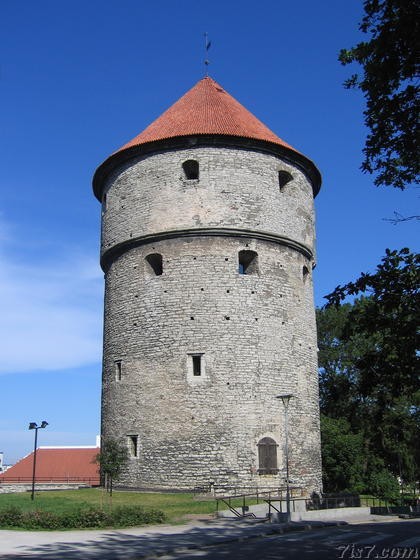
It is said that at the medieval times the cannon tower was so high that the warriors on top of it could see, how housewives and maids were cooking lunch in their kitchens, thus the name, meaning “peek into the kitchen ”.
Conclusion
It was very interesting to write this report, because before I wasn’t aware that there are so many enchanting legends about people, buildings, sights and objects in Tallinn. Thanks to this report I have discovered some new stories that are not so famous, but yet so fascinating. One of these is the legend about the Cat’s Well. I hadn’t heard nothing about it before and now it’s is definitely going to be a tale to tell my foreigner friends. Writing this report I have learned that almost everything in Tallinn has its own story.


References


http://et.wikipedia.org/wiki/Kalevipoeg_(eepos) , read on 23.03.2009
http://en.wikipedia.org/wiki/Toompea , read on 23.03.2009
http://en.wikipedia.org/wiki/Lake_%C3%9Clemiste , read on 23.03.2009
http://en.wikipedia.org/wiki/St._Olaf's_church,_Tallinn , read on 23.03.2009
http://www.tallinn-life.com/culture/culture_details/6-St_Olav's_Church , read on 23.03.2009
http://www.ohtuleht.ee/index.aspx?id=79256 , read on 23.03.2009
http://en.wikipedia.org/wiki/Old_Thomas , read on 23.03.2009
http://www.redgroup.ee/destinations?id=11717 , read on 23.03.2009
http://www.tourism.tallinn.ee/est/esi/vaatamis/vaatamis/vanalinn/article_id-436 -, read on 23.03.2009
http://www.linnamuuseum.ee/kok/index.php?&id=170 , read on 23.03.2009
http://en.wikipedia.org/wiki/Legends_of_Tallinn , read on 23.03.2009
http://en.wikipedia.org/wiki/Flag_of_Denmark , read on 23.03.2009
http://www.traveltoucan.com/files/Denmark-flag.gif , read on 23.03.2009
http://www.tallinn.ee/g6117s37760 , read on 23.03.2009
http://upload.wikimedia.org/wikipedia/commons/thumb/5/5b/OKallis-Kalevipoeg.jpg/180px-OKallis-Kalevipoeg.jpg , read on 23.03.2009
http://www.balticshop.com/shopping/pics/30696.m.jpg , read on 23.03.2009
http://www.tallinnavesi.ee/static/images/pilt_37.jpg , read on 23.03.2009
http://www.7is7.com/otto/estonia/tallinn_kiekindekok.html , read on 23.03.2009
http://euro.postimees.ee/foto/9/3/1344394770fc36d6312_2.jpg , read on 23.03.2009
Vasakule Paremale
Nimetu #1 Nimetu #2 Nimetu #3 Nimetu #4 Nimetu #5 Nimetu #6 Nimetu #7 Nimetu #8
Punktid 100 punkti Autor soovib selle materjali allalaadimise eest saada 100 punkti.
Leheküljed ~ 8 lehte Lehekülgede arv dokumendis
Aeg2011-03-03 Kuupäev, millal dokument üles laeti
Allalaadimisi 12 laadimist Kokku alla laetud
Kommentaarid 1 arvamus Teiste kasutajate poolt lisatud kommentaarid
Autor T2n3l Õppematerjali autor

Kasutatud allikad

Sarnased õppematerjalid

Legends of Tallinn
9
odt

Legends of Tallinn

koolinimi Report Legends of Tallinn Student: nimi Supervisor: nimi Tallinn 2010 Table Of Contents Table of Contents..................................................................................................................................2 Introduction......................................................................................................................................3 Legend of St. Olav's Church.......................................................................................................4 True story of St. Olav's Church..............................................................................................5 Legend of Old Thomas.....................................................................................................6 True story of Old Thomas....................................................................................

Ajalugu
Legends of Tallinn
10
doc

Legends of Tallinn

Tallinna Lilleküla Gymnasium Legends of Tallinn Referaat Koostaja: Jennifer Scholz Klass: 10B Juhendaja: Liis Olt Tallinna 2010 Table of contents 1. Introduction....................................................... 3 2. Legends of Tallinn............................................... 4 3. Conclusion......................................................... 8 4. References........................................................ 9 2 Introduction I chose this topic beacuse I tought it would be interesting to write. Beacuse of the fact, that I only know a few legends, I decided to read the book ,,Tallinna legendid", and after reading this book I gain much more information. It was interesting to read stories, how Tallinn got its name beacuse of the goat, who fell from the cliff and why

Inglise keel
Powerpointi esitlus vanalinna objektidest
17
ppt

Powerpointi esitlus vanalinna objektidest

Katariina Passage Katariina Passage connects Vene and Müürivahe street. On the northern portion of the passage you can find what's left of St. Catherine's Church (hence the passage name) and various large, ancient tombstones that used to line the inside of the sanctuary. On the southern portion of the passage, you'll find numerous artisan workshops, where you'll even get see them hard at work creating new items. City wall Tallinn's medieval city wall is a sub-facility that was built to protect the lower Tallinn and upper Tallinn (Toompea). The building of the city wall began in 1310th years, and by improving over time it formed the city wall with defensive buildings (towers). It was finished by the end of the 1561. Then it was 2.35-kilometer-long circular wall, which had 27 wall gate, 8 tower gate and 21 other stone fortifications. Many parts of the town wall have survived until today Great Coast

Inglisekeelne geograafia
The Most Important Buildings in Lai Street in Tallinn
17
odt

The Most Important Buildings in Lai Street in Tallinn

Tallinna Mustamäe College The Most Important Buildings in Lai Street in Tallinn Report Supervisor: Ingrid Teigar Tallinn 2014 Table of Contents Introduction.............................................................................. 3 Lai Street in general.................................................................. 4 The origin of the name "Lai"...................................................... 4 1 Lai Street / 4 Nunne Street...................................................... 5 17 Lai Street............................................................................. 6 23 Lai Street............................................................................. 6 27 Lai Street............................................................................. 8 29 Lai Street............................................................................. 8 30 Lai Street............................

Inglise keel
The 4 oldest Churches in Tallinn
11
doc

The 4 oldest Churches in Tallinn

Tallinn Mustamäe College G2K Jaana-Kristiina Jõgevest The Four oldest churches of Tallinn Report Supervisor: Ingrid Teigar Tallinn 2009 The Dome Church The Danes began fortification of Toompea after the conquest of Tallinn in 1219 and probably also built the first church there. It was presumably a wooden building located at the site of the present cathedral. However, a serious conflict with the Order of the Brothers of the Sword broke out soon as the latter wanted to gain control of the entire Estonia. The order succeeded in subordinating Tallinn and the whole of North Estonia to its rule in 1227. The monks of the Dominican Order began the construction of a stone church in Toompea in 1229. The first written data on the cathedral date back to 1233, the date of a battle between the order and the pro-papal vassals, wh

Ajalugu
Tallinn
10
doc

Tallinn

Tallinn English College English Sergo Vainumäe 9A TALLINN Report Supervisor: Inge Välja Tallinn 2006 Order of contents: 1.Introduction 2.Toompea 3.Lower Town 4.Kadriorg and Pirita 5.Museums 1. Introduction Tallinn, the capital of Estonia, lies on the Baltic Sea. It is on almost the same latitude east St. Petersburg in Russia, Stockholm in Sweden and Stavanger in Norway, and covers 158 sq km. Tallinn was first marked on a map of the world by the Arab geographer al-Idrisi in 1154, its name then being Kolyvan (probably derived from the name Kalev). In the 13th-century Chronicle of Henricus de Lettis the town was called Lyndanise. Later came Reval (presumably after the old county of Rävala), the name used by the Germans who ruled the country for seven centuries. Russians then modified Reval to Revel. For Estonians, the town came to be c

inglise teaduskeel
Tallinn Old Town
9
docx

Tallinn Old Town

Kunda Ühisgümnaasium Tallin Old Town Report Student: Kristin Karu Teacher: Kristi Aron Kunda 2012 The Alexander Nevsky Cathedral The Alexander Nevsky Cathedral is an orthodox cathedral in the Tallinn Old Town,Estonia. It was built to a design by Mikhail Preobrazhensky in a typical Russian Revivalstyle between 1894 and 1900, during the period when the country was part of theRussian Empire. The Alexander Nevsky Cathedral is Tallinn's largest and grandest orthodox cupola cathedral. It is dedicated to Saint Alexander Nevsky who in 1242 won the Battle of the Ice on Lake Peipus, in the territorial waters of present-day Estonia. The late Russian patriarch, Alexis II, started his priestly ministry in the church. Interior of the Cathedral. The Alexander Nevsky Cathedral crowns the hill of Toompea where the Estonian folk hero Kalevipoeg is said to have been buried according to a lege

Inglise keel
Northanger Abbey
4
doc

Northanger Abbey

Catherine Morland My name is Catherine Morland. I would like to tell you a bit about myself. To begin with, I am seventeen years old and grew up in a countryside in a small town named Fullerton with my parents and nine siblings. As a child I was interested in many things like drawing, sports and music. I was very lively and cheerful, enjoyed cricket, horse riding and just hated cleanliness and restriction. As I grew up, I chose reading over sports and all of the wild games I used to like. Undoubtedly, I would now describe myself with the word naivety. I am very naïve and do not notice the most obvious things happening around me. I really hope that it is caused by the lack of experience and will eventually pass. In addition, I find myself a kind and caring person because I always want and agree to help people when needed. Furthermore, I really like reading. Sometimes I think that I read too much because I often mix fiction up with reality and in some cases it does not do me any good.

British literature


Meedia

Kommentaarid (1)

erlis profiilipilt
erlis: super töö
09:24 15-03-2011


Sellel veebilehel kasutatakse küpsiseid. Kasutamist jätkates nõustute küpsiste ja veebilehe üldtingimustega Nõustun