Vajad kellegagi rääkida?
Küsi julgelt abi LasteAbi
Logi sisse

URO Security Council kriis, United nations Legitimacy crisis (0)

5 VÄGA HEA
Punktid
Inglise keel - Kõik luuletused, mis on inglise keeles
Legitimacy! AND UNITED NATIONS CRISIS
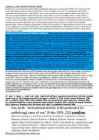
In this article, we examine the current debate regarding the legitimacy crisis facing the UNSC . We consider its most usual manifestation , namely that the Council faces a crisis of legitimacy because of its inability to constrain the unilaterally inclined hegemonic United States . But we also examine the converse argument that it is the whole UN collective security mechanism ( rather than just the Council) that is in crisis. According to this, it is the failure to recognize the unique dangers immanent within the contemporary security environment and the inability of the UN security system to tackle these which is the cause of the current crisis of legitimacy. International society, this position continues, must acknowledge these, and vest in the hegemon the powers it requires in order to meet its global responsibilities. Acknowledging the implications of both of these positions, we argue that the resolution of the current crisis of legitimacy is to be achieved through a more expansive interpretation of the Security Council's extant powers, accompanied by a commitment on the part of the United States to reinvest in the multilateral machinery upon which global order is founded .
Competing Conceptions of the Crisis of LegitimacyIn the introduction to this collection , Christian Reus -Smit defines an actor or institution as experiencing a crisis of legitimacy 'when the level of social recognition that its identity , interests, practices , norms, or procedures are rightful declines to the point where [the actor or institution] must either adapt ... or face disempowerment'. In the immediate aftermath of the Cold War, as the UNSC became more active, questions regarding its legitimacy tended to focus upon its failure adequately to represent a UN membership which had almost quadrupled since the organization's founding (Fassbender, 1998;  Morris , 2000). However , as disagreements between the P-5 emerged over the Kosovo crisis in 1998–1999, and even more significantly in relation to Iraq in 2003, this debate was overshadowed by one regarding the criteria to be applied in determining the acceptable bounds within which states may have recourse to the use of force . It is an exploration of these issues , and the fundamental bearing that they have on the UNSC's legitimacy, that forms the principal focus of this article. The first of these harbours concerns regarding the legitimacy of the UNSC, which it sees as being undermined by the Council's apparent inability to constrain great power use of force, particularly by the United States. This interpretation of the crisis of legitimacy is countered by an alternative understanding — proffered most notably by neoconservative forces in the George W. Bush administration — which focuses on the perceived inability of the existing UN regime to meet the challenges of contemporary global security (Frum and Perle, 2003;Kaplan and Kristol, 2003). Recognizing the United States as having a unique hegemonic role within contemporary international society, neoconservatives deride the existing collective security regime for impeding the United States as it seeks to fulfil the responsibilities that accompany its exalted status.
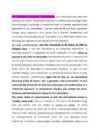
Both individually and collectively, all UN member states have the right under Article 51 of the Charter to use force in response to actual or imminent attack, but this ceases once the UNSC 'has taken measures necessary to restore international peace and security', and in no circumstances does the right extend to unilateral preventive  action .  So long as the UNSC serves as a brake on the ability of the hegemon to perform such a role, P-5 unanimity, on which its successful functioning depends, remains vulnerable to unilateral action. Viewed from this perspective, concerns regarding the Council's legitimacy are a mere symptom of a more fundamental crisis afflicting the legitimacy of the broader collective security regime of which it is part. For those who wish to preserve and strengthen the existing regime, it is the UNSC's inability to constrain the hegemon which is at the root of the crisis; for those who believe that the hegemon should be afforded the exceptional exemption from the rules governing the use of force, it is this very constraining nature of the regime more generally which
constitutes the crisis. 
At most it seems a vague and often suspiciously arbitrary composite of associations with other concepts, a great many of which havebeen invoked in attempts to “ explain ” it. These include consent (Brighouse, 1998: 720-1); authority (Hurd, 1999); justice (Steffek, 2006); the ‘moral basis for social interaction’ (Kelman, 2001: 55); normative belief that a rule or institution must be obeyed (Grafstein, 1981:; popular sovereignty ( Beetham , 1991); democracy (Beetham, 1991; Buchanan, and “right” or rightfulness Rousseau , 1968
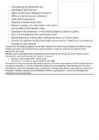
  • Key myth : “international anarchy is the permissive [or underlying] cause of war” ( Waltz 1959 : 232) orealism: Behaviour of actors in a system dictated by its character – hierarchy or anarchy,. Features of anarchy:Security Dilemma + Balance of Power . Realism: Attempt to impose hierarchy fails because no ‘orderer’ Conflict thus breaks out. Liberalism Key myth: “ there is an international society” - Informal collective or cooperative set of social relationships among sovereign states - Liberal assumption: people are basically good ; if organisations facilitate cooperation , people will cooperate.
Examples of Cooperation Liberalism
  • Strengthening of international law
    • When considering international anarchy, realists stress structure, liberals stress process
    • But share :
  • Belief that states are dominant actors in global politics
  • Rationalist theoretical approach
  • Security defined in ‘self-interested’ terms
    • See Wendt 1992: 130

  • International trade regimes
  • March of democracy throughout the world
  • UN as a collective security instrument
  • Arms control agreements
  • Response to humanitarian crises
  • Domestic analogy: that what works within states can be made to work between states
  • Assumption that democracy is what enables progress in domestic sphere
  • How is this transferred to the international level?
  • Spread democracy, to bring about international society of ‘good citizens’
  • Increase the opportunities for cross border communication – lessening divisiveness and creating common interests
Constuctivism; What states do depends on what states’ identities and interests are, and identities and interests change . Identities and interests are not pre- given but come into existence as states act. Anarchy is the outcome of state interactions – not a given
Self-help is not an immutable feature of international anarchy. Anarchy and self-help are social constructs .Social constructivists want to reclaim a place for ‘ practice ’ or ‘process’
  • Key point: states are the authors , not the system
  • The world is a ‘world of our making ’ (Nicholas Onuf 1989)

All committed to taking seriously the understanding that the social world is not an objective reality ‘out there’ which we can observe and explain; it is socially constructed and does not exist outside of our understandings of it. For social constructivists, states remain dominant actors in world politics; for many other theories, state-centricism is key part of the problem / Identities, interests, norms and beliefs all matter in in global politics – they are all intersubjectively constituted and can and do change
URO Security Council kriis-United nations Legitimacy crisis #1 URO Security Council kriis-United nations Legitimacy crisis #2 URO Security Council kriis-United nations Legitimacy crisis #3
Punktid 10 punkti Autor soovib selle materjali allalaadimise eest saada 10 punkti.
Leheküljed ~ 3 lehte Lehekülgede arv dokumendis
Aeg2013-03-20 Kuupäev, millal dokument üles laeti
Allalaadimisi 4 laadimist Kokku alla laetud
Kommentaarid 0 arvamust Teiste kasutajate poolt lisatud kommentaarid
Autor junglette Õppematerjali autor
inglise keeles

Sarnased õppematerjalid

Constructivism theory
4
docx

Constructivism theory

conventionally entrenched IR theories as neorealism and neoliberalism, or a "distinctive approach" to international relations that stresses the social, ideational and intersubjective character of world politics. The major thesis of constructivism is that the international system is "socially constructed," that is, it "consists of, "the ways in which human beings think and interact with one another." In contrast to realism, for which international relations are driven by the states' security and material interests defined in terms of power, and to liberal internationalism that concentrates upon the interdependency of international actors and their operation within institutional constraints, constructivism considers international politics as a sphere of interaction which is shaped by the actors' identities and practices and influenced by constantly changing normative institutional structures. For all theories of international relations, the world is in anarchy, and because

Inglise keel
The Rise and Demise of the New Public Management-28 10
15
docx

The Rise and Demise of the New Public Management, 28 10

It is popularly denoted by concepts such as project management, flat hierarchies, customer orientation, abolition of career civil service, depolitization, total quality management, and contracting-out. NPM comes from Anglo-America, and it was strongly pushed by most of the International Finance Institutions (IFI's) such as the World Bank and the IMF. It originates from the 1980s with their dominance of neo-liberal governments (especially Thatcher and Reagan) and the perceived crisis of the Welfare state, but it came to full fruition in the early 1990s. NPM is part of the neo-classical economic imperialism within the social sciences, i.e. the tendency to approach all questions with neo-classical economic methods. In advanced PA scholarship itself, especially ­ but not only ­ in Europe, NPM is on the defensive by now, if taken as a world view (i.e. an ideology), rather than as one of several useful perspectives for PA reform (i.e. part of a pluralistic approach). The

Avalik haldus
Sotsioloogia essee-Hechter ja Horne
6
docx

Sotsioloogia essee: Hechter ja Horne

Secondly, norms are often subject to interpretation and can thus be "bended" in situations by individuals to achieve their goals. For example, even though honesty is a strong norm and lying is seen as discrediting someone's general trustworthiness, individuals still tell white lies, and may often try to get away with minor thefts or bearings of false witness. And there is no punishment if they get away with it. Thirdly, as norms and values may bring out the best in people at times of crisis, they can also disappear, leading to quicker destruction of social order. An example of this would be Leningrad blockade during the Second World War, when many resorted to barbarianism and cannibalism, even though these ideas are strongly against civilized norms. Thus, norms help to contribute to the build-up of societal order, as they are generally beneficial to all individuals. Our values are more personal, but these do are affected by the norms in the societies

Sotsioloogia
Syria-Helimun-
8
doc

Syria (Helimun)

1. UN as a world organization The United Nations officially came into existence on 24 October 1945, when the UN Charter had been ratified by a majority of the original 51 Member States. The day is now celebrated each year around the world as United Nations Day. The purpose of the United Nations is to bring all nations of the world together to work for peace and development, based on the principles of justice, human dignity and the well-being of all people. It affords the opportunity for countries to balance global interdependence and national interests when addressing international problems. There are currently 192 Members of the United Nations. The Aims of the United Nations: -To keep peace throughout the world. -To develop friendly relations between nations.

Inglise keel
Public International Law is a system of law
47
docx

Public International Law is a system of law

fundamental principles (legally binding). PIL= system of (legally binding) norms and principles, written or customary, regulates the conduct of states and intergovernmental international organizations. Also known as International Law, but called PIL to distinguish from private international law, i.e. solution for conflict of laws. Only intergovernmental organizations are also subject of PIL, non-governmental organizations are not. There can be specific cases of PIL, e.g. nations fighting for their independence. These can be considered to be subjects of PIL. Also, some exceptions: International Committee of Red Cross, formerly it wasn't covered by PIL, but due to its unique status (covered by Geneva conventions etc), then it is a subject of PIL. PIL directly regulates private persons, e.g. punishment of international crimes (crimes against peace=crime of aggression, genocide, crimes against humanity, war crimes). This is if

Inglise keel
Challenges of childrens participation A Case Study of active citizenship in Cadle Primary School
164
docx

Challenges of childrens participation A Case Study of active citizenship in Cadle Primary School

`Submitted in partial fulfilment of the requirements for the degree of B.A. International Relations` Table of Contents Abstract 3 Introduction 4 Chapter 1: Citizenship, Children`s Rights and Participation: from the UN to the UK 6 Chapter 2: Citizenship Education in Wales………………………………………………14 Active Citizenship in Cadle Primary School: A Case Study 20 Conclusion 29 Bibliography 32 Appendices Appendix 1: The United Convention of the Rights of the Child Appendix 2: Interview with Jamie Richards, the Head Teacher of Cadle Primary School 2 Abstract: Children inherently have had a rather tenuous relationship with citizenship. Similarly to how women were once viewed, children have not been considered as subjects of rights due to their perceived incompetence and irrationality

Inglise keel
European Union Exam
38
docx

European Union Exam

European Union Exam 1949 France, UK and the Benelux countries decide to set in place a Council of Europe. 1951 Treaty of Paris signed by the Six (Belgium, France, Germany, Italy, Luxembourg, Netherlands), establishing the European Coal and Steel Community (ECSC). 1957 Treaties of Rome establish the European Economic Community (EEC) and the European Atomic Energy Community (Euratom). 1959 July, seven countries of the Organisation for European Economic Co- operation (OEEC) – Austria, Denmark, Norway, Portugal, Sweden, Switzerland and the UK – decide to establish a European Free Trade

Euroopa liidu põhikursus
Law-makers breaking the law-torture as a justified interrogation technique
26
docx

Law-makers breaking the law: torture as a justified interrogation technique?

are evils because each strays from national and International law and because they kill people or deprive them of freedom without due process. They can be justified only because they prevent greater evil.” (Ignatieff, 2004) Terrorism pressures a democratic system greatly indeed. As under international law, torture is in any case prohibited though, there is no grounds for the application of this method whatsoever. As per the United Nations Universal Declaration of Human Rights, “No one shall be subjected to torture or to cruel, inhuman or degrading treatment or punishment”. This does not leave any room for interpretation. Governments however face the issue that the normal way of doing things in law and order is a very long process, but terrorist threat asks for a quick decision. It should be possible to speed up the legislative power in times of crisis so important decisions can be made faster. A

Õiguse filosoofia


Kommentaarid (0)

Kommentaarid sellele materjalile puuduvad. Ole esimene ja kommenteeri


Sellel veebilehel kasutatakse küpsiseid. Kasutamist jätkates nõustute küpsiste ja veebilehe üldtingimustega Nõustun