Vajad kellegagi rääkida?
Küsi julgelt abi LasteAbi
Logi sisse

Referaat "Bedouins" (0)

1 Hindamata
Punktid

BEDOUINS
REFERAAT
Õppeaines: INGLISE KEEL
Arhitektuuri- ja keskkonnatehnika teaduskond
Õpperühm: TÖ 21A
Juhendaja : M.Kala
Tallinn 2009

Contents


1.Who are bedouins? 3
2.Bedouin Hospitally 4
3.Herbal Medicine 4
4.Religon and Faith 5
5.Bedouin Weddings 5
6.Bedouin Handicafts 5
7.What is a Tribe 6
8.Pictures 6
9.References 7


  • Who are bedouins?


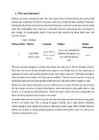
    Bedouins are Arabic speaking nomadic tribes that originate from the Arabian Peninsula (mainly Saudi Arabia ) and would travel the desert to locations where they would find drink and food. Sometimes traveling for days before they arrived at their final destinations. Each tribe would have an area of land under their responsibility from which they would make income by allowing travelers and traders to pass through . As knowledgeable guides of the desert they controlled the desert trade routes, and escorted caravans.
    Table 1. Bedouin
    Total population
    Regions
    Languages
    Religion
    Related ethnic groups
    Arab World, Africa, Israel
    Arabic dialects, Bedawi, Najdi, Hassani
    Sunni Islam , extremely few Bedouins who practice Shia Islam and other religions exist
    Arabs
    They have proudly managed to maintain their natural and rural way of life for thousands of years. They have survived in the dry nd harsh desert regions of the Middle East, on their herds and by supplying the surplus meat and dairy products to the more urban communities. The Bedouin people in Sinai can teach us much about surviving extreme conditions. They are excellent trackers recognising animal and human tracks and they are able to find their way in the desert without compass or map.
    Bedouin men and women traditionally carry out different roles in society. Bedouin men are generally the ones who go out to earn a living for their families, some work today as safari guides, drivers, shop keepers, or in construction and maintenance . Whilst the women work in the home looking after the house, the family and the livestock of goats and camels.
    Generally women are not to mix and socailise with men, unless they are from their family or are guests invited to the family home. This is starting to change in Dahab, with a small number of Bedouin women starting to work outside of the home as child careers, and in shops. Most of Dahab's Bedouin Women are excellent at making detailed beadwork necklaces and bracelets which are sold by their children in and around the town.


  • Bedouin Hospitally


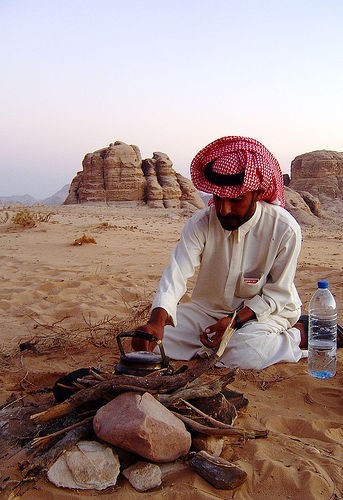
    Bedouin people are excellent hosts and are well known for looking after guests and making them feel welcome. This is part of a tradition that has been passed down generation after generation. Firstly there is the famous bedouin tea, made from tea leaf with sugar , and desert herbs of habuck and marmaraya. This gives it a distinctive flavour.It is customary as soon as a guest arrives to get the tea on the fire , whilst sharing stories and news.
    The second part of the hospitality always involves food, Bedouin people will always make sure their guest are well refreshed with tea, water and traditional bedouin food. This includes delicious bedouin bread cooked on an open fire, rice and either a meat, fish or vegetable dish . The cooking is always from fresh produce grown or reared locally. They take much pride in their cooking and food is always seen as a special event.
    For weary travelers in the desert the sight of a Bedouin Tent was equal to that of seeing an oasis. The custom is that food, water and a place to sleep should be provided to all travelers and guests if needed for up to three days. After this time the guest would be well and fit enough to continue onwards with their journey in the desert. Whilst modern times and cars, have really changed the need for such hospitality it is still forms a strong part of the bedouin culture and it is still offered if needed.
    To accompany all this hospitality the Bedouin are excellent story tellers, many have stories about how things were in the 'old days'. Most have great story's about their relationships with camels, about amazing herbal medicine cures that they use and about general family life. Many Bedouin people are also great poets , and have a real talent . But this is often reserved for special occasions such as weddings.


  • Herbal Medicine


    Bedouin people are strong advocates of herbal medicine, this was their only source and hope of getting better when were ill in the desert. They have hundreds of herbal cures and medicines, one of the most popular being camels milk . It is used for many conditions including stomach and digestive disorders, circulation problems and bone complaints. In addition they have vast knowledge of the desert plants and what they can be used for. They will amaze you with this, and in Dahab we find evidence of how effectively these cures have worked on people. Our safaris have been developed to provide more an insight into the fascinating life and knowledge of the Sinai Bedouin and to provide examples of how this knowledge is still used today.
  • Religon and Faith


    Sinai Bedouin are Sunni Muslims and follow their religion Islam with true faith and compassion . As part of their faith they have maintained a strong connection with the natural world. They usually know when a storm is coming before it arrives, or when a wild animal is approaching their home. Living with nature , in a very natural way preserves their faith. you will find most of Dahab's Bedouin have to get away every now and then and go somewhere remote so that they can feel close to nature again. Many of them miss the silence and the peace , so they make time to return to the desert.
    Finally Bedouin people are very open minded to western culture, tourists have been coming to Dahab for over 30 years now. They love to talk about different ways of life and share stories and experiences . The majority of Sinai's Bedouin now depend on tourism to sustain an income for their families.


  • Bedouin Weddings


    Bedouin weddings are usually held during a full moon , and are an excellent way to experience this unique culture. The weddings can last from 2 - 5 days with most of the celebrating happening during the night time. Much of the celebrating is done in the family homes. But big weddings held once or twice a year are often held in a big valley in the desert. One of the highlights includes a special night of tribal dancing and live music. This is when unmarried women can look for a husband , and dance in front of potential suitors. This is an amazing experience, as this is one of the few times of the year that young men and women can mix together, in the hope of finding love. Like weddings elsewhere in the world, a bedouin wedding provides everyone the opportunity to dress up in their best clothes and celebrate with food, music, and dancing.
    When big wedding takes place in Dahab, it is an event that everyone will talk about. Many people from the town are invited and guests and visitors are normally welcome to attend . So if you are lucky enough to be invited when a wedding is hapenning make sure you attend, it really is an opportunity not to be missed.


  • Bedouin Handicafts


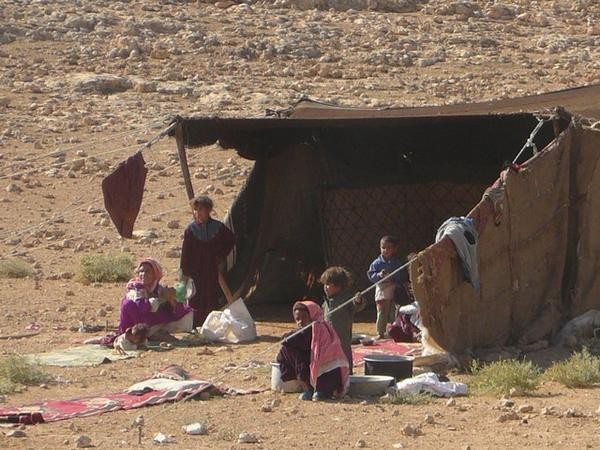
    Tradditionally Bedouin women would weave the family tent from goat or camel hair, and be responsible for the setting up and the packing of the tent when the family would move on to new lands.
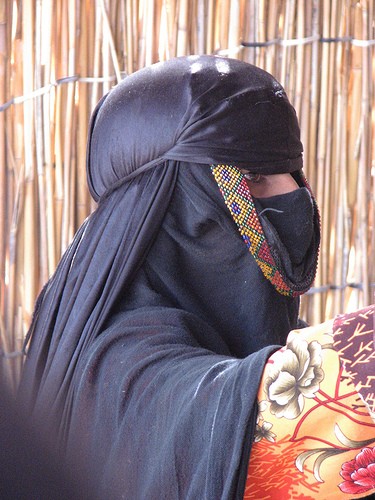
    Today Bedouin women make beautiful handicrafts including woven rugs, necklaces, bracelets and burkas. These are usually embroidered or embellished with beads, sequins and coins using tradditonal designs passed down through the generations. Bedouin children are often found selling these beauitful crafts around Dahab town centre. Many shops also sell these locally made items on behalf of the Bedouin families.


  • What is a Tribe


    A tribe is a group made up by a number of clans, each clan made up of individual families who can trace their ancestry back to one original source. Each clan always has its own wells , grazing grounds and land. These clans are further split into groups each performing different functions within the tribe i:e herding and rearing cattle, guiding traders etc. At the head of the tribe there is always a leader called the Sheikh.
  • Pictures


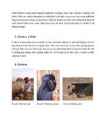
    Picture 1. Bedouin man Picture 2. Bedouin woman Picture 3. Bedouin tent
  • References


  • http://www.geographia.com/egypt/sinai/bedouin.ht m
  • http://en.wikipedia.org/wiki/Bedouin
  • http://www.sheikhsalemhouse.com/bedouins.asp
  • http://i-cias.com/e.o/bedouins.ht m
    7
  • Vasakule Paremale
    Referaat-Bedouins #1 Referaat-Bedouins #2 Referaat-Bedouins #3 Referaat-Bedouins #4 Referaat-Bedouins #5 Referaat-Bedouins #6 Referaat-Bedouins #7
    Punktid 50 punkti Autor soovib selle materjali allalaadimise eest saada 50 punkti.
    Leheküljed ~ 7 lehte Lehekülgede arv dokumendis
    Aeg2010-11-22 Kuupäev, millal dokument üles laeti
    Allalaadimisi 22 laadimist Kokku alla laetud
    Kommentaarid 0 arvamust Teiste kasutajate poolt lisatud kommentaarid
    Autor shktatjana Õppematerjali autor
    Inglise keeles

    Kasutatud allikad

    Sarnased õppematerjalid

    FAMILY tööleht
    14
    docx

    FAMILY tööleht

    THE FAMILY Marriage changes over the centuries constantly, surprisingly and swiftly. It cannot be defined as a sacred union between a man and a woman, as marriages have not always been considered sacred. Marriage has often been seen as a union between one man and several women. And sometimes marriage has been seen as a union between one woman and several men, as in southern India, for example, one bride may be shared by several brothers. Marriage has also, at times, been recognized as a union between two men (as in ancient Rome, where marriages between aristocratic males were recognized by law), or as a union between two siblings (as in medieval Europe, when valuable property was at stake); or as a union between two children (again in Europe, when parents wanted to protect their property); or as a union between two unborn (ditto); or as a union between two people of the same social class (once more in Europe, where medieval peasan

    Inglise keel
    Aborigeenid-Inglise keeles
    13
    doc

    Aborigeenid (Inglise keeles)

    Miina Härma Gümnaasium “The aborigines of Australia Student:Kärt Erikson Teacher:Tiia Timma Tartu 2010 contents  Introduction – page 3  History – page 3-4  Religion – page 4-7  Society - page 7-9  The British – page 9-10  Conclusion – page 10-11  Resources – page 11  Appendix – page 11-14 2 Introduction I selected this theme because it was the most interesting one for me. Aborigines have interested me for a long time now so doing this essay is really fun for me. Australian Aboriginal culture is one of the world's longest surviving cultures. Australian Aborigines, also known as Indigenous Australians , are the native people of Australia . Many of them suffered when white people from Britain arrived in Australia, because of

    Geograafia inglise keeles
    The Medium Is the Message
    18
    docx

    The Medium Is the Message

    1 The Medium Is the Message In a culture like ours, long accustomed to splitting and dividing all things as a means of control, it is sometimes a bit of a shock to be reminded that, in operational and practical fact,, the medium is the message. This is merely to say that the personal and social consequences of any medium-that is, of any extension of ourselves-result from the new scale that is introduced into our affairs by each extension of ourselves, or by any new technology. Thus, with automation, for example, the new patterns of human association tend to eliminate jobs, it is true. That is the negative result. Positively, automation creates roles for people, which is to say depth of involvement in their work and human association that our preceding mechanical technology had destroyed. Many people would be disposed to say that it was not the machine, but what one did with the machine, that was its meaning or message. In terms of the ways in which the machine altered our relations to

    Inglise keel
    CHANGE YOUR THINKING CHANGE YOUR LIFE
    580
    pdf

    CHANGE YOUR THINKING CHANGE YOUR LIFE

    ccc_tracy_fm_i-xviii.qxd 7/7/03 3:22 PM Page iii CHANGE YOUR THINKING, CHANGE YOUR LIFE How to Unlock Your Full Potential for Success and Achievement B R I A N T R AC Y JOHN WILEY & SONS, INC. ccc_tracy_fm_i-xviii.qxd 7/7/03 3:22 PM Page i CHANGE YOUR THINKING, CHANGE YOUR LIFE ccc_tracy_fm_i-xviii.qxd 7/7/03 3:22 PM Page ii ccc_tracy_fm_i-xviii.qxd 7/7/03 3:22 PM Page iii CHANGE YOUR THINKING, CHANGE YOUR LIFE How to Unlock Your Full Potential for Success and Achievement B R I A N T R AC Y JOHN WILEY & SONS, INC. ccc_tracy_fm_i-xviii.qxd 7/7/03 3:22 PM Page iv Copyright © 2003 by Brian Tracy. All rights

    Inglise keel
    Estonian holidays-festivals-cultural events
    12
    doc

    Estonian holidays, festivals, cultural events

    Holidays, Festivals, Cultural events TALLINN - If you're looking for entertainment in Estonia this summer, you are really spoiled for choice. Festivals and events dedicated to the consumption of beer are a lot of fun, but if you want to get the true feel of the country, you need something a little more ethnic. Like a town fair. Just as July becomes August, the seaside town of Haapsalu will host a grand spectacle of rural Estonian entertainment. The White Lady Days is a summer celebration filled with amusement for all the family. Held in and around the remains of the Teutonic-knights-era castles, the fair combines enchanting medieval legends with modern countryside charm to create a comprehensive experience of Estonia beyond the big cities. But the legend of the White Lady of Haapsalu, which is at the heart of the festival, is perhaps the most famous tall tale of the many that are so abundant in Estonia's folklore. It is the story of a poor girl who falls in love with the son of the

    Inglise keel
    ENGLISH TOPICS - palju teemasid inglise keele riigieksami kordamiseks
    17
    pdf

    ENGLISH TOPICS - palju teemasid inglise keele riigieksami kordamiseks

    British Cuisine Some people criticize English food. They say it's unimaginable, boring, tasteless, it's chips with everything and totally overcooked vegetables. The basic ingredients, when fresh, are so full of flavour that British haven't had to invent sauces to disguise their natural taste. What can compare with fresh pees or new potatoes just boiled and served with butter? Why drown spring lamb in wine or cream and spices, when with just one or two herbs it is absolutely delicious? If you ask foreigners to name some typically English dishes, they will probably say "Fish and chips" then stop. It is disappointing, but true that, there is no tradition in England of eating in restaurants, because the food doesn't lend itself to such preparation. English cooking is found at home. So it is difficult to a good English restaurant with a reasonable prices. In most cities in Britain you'll find Indian, Chinese, French and Italian restaurants. In London you'll also find Indonesian,

    Inglise keel
    Kreooli kultuur
    13
    doc

    Kreooli kultuur

    Creole Culture Report Table of contents INTRODUCTION.........................................................................................................................................................2 FAMILY LIFE..............................................................................................................................................................3 HISTORICAL CREOLE GENDER ROLE...............................................................................................................4 CREOLE CUSTOMS.......................................................................................................................................................5 CREOLE CULTURE...................................................................................................................................................5 PEOPLE......................................................................

    Geograafia
    THE CAPITALIST NIGER
    104
    pdf

    THE CAPITALIST NIGER

    THE CAPITALIST NIGER Chika Onyeani ………………………Every African must internalise this book - period….DAA INTRODUCTION In October 1960, Nigeria received its independence from Britain. By then, Ghana the former Gold Coast had been independent for three years under the great Osagyefo Kwame Nkumah. It was a time for celebrating Africa’s coming of age, as more and more African countries received their independence either from Britain or France. It was especially a poignant time for Africa, as then British Prime Minister Harold McMillan articulated his now famous “winds of change” sweeping Africa. We had high hopes for Africa, for the Black race, that the insidious imposition of foreign rule on us, the looting of Africa’s natural resources by our colonial masters accorded us would be things of history. That is more than forty years ago. Unfortunately, the promise of independence has not been fulfilled. Today, Africa has become more desolate; there is more starvation

    Inglise keel


    Meedia

    Kommentaarid (0)

    Kommentaarid sellele materjalile puuduvad. Ole esimene ja kommenteeri


    Sellel veebilehel kasutatakse küpsiseid. Kasutamist jätkates nõustute küpsiste ja veebilehe üldtingimustega Nõustun