Leidsid 33 sarnast õppematerjali, mis on seotud failiga "Acid rain". Need materjalid aitavad sul teemat sügavamalt mõista.
deposition, cause, acidic, precipitation, forest, them, scale, these, sulfur, below, release, fall, forests, impact, soil, cover, term, other, acids, ground, dust, lakes, amount, lower, occur, discovered, times, report, released, industrial, forms, such, smoke, wash, rivers, liquid, while, important, causes, sources, oxide, during, react, present, thereAcid rain is rain or any other form of precipitation that is unusually acidic. It can have harmful effects on plants, aquatic animals, and infrastructure through the process of wet deposition. Acid rain is caused by emissions of compounds of ammonium, carbon, nitrogen, and sulfur which react with the water molecules in the atmosphere to produce acids. Governments have made efforts since the 1970s to reduce the production of sulfuric oxides into the Earth's atmosphere with positive results Since the Industrial Revolution, emissions of sulfur dioxide and nitrogen oxides to the atmosphere have increased.[2][3] In 1852, Robert Angus Smith was the first to show the relationship between acid rain and atmospheric pollution in Manchester, England
Acid rains Stefani Nimtsuk What is acid rain? Rain or any other form of precipitation that is unusually acidic It can have harmful effects on plants, aquatic animals, and infrastructure through the process of wet deposition Acid rain is caused by emissions of compounds of ammonium, carbon, nitrogen, and sulfur which react with the water molecules in the atmosphere to produce acids History Since the Industrial Revolution, emissions of sulfur dioxide and nitrogen oxides to the atmosphere have increased In 1852, Robert Angus Smith was the first to show the relationship between acid rain and atmospheric pollution in Manchester, England Though acidic rain was discovered in 1852, it was not until the late 1960s that scientists began widely observing and studying the phenomenon The term "acid rain" was generated in 1972 Canadian Harold Harvey was among the first to research a "dead" lake Public awareness of acid rain in the U
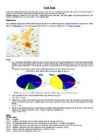
Acid Rain Acid rain is any precipitation that is unusually acidic. It possesses elevated levels of hydrogen ions(it has low pH level). Acid rain is caused by emissions of carbon dioxide, sulfur dioxide and nitrogen oxides, which react with water molecules. Distilled water(doesn't contain CO 2), has pH level 7. Liquids with pH level less than 7 are acidic, liquids with pH level greater than 7 are alkaline. Unpolluted rain has a pH level over 5.7, so it is slightly acidic. Affected areas Places significantly impacted by acid rain around the globe include most of eastern Europe from Poland northward into Scandinavia, the eastern third of the United States and southeastern Canada. Other affected areas include the southeastern coast of China and Taiwan Causes
As the world has industrialized and its population has grown, the problem of water pollution has intensified. The simple fact that millions of people live along coastlines and near rivers means that these bodies of water are likely candidates for heavy and destructive pollution. It is hard to know now what our oceans will look like in the future. Just how damaged they will be by pollution is uncertain. Acid rain The term acid rain refers to what scientists call acid deposition. It is caused by airborne acidic pollutants and has highly destructive results. Scientists first discovered acid rain in 1852, when the English chemist Robert Agnus invented the term. From then until now, acid rain has been an issue of intense debate among scientists and policy makers. Acid rain, one of the most important environmental problems of all, cannot be seen. The invisible gases that cause acid rain usually come from automobiles or coal-burning power plants.
ENVIRONMENTAL PROBLEM The term acid rain refers to what scientists call acid deposition. It is caused by airborne acidic pollutants and has highly destructive results. Scientists first discovered acid rain in 1852, when the English chemist Robert Agnus invented the term. From then until now, acid rain has been an issue of intense debate among scientists and policy makers. Acid rain, one of the most important environmental problems of all, cannot be seen. The invisible gases that cause acid rain usually come from automobiles or coal-burning power plants. Acid rain moves easily, affecting locations far beyond those that let out the pollution. As a result, this global pollution issue causes great debates between countries that fight over polluting each other's environments. For years, science studied the true causes of acid rain. Some scientists concluded that human production was primarily responsible, while others cited natural causes as well
density rural areas which results in spreading of city over more and more rural land. Urban sprawl results in land degradation, increased traffic, environmental issues and health issues. FIND OUT 5 WAYS HOW TO FIX URBAN SPRAWL. 10. Genetic Engineering: Genetic modification of food using biotechnology is called genetic engineering. Genetic modification of food results in increased toxins and diseases as genes from an allergic plant can transfer to target plant. Genetically modified crops can cause serious environmental problems as an engineered gene may prove toxic to wildlife. Another drawback is that increased use of toxins to make insect resistant plant can cause resultant organisms to become resistant to antibiotics. FIND OUT 5 REASONS TO AVOID GM FOOD. If humans continue moving forward in such a harmful way towards the future, then there will be no future to consider. Although it’s true that we cannot physically stop our ozone layer from thinning there are
I'd like to present the main issues of our planet and today i'll name 5 of them. These are air pollution, water pollution, endangered animals, deforestation and rubbish. Air pollution Firstly, lets talk about air pollution, which endangeres our life in cities and also the forests near by. Cars and factories blow poisoned gas in the air and it mixes with the oxygen, so the air that we breathe, becomes dangerous to our health. The ozone layer around the Earth, there
nutrients, pH, and many other factors which may vary between locations but also within a single plot and over very small distances (OECD, 2007). Nevertheless of the quantity of microflora, biomass of all microorganisms living in soil play an important role in the functioning of entire soil ecosystems because their enormous biochemical activity (Barabasz et al. 2002). Soil microflora cycles carbon, nitrogen, phosphorus, and sulfur, plays a role in soil structure formation, decomposition of organic matter, toxin removal, promoting plant growth, and in changes in vegetation (Canbolat at al. 2005 and Martin et al. 2012). Therefore, soil microflora plays a major role in preservation and the balance of life. Because of active role of soil micro- population, the diminution in microbial activity is always alarming (Barabasz et al. 2002). Factors influencing soil microflora
They used a spreadsheet to figure out how much energy they consumed for each of their activities. Each of the lights, car miles, games, and other appliances was converted to a common unit of power consumption called kilowatt-hours. The spreadsheet was used to determine how many kilowatt-hours were used during each day, each week, and each year for each energy consumption activity. The spreadsheet converted their energy consumption to show them the amount of money it costs for each energy consumption activity. In the end, they were shocked to see how much money Jules' energy using habits cost compared to Les' habits. USES OF ENERGY The United States is a highly developed and industrialized society. We use a lot of energy - in our homes, in businesses, inindustry, and for traveling between all these different places. The industrial sector uses almost one-third of the total energy. The residential and
are associated with other diverse functions the muscle and the vascular system. such as aiding in movement of blood and The second largest component of muscle lymph and also in maintaining body tempera- is protein (U.S. Department of Agriculture ture. All of these functions are dependent 2008). Protein makes up an average of 18.5% on cellular metabolism and the ability of the of the weight of the muscle, though that cell to maintain energy supplies. Few cells figure can range from 16 to 22%. Proteins are required to generate as much force and
Acid rains This morning you contributed to atmosphere desolation H ow it is formed? Acid rain is formed by burning fossil fuels such as coal, natural gas, and oil. Gases of acid rain Sulfur dioxide and nitrogen oxide are the gases that form the acid rain. Our health and acid rain Acid rain effects even our health. Breathing and lung problems in people (especially those with asthma) and have been linked to acid air pollution. Some things that you can do to make acid rain less of a problem are: Only run the dishwasher and washing machine with a full load. Turn off the lights in empty rooms or when you will be away from home. Turn off the hot water tank when you will be gone for a long period of time. Don't use your air conditioner or heater as much. Install fluorescent light bulbs instead of incandescent light bulbs. Try to reduce, reuse, and recycle as often as you can. Try not to burn a fire often. When
2. Where is prairie, pampas, steppe, and veldt situated? EurasiaSteppe, North America-Prairie, South AmericaPampa, South AfricaVeldt 3. Using the climate diagram describe the climate of the region. Temperate deciduous forest -Well-defined seasons with a distinct winter characterize this forest biome. Moderate climate and a growing season of 140-200 days during 4-6 frost-free months distinguish temperate forests. Temperature varies from -15° C to 25° C. Precipitation (750-1500 mm) is distributed evenly throughout the year. Temperate grassland- Semiarid, continental climates of the middle latitudes typically have between 25 cm and 50 cm of precipitation a year. Much of this falls as snow, serving as reservoir of moisture for the beginning of the growing season. Warm to hot summers are experienced, depending on latitude. In the winter, grassland temperatures can be as low as -40° C, and in the summer it can be as high 20° C
This steam filled the empty space of a closed tank of water with the only opening as a pipe from the depth of the water. The water was forced out because of the pressure of the expanding warm air. In the 1600's several scientists continued work on steam powered pumps. Robert Boyle proposed the steam engine in 1678. During the 1680's a gunpowder explosion was used to heat water. Jean de Hautefeuille tried to up water, and Dutch astronomer Christiaan Huygens tried a piston in a cylinder. These experiments were the beginnings of a nuclear power-like process. In 1712, Thomas Newcom and John Calley built their first successful steam engine. Nicholas Cugnot built the first mechanically propelled road vehicle in 1769. Cugnot's vehicle was powered through a two - cylinder piston connected steam engine. It used high pressure steam as the power source. Watt patented late in 1781 a connection from the piston to a rotating gear. This set-up is still used in the internal combustion engine.
is growing for many forms of renewable energy. Climate change concerns coupled with high oil prices, peak oil and increasing government support are driving increasing renewable energy legislation, incentives and commercialization. New government spending, regulation, and policies should help the industry weather the 2009 economic crisis better than many other sectors. Costs Renewable energy systems encompass a broad, diverse array of technologies, and the current status of these can vary considerably. Some technologies are already mature and economically competitive (e.g. geothermal and hydropower), others need additional development to become competitive without subsidies. This can be helped by improvements to sub-components, such as electric generators. The table shows an overview of costs of various renewable energy technologies. For comparison with the prices in the table, electricity production from a conventional coal-fired plant costs about 4¢/kWh
produce less carbon emissions than any other masonry material. History (slide 3) In more detail the earliest bricks were dried bricks, meaning they were formed from clay- bearing earth or mud and dried usually in the sun until they were strong enough for use. The oldest discovered bricks, originally made from shaped mud and dating before 10000 BC, were found in Mesopotamia related to the first known cities. Ceramic or fired bricks were first introduced by the Romans. These were mainly flat, broad thin sections, not unlike a tile, which is probably why they `burnt' so well, causing them to last for centuries. In Estonia the fired clay bricks came in to use in 13 century. The greatest buildings from that time are the St John's Church and the Tartu Cathedral. (Jaani kirik ja Toomkirik) Moving on, What is clay? (slide 4) Clay is fine-grained, firm earthy material that is plastic when wet and hardens when heated. Clay minerals are size of (point zero one mm)0,01mm
näitama ; eksponaat, asitõend) heliotropism. At sunrise, the faces of most sunflowers are turned towards the east. Over the course(kurss, suund, kulg, kursus, käik, väljak, müürilade) of the day, they move to track(jälitama) the sun from east to west, while at night they return to an eastward(ida suunaline, ida poole) orientation. This motion(liikumine, esildis) is performed by motor cells in the pulvinus, a flexible segment(segment, lõik ; segmenteerima, tükeldama) of the stem just below the bud. As the bud stage ends, the stem(tüvi) stiffens(kangestuma, jäigastuma) and the blooming stage is reached. Sunflowers in the blooming stage are not heliotropic anymore. The stem has frozen, typically in an eastward orientation. The stem and leaves lose their green color. The wild sunflower typically does not turn toward the sun; its flowering heads may face many directions when mature. However, the leaves typically exhibit some heliotropism. Cultivation and uses
DNA / mRNA, (nucleotide / base) sequence determines sequence of amino acids; AVP; e.g. 2, base triplets / codons, in ribosome AVP; e.g. ref. to : start / stop, codons polysomes large and small subunit in ribosome 2+ Mg [10] 10. (a) from below / ventral / AW; A idea of brain being seen from below R upside down, looking upwards 1 (b) (i) reject choice of answers, accept any reasonable spelling A cerebrum / cerebral hemisphere / cerebral cortex / frontal lobe; ignore refs to right or left R incorrect lobe B pituitary (gland); R hypothalamus C cerebellum;
Because the pressure is lower at the surface than underground, some of the gas will come out of solution and be recovered (or burned) as associated gas or solution gas. A gas well produces predominantly natural gas. However, because the underground temperature and pressure are higher than at the surface, the gas may contain heavier hydrocarbons such as pentane, hexane, and heptane in the gaseous state. At surface conditions these will condense out of the gas to form natural gas condensate, often shortened to condensate. Condensate resembles petrol in appearance and is similar in composition to some volatile light crude oils. The proportion of light hydrocarbons in the petroleum mixture varies greatly among different oil fields, ranging from as much as 97 percent by weight in the lighter oils to as little as 50 percent in the heavier oils and bitumens.
1. Key features for all studied biomes. Tundra The main seasons are winter and summer. The tundra is the world's coldest and driest biomes. The average annual temperature is -28° C. Nights can last for weeks when the sun barely rises during some months in the winter, and the temperature can drop to -70° C. During the summer the sun shines almost 24 hours a day. Summer are usually warm. Average summer temperatures range from 3° to 16°C. TaigaTaiga is the Russian word for forest and is the largest biome in the world. It stretches over Eurasia and North America. The taiga is located near the top of the world, just below the tundra biome. The winters in the taiga are very cold with only snowfall. The summers are warm, rainy, and humid. Some of the animals in the taiga hibernate in the winter, some fly south if they can, while some just cooperate with the environment. GrasslandsGrassland biomes can be found in the middle latitudes
Air pollution Every day, the average person inhales about 20,000 liters of air. Every time we breathe, we risk inhaling dangerous chemicals that have found their way into the air. Air pollution includes all contaminants found in the atmosphere. These dangerous substances can be either in the form of gases or particles. Air pollution can be found both outdoors and indoors. Pollutants can be trapped inside buildings, causing indoor pollution that lasts for a long time. The sources of air pollution are both natural and human-based. As one might expect, humans have been producing increasing amounts of pollution as time has progressed, and they now account for the majority of pollutants released into the air.
Teadlaste arvates on Eesti põlevkivi ehk kukersiidi tekkimisel olnud lähteaineks sinivetikad (tsüanobakterid). Huumus Humiinained Huumus Nonliving, finely divided organic matter in soil, derived from microbial decomposition of plant and animal substances. Humus, which ranges in colour from brown to black, consists of about 60 percent carbon, 6 percent nitrogen, and smaller amounts of phosphorus and sulfur. As humus decomposes, its components are changed into forms usable by plants. Humus is classified into mor, mull, or moder formations according to the degree of its incorporation into the mineral soil, the types of organisms involved in its decomposition, and the vegetation from which it is derived. Humiinhape Keemiline valem Humiinhape Humic acid has the average chemical formula C187H186O89N9S1 and is insoluble in strong acid (pH = 1).
Solubility in water: 3.6 g/100 mL at 20°C Solubility in ethanol: perfectly Viscosity: 3.71 cP (3.71 mPa·s at 25 °C) pH: >7 log Pow: 0.90/0.98 Koc: 25,5 3. Kinetics and metabolism The substance can be absorbed into the body by inhalation, through the skin and by ingestion, also as a vapour. The mean lethal dose of aniline may be between 15 and 30 grams. In case of short-term exposure the substance is irritating to the eyes and the skin. The substance may cause effects on the blood, resulting in the formation of methaemoglobin. Exposure at high levels may result in death. Repeated or prolonged contact may cause skin sensitization. The substance may have effects on the blood, resulting in formation of methaemoglobin. Tends to accumulate in the body, especially in bladder. Often leads to bladder cancer. Aniline was tested on animals, but in mice was observed no increase in tumour incidence, in rats, it
Secondly some people start smoking because there's a rumour saying that it's slimming. And another reason may be that it may relieve stress. After three or four cigarettes you get addicted to it because of nicotine. It is a drug that stimulates the brain. When the level of nicotine falls in your blood and you're a regular smoker, you usually develop withdrawal symptoms, such as craving, anxiety, restlessness, headaches, irritability, hunger, difficulty with concentration, or just feeling awful. These symptoms are relieved by the next cigarette. Most smokers need to smoke regularly to feel normal and to prevent nicotine withdrawal symptoms. So once you start smoking it is very hard to quit. But why is smoking so harmful? Cigarettes have tar in them which contains many chemicals. These deposit in the lungs and can get into the blood vessels and are carried to other parts of the body. Cigarette smoke contains over 4,000 chemicals, including over 50 known carcinogens (causes of cancer) and
Tallinn University Natural and exact sciences Molecular Biochemistry and Ecology Maria Gnidenko Capillary electrophoresis Essay Supervisor: Kert Martma Tallinn 2015 Table of contents Acronyms and symbols used Introduction History and development Physical basis and principle of separation Elektrophoresis Electroosmotic flow Separation process Electrodispersion Various methods of separation Capillary zone�
It was formed 10 000 years ago. Located at latitudes 55° to 70° North. Almost all tundras are located in the Northern Hemisphere, encircling arctic desert and extending south to the coniferous forests of the taiga. The ecotone (ecological boundary region) between the tundra and the forest is known as the tree line or timberline. Tundra comes from the Finnish word tunturi, meaning treeless plain. It is noted for its frost-moulded landscapes, extremely low temperatures, little precipitation, poor nutrients, and short growing seasons. Dead organic material functions as a nutrient pool. The two major nutrients are nitrogen and phosphorus. Nitrogen is created by biological fixation, and phosphorus is created by precipitation. The most distinctive characteristic of tundra soil is its permafrost, a permanently frozen layer of ground. The average winter temperature is -28°C, but the average summer temperature is 3-16°C. During the brief
of using fossil fuels and about 1/6 the cost of natural gas. Biofuels · Using natural I Love you Plants materials to turn into fuel or forms of combustible energy. · Which is mostly plants and plant products Cost Efficient? · A study done by OSU So much for the love.... · Going to biofuels would be like adding a new gas tax. About 25 cents. · And it is not proven to reduce green house gases and may even produce more of them. Geothermal Energy -By using heat from the earth's crust in forms of hot water and steam to power generators for electricity The Math? · Geothermal Energy systems are expensive to put in. · But they are able to pay themselves off in 5 to 10 yrs. · Is able to cut the energy bills by 30 to 40%. Overall Good Bad (technology not there yet) · Hydropower · Solar · Geothermal · Wind · biofuels
............................................................................................... Introduction To be honest I got the list of topics after most interesting ones for me were taken. At first I was not very satisfied with my topic but then I realized that this could be actually really interesting thing to make a report of. I chose this particular topic because I have always been interested in green energy. This topic gave me an excellent opportunity to improve my knowledge about these kinds of things. For me this report is a great challenge because I have not done anything like this before, especially in English. Primary goal for me is to improve my knowledge about renewable energy and also usage of English language. This report is going to talk about biogas. It provides a brief review of usage and future prospects of the biogas. I have tried to make this report as understandable as possible. By the end of this report I want to come to a conclusion whether biogas is
Temperate deciduous forests, woodlands and shrub Tartu 2008 Location: Temperate forests are typical of all European continent, the Eastern region of Asia (in special, Chinese and Japan) and North America. Also are finded in tempered areas of South America. Climate: The average temperature in temperate forests is 50° F. Summers are mild, and average about 70° F, while winter temperatures are often well blow freezing. The average yearly precipitation is 30-60 inches. This precipitation falls throughout the year, but in the winter it falls as snow. There are four seasons in this biome, with warm summers and cold winters, often snowy. In autumn, the leaves change color and fall from the trees. The leaves decay on the forest floor, so the soil is very rich. Because of this, and because of the long growing season, many deciduous forests have been cut down for farming purposes. Plants: Trees of this biome include hardwoods such as maple, oak, hickory, and beech. There are often
Wet the filter paper with distilled water. Measure with a small measuring cylinder 5...6 cm3 of hydrochloric acid with a concentration of 10%. Pour the acid through the funnel into the test tube so that the acid does not wet the upper part of the test tube. 4. While holding the test tube with the acid under a slight angle (d), place the piece of metal in the moist filter paper onto the wall of the test tube 2 cm below the opening (Figure 1, position d). Close tightly the test tube so that it is hermetic but avoid sudden movements that may drop the metal piece into the acid. 5. Move the burettes up and down so that the water level in both burettes is at the same plane (the metal piece cannot interact with the acid). Mark precisely (with a accuracy of 0,05 cm3) the reading from one burette (V1).
neuronal stimulation and inhibition. AXON TERMINAL – Nerve ending which forms presynaptic element of the neurone where synaptic vesicles* are accumulated. BASAL GANGLIA – Subcortical clusters of neurones, which include the following nuclei: caudate, putamen, globus pallidus and substantia nigra. They play a role in movement control. BLOOD-BRAIN BARRIER – A barrier made of epithelial cells which line the blood vessels of the brain. These cells form very tight junctions and control the passage of the chemicals between the blood and brain. BRAIN STEM – The part of the brain which connects to the spinal cord. It is the major route for information transfer between the brain and spinal cord. It controls such vital functions as respiration and heart rate. BROCA’S AREA – The brain region located in the frontal lobe of the left hemisphere which is implicated in the production of speech.
3. Relief Canada's geography is very diverse. It has huge lakes, evergreen forests, prairies, meadows and beautiful mountains. There are thousands of miles of coastline with beaches, fjords and wild rivers flowing to the oceans. Canada is a country of wide open spaces and beautiful landscape where traveling visitors can unexpectedly bump into wild animals like bears or be struck by unusual sight like the scarecrows on the Cabot Trail. Canada is rich in natural wonders, one of them, the Niagara Falls between lakes Erie and Ontario, which is the second biggest waterfall in the world is one of the greatest attractions in the world. About twelve million tourists come to see the beauty of the falling waters on the border between the United States of America and Canada. The Horseshoe Falls, which lie in the territory of Canada, are much bigger and have more strength than the American Falls.
The environment in realtion to mobility/transport in Europe Air pollution is problem all over the world. Through some pollution comes from these natural sources, most pollution is the result of human activity. The biggest causes are the operation of fossil fuel- burning power plants and automobiles that combust fuel. Combined, these two sources are responsible for about 90% of all air pollution in the United States. All kind of pollutions can lead us to serious health problems. For example, air pollution is increasingly being cited as the main cause of lung conditions such as asthma - twice as many people suffer from asthma today compared to 20 years ago. Every year, 3.2m Europeans are diagnosed with cancer - the most common cause of death after heart disease. Most widespread are cancers of the lungs, breast and colon
In this region the temperature can climb up to 35 degrees Celsius in the summer and descend to a chilly -25 degrees Celsius during winter. Canada's climate and environment are one of the main reasons that Canada is such a succesful country. The blend of natural resources and climate sustains us. The seasons dictate the look of the land: according to whether the natural environment is in a state of dormancy or growth. Canada's climate is characterized by its diversity, as temperature and precipitation differ depending on where you are and what time of year it is. Other than the North where it's above freezing for only a few months a year, most Canadian cities are within 300 km of the southern border, where mild springs, hot summers and pleasantly crisp autumns are common during the majority of the year. Climate sculpts the landscape through heat, cold, humidity, light and wind. In Canada, the variety of landscapes shows the diversity of our climate. In the north, low precipitation and cold
 annaabi.ee