Vajad kellegagi rääkida?
Küsi julgelt abi LasteAbi
Logi sisse

Theater of Tallinn (0)

1 Hindamata
Punktid
Inglise keel - Kõik luuletused, mis on inglise keeles

Report
Theatres of Tallinn
Student:
Supervisor:
Tallinn 2008

Table of Contents


Table of Contents 2
Introduction 3
The Estonia National Opera 4
Russian Drama Theatre 5
Tallinn City Theatre 6
Estonian Drama Theatre 7
Estonia National Puppet Theatre 8
8
Conclusion 9
References 10

Introduction


I choose this topic because I want to get know more about local Theatres I hoped to get more information about their location , for whom each theatre is designed and a little overview about their history.
The history of Estonian theatre does not differ much from that of the neighbor countries. The first play was performed in the 16th century at the Tallinn Town Hall. The town school children , who were Germans, staged Terence's The Andria in Latin. The first theatre house in Tallinn was mentioned in written materials which date from the late 17th century; the house was used by travelling theatre groups. Tallinn was already known then as a theatre-loving city.
The first prominent name in Estonian history of theatre, August von Kotzebue , dates from the same period. The Russian authorities sent him from St. Petersburg to Tallinn to work as an official . Kotzebue's entertaining productions became famous all over Europe. He founded the first theatre with its own permanent cast, and brought the Estonian language to the stage. Theatre became especially popular amongst Estonians in the second half of the 19th century, as part of the national awakening process .
Theatres in Estonia, like elsewhere in the world, may be divided into three categories according to their form of ownership: state, municipal and private theatres. In Estonia, the first prevail; there are 9 state and 1 municipal theatres, the Tallinn City Theatre.
The famous music and ballet theatre is the Estonian National Opera in Tallinn. The Russian Drama Theatre is the most popular theatre among the Russian speakers. Despite that the most of the repertory is in Russian, quite a number of Estonian classical plays are staged there. The other important theatres in Tallinn are the Tallinn City Theatre, the Estonian Drama Theatre and the Estonian State Puppet Theatre.

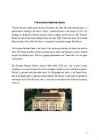
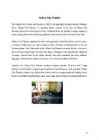
The Estonia National Opera


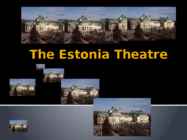
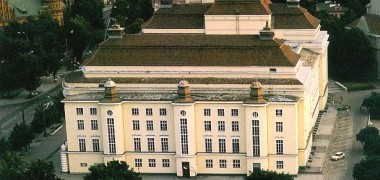
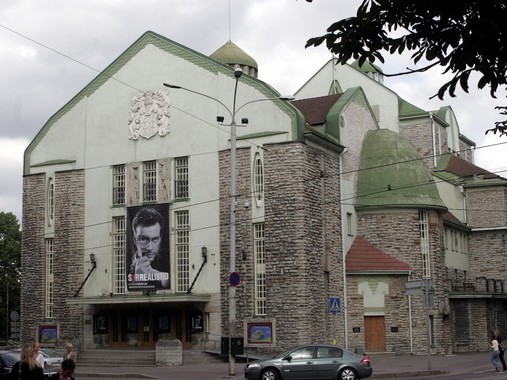
“Estonia” became a professional theater on September 16, 1906. The current Estonia house - a representative building in the heart of Tallinn - opened the doors in the summer of 1913. The building was designed by Finnish architects Armas Lindgren and Wiwi Lonn. The "Estonia" theatre has had several names during history, but since 1998, it bears the name The Estonian National Opera. From 1994 the theater is managed by the general manager Paul Himma.
The Estonian National Opera is the home of the symphony orchestra, the opera choir and the ballet. The theater repertoire includes classical operas, ballets and operettas as well as modern musical and children plays. The most popular performances are " Swan Lake" and the opera "La Traviata".
The Estonian National Opera’s majestic White Hall (218,8 m2) with its grand crystal chandeliers is an excellent place for festive receptions, formal occasions and dancing parties. The hall is provided with removable chairs (for 100 people) and tables. In the Opera House, next to the theatre hall is a spacious concert hall for 790 listeners. Concert hall is operated by state organization “Eesti Kontsert” and it is the main concert place of the Estonian Symphony Orchestra.

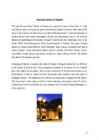
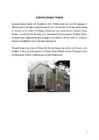
Russian Drama Theatre


The State Russian Drama Theatre of Estonia first opened It’s doors at December 15, 1948. And till now days is the only one professional Russian theatre in Estonia. More than for 50 years of the existence the theatre has put out about 500 performances. These are statements of modern Russian and western playwrights, Russian and international classics, the Estonian dramatic art, performances for children. During it’s tours theatre has visited many cities of the former USSR: from Kaliningrad to Chita, from Murmansk to Tashkent. Last year ’s Russian theatre of Estonia toured Moscow , Saint Petersburg, Riga, Vilnius , Novgorod, took part in various festivals. Some well-known theater directors (Andrey Tarkovsky, Roman Viktjuk, Juriy Sillart, Lembit Ulfsack and others ) worked on a stage of Russian theatre. The theatre puts about 8-10 premieres per year.
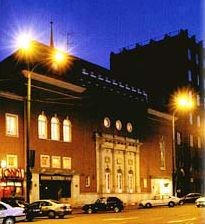
A building of theatre is located in the center of Tallinn. F.Skuinsh constructed it in 1926 first as the cinema . And up to now it keeps magnificent glamour of an interior. In one of theatre halls takes place the art gallery , which carries exhibitions of Russian and Estonian artist. Performances of famous collectives from Russia and other countries often took place in building of theater. The auditorium (an orchestra and a balcony ) is designed for 661 places . The mirror foyer is also used as a hall for creative meetings, presentations (about 70 places). In Pink foyer on the second floor the cozy theatrical bar is located. During performances it serves spectators.

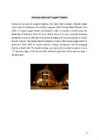
Tallinn City Theatre


The Tallinn City Theatre was founded in 1965 by the legendary Estonian director Voldemar Panso . Tallinn City Theatre is a repertory theatre, situated in the heart of Tallinn. The theatrical season lasts from August to June. Voldemar Panso put together a strong company of actors , among whom were both young graduates of the theatre school and well known stars .
Tallinn City Theatre's repertory has been well approved by both the audience and the critics . It contains world classics as well as modern drama. Attention is dedicated also to the new Estonian drama - Jaan Tätte works at the Tallinn City Theatre as an actor, but he is also one of the best Estonian playwrights. Several of his plays, including his most popular play "Highway Crossing ", directed here by the author himself, have been translated into many different languages , and have been staged in Germany, Latvia, Russia, Finland and Sweden .
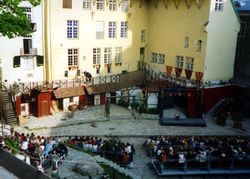
Currently the Tallinn City Theatre's resident company includes 28 actors and 3 stage directors, but the theatre is open to guest performers from Estonia as well as abroad. Tallinn City Theatre is famous by a high artistic level as well as its unique medieval building, which houses seven different performance spaces and a large open-air stage for summer productions.

Estonian Drama Theatre


Estonian Drama Theatre was founded in 1920. Theatre house has seen the changing of different powers, has had a variety of names but has still stood the test of time without losing it's position in the context of Estonian architectural and cultural history. Estonian Drama Theatre is connected with the name of an internationally known producer Voldemar Panso. His productions shaped and formed the image of this theatre in the 60-s and 70-s. Today his followers and adherents work in the same theatre house.
The performances are given in Estonian but the simultaneous translation into Russian is also available . In these days the repertoire of Estonian Drama Theatre consists of the plays written by Shakespeare , Moliere, Calderon and also Friel, Bergman etc.

Estonia National Puppet Theatre


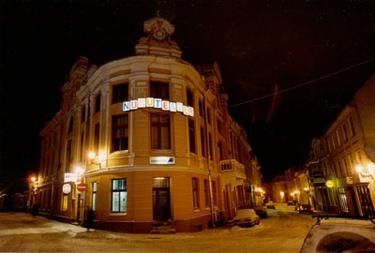
Estonia has no age-old puppetry tradition, like some other countries. Regular puppet shows were first a feature of the children's program of the Estonian Drama Theatre in the 1930s . A separate puppet theatre was founded in 1952; for decades it worked under the leadership of Ferdinand Veike . At first it had no house of its own, constantly travelling around the country . In 1955 part of an historic building in the old-town quarter of Tallinn became its home. The theatre started to broaden its means , often mixing puppets and live performers. From 2000 the artistic director is Andres Dvinjaninov and the managing director is Meelis Pai. The theatre building was extensively renovated; at present it has a 177- seat main stage, a 100-seat oval hall, an 80-seat green hall, and an open-air stage in the back yard.

Conclusion


Thanks to this summary I get lot of information about Tallinn theaters, their history and repertory. Its good to know more about my favorite theatres, which is Linnateater. Theatre played an important role in advancing and safeguarding the spirit of Estonians. I love theaters and its good to know, that a considerable part of the audiences are made up of young people. The fact that last year about 500 young people applied to the twenty places available at the Drama School, speaks volumes about the popularity of theatre in Estonia.

References


  • http://tourism.tallinn.ee/fpage/events/theatres , read on March 21,2008
  • http://www.estoniantheatre.info/index.html?action=artmitu&id=22 , read on March 19,2008
  • Jaak Rähesoo, 1999, Estonian Theatre, Kirjastus Eesti Teatriliit, read on March 19,2008
    10
  • Vasakule Paremale
    Theater of Tallinn #1 Theater of Tallinn #2 Theater of Tallinn #3 Theater of Tallinn #4 Theater of Tallinn #5 Theater of Tallinn #6 Theater of Tallinn #7 Theater of Tallinn #8 Theater of Tallinn #9 Theater of Tallinn #10
    Punktid 50 punkti Autor soovib selle materjali allalaadimise eest saada 50 punkti.
    Leheküljed ~ 10 lehte Lehekülgede arv dokumendis
    Aeg2009-05-17 Kuupäev, millal dokument üles laeti
    Allalaadimisi 11 laadimist Kokku alla laetud
    Kommentaarid 0 arvamust Teiste kasutajate poolt lisatud kommentaarid
    Autor roosid112 Õppematerjali autor
    Põhjalikult kirjutatud Tallinna teatritest inglise keeles

    Kasutatud allikad

    Sarnased õppematerjalid

    Theatres in Tallinn
    8
    docx

    Theatres in Tallinn

    School name THEATRES IN TALLINN Term Paper Compiler: Tallinn 2013 Introduction Tallinn is the capital city of Estonia. In Estonia there are many theatres. Tallinn has 8 theatres. Most of them are located in the Old Town or near the Old Town. These 8 theatres are: Estonian National Opera, Tallinn City Theatre, Estonian Drama Theatre, Estonian State Puppet & Youth Theatre, Russian Drama Theatre, VAT Theatre, Theatre NO99 and Von Krahl Theatre. Estonian National Opera The song and drama society `'Estonia'' was founded in 1865. Play-acting started in 1871. The following theatre activites were relatively haphazard, theatre as a tradition really came into being since 1895, when the society began to direct song plays, folk plays and comedies, usually with

    Inglise keel
    Theatres in Estonia
    1
    docx

    Theatres in Estonia

    Native Estonian theatre, born in 1870 with the plays of the patriotic poetess Lydia Koidula, came into being on the crest of national awakening. Its tastes were at first pretty simple, the favourite genres being folk comedy and romantic melodrama, although both also transmitted halfhidden social and political attitudes. In less than forty years, in 1906, the leading amateur companies, the "Vanemuine" in the university town Tartu and the "Estonia" in Tallinn, could become professional, and in 1911 the "Endla" of P ärnu joined them. Theatre became especially popular amongst Estonians in the second half of the 19th century. Before that time, theatre had mostly been staged in German for the benefit of the local nobility and merchants. Theatre in Estonian emerged in various song and drama societies, the strongholds of national thought. In the early 20th century,

    Inglise keel
    The Most Important Buildings in Lai Street in Tallinn
    17
    odt

    The Most Important Buildings in Lai Street in Tallinn

    Tallinna Mustamäe College The Most Important Buildings in Lai Street in Tallinn Report Supervisor: Ingrid Teigar Tallinn 2014 Table of Contents Introduction.............................................................................. 3 Lai Street in general.................................................................. 4 The origin of the name "Lai"...................................................... 4 1 Lai Street / 4 Nunne Street...................................................... 5 17 Lai Street................................

    Inglise keel
    Estinian Drama Theatre
    2
    doc

    Estinian Drama Theatre

    Estonian Drama Theatre Address: Tallinn, 10148, Parnu mnt. 5 Estonian Drama Theatre is city theatre in Tallinn. The Estonian Drama Theatre is the largest non- musical theatre in Estonia. Estonian Drama Theatre was born in 1920 under the leadership of Paul Sepp. The Drama Theatre rent the contemporary building which in these days was owned by German Theatre Society. In 1939 Drama studio Theatre finally bought it. In 1937 the Dramastudio Theatre was renamed - the new title was Estonian Drama Theatre. In Soviet times its name was The Tallinn Drama Theatre, which was changed back in 1989.

    Inglise keel
    Estonia
    28
    pptx

    Estonia

    The Estonia Theatre The location  Estoniatheatre is situated in the centre of Tallinn. Theatre Estonia winter garden The history  The Estonia Theatre is an opera house and concert hall in Tallinn, Estonia. The Jugendstil building was designed by Finnish architects Armas Lindgren and Wivi Lönn. It was built as a national effort with the leadership of Estonia society in 1913 and was opened to the public on 24 August. At the time, it was the largest building in Tallinn.  The opera house was heavily damaged in the Soviet air raid on Tallinn on 9 March 1944. It was reconstructed in a classical and Stalinist style, and reopened in 1947.  Thebuilding has two large

    Inglise keel
    Estonian National Opera
    3
    doc

    Estonian National Opera

    Estonian National Opera Pavel Kornev 9B Tallinn 2009 The National Opera "Estonia" was founded in 1906. Till 1949 the theatre staged both drama and musical productions. In the 1920s its opera and ballet troupes became separate entities; in every genre the theatre was then regarded as the leading one in the country. Its new house opened in 1913. It was the biggest and most imposing of the theatre buildings in Estonia. In World War II its building was bombed, but it was restored more or less in its former shape in 1947

    Inglise keel
    ESTONIAN SYMPHONIC MUSIC-THE FIRST CENTURY 1896-1996
    278
    doc

    ESTONIAN SYMPHONIC MUSIC. THE FIRST CENTURY 1896-1996.

    THINKING. XXIV. ERKKI-SVEN TÜÜR: LYRICIST SEARCHING FOR HIS PATH THROUGH SYNTHESIS. XXV. THE EIGHTIES. SUMMARY OF THE OUTPUT OF THE SOVIET PERIOD. RIPENING OF THE PRESUMPTIONS FOR A NEW HISTORICAL TURN. THE RE-ESTABLISHED REPUBLIC OF ESTONIA. XXVI. THE NINETIES AND THE FIFTH GENERATION OF COMPOSERS. XXVII. THE SPECIFIC FEATURES AND TRENDS OF ESTONIAN NATIONAL SYMPHONISM. XXVIII. THE PERFORMANCES OF SYMPHONIC MUSIC: THE ORCHESTRAS OF TARTU AND TALLINN. XXIX. ESTONIAN SYMPHONISTS ABOUT CREATIVITY. CONCLUSION APPENDIXES APPENDIX A. SELECTED PUBLICATIONS ON ESTONIAN HISTORY AND CULTURE IN GENERAL. APPENDIX B. BIBLIOGRAPHY OF ESTONIAN SYMPHONIC MUSIC APPENDIX C. RECORDINGS OF SYMPHONIC MUSIC. APPENDIX D. SCORES OF SYMPHONIC MUSIC PUBLISHED. APPENDIX E. CHRONOLOGY OF ESTONIAN SYMPHONIES. APPENDIX F. SOUND TAPES OF ESTONIAN SYMPHONIES IN THE ESTONIAN MUSIC INFORMATION CENTRE AT THE COMPOSERS UNION. APPENDIX G

    Inglise keel
    Estonian Drama theatre
    1
    doc

    Estonian Drama theatre

    Estonian Drama Theatre 1) Estonian Drama Theatre is city theatre in Tallinn. 2) It is the largest non-musical theatre in Estonia. 3) Estonian Drama Theatre is situated right in the heart of Tallinn. The theatre has two halls, cosy bars and elegant foyers. 4) It´s was founded in 1920 under the leadership of Paul Sepp. 5) The Drama Theatre rent the contemporary building which in these days was owned by German Theatre Society. 6) In 1939 Drama studio Theatre finally bought it. 7) At the beginning the theatre was called the Dramastudio but in 1937 theatre was renamed - the new title was Estonian Drama Theatre. 8) Estonian drama theatre has a big auditorium with 426-seats

    Inglise keel


    Meedia

    Kommentaarid (0)

    Kommentaarid sellele materjalile puuduvad. Ole esimene ja kommenteeri


    Sellel veebilehel kasutatakse küpsiseid. Kasutamist jätkates nõustute küpsiste ja veebilehe üldtingimustega Nõustun