Vajad kellegagi rääkida?
Küsi julgelt abi LasteAbi
Logi sisse

THE HISTORY OF JOURNALISM (0)

5 VÄGA HEA
Punktid

THE HISTORY OF JOURNALISM
REPORT SUBMITTED TO:
JELENA SCHMIDT
SUBJECT :
ENGLISH
BY
NIKITA GUSTSHIN
TMHG
19.04.2012
“The History of Journalism”
● What is “Journalism”?
Journalism is the investigation and reporting of events , issues and trends to a broad audience . Though there are many variations of journalism, the ideal is to inform the intended audience. Along with covering organizations and institutions such as government and business, journalism also covers cultural aspects of society such as arts and entertainment. The field includes editing, photojournalism, and documentary .
● History of journalism. Ancient journalism.
Note : "Journalism" is often called the first draft of history, but not all of it has to get written down in real time. A "Journalist" can write today about events that happened yesterday or a week ago.
Definition of "Ancient Journalism" is any historian who wrote about events in his own lifetime , IF he recorded those events within a year or less after they happened, or finished happening.
Here are some examples of ancient journalism:
Nicolas of Damascus - chief advisor to King Herod the Great, Nicolas also wrote the history of those days during Herod's life. (The work is mostly lost , but Josephus relied on it as a source.) Nicolas wrote from 14 to 4 BC, relying on his own current , ongoing experience and Herod's memoirs.
Julius Caesar - not a king (yet) and he wrote it himself, but he chronicled his Gallic Wars and Civil Wars in true journalistic fashion . Also, Caesar did it deliberately to provide source material for future historians.
○ About nowadays journalism:
Johann Carolus 's “Relation aller Fürnemmen und gedenckwürdigen Historien”, published in 1605 in Strassburg, is often recognized as the first newspaper. The first successful English daily , the Daily Courant, was published from 1702 to 1735.The first dedicated school for journalism, Missouri School of Journalism, was founded in 1908 in the United States of America by Walter Williams .
In the 1920s , as modern journalism was just taking form, writer Walter Lippmann and American philosopher John Dewey debated over the role of journalism in a democracy . Their differing philosophies still characterize a debate about the role of journalism in society and the nation -state.
The journalist became the middleman . When elites spoke, journalists listened and recorded the information, distilled it, and passed it on to the public for their consumption. The public is not smart enough to understand complicated, political issues. Furthermore , the public was too consumed with their daily lives to care about complex public policy. Therefore the public needed someone to interpret the decisions or concerns of the elite to make the information plain and simple .
Bill Kovach and Tom Rosenstiel propose several guidelines for journalists in their book “The Elements of Journalism”. Because journalism's first loyalty is to the citizenry, journalists are obliged to tell the truth and must serve as an independent monitor of powerful individuals and institutions within society. The essence of journalism is to provide citizens with reliable information through the discipline of verification, as well providing a forum for public criticism.
Professional and ethical standards
In the UK, all newspapers are bound by the Code of Practice of the Press Complaints Commission. This includes points like respecting people's privacy and ensuring accuracy. However , the Media Standards Trust has criticised the PCC, claiming it needs to be radically changed to secure public trust of newspapers.
This is in stark contrast to the media climate prior to the 20th Century, where the media market was dominated by smaller newspapers and pamphleteers who usually had an overt and often radical agenda, with no presumption of balance or objectivity.
Little note: Publishers, owners and other corporate executives, especially advertising sales executives, can try to use their powers over journalists to influence how news is reported and published. Journalists usually rely on top management to create and maintain a "firewall" between the news and other departments in a news organization to prevent undue influence on the news department.
Legal status
Governments have widely varying policies and practices towards journalists, which control what they can research and write, and what press organizations can publish. Some governments guarantee the freedom of the press; while other nations severely restrict what journalists can research and/or publish.
Journalists in many nations have some privileges that members of the general public do not; including better access to public events, crime scenes and press conferences, and to extended .
YELLOW JOURNALISM
Yellow journalism, or the yellow press, is a type of journalism that presents little or no legitimate well-researched news and instead uses eye-catching headlines to sell more newspapers.
Frank Luther Mott (1941) defines yellow journalism in terms of five characteristics :
● Scare headlines in huge print , often of minor news
● Lavish use of pictures, or imaginary drawings
● Use of faked interviews, misleading headlines, pseudoscience, and a parade of false learning from so-called experts
Emphasis on full - color Sunday supplements, usually with comic strips
● Dramatic sympathy with the " underdog " against the system.
Frank Luther Mott (April 4, 1886 – October 23, 1964) was an American historian and journalist of Quaker descent.
FAMOUS JOURNALIST
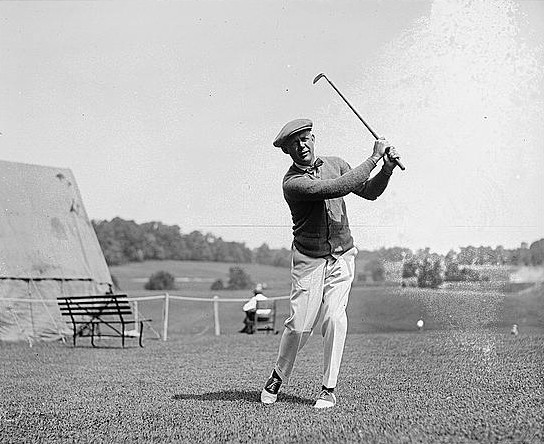
Grantland Rice
1880-1954
One of America’s best - known and respected sports writers . Rice saw sports as life. His column “Sportslight” appeared in more than 100 newspapers. He estimated that he wrote 1 million words a year—3,000 words a day—and traveled 15,000 miles a year to bring stories to his readers.
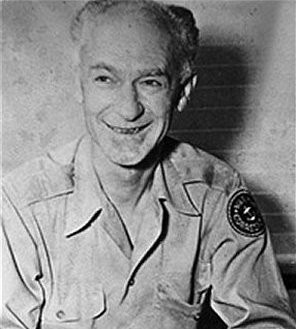
Ernie Pyle
1900-1945
Perhaps the best-loved reporter of all time. Pyle covered the human side of the news in a folksy, chatty style. With his wife , Jerry, he traveled the United States and the world in search of stories about ordinary heroes. During World War II, Pyle mixed with soldiers in Europe and the Pacific and followed them into battle. His columns home gave readers a glimpse of war from what he called “the worm ’s-eye view.”
My opinion of this profession
I think, this profession is quite interesting , but not for all. I assume that, to be a great journalist, you must be interested in sphere about you write. It’s boring, when journalists just write about things, which happened in their town/ country . Inspiration – is the first thing, which could help to write fantastic reports. For example, if you are interested in sports for a long time, why not to publish your own opinion (cause of big experience) in to the local newspaper or magazine ? There is a hope , that public will read your articles and start to listen your opinion, which was created during your long life. You might be a person, who really can objectively and clearly talk about sports events. When I was listening to Pavel Ozerov (Russian 1st canal journalist) he said, that firstly you should choose a profession you like. After that, you can write about it. So, in this way you can help people to understand for example “good” and “bad” sides of your job/profession or inform society about events which are connected with your profession.
THE HISTORY OF JOURNALISM #1 THE HISTORY OF JOURNALISM #2 THE HISTORY OF JOURNALISM #3 THE HISTORY OF JOURNALISM #4
Punktid 100 punkti Autor soovib selle materjali allalaadimise eest saada 100 punkti.
Leheküljed ~ 4 lehte Lehekülgede arv dokumendis
Aeg2012-10-31 Kuupäev, millal dokument üles laeti
Allalaadimisi 4 laadimist Kokku alla laetud
Kommentaarid 0 arvamust Teiste kasutajate poolt lisatud kommentaarid
Autor Nikita Gushtshin Õppematerjali autor
The history of journalism. What is journalism? History of journalism. Professional and ethical standards.

Sarnased õppematerjalid

600976-teacher-guide-for-writing-c1-advanced
26
pdf

600976-teacher-guide-for- writing-c1-advanced

Assessing writing for Cambridge English Qualifications: A guide for teachers  Contents Who this guide is for Contents Who this guide is for................................................................................................................................. 3 Just like official examiners, teachers also spend many hours evaluating learners’ writing. This guide

Kategoriseerimata
Media
2
doc

Media

for thousands of news stories. Local reporters, for example, cover school board meetings, fires, sports events and other local stories. Other journalists, including foreign correspondents cover national and international news. In democratic countries, people depend on the news media for the fair and truthful reporting of current events. These nations grant the press freedom to report news and opinions without government interference. There are five chief fields of journalism: newspapers, news services, magazines, radio and television. A newspaper provides many kinds of communications. Some articles, such as news stories and recipes, furnish information. Others are usually meant just for fun. Newspapers cover more stories than do any any of the other news media. Many millions of people watch television for amusement during their free time. But television provides viewers with more than just entertainment. Most people get a large proportion of their

Inglise keel
To what extent does the media influence foreign policy
8
pdf

To what extent does the media influence foreign policy?

legislative and judicial government. As media has become more accessible worldwide, it has become a platform where governments and nonstate actors can share their foreign policy priorities in an effort to receive feedback, engage in diplomacy, inform people, and try to affect foreign policy outcomes. In this essay, I am analyzing what effect to what extent does the media has on foreign policy and bringing examples to prove my statements. Starting from history, then during the 1980s the new technologies were outstandingly improving and it gave the news media chance to provide a constant flow of global real-time news. At this time Ted Turner produced CNN, the first global news network, which gave the opportunity to broadcast the news around the world. (Eytan Gilboa, 2005) Back in the 1990s, there were a series of world-shaping events and concurrently CNN became a global actor in

Rahvusvahelised suhted
Suurbritannia ühiskond ja kultuur quiz 1 mõisted
26
pdf

Suurbritannia ühiskond ja kultuur quiz 1 mõisted

find the smaller formats more convenient. It remains to be seen how this shake-up will affect the usage of the term "broadsheet". The largest of newspaper formats and is characterized by long vertical pages (typically 22 inches or 560 millimetres). The term derives from types of popular prints usually just of a single sheet, sold on the streets and containing various types of material, from ballads to political satire. 22. Tabloids- a style of journalism that tends to emphasize topics such as sensational crime stories, astrology, gossip columns about the personal lives of celebrities and sports stars, and junk food news. Such journalism is commonly associated with tabloid sized newspapers including the National Enquirer, Globe, or The Sun, and the formerNews of the World. Not all newspapers associated with such journalism are in tabloid size; for example, the

Inglise keel
Inglise keele kodulugemine teemal-Mass Media
8
doc

Inglise keele kodulugemine teemal: Mass Media

and most popular of the mass media. Here, information is been generated through various websites and search engines. One can play games, listen to radio while working and chat with friends and relatives, irrespective of location. It also gives information on various topics such as literature, politics, science, sports, fashion, movies, education, career, jobs etc. similar to other types of mass media. Thus, due to the progress of science and technology, history of media has evolved and reached the present-day world of internet, cellular phones, blogs, podcast and RSS feeds. Mass media enjoys a very prominent role in our lives. There are various effects of mass media on the society at large. Media tends to influence and it's obvious, there are positive as well as negative influences of mass media. However, it also depends upon the way audiences perceive things. The power of the mass media is by far

Inglise keel
IS MEDIA DECEIVING AND PACIFYING THE POPULATION
4
pdf

IS MEDIA DECEIVING AND PACIFYING THE POPULATION?

The large variety of international media publications does not necessarily mean more opinions as many of them belong the same monopolistic companies, which only distribute their content on different platforms and for different audiences across countries. This kind of concentration of media power can be a real threat to democratic societies. (Concentration, 1980). The story of a man who has taken all control over public media and uses it politically to govern a country is not only the history of Adolf Hitler, but can also be found in the modern day Europe. A living example of this could be found in Italy, where the former Prime Minister Silvio Berlusconi maintained a tight grip on the public press. Being a prime minister in 2010, he together with his family practically controlled the national television and radio, having roughly a 90 percent of the audience share. The media publications, that he controlled, were used to make sure he stays in the government and wins the elections

Meediateooriad
Ameerika kirjandus alates I maailmasõjast kuni tänapäevani
29
docx

Ameerika kirjandus alates I maailmasõjast kuni tänapäevani.

womens magazine. Anti human values of the city. Sacco and Vanzetti-two Americans of Italian origin, who were fighters of rights of workers. They were executed, it is been proved that they have been accused wrongfuly, it wasnt fair, they were communists. The 1930's saw the publications ,,USA trilogy"- 1."The 42nd Parallel", 2. ,,1919", 3. ,,Big Money". All the three books were published in 1930's. It's his masterpiece, the greatest work. He did a huge work. He traces the history of usa to the very end of the 19th century, the american-spanish war-to 1927, the execution of Sacco and Vanzetti. He shows history as a great operative force, wants to recreate history, wants to show that the causes of what is happening now has to be found somewhere in the history. Unlike other modernists Dos Passos is interested in the average man, more than other modernist authors. Geography of the novel extends from east coast to west coast

Ameerika kirjandus
Means of communication
5
doc

Means of communication

..). They use lots of advertisements because they want to earn money (if the channel is more popular they earn more money). Some people say that it is needless to have so much adverts but I think that it is good because you can choose which product is the best for you. but it's true that they sometimes lie and many of them are absolutely stupid. Kinds of programs: children's, current affairs, discussion, pop music, gardening, arts, natural, history, film review, customer affairs, language-learning, human interest, fashion, light entertainment, variety; documentaries, the news (is), soap operas, quiz shows, game shows, breakfast TV, costume dramas, the National Lottery draw, film, action series, weather forecast, sci-fi series... Broadcasting in BG and CZ GB ­ 5 channels: BBC 1, BBC 2 (these two don't have adverts), ITV, Channel 4, Channel 5, + satellite programs CZ ­ CT 1, CT 2, Nova, Prima, + satellite programs The Internet

Inglise keel


Meedia

Kommentaarid (0)

Kommentaarid sellele materjalile puuduvad. Ole esimene ja kommenteeri


Sellel veebilehel kasutatakse küpsiseid. Kasutamist jätkates nõustute küpsiste ja veebilehe üldtingimustega Nõustun