Vajad kellegagi rääkida?
Küsi julgelt abi LasteAbi
Logi sisse

IS MEDIA DECEIVING AND PACIFYING THE POPULATION? (0)

1 Hindamata
Punktid


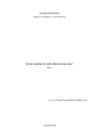
IN THE  LIGHT  OF  RECENT  DEVELOPMENTS IN MEDIA ECONOMY  AND 
TECHNOLOGY , HOW  VALID  IS THE  CRITIQUE  OF THE  FRANKFURT SCHOOL OF 
MEDIA DECEIVING AND PACIFYING THE POPULATION? 
Essay 


Tallinn 
2013
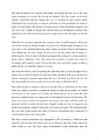
The   rapid    development   of  computer  technologies  and   internet   has  been  one  of  the  main 
factors  affecting  our   everyday   life  over  the  last  decades.  They  have  made  our  life  more 
efficient,  comfortable  and  also  changed  the  way  we  communicate  and  consume  media. 
Digitalization  has  also  brought  us  many  new  platforms  and  more  possibilities  for  media  to 
reach  even  more people. The internet is allowing  anyone  to  share  information instantly to all 
over  the  world.  It  might  be   thought   that  with  all   these   new  developments,  problems  like 
controlling of the media and deceiving people are  gone , but it  seems  that things are not that 
clear .  
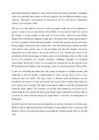
When  the   first   newspapers   appeared ,  they  were  just  a   part   of  small  businesses,   whose    goal  
was to make  money  by  selling  the reports of recent  events .  People bought the papers to  stay  
up to  date  or read  something   interesting  about  a distant occurrence.   However  the businesses 
soon  changed  into  not  only  covering  the  recent  news,  but  also   politics   and  viewpoints  of 
different  people. The  newspaper  publishers had changed from selling news to being dealers of 
public  opinion.  ( Habermas ,  1991).  The  readers  had  no   doubt   to  question  the  content  of 
newspapers  and  it  quickly   became   obvious  that  they  were  a   powerful   weapon  to   shape   a 
public opinion, even when the content was not true. 
One of the most  famous   cases  of exploiting the media and called to be one the  biggest  lies in 
history was  during  the World War II, when Adolf  Hitler  controlled all the press and launched 
massive   campaigns   to  promote   anger   against  the   Jews .  His  theory  was  that  if  you   tell   a  lie 
that`s big enough and repeat it, people will eventually believe it. (McGrath, 2013). 
Many think this kind of situation  could  not be possible   today   as information can flow much 
freely now. People can instantly  communicate  around  the  globe  and no  nation  is  so isolated 
and   locked   in  as  the  situation  was  70   years   ago.  People  had  no  way  to   spread   the  word 
themselves and information was  coming  only one-directionally from the controlled press. The 
media  was  used  to  deceive  the  population  and  people  were  made  to  believe  what  was 
politically  needed.  It  seems  the   times   have  changed,  people  are  free  of   propaganda   and 
modern  communication  methods could easily see  through   such  scams. The population thinks 
that  with  such  a  high  number  and  variety  of  different  international  media  publications  it 
would be impossible to deceive the public. 
The   truth   is  media  manipulation  and  propaganda  is   still   all  around  us.   Global   news  and 
magazines  still  dominate  what  kind  of  news  see  on   television   and  latest  fashion  determines 
which  clothes  to  wear.  The  large  variety  of  international  media  publications  does  not 
necessarily  mean  more  opinions   as  many of  them  belong the  same  monopolistic  companies
which  only  distribute  their  content  on  different  platforms  and  for  different  audiences   across  
countries.  This  kind  of   concentration   of  media   power   can  be  a   real    threat   to   democratic  
societies. (Concentration, 1980).   
The  story  of  a  man  who  has  taken  all   control   over  public  media  and  uses  it  politically  to 
govern a  country  is not only the history of Adolf Hitler, but can also be  found  in the modern 
day   Europe .  A   living   example  of  this  could  be  found  in   Italy ,  where  the   former    Prime  
Minister Silvio  Berlusconi  maintained a tight grip on the public press. Being a prime minister 
in  2010,  he  together  with  his  family  practically  controlled  the  national  television  and   radio
having  roughly a 90 percent of the  audience  share. The media publications, that he controlled, 
were  used  to  make   sure   he  stays  in  the   government   and  wins  the  elections.  Any  press 
publications  that  would  criticize  the   current    leader   were  sued.  Having  also   control   in  the 
government,  Berlusconi   managed   to  propose  and  even  push  through  some   laws   that  would 
prevent   free  journalism,  for  example  criminalize  publishing  transcripts  of  wiretapped 
conversations. Berlusconi`s control over the media was criticized all over the world, but even 
the European Court of Justice could not  manage  to  pass any  measures against it. (Pavli, 2010). 
It  can`t  be  overlooked  that   there   have  been  many  developments  in  media  economy  and 
technology  in  the  last  decades.  Communication  is   easier   and  the   whole   world  is  more 
connected   than   ever   before .  The  large  variety  of  different  media  publications  and  the 
possibilities for everyone to share information to the masses  makes  us believe that media is a 
just a  tool  for news reporting. The  reality  is  that  public  media is  a powerful  instrument  that 
shapes  the  public  opinion.  The   examples   of  deceiving   entire   populations  with  media  can  be 
found during the  wars  and into the  present  day Europe. Large corporations are  formed  that try 
to  control  the  entire  industries   making   the  people  believe  in   diversity   and  independence  of 
publications.  
So while many there have been many developments, the  means of deception are still the same. 
Media  is  used  to  make  people  believe  the  benefits  of  some   political    views   or   products .  The 
theories of Hitler, who  stated  that  telling  a big enough lie will make people believe it, are still 
valid. 
 
 
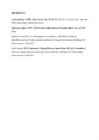
REFERENCES 
„Concentration“  (1980).  Many  Voices,  One  World,  Part  IV,  ch  4.  London,  New   York   and 
Paris , Kogan Page, Unipub and Unesco
Habermas, Jürgen, (1991). The structural transformation of the public sphere.  England : MIT 
Press. 
McGrath,  Jane  (2013). 10 of the Biggest Lies in History. [ONLINE]  Available  at: 
http://history.howstuffworks.com/american-history/10-biggest-lies-in-history.htm#page=10. 
[Last Accessed 15.04.2013]. 
Pavli, Darian (2010). Berlusconi’s Chilling  Effect  on  Italian Media. [ONLINE] Available at: 
http://www.opensocietyfoundations.org/voices/berlusconi-s-chilling-effect-italian-media. 
[Last Accessed 15.04.2013]. 
 
IS MEDIA DECEIVING AND PACIFYING THE POPULATION #1 IS MEDIA DECEIVING AND PACIFYING THE POPULATION #2 IS MEDIA DECEIVING AND PACIFYING THE POPULATION #3 IS MEDIA DECEIVING AND PACIFYING THE POPULATION #4
Punktid 50 punkti Autor soovib selle materjali allalaadimise eest saada 50 punkti.
Leheküljed ~ 4 lehte Lehekülgede arv dokumendis
Aeg2014-01-09 Kuupäev, millal dokument üles laeti
Allalaadimisi 3 laadimist Kokku alla laetud
Kommentaarid 0 arvamust Teiste kasutajate poolt lisatud kommentaarid
Autor studentm Õppematerjali autor
In the light of recent developments in media economy and technology, how valid is the critique of the Frankfurt school of media deceiving and pacifying the population? Inglisekeelne essee antud teemal. Arutleb internetist, uudistest ning kuidas meedia vahendusel inimesi mõjutatakse ka poliitiliselt.

Kasutatud allikad

Sarnased õppematerjalid

To what extent does the media influence foreign policy
8
pdf

To what extent does the media influence foreign policy?

TALLINN UNIVERSITY School of Governance, Law and Society To what extent does the media influence foreign policy? Essay In Great Powers Foreign Policies and Relations TALLINN 2019 Media as a mass communication of today is playing a central role in creating and shaping public opinion and perceptions and also affecting society. Media is growing every day and influencing even more as the days go by. The word media is derived from the word medium. Singly the different media channels such as radio, TV, books, newspapers, magazines and mobile devices are called mediums, but as one, they are considered as media. (Cambridge Academic Content Dictionary, 2017) The media’s role in society depends on how society chooses to use media. In today’s world, the media has become a crucial thing for society,

Rahvusvahelised suhted
Inglise keele kodulugemine teemal-Mass Media
8
doc

Inglise keele kodulugemine teemal: Mass Media

Mass Media What is Mass Media? Statistics show that there are few things which impact the human mind more than mass media. The advice of teachers, parents and relatives may fall on deaf ears, but the mass media influence holds us all spellbound! At this point, it becomes necessary to define mass media. Mass media may be defined as any form of communication which is meted out to the people at large, through the various forms of communication. What modes of communication are we talking about? Well there can be no static definition for the channels of mass communication as they are increasing all the time. But any form of communication which is seen and understood by a large mass of people can be taken to mean mass communication or mass media channels. Why is mass media so attractive to people

Inglise keel
Social media information and data collection and security
16
docx

Social media information and data collection and security

New Media Economy Social media information and data collection and security In this brief essay, i would like to focus on the social media platforms in our moren society. How people use them, what kind of information we give away, what companies will do with this. Information sharing and data protection has become very popular theme in the recent few years. People care more about their privacy and avoid „big brother“ foreshadowing. It is important to know what social media platforms promise and are they really going to keep it. Users should think about what they share and what kind of information they generate. Because it is all recorded and some info can be traced back to real people. Privacy and data protecion topics are becoming more and more important and the amouts of data generated is becoming larger. When wrongly access this kind of data, a lot damage could be done by criminals. Users privacy settings should be reviewd and fixed when needed.

Inglise keel
Suurbritannia ühiskond ja kultuur quiz 1 mõisted
26
pdf

Suurbritannia ühiskond ja kultuur quiz 1 mõisted

that their central government chooses to delegate. The majority of states in the world have a unitary system of government. 4. A federal state-- a political entity characterized by a union of partially self- governing states or regions under a central (federal) government. 5. A multinational state- A multinational state is a sovereign state which is viewed as comprising two or more nations. Such a state contrasts with a nation-state where a single nation comprises the bulk of the population. 6. A single-nation state- a geographical area that can be identified as deriving its political legitimacy from serving as a sovereign nation. A state is a political and geopolitical entity, while a nation is a cultural and ethnic one. The term "nation state" implies that the two coincide, but "nation state" formation can take place at different times in different parts of the world. 7. Commonwealth realm- is a sovereign nation within the Commonwealth which has Queen

Inglise keel
The Medium Is the Message
18
docx

The Medium Is the Message

technology. The essence of automation technology is the opposite. It is integral and decentralist in depth, just as the machine was fragmentary, centralist, and superficial in its patterning of human relationships. The instance of the electric light may prove illuminating in this connection. The electric light is pure information... It is a medium without a message, as it were, unless it is used to spell out some verbal a ad or name. This fact, characteristic of all media, means that the " Intent"_ of any medium is always .another medium. The content of writing is speech, just as the written word is the content of print, and print is the content of the telegraph. If it is asked, "What is the content of speech?," it is necessary to say, "It is an actual process of thought, which is in itself nonverbal." An abstract painting represents direct manifestation of creative thought processes as they might appear in computer designs. What we are considering here,

Inglise keel
Finished topic- mass media
2
docx

Finished topic- mass media

MASS MEDIA By ''mass media '' we intend to those means of communication which can reach large or mass audiences. The most important are probably Television, Radio, the Press and Internet. The English-speaking peoples have always allowed more freedom of speech and of the press than most other countries. This gave them an advantage from the start in communications. The ground work for mass communications in the 20th century was laid in the 19th century by two inventions which allowed people to communicate by wire

Inglise keel
600976-teacher-guide-for-writing-c1-advanced
26
pdf

600976-teacher-guide-for- writing-c1-advanced

Assessing writing for Cambridge English Qualifications: A guide for teachers  Contents Who this guide is for Contents Who this guide is for................................................................................................................................. 3 Just like official examiners, teachers also spend many hours evaluating learners’ writing. This guide

Kategoriseerimata
Means of communication
5
doc

Means of communication

Maturitní otázka c. 23. Means of communication Introduction A few centuries ago people knew only a few kinds of communication. They could speak to each other, they could send their message from one place to another by smoke signals, they used mail. Later on, they also had some newspapers. The first expansion of media was when the radio and television were invented. The second and the biggest boom started in 1960s when the first communication satellite was launched into orbit. There are 4 main media: Newspapers, TV, Radio and the Internet. Today's people take this as an ordinary thing and we don't realise that we nearly can't live without it. Media are very important for us. They give us big amount of information, so big that we can't remember all that things

Inglise keel


Kommentaarid (0)

Kommentaarid sellele materjalile puuduvad. Ole esimene ja kommenteeri


Sellel veebilehel kasutatakse küpsiseid. Kasutamist jätkates nõustute küpsiste ja veebilehe üldtingimustega Nõustun