Vajad kellegagi rääkida?
Küsi julgelt abi LasteAbi
Logi sisse

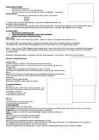
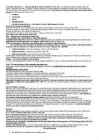
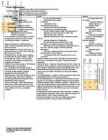
Stages of democratization (0)

5 VÄGA HEA
Punktid
Inglise keel - Kõik luuletused, mis on inglise keeles
Stages of democratization ILLIBERAL DEMOCRACIES: transition always doesn’t end up in a democracy
Mexico /SA:
Continuing problems of corruption ;
lack of transparency;
weak rule of law;
Impunity
Democratic culture weak
The old regime breaks down.
New democratic structures are built . Initial fragility
These new structures become embedded; their removal is unthinkable: ‘consolidation’.
Structural factors :
W. Germany 1950s: educated, literate population, but residue of authoritarian attitudes, poor experience of Weimar democracy?
E. Germany 1990s : educated, literate, good knowledge of West German system – (relatively) easy adaptation once East German state collapsed Mexico: as economy developed did potential for democratic structures increase ? South Africa : little apparent scope for change?
Transitions theory
  • liberalization of authoritarian rule
  • civil society pushes the boundaries of change faster and farther
  • holding of fair elections of uncertain outcome.
    Elite vs mass
    West Germany – 1950s – mass element largely absent – ‘guided’ into democracy by Adenauer and economic success
    East Germany 1990 – mass protests against communist rule undermine regime; when it crumbles no obstacle to unification
    ‘Wir sind das Volk’ (we are the [East German] people becomes ‘Wir sind ein Volk’ (we are one [united German] people)
    Mexico – crises (economic, 1985 earthquake) brought gradual change. Ironically, pro-democratic electoral reform was greatest when ruling party (PRI) was strongest. PRI needed a credible opposition. Both bottom up and top down (though former was stronger). Pres Zedillo (1994-2000) accelerated reforms.
    South Africa: Mass protests played a determinative role , but timing contingent on elite decisions…but elites lost control of process
    What is Governance? 
    Governance consists of the traditions and institutions by which authority in a country is exercised. This includes the process by which governments are selected, monitored and replaced; the capacity of the government to effectively formulate and implement sound policies; and the respect of citizens and the state for the institutions that govern economic and social interactions among them .
    Domestic vs international factors
    Germany 1950s:
    Context of division , occupation: western allies insist on democratic renewal
    Effective leadership and economi recovery provide space for accommodation with democracy
    Germany 1990s
    Gorbachev removes protection from East German state, end of Cold War
    East German civic protest thus enabled, removing east German regime, paving way for unification
    Mexico:
    International – pressure from IOs, other states , donors, learning effect from reforms elsewhere, etc.
    Domestic pressures come from crises or lack of ‘ delivery ’ of services, growth , etc.
    South Africa
    Domestic: uprising ‘ungovernability’ Electoral instutitions: Germany – PR, with 5% hurdle to prevent fragmentation, enable stable government
    Mexico: first -past-the-post for President ; mix of PR and FPTP for Congress . No re-election undermines commitment of Congress to constituents.
    South Africa – PR, still high turnout (if diminishing)
    Concerns about distance between MPs and voters
    International: sanctions, censure, impact on economy
    Transitional institutions
    Rule of law : Voice and Accountability
    Political Stability and Absence of Violence
    Government Effectiveness Regulatory Quality
    Rule of Law
    Control of Corruption
    Separation of powers; Allied armies as back up if needed … (g)
    East Germany absorbed into ready -made rule of law from West
    Constitutions, courts (SA)
    more independent Congress (M)
    Federal Electoral Institute (M)
    Openness:
    TRC (SA)
    Gauck-Authority’ (G)– opening of Stasi files;
    Freedom of Information Agency (M)
    CONSOLIDATION
    Democratization doesn’t end with elections….
    West Germany: importance of democracy in delivering prosperity, international rehabilitation and security (after experience of war, division)
    South Africa: need to develop trust in institutions, strengthen accountability
    Mexico: corruption, rule of law still needs strengthening. Acceptance of norms of democracy
    Germany
    1950 25% felt best to have one party, 53% several parties
    1997 7% felt best to have one party, 86% several parties
    South Africa
    Barely 30% citizens thought that MPs should hold the president to account .
    Fewer than 40% agreed that “the government is like an employee ; the people should be the bosses”, most preferring the view that “people are like children ; the government should take care of them like a parent ”.
    Only 10% thought that voters should hold MPs to account, 40% believed that presidents should be able to “decide everything”.
    Mexico democratizised
    Electoral change - PAN success.
    More independent institutions and groups - Courts, Congress, IFE, media, pressure groups.
    Power slowly being devolved to states.
    Popular unhappiness caused by response to 1985 earthquake, economic crises, stolen election of 1988.
    BUT!!! Legacies continue : corruption, impunity, authoritarian-style lack of accountability.
    Legacy of long PRI rule = stability. Unique in Latin America.
    Typical questions in first session. Three and choose one. Pattern. Broad theme or concept. 2nd question is explicit comparison –more narrow concept.
    3. Not sig more challenging than others, can say far less about each
    No question only about SA or Germany –have already done that in essays
    Critically assess the impact of electoral systems on politics of two of the countries studied
    How do a country’s history and political culture affect its ability to democratise? Answer by comparing two of the countries studied in this course.
    What role do political parties play in democratisation? Compare South Africa and Germany.
    Learn key themes from certain authors so that you can refer to them Show that you have learned something in the course!
    • Explain your ‘take’ on the question, e.g.
      • define key terms (impact)
      • explain parameters: which bit of ‘politics’ will you focus on? outcomes, representation, stability?
    Exam Q: ‘Critically assess the impact of electoral systems on politics in two of the countries studied in the course.’
    Impact: effect, what kind of effect, why should we expect impact
    Refine and define, but explain.
    Outcome: coalition government; representation: minorities, small parties, stability (FPTP= stable)
    What kind of things might be mentioned – Germany – double ballot system – combination of single-member districts and PR each voter has own local representative , and the Bundestag as a whole is proportional.
    Russia –double ballot system until 2003 elections but not closely linked as in German system – the PR system independent of the single-member district so Russian elections not very proportional. Eg. 1995 43 parties run for election and only 4 in parliament. 50 % of electorate unrepresented. Since 2007 fully proportional system which has strengthened power of core 4 parties to pick their candidates from centre and weakened independents and regional cands.
    Many paths to democracy
    Structural factors / Contingent choices
    Elite vs mass influences
    Domestic vs int’l
    Consolidation
    Illiberal/ pseudo democracies can emerge
    Governance – a useful approach ?
  • Stages of democratization #1 Stages of democratization #2
    Punktid 50 punkti Autor soovib selle materjali allalaadimise eest saada 50 punkti.
    Leheküljed ~ 2 lehte Lehekülgede arv dokumendis
    Aeg2013-03-20 Kuupäev, millal dokument üles laeti
    Allalaadimisi 3 laadimist Kokku alla laetud
    Kommentaarid 0 arvamust Teiste kasutajate poolt lisatud kommentaarid
    Autor junglette Õppematerjali autor
    inglise keelne

    Sarnased õppematerjalid

    Louna-Aafrika poliitajalugu-South Africa
    3
    docx

    Louna-Aafrika poliitajalugu, South Africa

    3. These new structures become embedded; their removal is unthinkable: `consolidation'. Structural factors : ­ Factors that are `unchangeable' · Historical · Economic · Political Agential factors: ­ Decisions and calculations made by individuals ­ Or the personalities of certain individuals Most `older' theories of democratization emphasized structural change ­ eg revolution in Russia or China; democratization in the UK & USA In the 1990s, theories began to emphasize `agential' factors or­ eg the rise of solidarity in Poland, Vaclev Havel in Czechoslovakia, the downfall of Pinochet in Chile were thought to have been contingent on the presence of particular people as leaders or groups of people who were able to make pacts and arrange for transfer of power.

    Politoloogia
    Lõuna-Aafrika-Saksamaa ja Mehhiko demokraatiate võrdlus inglise keelne
    2
    doc

    Lõuna-Aafrika, Saksamaa ja Mehhiko demokraatiate võrdlus inglise keelne

    what are `territorial politics' ­ The multi-level politics of federal, regionalised, devolved states Distribution of power between central and regional government ­ Party competition across levels of government ­ `Regions' as spheres for autonomous action South Africa Mexico Germany · 9 provinces · 31 states plus federal district · Developed democracy · `Cooperative' federalism · Predominant role for federal 16 Laender ­ German influence, ANC government · Cooperative federalism preference

    Ühiskond
    Strategies of creating a dominant party – the case of UR
    12
    odt

    Strategies of creating a dominant party – the case of UR

    7. Fish, S. (2001). Putin's Path, The Journal of Democracy, 12(4), 71-78 8. Gel'man, V. (2006), From Feckless Pluralism to Dominant Power Politics?, The Transformation of Russia's Party System", 13(4), 545­561 9. Gel'man, V. (2008). Party Politics in Russia: From Competition to Hierarchy, Europe- Asia Studies, 60(6), 913-930 10. Greene, K.F. (2008). Dominant Party Strategy and Democratization, American Journal of Political Science, 52(1), 16­31 11. Lemaître, R. (2006). The Rollback of Democracy in Russia after Beslan, Review of Central and East European Law, 31(1), 369-411 12. McFault, M. (1996). The Vanishing Centre, Journal of Democracy, 7(2), 90-104 13. of Russia's Party System", 13(4), 545­561 14. Peregudiov, S.P. (2009). The Russian Political System After the Elections of 2007­ 2008: stabilizing and Destabilizing Factors, 47(6), 47-87 15. Remington, T

    Sotsiaalteadused
    English portfolio
    19
    doc

    English portfolio

    Estonian history between 1710-1850 and 1850-1918 Contents Contents.................................................................................................................................. 2 1710­1850.............................................................................................................................. 3 Population and social structure........................................................................................ 4 Serfdom and the intensifying manorial economy ............................................................. 4 Influences of Pietism and the Moravian Brethren............................................................. 5 Enlightenment and enlightened absolutism...................................................................... 6 1850­1918.............................................................................................................................. 8 The national awakening......

    Inglise keel
    Konspekt USA history
    17
    docx

    Konspekt USA history

    I Native Americans · Origin of Native Americans ­ Origin is debatable Siberia->Alaska Crossed the land bridge around 14,000 years ago "ice-free corridor" Hunters, searching for fresh grounds · Different tribes and their way of life In tents, dark skin, hair is long, black and straight, women-agriculture, men- hunting. bands(chief. Travelled together) and tribes land was owned by the tribe that occupied it. 200 different tribes Apache- "enemy"- hunted buffalos, oil and natural gas from their land Cherokee- largest tribe Cheyenne- from Minnesota and S & N Dakota. High system of laws Northwest Ordinance of 1787 Signed in 1787 by Thomas Jefferson. The creation of the Northwest Territory as the first organized territory Ohio River was settled, 5 new states Advancement of education, maintenance of civil liberties, exclusion of slavery Promised not to invade or disturb Indians Northwest Indian War-> to stop white expropriation (sundkoormis) · Indian Removal Act of 1830 D

    Inglise keel
    Netherlands
    18
    doc

    Netherlands

    Tartu Kivilinna Grammar School Netherlands Report Composer: Reino Urbanovits Supervisors: Tiia Krass Erika Hunt Tartu, 2003 Table of contents Table of contents............................................................................................................................2 Introduction....................................................................................................................................3 Chapter 1........................................................................................................................................4 The Netherlands.............................................................................................................................4 Chapter 2......................................................

    Inglise kirjandus
    Kodutöö word variant 9 teema 19
    18
    docx

    Kodutöö word variant 9 teema 19

    I. Portugal ABOUT Photo Location of Portugal (dark green) Portugal (Portuguese: Portugal, IPA: [putua]; officially the Portuguese Republic, Portuguese: República Portuguesa) is a country located in Southwestern Europe, on the Iberian Peninsula. It is the westernmost country of mainland Europe, and is bordered by the Atlantic Ocean to the west and south and by Spain to the north and east. The Atlantic archipelagos of the Azores and Madeira are Portuguese territory as well. The country is named after its second largest city, Porto, whose Latin name was Portus Cale. SETTLEMENT The land within the bo

    Informaatika
    Cold war
    3
    doc

    Cold war

    The Troubled Peace 1 a) The Nazis didn't care for any other nationalities, they used people who weren't German only for ''slave work'' . Germanys only concern was to keep themselves happy and powerful. They wanted to make themselves the superior race. Hitlers idea of the perfect race, the Aryan race also didn't help, because the Aryan race should have people with light eyes,hair and skin, they should be tall and powerful. He didn't care for people who didn't meet his expectations of the perfect race. In his eyes all other groups of people like the Russians, Jews and just crazy, crippled or diseased people were worthless and didn't have any other use than for slave work or just killing. b) After the war twenty-four major political and military leaders of Nazi Germany, indicted for aggressive war, war crimes, and crimes against humanity, were brought to trial before the British, French, Russian and American judges. More than 100 additional def

    Ajalugu


    Kommentaarid (0)

    Kommentaarid sellele materjalile puuduvad. Ole esimene ja kommenteeri


    Sellel veebilehel kasutatakse küpsiseid. Kasutamist jätkates nõustute küpsiste ja veebilehe üldtingimustega Nõustun