Vajad kellegagi rääkida?
Küsi julgelt abi LasteAbi
Logi sisse

Saturn (0)

1 Hindamata
Punktid
Inglise keel - Kõik luuletused, mis on inglise keeles
Tallinna Tööstushariduskeskus
Saturn
Referaat
Tallinn 2014


Sissejuhatus


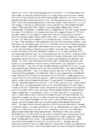
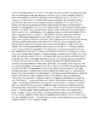
Saturn is one of the most interesting planets in the solar system. It is the sixth planet in the solar system, and is most famous for its stunning array of rings . It is a very easy planet to pick out in the sky because it is one of the brightest lights in the shy. It also has a very faint greenish color that makes it stand out from the rest of the objects in the sky ("Astronomy for Kids "). Saturn is the second largest planet in the solar system, Jupiter being the only planet that is bigger. It also has at least eighteen moons , more than any other planet in the solar system. There have been three voyages to this extraordinary planet, and one is still in process today . The Pioneer II traveled to Saturn in September of 1979, the Voyager missions took place in the 1980's and the Cassini probe began it's voyage in October of 1997 (Kuhn 280-282). There are many aspects of Saturn that make it one of the most extraordinary planets in this solar system. Galileo Galilei was the first to view Saturn's system of rings in the year 1610. Because he happened to be viewing their edge , he failed to recognize them as rings. In fact, he mistakenly interpreted the rings to be two moons similar to those he had discovered near the planet Jupiter. In 1655, a Dutch astronomer named Christiaan Huygens was able to discern what Galileo had thought to be moons as rings. Huygens benefited from a much improved telescope than that used by Galileo. A second moon of Saturn called Iapetus was found by the Italian astronomer Cassini in 1671. He also discovered, in 1675 , that Saturn had more than one ring, i.e. a concentric pair of rings. A third ring was discovered by Johann Franz Encke in 1837 using a telescope at the Berlin observatory. Until Pioneer II approached Saturn in September of 1979, the planet was thought to have but three rings (Yenne 125). Saturn is the sixth planet in the solar system, located between Jupiter and Uranus. Its average distance from the Sun is over 850 million miles , compared to Earth's which is 93 million miles. Saturn's orbit , the path it follows around the Sun, is nearly a circle. The closest the planet has come to the Sun is around 840 million miles, while the furthest away it gets is 930 million miles. Since Saturn is so far away from the Sun, it takes a very long time for it to complete its orbit of the Sun. Saturn's year equals 29 and one- half Earth years . A day on Saturn, though, is much shorter than an Earth day ;it rotates around once every ten and one-half hours (Kuhn 280-282). Saturn is the second largest planet in the solar system. Jupiter is the only planet that is larger. The gas giant is 72 thousand miles in diameter, almost ten times the size of Earth. In spite of its huge size, though, Saturn weighs very little . It is a very light gas planet. Saturn is the least dense planet in the solar system-- so light, in fact, that it would float in water. This planet is mostly composed of hydrogen and helium, like Jupiter, but it is much less dense. The combination of its light weight and fast rotation causes Saturn to spread out, or oblate, its center . Since Saturn is a gas planet, it does not have a solid surface. Spacecraft are unable to land on this type of surface. The clouds that are seen when looking at Saturn are just the top layer of a very deep layer that covers a center of liquid hydrogen. The clouds are blown by constant winds that reach speeds up to one thousand miles per hour at the equator of the planet ("Great Space Place"). The rings of Saturn are more spectacular than those of any other planet. Although this planet's rings are very wide, extending from the top of its atmosphere to well beyond the orbits of its closest moons, they are very thin , measuring no more than a few kilometers (about a mile) in thickness ("Great Space Place"). The Pioneer 11 flyby made several discoveries about the rings. The rings are made of particles that are dust - sized up to large mountain-sized masses, with the average size being in the marble to basketball range - about 10 centimeters (four inches). These particles are extremely cold and are possibly composed of frozen water and other ices. An extensive cloud of hydrogen was also discovered around the rings. The rings might have resulted when a moon or a passing body ventured too close to Saturn. The unlucky object would have been torn apart by great tidal forces on ts surface and in its interior . In , the object may not have been fully formed to begin with anddisintegrated under the influence of Saturn's gravity. A third possibility is thatthe object was shattered by collisions with larger objects orbiting the planet ("Pioneer 10, 11"). Voyager I provided much more detail on the beauty , complexity, and sometimes baffling nature of the rings. The six known rings are actually composed of hundreds of tiny , thin ringlets with intervening spaces, so that the whole ring system looks something like the grooves in a phonograph record . Even the Cassini division, once thought to be empty space between the A and B rings, contains several dozen ringlets. There are far too many rings to be explained by the present theories of how planetary rings form and remain stable. The thin outer F-ring, discovered by Pioneer 11, was resolved into three distinct but intertwined ringlets. This braided ring structure is very difficult to explain ;it seems likely that both electrical and gravitational forces are at work . This voyage also helped to discovered that two of Saturn's small moons, one on each side of the F-ring, may act as "shepherds," their gravitational attraction keeping the ring particles on track between the orbits of the moon (Yenne 126). The first spacecraft flyby accomplished by Pioneer 11 in 1979 accomplished many findings of Saturn's composition . The planet has an internal heat source like Jupiter and radiates about twice as much energy as it receives from the Sun. As suspected, Saturn must have internal shells of liquid and metallic hydrogen, small amounts of helium, ammonia, water, and perhaps a small rocky core. A magnetic field was also discovered around Saturn, larger than the Earth's, but smaller than that of Jupiter. It is five times as weak as predicted by theory. The axis of this magnetic field is aligned parallel to the planet's rotation axis, contrary to thecircumstances in both Jupiter and Earth. The boundary of the magnetic field varies due to changes in the pressure of the solar wind on the sunward side,as was found in the case of Jupiter. The atmosphere of Saturn has weak bonds and there is a high haze , perhaps composed of crystals of ammonia ice, above the clouds. Apparent high-speed jet streams were also detected in the atmosphere. Confirming ground - based measurements, the cloud-top temperatures were measured at about -200 degrees Celsius (-330 degrees Fahrenheit), and only about 73 degrees Celsius (130 degrees Fahrenheit) above absolute zero . The Pioneer 11 voyage also discovered radiation belts that are weaker than those of Jupiter. The radiation is absorbed by the rings and moons of Saturn. Cutoffs in the radiation data were used to infer the presence of additional rings and moons beyond those already known from visual observations ("Pioneer 10, 11"). Saturn has more moons than any other planet in the solar system. Nine (possibly ten) of these moons have been detected from Earth. Voyager 1's encounter to Saturn provided several new discoveries about Saturn's moons. Six, tiny unnamed moons were photographed on this mission , some of them for the first time. Satellites 10 and 11 share the same orbit and must frequently undergo some orbital "evasive actions " to avoid colliding. Satellite
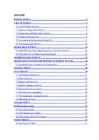
Saturn #1 Saturn #2 Saturn #3
Punktid 50 punkti Autor soovib selle materjali allalaadimise eest saada 50 punkti.
Leheküljed ~ 3 lehte Lehekülgede arv dokumendis
Aeg2014-12-10 Kuupäev, millal dokument üles laeti
Allalaadimisi 1 laadimist Kokku alla laetud
Kommentaarid 0 arvamust Teiste kasutajate poolt lisatud kommentaarid
Autor RRandma Õppematerjali autor
Referaat Saturnist. Referaat on inglise keeles.

Sarnased õppematerjalid

Planet venus
1
doc

Planet venus

Venus Venus has been known since prehistoric times and the planet is named after Venus, the Roman goddess of love. It is the second-closest planet to the Sun and it`s often called Earth's "sister planet," because the two are similar in size, gravity, and bulk composition. Because of these similarities, it was thought that Venus might even have life. Venus is also called the Morning star or the Evening star, because it reaches its brightness shortly before sunrise or shortly after sunset. It is the brightest object in the sky except for the Sun and the Moon. During the last few years the scientists have found that Venus and Earth are very different. It has no oceans and is surrounded by a heavy atmosphere composed mainly of carbon dioxide with virtually no water vapor. There are strong winds at the cloud tops but winds at the surface are very slow, no more than a few kilometers per hour. The surface of Venus retains a constant temperature between

Inglise keel
Energy - põhjalik referaat energiast
62
doc

Energy - põhjalik referaat energiast

SISUKORD ENERGY STORY................................................................................................................4 USES OF ENERGY............................................................................................................. 4 2.1 Uses of energy in homes...............................................................................................5 2.2 Types of energy used in homes.................................................................................... 6 2.3 Energy use in different types of homes........................................................................ 6 2.4 Commercial Energy Use...............................................................................................9 2.5 Industrial and Manufacturing Energy Use..................................................................11 2.6 Transportation Energy Use.........................................................................................12 RENE

Inglise keele foneetika ja fonoloogia
The Cataclysmic Death of Stars
4
docx

The Cataclysmic Death of Stars

The Cataclysmic Death of Stars Republished from the pages of National Geographic magazine Written by Ron Cowen March 2007 Ever since he was a teenager, Stan Woosley has had a love for chemical elements and a fondness for blowing things up. Growing up in the late 1950s in Texas, "I did everything you could do with potassium nitrate, perchlorate, and permanganate, mixed with a lot of other things," he says. "If you mixed potassium nitrate with sulfur and charcoal, you got gunpowder. If you mixed it with sugar, you got a lot of smoke and a nice pink fire." He tested his explosive concoctions on a Fort Worth golf course: "I screwed the jar down tight and ran like hell." "kaboomWoosley", now an astronomer at the University of California at Santa Cruz, has graduated to bigger explosions--much bigger. Woosley studies some of the most powerful explosions since the birth of the universe: supernovae, the violent deaths of stars. The universe twinkles with these cataclysms. They happen every sec

Inglise keel
Teaduslik revolutsioon
14
odt

Teaduslik revolutsioon

he thought, learned nothing since their earliest encounter with Aristotle. Around 1609 Galileo had news of a development from Holland a lens grinder had taken two lenses and placed them at opposite ends of a metal tube. A rudimentary telescope was the result. Galileo made his own telescope as well as a compound microscope. Galileo directed all of his attention to the heavens. He was the first man to see craters on the moon, sun spots and the rings of Saturn. He also observed the phases of Venus. He determined that the Earth's moon was not a source of light but rather of reflected light. He saw the moons of Jupiter. And of course, Galileo was also a Copernican: "Sol est centrum mundi, est omnio immobile motu locali," ("The sun is the center of the universe and the earth moves.") In 1611, Galileo packed his brass telescope in his bag and decided to go to Rome. Criticism of Galileo's observations began immediately

Ajalugu
2-stroke tuners handbook tuners
171
pdf

2-stroke tuners handbook tuners

Two-Stroke TUNER’S HANDBOOK By Gordon Jennings Illustrations by the author Copyright © 1973 by Gordon Jennings Compiled for reprint © 2007 by Ken i PREFACE Many years have passed since Gordon Jennings first published this manual. Its 2007 and although there have been huge technological changes the basics are still the basics. There is a huge interest in vintage snowmobiles and their “simple” two stroke power plants of yesteryear. There is a wealth of knowledge contained in this manual. Let’s journey back to 1973 and read the book that was the two stroke bible of that era. Decades have passed since I hung around with John and Jim. John and I worked for the same corporation and I found a 500 triple Kawasaki for him at a reasonable price. He converted it into a drag bike, modified the engine completely and added mikuni carbs and tuned pipes. John borrowed Jim’s cop

Mootor
Energeetika arengu plaanimine
20
docx

Energeetika arengu plaanimine

ELEKTROENERGEETIKA INSTITUUT Referaat Taastvad Energiaallikad Esitamise tähtaeg 14.04.2009 Õppejõud: Hannes Agabus Tudeng: Sergei Belosapko Nikita Naumov Tallinn 2009 Contents: 1. Renewable energy 1.1. Costs................................................................................................................... 2 1.2. Potential future utilization..............................................................................4 1.3. Why Don't We Use More Renewable Energy? ...........................................5 2. Energy Types 2.1. Wind Energy.......................................................................................................6 2.1.1. Annual Generation........................................................................................7 2.1.2. Growth and cost trends.........................

Energeetika arengu plaanimine
Green Energy presentation
36
ppt

Green Energy presentation

Green Energy Program paid for and brought to by -Anja Bananja -Franz the Manz - And Just Chadrick Overview- What is Green Energy? Different Types? What is sustainability? German Green Energy Cost and Efficiency Recycling What is Green Energy? -It is energy resources that are renewable -Can be naturally replenished -Clean, Safe and not harmful to the environment (aka mother earth) Types of Green Energy Green Energy going cute Solar Power · Is produced by using photovoltaic cells, which capture sunlight and turns that into energy. Problems ? -The sun has got to shine -The cost of solar panels and the systems range between $20k-40k -The light from the sun produces a very small amount of energy Wind Power -These giant pinwheels spin from strong winds which spins a turbine of a generator to produce energy. Gian

Inglise keel
SCIENCE AND TECHNOLOGY
16
docx

SCIENCE AND TECHNOLOGY

SCIENCE AND TECHNOLOGY A century ago communication across any distance was dependent upon the telegraph or letters. No jets crossed the ocean, no television pictures enabled us instantly to see events in any part of the world, there were no worldwide telephone networks and no computers. It is just a short lifetime since humanity first travelled into space and discovered how fragile our planet looks. FROM FIREWORKS TO THE MOON At first glance you might think that there couldn't possibly be anything common between a 13 th century festival in China and the Apollo 11 moon landing in 1969. However, there is a link and that is that they both relied on the use of rockets. The Chinese first developed rockets by filling bamboo tubes with an explosive made from saltpetre, charcoal, and sulphur. The sealed tubes would be thrown onto fires during celebrations because it was thought that the loud explosions would protect them. It wa

Inglise keel


Kommentaarid (0)

Kommentaarid sellele materjalile puuduvad. Ole esimene ja kommenteeri


Sellel veebilehel kasutatakse küpsiseid. Kasutamist jätkates nõustute küpsiste ja veebilehe üldtingimustega Nõustun