 50 punkti
Autor soovib selle materjali allalaadimise eest saada 50 punkti.
50 punkti
Autor soovib selle materjali allalaadimise eest saada 50 punkti.
 ~ 6 lehte
Lehekülgede arv dokumendis
~ 6 lehte
Lehekülgede arv dokumendis
 2009-04-28
Kuupäev, millal dokument üles laeti
2009-04-28
Kuupäev, millal dokument üles laeti
 15 laadimist
Kokku alla laetud
15 laadimist
Kokku alla laetud
 1 arvamus
Teiste kasutajate poolt lisatud kommentaarid
1 arvamus
Teiste kasutajate poolt lisatud kommentaarid
 gregor134
Õppematerjali autor
gregor134
Õppematerjali autor
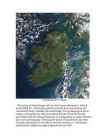
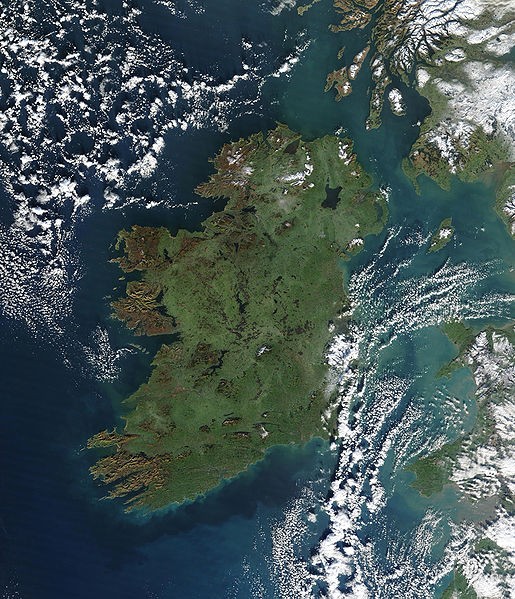
Ireland is the third largest island in Europe. It lies in between the Atlantic Ocean and the Irish Sea. Politically it is divided into a sovereign state, the Republic of Ireland, that covers about five-sixths of the island (south, east, west and north-west), and Northern Ireland, which is part of the United Kingdom, covering the northeastern sixth of the island.[1] The name 'Ireland' derives from the name Ériu (in modern Irish, Éire) with the addition of the Germanic word 'land'. The population of the island is just under 6 million (2006); just over 4.2 million in the Republic of
raped. She swept trough Southern Britain with her tribe and tortured every Roman she met. A women having power seemed unnatural to the Romans. She fought back for 2 years, but finally took poison and died. *Hadrian's Wall It was built by the emperor Hadrian and it marked the Northen border of the Roman empire. Hadrian's Wall was built, beginning in 122, to keep Roman Britain safe from hostile attacks from the Picts. The wall stretched from the North Sea to the Irish Sea. In addition to the wall, the Romans built a system of small forts called milecastles. Sixteen larger forts holding from 500 to 1000 troops were built into the wall, with large gates on the north face. To the south of the wall the Romans dug a wide ditch with high earth banks. *The Picts, Caledonia The Romans called Scotland 'Caledonia' because the dominant tribe of Picts they encountered was the Calidonii. Romans thought they were barbarian savages, but
The name "dominion" is not used anymore. 6. Which organisation unites Britain and most of its former colonies nowadays? The Commonwealth unites Britain with its former colonies. Ireland 1. Who were the early inhabitants of Ireland? Seafarers, fisheremen and hunter-gatherers from mainland Europe arrived around 8000 BC 2. When was Christianity established in Ireland? 432 AD Saint Patrick arrived in Ireland and began converting the Irish to Christianity. Who is Ireland's patron saint? Saint Patrick is Ireland's patron saint. When is his feast day? His feast day is on 17 March 3. When did the English conquest of Ireland begin? Henry II, with permission from tha Pope, sought to conquer Ireland. In 1171 he became the first English monarch to set foot on the isle. 4. Who were settled in the province of Ulster by King James I? James I settled English and Scottish Protestants in Munster and Ulster. What has this resulted in
The Royal Navy also enabled England to realize her imperialistic ambitions and defy the Pope and the Catholic powers of Europe. Henry used Parliament to establish himself as the head of the Protestant Church with the Act of Supremacy (1534). His Reformation led to the creation of the religiously distinct Anglican Church. The dissolution of the monasteries provided Henry with much needed wealth. The reign of Elizabeth I was called the Golden Age of English history, because it produced poets like Shakespeare and Spenser and prosperity for the entire nation. She also restored national unity and made England Protestant again. The discovery of America placed Britain in the centre of the world's trading routes and brilliant naval commanders (Sir Francis Drake, Sir Walter Raleigh) enabled England to dominate these trade routes. Sir Walter Raleigh is known for being the person who first brought potatoes and tobacco to Britain. The Stuarts
ESP (English for Specific Purposes) used in business, airlines, hotels etc. 4. Settlement colonies people migrated into them from Britain and started their own communities, they are the present English-speaking countries (USA, Australia, Canada, New Zealand) Trading Empire (dependencies) mainly ESL countries; British people were seen more as a small ruling class (India, Africa) 5. Australia, The USA, Canada, Sri Lanka, India & Pakistan, Irish Free State, Newfoundland, New Zealand, South Africa were the British colonies that became dominions. They were given "responsible government" and became part of the Commonwealth. The Head of State was the British monarch. Nowadays, the word "dominion" is not used. 6. The British Commonwealth of Nations freely unites Britain and its former colonies. Ireland 1. The first inhabitants were hunters and fishers from the European mainland in 6000 BC
Unlike the German invasions, the Norman invasion was small-scale. On 14 October 1066, an invading army from Normandy defeated the English at the Battle of Hastings. The battle was close and extremely bloody. At the end of it, most of the best warriors in England were dead, including their leader, King Harold. On Christmas Day that year, the Norman leader, Duke William of Normandy, was crowned king of England. He is known in popular history as “William the Conqueror” and the date is remembered as the last time that England was successfully invaded. There was no such thing as a Norman area of settlement. Instead, the Norman soldiers who had invaded were given the ownership of land and of the people living on it. A strict feudal system was imposed. 12. Magna Carta. In 1215 King John was forced to sign the document, drawn up by the noblemen of England
1666 The Great Fire of London destroys most of the city's old wooden buildings. It also destroys bubonic plague, which never reappears. Most of the city's finest churches, including St Paul's Cathedral, date from the period of rebuilding which follows. 1688 The Glorious Revolution 1690 The Presbyterian Church becomes the official Church of Scotland" The Battle of the Boyne, in which William III and the Ulster Protestants defeat James II and the Irish Catholics. EIGHTEENTH-CENTURY ✿ Politically, this century was stable. Monarch and Parliament got on quite well together. ✿ The Whigs, were the political 'descendants' of the parliamentarians - supported the Protestant values of hard work and thrift, were sympathetic to Dissenters, and believed in government by monarch and aristocracy together. ✿ The Tories, had a greater respect for the idea of the monarchy and the importance of the Anglican Church
of Normandy, was crowned the king onf England(william the conqueror) o In 1086 the domesday book was completed- a complete catalogue of who owned what in the country o The french language became dominant o The normans imposed a strict feudal system (anglo-saxons were the peasants who were under the norman nobles and barons) o Built castles, cathedrals Three facts about the history of parliament It was in the medieval period that Parliament began its gradual evolution into the democratic body which it is today. The word 'parliament', which comes from the French word parler (to speak), was first used in England in the thirteenth century to describe an assembly of nobles called together by the king. It was divided into two houses during the reign of Henry VII: the House of Commons and the House of Lords. The class system
 annaabi.ee








Kõik kommentaarid