Vajad kellegagi rääkida?
Küsi julgelt abi LasteAbi
Logi sisse

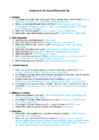
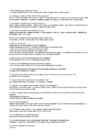
Questions for the First Philosophy Test (0)

1 Hindamata
Punktid
Questions for the First Philosophy Test
a. Introduction
1. How would you characterize Modern philosophy? Commanding outlook , power, will, Man is God.
2. How would you characterize Classical philosophy? Contemplative outlook, truth , intelligence, God is truth.  
b. Descartes
3. What is the main question that Descartes is trying to answer ? How can I be certain [sure] that I am in the truth?
4. Which are precepts of Descartes' method ? Only accept what is self-evident. Analysis . Synthesis . Enumeration.
5. Descartes will only accept one specific kind of ideas : which and why? He will only accept clear and distinct ideas that are indubitable. Because the complex ideas could then be constructed using the simple ideas.
6. How does Descartes call his method and why is it not skeptical? Methodic doubt . Because the goal of this doubt is not to be skeptical but to prove that some things can not be doubted.
7. “I think, therefore I am”. What does this phrase means? If I think, I cannot doubt my own existence.
8. What kind of idea is for Descartes the idea of God? What does it mean ? Innate idea. If God is God, he should be perfect.
9. How does Descartes prove the existence of God? The fact that I have an idea of God implies its existence. Also unicorns
10. Why God's truthfulness is important for Descartes? If God is the truth, and he created our minds, we can trust that our minds are good means to reach the truth.
11. According to Descartes, by what elements is man constituted and how are they connected? Human beings are formed by the union of a res cogitans ( thinking thing - mind/ soul ) and a res extensa (an extended thing - material substance), that are united in the pineal gland.
12. What is the main problem of Descartes philosophy? Dualism . Idea-Things; soul- body
c. Hume
13. What is the problem that Hume is trying to solve? What answer he gives to this problem? Can we be certain about anything ? He wants to show that this pretension is absolutely false.
14. What is Empiricism?
15. What is Skepticism? Skepticism is generally any questioning attitude towards knowledge , facts, opinions or beliefs stated as facts, or doubt regarding claims that are taken for granted elsewhere.
16. According to Hume, what different kind of mental perceptions can we find in human mind? Ideas(thoughts), impression(sensation and feelings ).  
17. What does Hume think about general abstract ideas? Why? There is no such thing as abstract or general ideas, properly speaking”.
18. According to Hume, what is the difference between relations of ideas and matters of fact? Matters of fact are the more common truths we learn through our experiences . Mathematical propositions assert relations between ideas, and ideas only. The truth of a mathematical proposition is independent of questions about existence.
19. What does Hume think about the notion of cause - effect ? We understand matters of fact according to causation. The notion of cause-effect is a complex idea that is made up of three more foundational ideas: priority in time, proximity in space , and necessary connection .
20. What does Hume think about the notion of substance? Hume held that since substance cannot be perceived, it should not be assumed to exist . What we call substance is simply a bundle of qualities created by our minds – it is an association of ideas. If qualities were all removed there would be nothing else there. Therefore, substance does not exist.
21. What does Hume thinks about the notions of God, the world and the self? Why? God, the world and even the self, don't exist.
22. According to Hume, what is belief and why is it important for life? Belief is a feeling , a “guide for life”, but we must accept that our knowledge will always be limited, probable and insecure.
d. Kant
23. Who said the phrase: “I had to set limits to knowledge in order to make place for faith”? Immanuel Kant
24. What is Kant's philosophy goal? Kant's goal is to save religion from reason and at the same time to save science from skepticism.
25. For Kant, what is a priori knowledge? A priori knowledge is the necessary and universal knowledge we have independent of experience , such as our knowledge of..
26. For Kant, what is a posteriori knowledge? A posteriori knowledge is the particular knowledge we gain from experience.
27. For Kant, what is synthetic a priori judgement? Why are they important? In a synthetic judgement, the predicate concept contains information not contained in the subject concept, and so is informative.
28. Why Kant believes that his philosophy is a Copernican Revolution ? According to Kant the mind of man is not passive but an active organ which molds and coordinates sensations into ideas, an organ which transforms the chaotic multiplicity of experience reported.
29. What are the pure forms of perception? Which are them ? From the external world we receive different stimuli. the sense of space, and the sense of time.
30. What are the pure forms of conception? In a second stage, the mind raises the perceptual knowledge of objects into the conceptual knowledge of relationships, sequences and laws .
31. What is the difference between noumena and phenomena? Noumena, which is the world of things-in-themselves. Phenomena are often, but not always, understood as 'appearances' or 'experiences'. These are themselves sometimes understood as involving qualia.
32. What does Kant say about metaphysics and religion?
e. Hegel
33. What is the goal of Hegel's philosophy? His goal was to reduce reality to a more synthetic unity within the system of absolute idealism , to achieve the absolute.
34. For Hegel, what is the Absolute? The Absolute is, in principle, the relation between two different things, that ties these things together.
35. What kind of process is the Absolute? Understandable. If two things are opposed, it’s a relationship between them.
36. How would Hegel characterize the idea of Nature ? Nature is no other than Spirit . Indeed it is the 'other' of the Spirit.
37. How would Hegel characterize the idea of God? God is only a very advanced form of thinking the totality . Yet God is only a limited symbol .
38. What is the connection between the Spirit and human reason? Spirit is a rationality that manifests itself in human reason.
39. What is the name of the method that Hegel uses to explain the activity of the Absolute? The dialectic method.
40. What are the consequences of Hegel's philosophy? The priority of the principle of Immanence. Excessive rationalism. The risk of pantheism.
f. Marx
41. What kind of philosopher is Marx? A materialist philosopher
42. Which are the three elements of Marxist dialectic? Thesis, antithesis, synthesis
43. For Marx, which is the only possible way to impose Socialism? Revolution of the working
44. What does it mean that man is “homo oeconomicus”? Man is solely a material being and as such his activity is solely material. Human has only material needs and everything is for the economy .
45. For Marx, what is the structure? Struggle between thesis and antithesis.
46. For Marx, what is the superstructure? The man's manner of understanding himself and interpreting his relations with the world. Synthesis ( result of thesis and antithesis)??
47. What is the cause of alienation? The cause of this alienation is found in the economic structures that uphold society, and more specifically in the relations of production ,which historically have been based on private property.
48. What should be the goal of Marxist revolution? To eliminate the causes of alienation in the hopes of creating the new man, redeemed from socioeconomic injustices.
49. Who said the phrase: “religion is the opium of the people”? Karl Marx
50. What is the communist paradise? To establish a society without classes, no private possessions and where everyone is equal.
Vasakule Paremale
Questions for the First Philosophy Test #1 Questions for the First Philosophy Test #2 Questions for the First Philosophy Test #3 Questions for the First Philosophy Test #4 Questions for the First Philosophy Test #5
Punktid 50 punkti Autor soovib selle materjali allalaadimise eest saada 50 punkti.
Leheküljed ~ 5 lehte Lehekülgede arv dokumendis
Aeg2015-02-17 Kuupäev, millal dokument üles laeti
Allalaadimisi 1 laadimist Kokku alla laetud
Kommentaarid 0 arvamust Teiste kasutajate poolt lisatud kommentaarid
Autor VikiKristina Õppematerjali autor
Kant, Hume, Hegel, Marx, Descartes. a. Introduction
1. How would you characterize Modern philosophy? Commanding outlook, power, will, Man is God.
2. How would you characterize Classical philosophy? Contemplative outlook, truth, intelligence, God is truth.

b. Descartes
3. What is the main question that Descartes is trying to answer? How can I be certain [sure] that I am in the truth?
4. Which are precepts of Descartes' method? Only accept what is self-evident. Analysis. Synthesis. Enumeration.
5. Descartes will only accept one specific kind of ideas: which and why? He will only accept clear and distinct ideas that are indubitable. Because the complex ideas could then be constructed using the simple ideas.
6. How does Descartes call his method and why is it not skeptical? Methodic doubt. Because the goal of this doubt is not to be skeptical but to prove that some things can not be doubted.
7. “I think, therefore I am”. What does this phrase means? If I think, I cannot doubt my own existence.
8. What kind of idea is for Descartes the idea of God? What does it mean? Innate idea. If God is God, he should be perfect.

Sarnased õppematerjalid

Questions for the Second Philosophy Test
4
docx

Questions for the Second Philosophy Test

Questions for the Second Philosophy Test A. Aristotle 1. According to Aristotle, what is the soul? Which are the three kinds of souls? Hing on elusolendi olemuslik vorm. Vegetatiivne, tajulik ja teadlik hing. 2. Where can we find truth and falsehood? Why? Oma teadvuses, kuna seal moodustame kontseptidest lauseid ja ideid, mida otsustamise käigus kõrvutades jõuame tõesuse ja vääruseni. 3. Which are the four causes? Aineline, vormiline, tegev ja lõplik põhjus. 4

Inglise keel
Filosoofia küsimused
6
pdf

Filosoofia küsimused

1. What does the word “philosophy” mean? The study of proper behaviour and the search for wisdom, in greek means love for wisdom 2. Is philosophy a science? Why? What kind of science it is? Yes it is. It tries to understand the meaning of reality. It’s the science of truth. Science, as it exists today, happens within the framework of philosophy. Philosophy, however, is bigger than science. It is also a form of art and discipline…... 3. Name three characteristics of Classical philosophy? deeply rooted in religious traditions ; believes that inferior was created by superior ; more positive ; seeks the real truth ; about intelligence ; reaalsuse üle mõtisklus ; believes that god is truth 4. Name three characteristics of Modern philosophy. believes that superior was created by inferior (!) ; more negative ; about will ; power ; domain of reality ; believes that knowledge is truth ; man is god 5. What was the problem that the first philosophers tried to solve?

Inglise keel
Filosoofid-kes räägivad teadusest
5
doc

Filosoofid, kes räägivad teadusest

2. Idols of the Cave: - private obsessions or preoccupations caused by education, conversation, reading throw people off the track in the search for truth 3. Idols of Market-place: - illusions due to the use of language - people tend to rely on false but plausible technical terms, which often mask the truth 4. Idols of the Theatre: - false systems of traditional philosophy, which people believe to be true - all systems are stage-plays representing worlds of their own creation - The human nature is so that if it has once adopted an opinion, it sticks to it and draws all other things to support and agree with it. - If there is something else that seems to be more true, people just ignore or reject it to be true so that the former opinion can hold true. - Example: A man was shown a picture hanging in a temple of all the people who had

Filosoofia
History of philosophy
8
docx

History of philosophy

History of Philosophy James Thurlow, Ph.D. 01.02.2012 Books to read · Plato's Republic · G.W.F. Hegel's Philosophy of History 1. Greek philosophy 2. Republic 3. Philosophy of History Ancient Greece - Ancient Greece vs. Persia (300-Herodotus) Salamis - Ancient Greece vs. Troy (Homer-screen writer)Iliad o Achilles- Hero of the heroes (main hero in Greece)- handsome, strong, brave, fast, anger(tema viga), young, bad temper o Agamemnon- son of King Atreus - Olympics - Sculptures- more lifelike, human figures come out of the stone - Greek liked physical beauty

Filosoofia
Keelefilosoofia raamat
234
pdf

Keelefilosoofia raamat

proper names, Searle's cluster theory, and the causal­historical theory. Part II, Theories of Meaning, surveys the competing theories of linguistic mean- ing and compares their various advantages and liabilities. Part III, Pragmatics and Speech Acts, introduces the basic concepts of linguistic pragmatics, includes a detailed discussion of the problem of indirect force and surveys approaches to metaphor. Part IV, new to this edition, examines the four theories of metaphor. Features of Philosophy of Language include: · new chapters on Frege and puzzles, inferentialism, illocutionary theories of meaning, and relevance theory · chapter overviews and summaries · clear supportive examples · study questions · annotated further reading · glossary Praise for the First Edition: "This exceptional text fulfils two essential criteria of a good introduc- tory textbook in the philosophy of language: it covers a broad range of

Filosoofia
Õigusfilosoofia
3
docx

Õigusfilosoofia

1. What is the object of philosophical study? The object of philosophical study is being itself on an abstract level. Everything and nothing can be or exist. Things like colour, nature, material things like a table just are, but the meaning of being in be-ing in itself is unclear. Non Material things can also be or exist. If something is, then it is a being. But what exactly is this IS that we can see or on the opposite can not see? Therefore this is one of the fundamental questions of philosophy. 2. Can you reject solipsism? Solipsism (solus ipse) means nothing exists, therefore everything is an illusion outside of our own minds. I think that it is true that we know WE as in myself exists. But i can not for certain say that the person reading this exists although it might seems like it to me. I think that you really can’t reject solipsism on the whole because you do know that you exists, but can you for certain say that anybody else does

Õiguse filosoofia
Education
14
doc

Education

retested. Some people say "it's as simple as . . . " and then name their pet peeve or passion. My view is not of an education specialist, but of one who loves sharing what I learn, and owes much to educators. Since I don't have an educational theory neatly worked-out, nor an outline of my perceptions, my intent is to address each educational ingredient that comes to my mind. After I've said what I think about each topic, readers may have a fair comprehension of my philosophy. First comes sensitivity. If a person be insensitive, be it from numbing cold, exhaustion, drugs, genetic makeup, or upbringing, then the process of education is bogged down, and results come only after great efforts. Sensitivity in my integrated meaning is broad, covering literally the senses, so that deaf and blind people are less sensitive, as well as people whose senses work perfectly, but whose receptivity or thought processes are blunted for whatever reason

Inglise keel
Teaduslik revolutsioon
14
odt

Teaduslik revolutsioon

With this in mind, the revolution in science which emerged [ kerkis esile ] in the 16th and 17th centuries has appeared as a watershed in world history. The long term effects of both the Scientific Revolution and the modern acceptance and dependence upon science can be felt today in our daily lives. And not with standing some major calamity science and the scientific spirit will be around for centuries to come. There are numerous questions we could ask ourselves about the Scientific Revolution: why it occurred? what forces produced it? why was it so revolutionary? why was it stronger in the Protestant North? But to my mind, before we can even begin to cope with these questions we must ask a much more basic question: What is science? [ On mitmeid küsimusi, mida me võiksime küsida endalt selle revolutsiooni kohta: Miks see toimus? Mis seda mõjutasid

Ajalugu


Kommentaarid (0)

Kommentaarid sellele materjalile puuduvad. Ole esimene ja kommenteeri


Sellel veebilehel kasutatakse küpsiseid. Kasutamist jätkates nõustute küpsiste ja veebilehe üldtingimustega Nõustun