Leidsid 33 sarnast õppematerjali, mis on seotud failiga "Questions for the First Philosophy Test". Need materjalid aitavad sul teemat sügavamalt mõista.
idea, ideas, thing, knowledge, descartes, hume, kant, thesis, philosophy, truth, marx, between, cause, exist, hegel, goal, things, fact, relations, them, method, doubt, material, there, experience, accept, call, mean, notion, concept, spirit, synthesis, phrase, important, minds, different, such, matters, understand, belief, religion, reason, revolutionQuestions for the Second Philosophy Test A. Aristotle 1. According to Aristotle, what is the soul? Which are the three kinds of souls? Hing on elusolendi olemuslik vorm. Vegetatiivne, tajulik ja teadlik hing. 2. Where can we find truth and falsehood? Why? Oma teadvuses, kuna seal moodustame kontseptidest lauseid ja ideid, mida otsustamise käigus kõrvutades jõuame tõesuse ja vääruseni. 3. Which are the four causes? Aineline, vormiline, tegev ja lõplik põhjus. 4. What is the name that Aristotle gives to his god? Noesis Noeseos – mõtte mõte. B. Saint Augustine 1. What is evil for the Manicheans? „Teine jumal“. 2. How does Augustine define evil? Millegi, nt headuse, puudumisena. 3
1. What does the word “philosophy” mean? The study of proper behaviour and the search for wisdom, in greek means love for wisdom 2. Is philosophy a science? Why? What kind of science it is? Yes it is. It tries to understand the meaning of reality. It’s the science of truth. Science, as it exists today, happens within the framework of philosophy. Philosophy, however, is bigger than science. It is also a form of art and discipline…... 3. Name three characteristics of Classical philosophy? deeply rooted in religious traditions ; believes that inferior was created by superior ; more positive ; seeks the real truth ; about intelligence ; reaalsuse üle mõtisklus ; believes that god is truth 4. Name three characteristics of Modern philosophy. believes that superior was created by inferior (!) ; more negative ; about will ; power ; domain of reality ; believes that knowledge is truth ; man is god 5. What was the problem that the first philosophers tried to solve?
- animals and plants do things for the sake of an end - plants grow leaves to provide shade for fruit - has roots downwards for nourishment - spiders have a web to catch flies Bacon - argues against Aristotle and his theory of syllogism (deduction) - Deduction: All men are mortal - Socrates is a man - Therefore, Socrates is mortal - deduction from self-evident axioms had led to little or no new scientific knowledge - it only leads to what we already knew or confuses us to make false assumptions - to understand nature properly an empirical method (based on observation) is needed - There are 4 idols (obstacles) to true knowledge 1. Idols of he Tribe: - false illusions caused by the human nature - argues against Protagoras ("man is the measure of all things") - all perceptions of senses and mind are according to the measure of the
History of Philosophy James Thurlow, Ph.D. 01.02.2012 Books to read · Plato's Republic · G.W.F. Hegel's Philosophy of History 1. Greek philosophy 2. Republic 3. Philosophy of History Ancient Greece - Ancient Greece vs. Persia (300-Herodotus) Salamis - Ancient Greece vs. Troy (Homer-screen writer)Iliad o Achilles- Hero of the heroes (main hero in Greece)- handsome, strong, brave, fast, anger(tema viga), young, bad temper o Agamemnon- son of King Atreus - Olympics - Sculptures- more lifelike, human figures come out of the stone - Greek liked physical beauty
proper names, Searle's cluster theory, and the causalhistorical theory. Part II, Theories of Meaning, surveys the competing theories of linguistic mean- ing and compares their various advantages and liabilities. Part III, Pragmatics and Speech Acts, introduces the basic concepts of linguistic pragmatics, includes a detailed discussion of the problem of indirect force and surveys approaches to metaphor. Part IV, new to this edition, examines the four theories of metaphor. Features of Philosophy of Language include: · new chapters on Frege and puzzles, inferentialism, illocutionary theories of meaning, and relevance theory · chapter overviews and summaries · clear supportive examples · study questions · annotated further reading · glossary Praise for the First Edition: "This exceptional text fulfils two essential criteria of a good introduc- tory textbook in the philosophy of language: it covers a broad range of
1. What is the object of philosophical study? The object of philosophical study is being itself on an abstract level. Everything and nothing can be or exist. Things like colour, nature, material things like a table just are, but the meaning of being in be-ing in itself is unclear. Non Material things can also be or exist. If something is, then it is a being. But what exactly is this IS that we can see or on the opposite can not see? Therefore this is one of the fundamental questions of philosophy. 2. Can you reject solipsism? Solipsism (solus ipse) means nothing exists, therefore everything is an illusion outside of our own minds. I think that it is true that we know WE as in myself exists. But i can not for certain say that the person reading this exists although it might seems like it to me. I think that you really can’t reject solipsism on the whole because you do know that you exists, but can you for certain say that anybody else does
or how to prioritize the many factors. Relaying my own experience is easy: I had a standard classroom approach, supplemented by inordinate reading. In only the briefest and least memorable instances did I receive any individual tutoring. Education is commonly thought of as the job of schools. Adults cry "educate our children!" Everyone has opinions about the best way to do the job. It is of urgent importance, and all the numerous factors are much studied, debated, and new (or old) ideas continually tested or retested. Some people say "it's as simple as . . . " and then name their pet peeve or passion. My view is not of an education specialist, but of one who loves sharing what I learn, and owes much to educators. Since I don't have an educational theory neatly worked-out, nor an outline of my perceptions, my intent is to address each educational ingredient that comes to my mind. After I've said what I think about each topic, readers may have a fair comprehension of my
I One of the most important developments in the western intellectual tradition was the Scientific Revolution. The Scientific Revolution was nothing less than a revolution in the way the individual perceives [ tajub ] the world. As such, this revolution was primarily an epistemological revolution it changed man's thought process. It was an intellectual revolution a revolution in human knowledge. Even more than Renaissance scholars who discovered man and Nature, the scientific revolutionaries attempted to understand and explain man and the natural world. Thinkers such as the Polish astronomer Nicholas Copernicus(14731543), the French philosopher René Descartes(15961650) and the British mathematician Isaac Newton(16421727) overturned the authority of the Middle Ages and the classical world. And by authority I am not referring
1. Is the argument valid? An argument is valid if it is impossible for its premise(s) to be (all of them) true and its conditions false. In a valid argument, if the premises are all true, then the conclusion is necessarily true. Soundness An argument might be valid even when some or all its premises are false and/or its conclusion is false. No Human is mortal Aristotle is a human Therefore, Aristotle is not mortal. The validity of an argument does not guarantee the truth of its conclusion. An argument is Sound if it is valid and has (all non-superflous) true premises. Sound = Valid + (all) true premises It is important to remember the difference between valid and sound argument. A sound argument must have a true conclusion! Typology of deductive arguments The form of an argument The form of an argument is its structure of pattern of reasoning. All Birds are Animals A=Birds All A are B
· Hobbes leviathan · Locke second treatise of government · Rousseau - social contract · Montesquieu - The Spirit of the Laws · Kant idea for a universal history from a cosmopolitan point of view · Hegel - philosophy of right Key dates 1603 Shakespear's King Lear , Death of the Queen Elizabeth 1. 1618-48 The Thirty Year's War 1649 Execution of Charels 1 of England, Establishment of Oliver Cromwell's Prodecorate 1651 Hobbes' Leviathan(1588-1679) 1660 The Restoration of Charels 2. as king of England 1688 The Glorious Revolution of Willim and Mary in England 1689 John Locke publishes Two Treatises of Goverment 1707 formation of the British Parliament
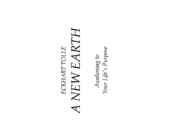
however, a critical threshold was reached, and suddenly there would have been an explosion of color and scent all over the planet – if a perceiving consciousness had been there to witness it. Much later, those delicate and fragrant beings we call flowers would come to play an essential part in the evolution of consciousness of another species. Humans would increasingly be drawn to and fascinated by them. As the consciousness of human beings developed, flowers were most likely the first thing they came to value that had no utilitarian purpose for them, that is to say, was not linked in some way to survival. They provided inspiration to countless artists, poets, and mystics. Jesus tells us to contemplate the flowers and learn from then how to live. The Buddha is said to have given a “silent sermon” once during which he held up a flower and gazed at it. After a while, one of those present, a monk called Mahakasyapa, began to smile. He
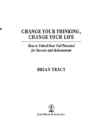
Change Your Thinking, Change Your Life shows you how to dis- cover your extraordinary inner resources and tap your incredible powers.You will learn how to attract into your life all the people and resources you need to achieve any goal you can set for yourself. You will absolutely amaze yourself as you start to achieve new and better results by employing these concepts and ideas in every- thing you do. These are the same concepts used by all big-time win- ners, self-made millionaires, and leaders in every field. In this book, you will learn a step-by-step process to great suc- cess that you will eventually implement, easily and effortlessly. This strategy for success is so logical, so inviting, and ultimately so fulfill- ing and omni-beneficial that it is virtually a breakthrough in per- sonal performance.
Mantra 9.-11. Right & wrong vidya (knowledge) - for understanding Ishvara Mantra 12.-14. Right & wrong upasana (disposition of the heart) for worshiping Ishvara Mantra 15.-18. Prayers to Ishvara to reveal Himself If I want to obey someone, I should know this person. We can know the Ishvara by the spiritual vision. Developing the spiritual vision has two parts: · cultivating the proper knowledge & then · developing the right disposition of the heart Yet to understand the Supreme Lord is not just an intellectual exercise, we have to offer both the head & the heart to the Lord. This is part of our endeavor, but ultimately it is up to the Supreme Lord to reveal Himself. So we pray to Him to reveal Himself. ISOPANISAD SECTION 1 OVERVIEW (INVO-MANTRA 3) Invo-mantra 1 What is the principle? Invo - Everything is perfect.
Broadly, the Enlightenment was an intellectual movement that changed the fundamental perspective of the masses, urging them to foster skepticism and apply scientific principles in matters of religion and morality. Its chief values were: Liberty, Democracy, Republicanism, Religious Tolerance. The movement gained momentum with the publication of landmark texts like Thomas Paine's The Age of Reason, and the Jefferson Bible, but the most influential thinker was undoubtedly John Locke, whose ideas spread to the colonies and across Europe. Main Ideas of the American Enlightenment: The Enlightenment caused a shift in the cultural and social attitudes of the people, bringing in some new and radical ideas. Republicanism: The doctrine of republicanism asserts a system of a government that is elected by the people of the nation. The roots of this ideology go back to ancient Greece, when the concept of a democratic government was examined by philosophers such as Plato and Aristotle
11. Exclusive occupancy of a private room is a basic human right. 12. Fair compensation for genius is wealth. 13. God's not perfect, so it's a pretty good bet that you're not, either. 14. Good institutions help to overcome human moral inertia. 15. I am not one of your little friends. 16. If a dimension is anywhere it's everywhere. 17. If God's not crazy, why are you? 18. If one makes a promise one shouldn't have made it cannot stand against the obligation to do the right thing. 19. If you odn't give a certain amount of attention to filtering distractions, every distraction is a catastrophe. 20. If you don't know what your duty is, your duty is to find out. 21. If you're not an animal, then you must be a vegetable. 22. If you want to get along you have to get along with those who don't want to get along. 23. If you whine whenever anybody messes with your crutches you can't claim not to be crippled. 24. I hate an unfair fight, so I need to be ganged up on. 25
His reaction to the changing world, this is the most intimate and subjective part of the novel, the camera eye. All these four sections make up the very diverse and complex narrative structure of the novel. ,,42 Parallel" 1900 to 1917. Although the novel was published on 1930, it represents the young nations hopes. Hopes for the 20th century and most of the heros are chosen from the working class movement and the faith of these people is mostly unfortunate and they are chosen to illustrate the idea that american sociaty distorts and prostitutes his talents. Camera eye section deal with dos passos's own childhood. The protagonist of the whole trilogy is Jay Ward Moorehouse. He is the protagonist, he is very modest origin, son of the railway worker, seems to be typical example of american drea, selfmade man. Marries Annabel, but quicly divorces, tries to manipulate people, joins the right clubs, where he can meet other rich persons. Marries again for fortune
British Literature in the 20th-21st Century REVISION QUESTIONS 1. The Contradictory, diverse, chaotic 20th century. New developments in science and philosophy. The essence and influence of Freudian theory. Contradictory, diverse, chaotic 20th c- simultaneous rejection and invocation of the past. While modernists apotheosized the creative geniuses of the past, they also rejected old poetic forms. Challenge old and established beliefs and more and more people had access to books and education more people went to universities. profound change in morals: · No universal value and perspective on things
Happiness is something long-term and is more 'part' of a person than an experience its senses undergo. Utilitarianism believes a certain action should result in maximum happiness for the biggest group of people. The government should always think of the interests of the population. Eudemonism and hedonism are however more focused on the individual. Here, classical utilitarianism 1 justifications will be discussed (Ibid.). Classic utilitarianism departs from the idea that there are two intrinsic values, pain and happiness. Jeremy Bentham believed that happiness includes wellbeing and absence of pain. It was him who defined that utility holds that the good is what produces most happiness for the most amount of people. "The greatest happiness of the greatest number" was called the "Greatest happiness principle" and was according to him the base for moral and legislation. What was not considered was that people would
An analysis of the problem of Political Power Written by: Katre Kikkas Introduction It is said that in the political philosophy there are only two questions: ,,Who can have what?" and ,,Who will decide over it?". It is not exactly like that but it is quite close to the trough, to begin with. The first question includes material amenity's, and dividing rights and liberties.(Wolff, 1996) What is power? It is ability to influence others to do something they otherwise would not. Also, others can be affected with threats and force. (Kilp, 2010) Political power includes also right to force the others and to punish them if
TV in these familiar lines from Romeo and Juliet: But soft! what light through yonder window breaks? It speaks, and yet says nothing. In Othello, which, as much as King Lear, is concerned with the torment of people transformed by illusions, there are these lines that bespeak Shakespeare's intuition of the transforming powers of new media: Is there not charms By which the property of youth and maidhood May be abus'd? Have you not read Roderigo, Of some such thing? In Shakespeare's Troilus and Cressida, which is almost completely devoted to both a psychic and social study of communication, Shakespeare states his awareness that true social and political navigation depend upon anticipating the consequences of innovation: The providence that's in a watchful state Knows almost every grain of Plutus' gold, Finds bottom in the uncomprehensive deeps, Keeps place with thought, and almost like the gods
g. “Murder in the Cathedral” (1935). Also a critic – criticism and poetry become almost indistinguishable. Virginia Woolf Virginia Woolf, nee Stephen (1882-‐1941) – modernist, one of the most innovative writers of her age, influential theorist. Great influence on feminist ideas. Strong visual quality of works. Bloomsbury group – English writers, philosophers and artists; met between about 1907 (though the Stephens already moved to Bloomsbury in 1904) and 1930 at the Bloomsbury house in the Bloomsbury district of London
special? The list might be smaller than it once was, but there are some traits of ours that no other creature on Earth can match. No animal can get close to the devastation humans can cause (Credit: Thinkstock) No animal can get close to the devastation humans can cause (Credit: Thinkstock) Ever since we learned to write, we have documented how special we are. The philosopher Aristotle marked out our differences over 2,000 years ago. We are "rational animals" pursuing knowledge for its own sake. We live by art and reasoning, he wrote. Much of what he said stills stands. Yes, we see the roots of many behaviours once considered uniquely human in our closest relatives, chimpanzees and bonobos. But we are the only ones who peer into their world and write books about it. We see the roots of many behaviours once considered uniquely human in our closest relatives "Obviously we have similarities. We have similarities with everything else in
The Essay Writing Manual Brain Storming The process of writing the application essay can be broken into five very basic parts: Brainstorming Selecting the essay topic Writing the essay Revising the essay Coming up with the final draft 1. BRAINSTORMING: Brainstorming is the process of coming up with ideas spontaneously from free flowing writing or talking. To brainstorm, you can simply sit down with a pen and jot down every idea that comes into your head. Another approach is to simply start writing and see where you end up. Record as much information as you can recall, such as schools attended, courses taken, jobs held, research projects undertaken. Work on taking yourself deeper into the introspection process by tackling more specific topics. Here are some questions you might want to consider: What am I like? How do my friends characterize me? What are my personality traits?
A woman who would please her husband's eyes Alone, wants no such wealth of fineries. CLEANTE But, madam, after all . . . MADAME PERNELLE Sir, as for you, The lady's brother, I esteem you highly, Love and respect you. But, sir, all the same, If I were in my son's, her husband's, place, I'd urgently entreat you not to come Within our doors. You preach a way of living That decent people cannot tolerate. I'm rather frank with you; but that's my way-- I don't mince matters, when I mean a thing. DAMIS Mr. Tartuffe, your friend, is mighty lucky . . . MADAME PERNELLE He is a holy man, and must be heeded; I can't endure, with any show of patience, To hear a scatterbrains like you attack him. DAMIS What! Shall I let a bigot criticaster Come and usurp a tyrant's power here? And shall we never dare amuse ourselves Till this fine gentleman deigns to consent? DORINE If we must hark to him, and heed his maxims, There's not a thing we do but what's a crime;
ELT Methodology (FLGR.01.041) 27.12.2012 Home Assignments. I Youtube clips: · A vision of K-12 students I personally think that Estonian learners are also digital learners. They spend more time at the computers or laptops or iPads etc. than read books or move outside. And another thing is that teachers are less capable in using technological appliances. But the latter mentioned fact is an advantage for us teachers as well. It gives us an opportunity to provide our students to experience success. They can help and assist us if we need some technological help. Another thing is that in schools, in classes generally students are not allowed to use their appliances, so it means they have to communicate verbally as well. I
shooting, then looking down to pick another ball off the floor. · In contrast, another REM period in which the eye movements were mostly from side to side, produced a dream in which the subject watched two people throwing tomatoes at each other. Dreams as Cognition: Dreams reflect what we know, what we have experienced, remembered, thought about- activities psychologists call 'cognition'. Components of the dream were surely drawn from dreamer's own knowledge, which contains info about flying or tea or car crash etc. Some psychologists have founded: people who remember more of their dreams are more likely to have better and sharper visual mental images in their waking life; perhaps their dreams are more memorable becaus they are experienced in a more vivid pictorial form. Another factor: the extent to which the dream experience is interfered with by what happens immediately after the sleeper awakes. Dreams and Social Behavior:
maintaining our property, which to everyone but us is a major part of their investment and retirement and retirement portfolio. The blame game has become a permanent part of our lives to the exclusion of any other solution that could be more viable in solving our problems. It has become the most productive part of our lives, because without it the African cannot really point to much that they are in charge of producing. It is better to blame others than to confront the truth of our being responsible for whatever has happened to us as an African race. I decided to write ‘Capitalist Nigger’ to open a debate on the state of the African race. But in doing so, my intention was not to treat my own contribution to the debate with kid gloves. It is to tell it like it is, the truth and nothing but the truth. My observations are bound to infuriate a lot of my people. Even the title of the title of the book is bound to make a lot of people angry
Who's there? Enter HORATIO and MARCELLUS HORATIO Friends to this ground. MARCELLUS And liegemen to the Dane. FRANCISCO Give you good night. MARCELLUS O, farewell, honest soldier: Who hath relieved you? FRANCISCO Bernardo has my place. Give you good night. Exit MARCELLUS 5 Holla! Bernardo! BERNARDO Say, What, is Horatio there? HORATIO A piece of him. BERNARDO Welcome, Horatio: welcome, good Marcellus. MARCELLUS What, has this thing appear'd again to-night? BERNARDO I have seen nothing. MARCELLUS Horatio says 'tis but our fantasy, And will not let belief take hold of him Touching this dreaded sight, twice seen of us: Therefore I have entreated him along With us to watch the minutes of this night; That if again this apparition come, He may approve our eyes and speak to it. HORATIO Tush, tush, 'twill not appear. BERNARDO Sit down awhile; And let us once again assail your ears,
Philip Larkin’s Poetry: Themes, Form, Style, Imagery and Symbolism Author: Sandra Olivares González Tutor: Jesús Marín Calvarro Degree in English Studies, English Department, Faculty of Philosophy and Letters, University of Extremadura Cáceres, 29th January 2016 Philip Larkin’s Poetry: Themes, Form, Style, Imagery and Symbolism The aim of this work is to obtain some characteristics of the poetry of Philip Larkin, such us the origin of his themes, the way in which he writes his poems and the symbolism he uses (which is a very controversial topic because some assume that he
Actually, it isn't my story; it's about mother turkeys, and it belongs to the relatively new science of ethology-the study of animals in their natural settings. Turkey mothers are good mothers-loving, watchful, and protective. They spend much of their time tending, warming, cleaning, and huddling their young beneath them; but there is something odd about their method. Virtually all of this mothering is triggered by one thing: the "cheep-cheep" sound of young turkey chicks. Other identifying features of the chicks, such as their smell, touch, or appearance, seem to play minor roles in the mothering process. If a chick makes the cheep-cheep noise, its mother will care for it; if not, the mother will ignore or sometimes kill it. The extreme reliance of maternal turkeys upon this one sound was dramati- cally illustrated by animal behaviorist M. W. Fox (1974) in his description of an ex-
In the case of Clive Wearing, it was impossible for him to sign any kind of consent, so his wife took the responsibility for him. His name and personal information have been revealed in many television podcasts and his wife wrote a book about him. In experiments researcher often deliberately use deception and can put participants in unpleasant situations (e.g. watching an unpleasant film). Evaluate schema theory with reference to research studies. Schema is a network of knowledge, beliefs and expectations about a particular aspect of the world. Schemas can describe how specific knowledge is organized and stored in memory. Schema theory has been used to explain memory processes. Memory processes are divided into three main stages: 1) Encoding: transferring sensory information into a meaningful memory. 2) Storage: retaining information over time / creating a biological trance. 3) Retrieval: using the stored information.
FGI 1811 Proseminar (Irina Ladusseva) 2.0 AP Kab. 420 03.09.2002. Writing a term paper (this spring) and graduation paper. To get a pass: one written task (part of introduction, thesis statement) Term paper should be printed (20-25 pages long). Graduation paper should be printed (50-60 pages long). First write term paper, and choose a topic right now (theme of term paper later will be developed into graduation paper). Rights: we have a right to have a supervisor. Supervisor writes on the front page "Lubatud kaitsmisele". You need time to: 1. read the theory 2. collect material 3. regularity (1-2 hours a day deal with your paper)
continue as previously. Kitty goes with her mother to a resort at a German spa to recover from her ill health. There they meet the Pietist Madame Stahl and the saintly Varenka, her adopted daughter. Influenced by Varenka, Kitty becomes extremely pious, but is disillusioned by her father`s criticism. She then returns to Moscow. Part 3 Levin continues his work on his large country estate, a setting closely tied to his spiritual thoughts and struggles. Levin wrestles with the idea of falseness, wondering how he should go about ridding himself of it, and criticising what he feels is falseness in others. He develops ideas relating to agriculture and the unique relationship between the agricultural labourer and his native land and culture. He believes that the agricultural reforms of Europe will not work in Russia because of the unique culture and personality of the Russian peasant. Stiva stays with Levin on his country estate when he makes a sale of a plot of land,
 annaabi.ee