Vajad kellegagi rääkida?
Küsi julgelt abi LasteAbi
Logi sisse

Kosmilised kiired (0)

5 VÄGA HEA
Punktid

Esitatud küsimused

  • Mis on kosmilised kiired?
  • Kust need tulevad?

  • Häädemeeste Keskkool
    Kristen Sepp
    KOSMILISED KIIRED
    Referaat
    Juhendaja: Raimo Pruul
    Häädemeeste 2012


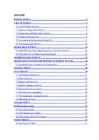
    Sisukord


    Mis on kosmilised kiired? 2
    Kust need tulevad? 3
    Primaarkiirgus 4
    Sekundaarkiirgus 5
    Ajalugu 6
    Kasutatud allikad 7
    LISA 1 8
    What are cosmic rays? 8
    Where do they come from? 8
  • Mis on kosmilised kiired?


    Kosmilisteks kiirteks nimetatakse suure energiaga osakesi, mis Maa atmosfääri sattudes põrkavad sealsete aatomitega ja tekitavad terve laviini uusi osakesi. Üldlevinud arusaama kohaselt peaks niisugused osakesed Maale jõudma hajusalt, st. igast suunast umbkaudu ühepalju. Seda põhjendatakse nende laenguga, mis tingib osakeste kaldumise nii meie galaktika kui Päikese magnetväljades. Keeruliste magnetvälja konfiguratsioonide korral peaks see tagama osakeste hajumise ühtlaseks fooniks.[1]
    Kosmilised kiired on põhiliselt aatomi osad: elektronid, prootonid ja aatomi tuumad mille ümbert on kõik elektroonid lahkunud suure kiiruse (peaaegu valguse kiiruse) tõttu, millega nad läbivad Galaktikat. Kosmilised kiired on ühed vähesed otsesed näited mateeriast väljaspoolt päikesesüsteemi. Galaktika magnetväljad, päikesesüsteem ja Maa segavad kiirte lennuteekonda sedavõrd palju, et me ei suuda leida nende allikaid Galaktikast. Kui teha taevakaart kosmiliste kiirte tugevusest oleks see täiesti ühtlane. Sellepärast peamegi määrama kiirte allika kaudselt .[2]
    Üks kaudsetest vaatlustest mida me saame teha on kosmiliste kiirte „koostis“. See võib öelda meile palju kiire allika ja selle teekonna kohta. Kosmiliste kiirte „koostis“ määratleb millised fraktsioonid kiirtest on prootonid, millised heeliumi tuumad jne. Kõik looduslikud elemendid, mis on perioodilisustabelis , esinevad kosmilites kiirtes, umbes samades kogustes nagu nad esinevad päikesesüsteemis. Aga detailsed erinevused tagavad „sõrmejälje“ kosmilise kiire allika kohta. Erinevate elementide hulga mõõtmine on võrreldavalt lihtne, kuna erinevad laengud igast nukleiidist annavad erinevaid tulemusi. Raskem mõõtmisviis, kuid parema „sõrmejälje“ annab isotoopiline koostis (sama elemendi tuum aga erineva neutronite hulgaga ). Et teha isotoopidel vahet, tuleb kaaluda igat aatomi nukleiidi mis läbib kosmilise kiire detektorit.[2]
    Umbes 90% kosmiliste kiirte tuumadest on vesinikud (prootonid), umbes 9% on heeliumid (alfa osakesed) ja kõik teised elemendid moodustavad ainult 1%. Isegi selles ühes protsendis on väga haruldasi elemente ja isotoope. Need vajavad suuri detektoreid, et koguda piisavalt osakesi selleks, et öelda midagi olulist kiire allika „sõrmejälje“ kohta. HEAO (The High Energy Astrophysical Observatory) Heavy Nuclei Experiment , millega alustati 1979, kogus ainult umbes 100 kosmilist kiirt milles esines elemente vahemikus 75-89 (grupp elemente millesse kuulub plaatinum, elavhõbe ja plii). Kasutatud detektor oli palju suurem kui enamus teaduslikke vahendeid mida kasutab NASA praegu. Et teha paremaid mõõtmisi on vaja veelgi suuremat detektorit ja mida suurem on detektor, seda suurem on selle maksumus.[2]
  • Kust need tulevad?


    Enamus galaktilisi kosmilisi kiiri on arvatavasti kiirendatud supernoovade jäänuste plahvatuslainetes. See ei tähenda, et supernoova plahvatus ise osakesed sellisele kiirusele saab. Plahvatuse jäägid, laienevad gaasipilved ja magnetväli võivad kesta tuhandeid aastaid ja see kiirendabki kosmilisi kiiri. Põrgates edasi ja tagasi jääkide magnetväljas laseb suvaliselt mõnel osakesel koguda energiat ja saada kosmiliseks kiireks. Lõpuks koguvad nad piisavalt kiirust ja jäägid ei suuda neid enam endas hoida ja nad põgenevad Galaktikasse.[2]
    Kuna kosmilised kiired lõpuks lahkuvad supernoova jääkidest, saavad nad kiirendada ainult teatud maksimaalse energiani, mis sõltub nende kiirenduse suuruse alast ja magnetvälja tugevusest. [2]
    Aeglasemad kiired, mis pärinevad Päikeselt põhjustavad virmalisi Maa atmosfääri ülemistes kihtides. [3]
    Aeglased osakesed haaratakse Maa magnetvälja poolt, mille tagajärjel nad jäävad spiraalsetele orbiitidele ümber magnetvälja jõujoonte. Lähenemisel magnetpoolusele nende liikumine aeglustub ja nad suunduvad tagasi, kuni teine magnetpoolus nad jälle tagasi peegeldab jne. Nii nad kontsentreeruvad Maa lähedale niinimetatud kiirgusvöönditesse, ohustades mingil määral kosmoselendureid ja nende aparatuuri. Need lõksupüütud osakesed on enamuses prootonid ja elektronid. Pooluste lähedal algab sisemine kiirgusvöönd 100km kõrguselt, ekvaatoril umbes 1000km kõrguselt.[3]
    Kuid siiski, kosmilisi kiiri on täheldatud palju suurema energiaga kui supernoova jäägid suudavad genereerida ja see kust need ultra -kõrged energiad tulevad on siiani suur küsimus. Võibolla need tulevad väljastpoolt Galaktikat, aktiivsetelt galaktilistelt tuumadelt, kvasaritelt (üliere objekt meie universumi äärel, mis kiirgab suurel hulgal energiat) või radioaktiivsete kiirte puhangust.[2]
  • Primaarkiirgus


    Primaarkiirguse moodustavad peamiselt prootonid (u. 90%) ja alfaosakesed (u. 6%), vähem on keemiliste elementide perioodilisuse süsteemi esimese poole elementide aatomite tuumi, elektrone ja positrone. Primaarkiirguse osakeste keskmine energia on 1010 eV, kuid on ka avastatud osakesi, mille energia küündib lausa 1019 eV-ni. Primaarkiirguse energia keskmine tihedus on kaudsete hinnangute järgi Galaktikas umbes 10-13 J/m3 (10-12 erg/cm3) (elektronide ja positronide energia tihedus on ligikaudu 100 korda väiksem), raadiogalaktikates (plahvatusliku evolutsiooni staadiumis olevad galaktikad) kuni 1000 korda suurem, Metagalaktikas (astronoomiainstrumentide abil vaadeldav universumiosa, lähemal asuvad galaktikad) väiksem kui 10-16 J/m3 (10-15 erg/cm3). Seega asuvad kosmilise primaarkiirguse allikad galaktikates. Oletatakse, et kosmiline kiir tekib kvasarites, supernoovades, galaktikatuumades ja teistes plahvatuslikes objektides ning saab lisaenergiat kiirendumisel kosmilistes magnetväljades (kiirendumise mehhanism ei ole veel päris selge). Ka tähed, sealhulgas Päike, tekitavad primaarkiirgust. Galaktikast pärineva kosmilise kiire intensiivsus on kõigis suundades ühesugune, kuid Maale langeva kosmilise kiirguse jaotust mõjustab Maa magnetväli (maamagnetism), mistõttu kosmilise kiire intensiivsus suureneb (u. 30%) ekvaatorist pooluse suunas. Seda ja Maa magnetvälja teisi, väiksemaid mõjusid kosmilistele kiirtele nimetatakse geomagnetilisteks effektideks. Päikese aktiisvuse miinimumi ajal langeb suurtel geomagnetilistel laiustel Maa atmosfääri umbes üks osake ruutsentimeetri kohta sekundis; Päikese aktiivsuse suurenemisel väheneb see arv kuni paar korda. Maa magnetvälja mõju kosmilisele kiirele on ka kiirgusvööndi tekkimise põhjus.[4]
  • Sekundaarkiirgus


    Sekundaarkiirgus, mis tekib Maa atmosfääris primaarkiirguse mõjul, sisaldab prootoneid, mesoneid ja müoone ( kalk komponent) ning elektrone, positrone ja footoneid (pehme komponent). Üks energiarikas primaarosake kutsub harilikult esile terve sekundaarosakeste valangu. Umbes 70% merepinnani jõudvatest kosmilistest kiirguste osakestest on kalgi komponendi, ülejäänud pehkme komponendi osakesed.[4]
  • Ajalugu


    20. sajandi algul avastati õhu ionisatsioon, mille põhjust ei teatud. 1912-13 tegid V. F. Hess ja temast sõltumatu saksa füüsik W. Kolhöster (1885-1946) kindlaks, et õhu ionisatsiooniaste maapinnast kaugenemisel kasvab, ja oletasid, et tegemist on kosmosest tuleva kiirguse mõjuga. Hüpoteesi kinnitasid R. Millikani ja L. Mõssovski mõõtmised 1925-1926. D. Skobeltsõn tegi 1927 aastal kindlaks, et kosmilistel osakestel on suur energia, ja avastas sekundaarosakeste valangute tekkimise, 1936-38 rakendas S. Vernov kosmilise kiirguse uurimisel kuni 30km kõrgusele tõusvaid raadiosonde. 1932 avastas C. D. Anderson kosmilises kiirguses positroni ja 1937 müooni. Valangute tekkimise nn. kaskaaditeooria sai lõpliku kuju 1937-38. Mitut tüüpi valanguid avastati 1938-46 (P. V. Auger jt.). 1947-49 tehti kindlaks, et kosmiline primaarkiirgus sisaldab aatomite tuumi umbes samas vahekorras nagu looduses leidub keemilisi elemente (S. Vernov jt.). Kosmilise sekundaarkiirguse pehmet komponenti uurisid 1944-45 aastatel A. Alihhanjan ja A. Alihhanov Aragatsil ja 1945-49 rühm teadlasi D. Skolbeltsõni juhtimisel Pamiiris. Aastast 1957 rakendatakse kosmilise kiirguse uurimisel Maa tehiskaaslasi jt. kosmoselennuaparaate. 1958 avastati Maa kiirgusvöönd, mille ehitust on pidevalt täpsustatud.[4]
  • Kasutatud allikad


  • http://www.fyysika.ee/uudised/?p=974
  • http://imagine.gsfc.nasa.gov/docs/science/know_l1/cosmic_rays.html (Tõlkis Kristen Sepp, originaaltekst: Lisa1 )
  • Füüsika õpik 12. klassile, Ain Ainsaar, lk 49 Kosmilised kiired, lõik 4 ja 5, Tallinn „Koolibri“ 1996
  • Eesti Nõukogude Entsüklopeedia 4, Tallinn 1972
  • LISA 1

  • What are cosmic rays?


    Galactic cosmic rays (GCRs) are the high-energy particles that flow into our solar system from far away in the  Galaxy . GCRs are mostly pieces of atoms:protonselectrons, and atomic nuclei which have had all of the surrounding electrons stripped during their high- speed (almost the speed of light) passage through the Galaxy. Cosmic rays provide one of our few direct samples of  matter from outside the solar system. The magnetic fields of the Galaxy, the solar system, and the Earth have scrambled the flight paths of these particles so much that we can no longer point back to their sources in the Galaxy. If you made a map of the sky with cosmic ray intensities, it would be completely uniform. So we have to determine where cosmic rays come from by indirect means .
    One of the indirect observations we can make is the " composition " of GCRs. This can tell us a lot about the GCR sources and the cosmic rays' trip through the Galaxy. The "composition" of cosmic rays describes what fraction of cosmic rays are protons, what fraction are helium nuclei, etc. All of the natural  elements in the periodic table are present in cosmic rays, in roughly the same proportion as they occur in the solar system. But detailed differences provide a "fingerprint" of the cosmic ray's source. Measuring the quantity of each different element is relatively easy , since the different charges of each nucleus give very different signatures. Harder to measure, but a better fingerprint, is the isotopic composition (nuclei of the same element but with different numbers of neutrons). To tell the isotopes apart involves, in effect, weighing each atomic nucleus that enters the cosmic ray detector.
    About 90% of the cosmic ray nuclei are  hydrogen  (protons), about 9% are helium (alpha particles), and all of the rest of the elements make up only 1%. Even in this one percent there are very rare elements and isotopes. These require large detectors to collect enough particles to say something meaningful about the "fingerprint" of their source. The HEAO Heavy Nuclei Experiment, launched in 1979, collected only about 100 cosmic rays between element 75 and element 87 (the group of elements that includes platinum, mercury, and lead ), in almost a year and a half of flight, and it was much bigger than most scientific instruments flown by NASA  today . To make better measurements requires an even larger instrument , and the bigger the instrument, the greater the cost .
  • Where do they come from?


    Most galactic cosmic rays are probably accelerated in the blast waves ofsupernova remnants. This doesn't mean that the supernova explosion itself gets the particles up to these speeds. The remnants of the explosions, expanding clouds of gas and magnetic field, can last for thousands of years, and this is where cosmic rays are accelerated. Bouncing back and forth in the magnetic field of the remnant randomly lets some of the particles gain energy, and become cosmic rays. Eventually they build up enough speed that the remnant can no longer contain them , and they escape into the Galaxy.
    Because the cosmic rays eventually escape the supernova remnant, they can only be accelerated up to a certain maximum energy, which depends upon the size of the acceleration region and the magnetic field strength .
    However, cosmic rays have been observed at much higher energies than supernova remnants can generate , and where these ultra-high-energies come from is a big question. Perhaps they come from outside the Galaxy, from  active galactic nucleiquasars or  gamma ray bursts. Or perhaps they're the signature of some exotic new physics : superstrings, exotic dark matter, strongly-interactingneutrinos, or topological defects in the very structure of the  universe . Questions like these tie cosmic-ray astrophysics to basic particle physics and the fundamental nature of the universe.
    9
  • Vasakule Paremale
    Kosmilised kiired #1 Kosmilised kiired #2 Kosmilised kiired #3 Kosmilised kiired #4 Kosmilised kiired #5 Kosmilised kiired #6 Kosmilised kiired #7 Kosmilised kiired #8 Kosmilised kiired #9 Kosmilised kiired #10
    Punktid 50 punkti Autor soovib selle materjali allalaadimise eest saada 50 punkti.
    Leheküljed ~ 10 lehte Lehekülgede arv dokumendis
    Aeg2013-05-22 Kuupäev, millal dokument üles laeti
    Allalaadimisi 10 laadimist Kokku alla laetud
    Kommentaarid 0 arvamust Teiste kasutajate poolt lisatud kommentaarid
    Autor Kristen Sepp Õppematerjali autor
    Füüsika referaat kosmiliste kiirte kohta

    Kasutatud allikad

    Sarnased õppematerjalid

    The Cataclysmic Death of Stars
    4
    docx

    The Cataclysmic Death of Stars

    The Cataclysmic Death of Stars Republished from the pages of National Geographic magazine Written by Ron Cowen March 2007 Ever since he was a teenager, Stan Woosley has had a love for chemical elements and a fondness for blowing things up. Growing up in the late 1950s in Texas, "I did everything you could do with potassium nitrate, perchlorate, and permanganate, mixed with a lot of other things," he says. "If you mixed potassium nitrate with sulfur and charcoal, you got gunpowder. If you mixed it with sugar, you got a lot of smoke and a nice pink fire." He tested his explosive concoctions on a Fort Worth golf course: "I screwed the jar down tight and ran like hell." "kaboomWoosley", now an astronomer at the University of California at Santa Cruz, has graduated to bigger explosions--much bigger. Woosley studies some of the most powerful explosions since the birth of the universe: supernovae, the violent deaths of stars. The universe twinkles with these cataclysms. They happen every sec

    Inglise keel
    Tuuma energia
    13
    odt

    Tuuma energia

    Tartus secondary school of business Nuclear Power Helena Nulk form 11b Tartu 2009 Table of contents Introduction..........................................................................................................................................3 What is nuclear power?....................................................................................................................3 Nuclear life cycle.............................................................................................................................3 What is nuclear energy?...................................................................................................................3 What is nuclear fusion?....................................................................................................................4 What is nuclear fission?..................................

    Füüsika
    Energy - põhjalik referaat energiast
    62
    doc

    Energy - põhjalik referaat energiast

    SISUKORD ENERGY STORY................................................................................................................4 USES OF ENERGY............................................................................................................. 4 2.1 Uses of energy in homes...............................................................................................5 2.2 Types of energy used in homes.................................................................................... 6 2.3 Energy use in different types of homes........................................................................ 6 2.4 Commercial Energy Use...............................................................................................9 2.5 Industrial and Manufacturing Energy Use..................................................................11 2.6 Transportation Energy Use.........................................................................................12 RENE

    Inglise keele foneetika ja fonoloogia
    Railgun
    17
    docx

    Railgun

    Referaat Railgun Table of contents Introduction......................................................................................................................................3 1.What a railgun basically is............................................................................................................4 1.1History of railguns...................................................................................................................4 1.2Theory behind it......................................................................................................................5 1.3How a railgun works...............................................................................................................6 1.4How a railgun would work on a military ship in the future....................................................8 3. Research advances so far.............................................................................................................9

    Inglise keel
    English literature
    4
    doc

    English literature

    1. Beowulf. The dating of Beowulf is still controversial. The poem is one of the earliest and greatest monuments of the Germanic literatures. The main stories of the poem (the fights of B.) are versions of common folk-tales, but the poet also introduces many incidental stories, some of which belong to the world of ancient Germanic legend. He writes his folk-tales and legends in a web of other events, mainly set in the Baltic Kingdoms. He shows a very rich and leisurely portrayal of this Baltic world, providing many customs like the close relationship between lord and man in the war-band and others. All this encouraged the supposition that the unknown author of the poem was himself a bard of the ancient type portrayed within the poem (a lord's scoop). However, many people propose that the author could be Christian poet, perhaps a monk, versed not only in old native traditions, but also in the culture and literature of the Latin Church, and whose purpose of writin

    Inglise keel
    Saturn
    6
    docx

    Saturn

    Tallinna Tööstushariduskeskus Saturn Referaat Tallinn 2014 Sissejuhatus Saturn is one of the most interesting planets in the solar system. It is the sixth planet in the solar system, and is most famous for its stunning array of rings. It is a very easy planet to pick out in the sky because it is one of the brightest lights in the shy. It also has a very faint greenish color that makes it stand out from the rest of the objects in the sky ("Astronomy for Kids"). Saturn is the second largest planet in the solar system, Jupiter being the only planet that is bigger. It also has at least eighteen moons, more than any other planet in the solar system. There have been three voyages to this extraordinary planet, and one is still in process today. The Pioneer II traveled to Saturn in September of 1979, the Voyager missions took place in the 1980's and the Cassini probe began it's voyage in Octo

    Füüsika
    Piletid vastustega
    13
    docx

    Piletid vastustega

    Ticket No1 1)The characteristic is called output characteristic or volt-ampere charateristic of a Rectifier Diode. 2)Rectifier Diode. 3) A is called Anode and C is called Cathode. An Anode has positive potential and therefore collects electrons in the device. Cathode has negative potential and therefore emits electrons to anode. The symbol looks like an arrow that ponts from the anode to the cathode, and reminds that conventional current flows easily from the p side(anode) to the n side(cathode). BIASING. Forward biasing. If the current in a diode is too large, excessive heat will destroy the device. Even approaching the burnout current value without reaching it can shorten its life. Therefore manufacturer's data sheet specifies the maximum forward current, that diode can withstand. This average current IF is the rate a diode can handle up to the forward direction when used as a rectifier. Another entry of interest in the da

    Elektroonika jõupooljuht tehnika
    Photographic camera
    18
    docx

    Photographic camera

    2 Photographic camera & photography (SEBA)  Photographic camera is an equipment used for taking photographs (usually consisting of a lightproof box with a lens at one end and light-sensitive film at the other)  Photography is The art or practice of taking and processing photographs. 3 Context of the creation of the camera (CARLA)  The camera has been used since before Christ. The impact in society the emergence of the camera was important and shocking because it helped us capture important moments in time that can no longer be repeated and helped a lot in the field of communication. The first models of cameras were used in the years before Christ where they were used to see closely objects. After its emergence was marked a before and after in history because thanks to this artefact can capture exact moments in which a event happened. Advancing in history have improved the types of cameras, passing cameras that took several min

    Inglise keel


    Kommentaarid (0)

    Kommentaarid sellele materjalile puuduvad. Ole esimene ja kommenteeri


    Sellel veebilehel kasutatakse küpsiseid. Kasutamist jätkates nõustute küpsiste ja veebilehe üldtingimustega Nõustun