Vajad kellegagi rääkida?
Küsi julgelt abi LasteAbi
Logi sisse

Kitarrikursus algajatele 3osa-Ben Edwards (0)

1 Hindamata
Punktid
6 Part Beginners Guitar Course - Part Three
A FREE Mini Course Brought to You by
Jamorama – The Ultimate Guitar Learning Kit
Hi there and welcome to Part Three of the Beginners Mini-Course on Learning How to Play the Guitar. This mini-course gives you a taste of what's covered in Jamorama - The Ultimate Guitar Learning Kit!
In this course you will learn powerful tips and skills to get you playing the guitar with the fluency and accuracy of a professional, and by the end of it you will be able to play a full song by yourself.
Ben Edwards - Creator of Jamorama
This lesson continues on from lessons one and two. In lesson one you learnt how to start playing and how to play the chords A and D. In the second lesson you were shown how to read tab. This lesson will be similar to the second part of lesson two, however I plan to introduce you to the chord G. Once you have mastered G, we will try and practice changing between the three chords we have learnt; D, A, and G.
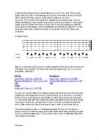
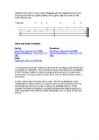
Let's take a look at the G major chord :
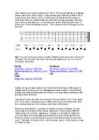
Exercise :
With this exercise , I want to get you strumming up and down. I would like to introduce to you a new technique to help with your playing. When you are practicing the lesson above I would like you to count out loud . This sounds easier than it is, but it is something you need to learn and it is an achievable skill. It works like this; on your down strum I want you to count “1,2,3,4,1,2,3,4” and on the up strum I would like you to say “and”. So you should be saying “1 and 2 and 3 and 4 and 1 and 2 and 3 and 4”. Most guitar music is broken down into beats of four . This is not something you need to worry about at this stage, but it is something you should be aware of. Try the exercise below and remember to take a look at the video if you have any problems:
G major chord
 
Tip: You can download a video or audio example of the above exercise to see and hear it for yourself. The download links are below (right click on the link and select "save as"):
Dial Up
Broadband
QuickTime - Exercise 1 (850 KB)
WindowsMediaPlayer - Exercise 1 (1.48 MB)
QuickTime - Exercise 1 (2.30 MB)
WindowsMediaPlayer - Exercise 1 (2.80 MB)
Audio
 
Audio mp3 - Exercise 1 (495 KB)
 
As you can see the difference between practicing this chord and the previous chords you have learned is that you are doubling up on the strum. The way I would like you to do this is by strumming up when you bring your hand back up. Take your time with this. Watch the video provided and try and play along. Your strum should be constant and in time. The track provided is slow and with a little pratice you should be able to play G with up and down strum.
Now we are going to work on changing between G, D and A. As above, I would like you to continue using an up and down strum and counting out loud. So if you continue with your, “1 and 2 and 3 and 4 and”, it will help make the next lesson a lot easier.
 
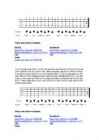
Exercise:
Next I want you to practice going from G to D. This should feel like a realitively smooth and easy chord change . It also sounds good and should with a bit of practice feel very natural. Just to remind you, you should be strumming up AND down while you perform this exercise and counting out aloud, "one and two and three and four and", in time with your strum. Note that each 'and' is written as '+' in the following exercise... This is just so that it fits properly under the TAB.
Tip: You can download a video or audio example of the above exercise to see and hear it for yourself. The download links are below (right click on the link and select "save as"):
Dial Up
Broadband
QuickTime - Exercise 2 (861 KB)
WindowsMediaPlayer - Exercise 2 (1.40 MB)
QuickTime - Exercise 2 (2.33 MB)
WindowsMediaPlayer - Exercise 2 (2.88 MB)
Audio
 
Audio mp3 - Exercise 2 (502 KB)
 
 
Adding the up and down strum may mean that this will take a little longer to master than the previous chord changing exercises in lesson 2. Don't worry though, just keep working away at it until you can play along comfortably with the audio track provided.
Now we will move onto the next exercise. This one starts in A and then goes to G. Once again I would like you continue with the up and down strum and the counting aloud as in the previous exercises in this lesson.
Before you do however, I just want to mention a couple of things. You will notice that in the video for this lesson, I play the A chord using a different method than the one that I taught you in lesson 1. I just want to make the point that there are many fingering variations to many chords and none of them are wrong . If you find a way to play a chord that is easier for you, then use it. That said, try playing the A chord the way I play it on the video and see if it works for you.
 

Video and Audio Available :
Dial Up
Broadband
QuickTime - Exercise 3 (859 KB)
WindowsMediaPlayer - Exercise 3 (1.40 MB)
QuickTime - Exercise 3 (2.33 MB)
WindowsMediaPlayer - Exercise 3 (2.87 MB)
Audio
 
Audio mp3 - Exercise 3 (502 KB)
 
 
You're doing great here ! For the final exercise we will play all three chords we have learned. Just as a quick note, when you play a group of chords in order it is called a ‘progression’ or a ‘chord progression’. In this progression we will start with a G then change to the D before finally finishing with the A. You will notice in this exercise that the A is played for twice as long as both the D and the G. I have done this so you can count out in fours as you have done in the previous exercises.

Video and Audio Available:
Dial Up
Broadband
QuickTime - Exercise 4 (839 KB)
WindowsMediaPlayer - Exercise 4 (1.32 MB)
QuickTime - Exercise 4 (2.30 MB)
WindowsMediaPlayer - Exercise 4 (2.73 MB)
Audio
 
Audio mp3 - Exercise 4 (484 KB)
 
 
I bet you never thought you would read this but; being a guitarist is a lot like being a boxer . In both disciplines your hands are your principal tools . Both guitarists and boxers must put their hands in a difficult and potentially injurious situation to perform their art.
By now you will have come across some of the difficulties and pain that come with learning the guitar. For most of you, just pressing down the strings and trying to play chords will have caused some moderate pain. Most of this pain will be in your fretting hand ( left hand for right handed players). This pain is normally felt in a few places ; pain in your fingertips, sore wrists, stiff forearms and pain between your thumb and your fingers. Most of this pain is inevitable and will pass with time.
If you have serious continued pain in your hands then you should contact a health care professional. Repetitive Strain Injuries (R.S.I) and carpal tunnel syndrome are the most common serious problems that guitarists encounter . However for the vast majority of players these problems are not an issue .
The best way to avoid pain when you are playing the guitar is to dedicate some time to warming up. There are many ways you can warm up and every guitar player has a different method. In this lesson I will show you some basic warm up techniques. These techniques will also help you build hand strength and a little bit of speed .
Unlike the previous exercises in this lesson there is no need to continue with the up and down strokes . All the strokes in these two exercises will be single notes using down strokes. It is important to note that in these warm up exercises you will be playing single notes as opposed to chords which you have been practising in this lesson and in lessons 1 and 2.
 
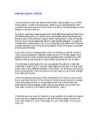
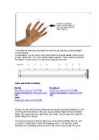
In this first warm up exercise I want you to get used to using particular fingers. If you look at the diagram below you will see that each finger is numbered. Your index finger is 1, your middle finger is 2, your ring finger is 3 and your pinky is 4.
This following exercise is excellent for warming up, improving hand strength and increasing
co-ordination. You will notice that I have tabbed out some single notes for you to play. Above the TAB I have written some numbers . These numbers indicate the fingers I would like you to use when doing the exercise.
Video and Audio Available:
Dial Up
Broadband
QuickTime - Exercise 5 (927 KB)
WindowsMediaPlayer - Exercise 5 (1.44 MB)
QuickTime - Exercise 5 (2.50 MB)
WindowsMediaPlayer - Exercise 5 (3.05 MB)
Audio
 
Audio mp3 - Exercise 5 (547 KB)
 
 
As you can see, this is just a simple ascending and descending pattern on the 1st string (thinnest string). First, you use your index finger, then your middle finger, then your ring finger and finally your pinky. The second part is just the same thing but in reverse .
This second exercise I want to show you involves three strings; the 1st, 2nd and 3rd. It is important to notice the fingering used. This may feel a little awkward and frustrating at first but this is the correct way to play the guitar. Getting in the habit of using correct fingering will pay massive dividends as you progress with your guitar playing. Once again, play this exercise with down strokes only...
Video and Audio Available:
Dial Up
Broadband
QuickTime - Exercise 6 (1.07 MB)
WindowsMediaPlayer - Exercise 6 (1.70 MB)
QuickTime - Exercise 6 (2.90 MB)
WindowsMediaPlayer - Exercise 6 (3.52 MB)
Audio
 
Audio mp3 - Exercise 6 (634 KB)
 
The two exercises shown above are excellent for warming up your hands and increasing your dexterity. If you are having severe pain when you are playing. STOP! It is much better to rest your hands and forearms for the next day's practice than to force yourself to injury. Work hard on the exercises shown in this lesson.
In tomorrows lesson we have a lot to cover . We will be playing all of the chords that you have learned; A, D and G, and you will be introduced to the strumming you will need to play the song 'The Midnight Special '. If you followed the lessons carefully you should find these exercises a logical and easy progression from what you have previously done. It's great to have you with us.
Vasakule Paremale
Kitarrikursus algajatele 3osa-Ben Edwards #1 Kitarrikursus algajatele 3osa-Ben Edwards #2 Kitarrikursus algajatele 3osa-Ben Edwards #3 Kitarrikursus algajatele 3osa-Ben Edwards #4 Kitarrikursus algajatele 3osa-Ben Edwards #5 Kitarrikursus algajatele 3osa-Ben Edwards #6 Kitarrikursus algajatele 3osa-Ben Edwards #7
Punktid 10 punkti Autor soovib selle materjali allalaadimise eest saada 10 punkti.
Leheküljed ~ 7 lehte Lehekülgede arv dokumendis
Aeg2008-05-18 Kuupäev, millal dokument üles laeti
Allalaadimisi 19 laadimist Kokku alla laetud
Kommentaarid 0 arvamust Teiste kasutajate poolt lisatud kommentaarid
Autor Mart Õppematerjali autor
Inglise keelne:· Learn the G chord. Add to your database of chords.
· Eigth Note Strumming. And to think, two days ago you could hardly strum a thing.
· Chord Changing. Now you are really cooking with fire and it's sounding hot!
· Warm up exercises. One of the most important things you will ever learn about playing the guitar!

Sarnased õppematerjalid

Kitarrikursus algajatele 4 osa-Ben Edwards
6
doc

Kitarrikursus algajatele 4.osa-Ben Edwards

A FREE Mini Course Brought to You by Jamorama ­ The Ultimate Guitar Learning Kit Hi there and welcome to Part Four of the Beginners Mini- Course on Learning How to Play the Guitar. This mini- course gives you a taste of what's covered in Jamorama - The Ultimate Guitar Learning Kit! In this course you will learn powerful tips and skills to get you playing the guitar with the fluency and accuracy of a Ben Edwards - professional, and by the end of it you will be able to play a full Creator of song by yourself. Jamorama In today's lesson we have a lot to cover. We will be playing all of the chords that you have learned: A, D and G, and we will be trying a new strum with these chords. By now you should be able to play and change between these three chords. If you followed the lessons carefully you should find these

Muusika
Kitarrikursus algajatele 2osa-Ben Edvards
6
doc

Kitarrikursus algajatele 2osa-Ben Edvards

A FREE Mini Course Brought to You by Jamorama ­ The Ultimate Guitar Learning Kit Hi there and welcome to Part Two of the Beginners Mini- Course on Learning How to Play the Guitar. This mini- course gives you a taste of what's covered in Jamorama - The Ultimate Guitar Learning Kit! In this course you will learn powerful tips and skills to get you playing the guitar with the fluency and accuracy of a Ben Edwards - professional, and by the end of it you will be able to play a full Creator of song by yourself. Jamorama Guitar Lesson - How to Read Guitar Tablature TAB or tablature is the most common method of writing out music for the guitar. It is different from classical music notation in that; TAB uses ordinary numbers and keyboard characters as opposed to standard musical notation which uses symbols

Muusika
Kitarrikursus algajatele 5 osa-Ben Edwards
6
doc

Kitarrikursus algajatele 5.osa-Ben Edwards

A FREE Mini Course Brought to You by Jamorama ­ The Ultimate Guitar Learning Kit Hi there and welcome to Part Five of the Beginners Mini- Course on Learning How to Play the Guitar. This mini- course gives you a taste of what's covered in Jamorama - The Ultimate Guitar Learning Kit! In this course you will learn powerful tips and skills to get you playing the guitar with the fluency and accuracy of a Ben Edwards - professional, and by the end of it you will be able to play a full Creator of song by yourself. Jamorama The song 'The Midnight Special' uses predominantly the chords A and D, and at the end of the song you will need to play the chord G. You will notice that these are chords that you have already learned, so you should have no problems playing and changing between them. Also you will notice the strum

Muusika
Kitarrikursus algajatele 1osa-Ben Edwards
10
doc

Kitarrikursus algajatele 1osa-Ben Edwards

A FREE Mini Course Brought to You by Jamorama ­ The Ultimate Guitar Learning Kit YOU HAVE CONFIRMED YOUR SUBSCRIPTION TO THE JAMORAMA NEWSLETTER AND THE FREE 6 PART GUITAR MINI COURSE! Hi there and welcome to Part One of the Beginners Mini- Course on Learning How to Play the Guitar. This mini- course gives you a taste of what's covered in Jamorama - The Ultimate Guitar Learning Kit! Ben Edwards - In this course you will learn powerful tips and skills to get you Creator of playing the guitar with the fluency and accuracy of a Jamorama professional, and by the end of it you will be able to play a full song by yourself. In my mini-course, this is what you'll learn: Part One--Introduction to the Guitar and How to Play Chords · Getting into Position. Information that every beginner should know before they start out! · Introduction to Chords

Muusika
Kitarrikursus algajatele 6 osa-Ben Edwards
3
doc

Kitarrikursus algajatele 6.osa-Ben Edwards

A FREE Mini Course Brought to You by Jamorama ­ The Ultimate Guitar Learning Kit Hi there and welcome to Part Six of the Beginners Mini- Course on Learning How to Play the Guitar. This mini- course gives you a taste of what's covered in Jamorama - The Ultimate Guitar Learning Kit! In this course you will learn powerful tips and skills to get you playing the guitar with the fluency and accuracy of a Ben Edwards - professional, and by the end of it you will be able to play a full Creator of song by yourself. Jamorama There will be three parts to this lesson. First, I will show you another warm up pattern, then show you the song's lyrics and how the chords work with them, finally we will get you playing along with the band. This final part should be fun and easy as you have already mastered the song and it should be a matter of

Muusika
Stretches and exercises in office
12
doc

Stretches and exercises in office

TALLINNA TEHNIKAÜLIKOOL Ärikorralduse instituut Ruslan Karpovits 050829 IATM Stretches and exercises in office Referaat Esitatud: 22.09.2008. Juhendajad: Ülo Kristjuhan Tallinn 2008 Stiff neck, back and wrist pain, poor circulation - these are just some of the health hazards that can come with having an office job. It doesn't have to be that way. Human bodies are made to move. It is recommended that a person break for 5-10 minutes for every hour spent at a workstation. Working "mini" activity breaks into your day can really make a difference in how you feel and even how well you perform your job. Even the busiest person can do it. Just five minutes of movement every hour or two can boost energy and improve your attitude. You'll find that getting your blood pumping and oxygen circulating will help you concentrate better and be more productive, calm, and efficient. Breaks ca

Ergonoomika
English Grammar Book 1
159
pdf

English Grammar Book 1

Book 1 BASIC ENGLISH BASIC ENGLISH GRAMMAR GRAMMAR BASIC ENGLISH GRAMMAR Book 1 Book 1 Younger students at beginning to intermediate levels will greatly benefit from this step-by-step approach to English grammar basics. This is the ideal supplement to your language arts program whether your students are native English speakers or beginning English language learners. Skill-specific lessons make it easy to locate and prescribe instant reinforcement or intervention. · Illustrated lessons a

Inglise keel
The 4-Hour Body - An Uncommon Guide to Rapid Fat-Loss-Incredible Sex-and Becoming Superhuman - Timothy Ferriss
574
pdf

The 4-Hour Body - An Uncommon Guide to Rapid Fat-Loss, Incredible Sex, and Becoming Superhuman - Timothy Ferriss

PRAISE FOR The 4-Hour Workweek "This is a whole new ball game. Highly recommended." --Dr. Stewart D. Friedman, adviser to Jack Welch and former director of the Work/Life Integration Program at the Wharton School, University of Pennsylvania "It's about time this book was written. It is a long-overdue manifesto for the mobile lifestyle, and Tim Ferriss is the ideal ambassador. This will be huge." --Jack Can eld, cocreator of Chicken Soup for the Soul®, 100+ million copies sold "Stunning and amazing. From mini-retirements to outsourcing your life, it's all here. Whether you're a wage slave or a Fortune 500 CEO, this book will change your life!" --Phil Town, New York Times bestselling author of Rule #1 "The 4-Hour Workweek is a new way of solving a very old problem: just how can we work to live and prevent our lives from being all about work? A world of in nite options awaits those who would read this book an

Inglise keel


Meedia

Kommentaarid (0)

Kommentaarid sellele materjalile puuduvad. Ole esimene ja kommenteeri


Sellel veebilehel kasutatakse küpsiseid. Kasutamist jätkates nõustute küpsiste ja veebilehe üldtingimustega Nõustun