Vajad kellegagi rääkida?
Küsi julgelt abi LasteAbi
Logi sisse

Exercise Physiology - lecture 1 (0)

1 Hindamata
Punktid

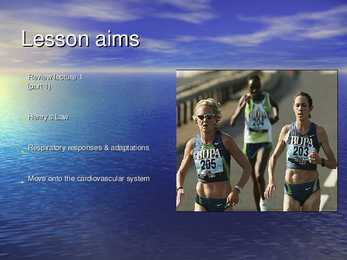
Lesson aims
• Review lecture 1 
   ( part  1)
•  Henry ’s Law
• Respiratory  responses  & adaptations
•  Move  onto the cardiovascular system 
Lecture 1 – recall  task
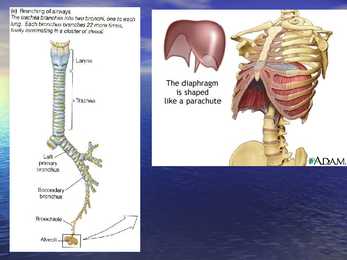
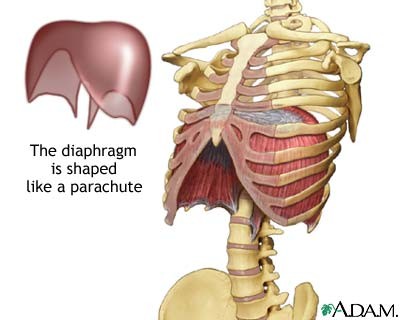
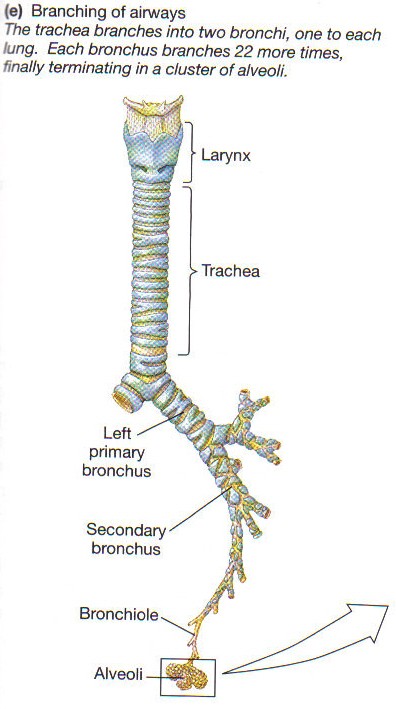
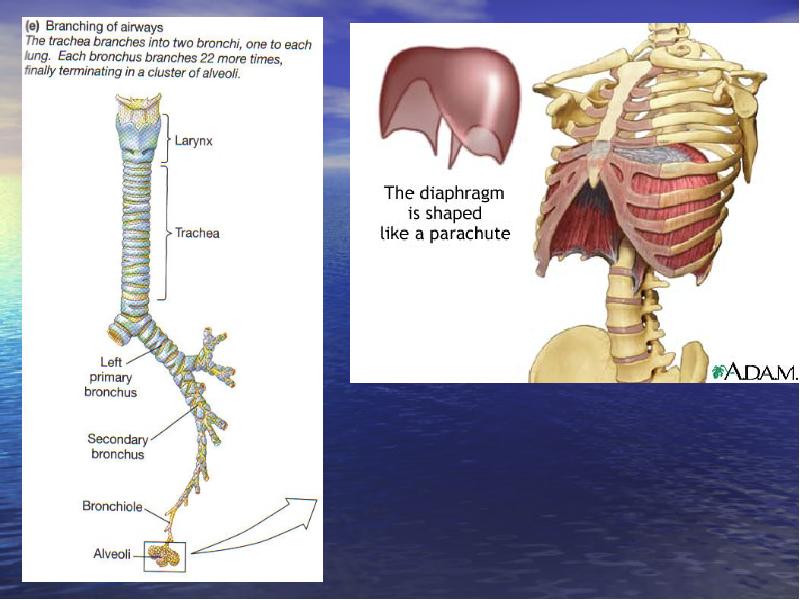
1) Identify the route that air  takes  from the atmosphere 
to the  blood  (e.g., air enters  through  the mouth and 
then…).
2)  Explain  the mechanism of how air is drawn into the 
body  with  reference  to Boyle’s law and  diffusion .
3) With reference to Dalton’s law explain why training 
at altitude can be problematic for athletes.
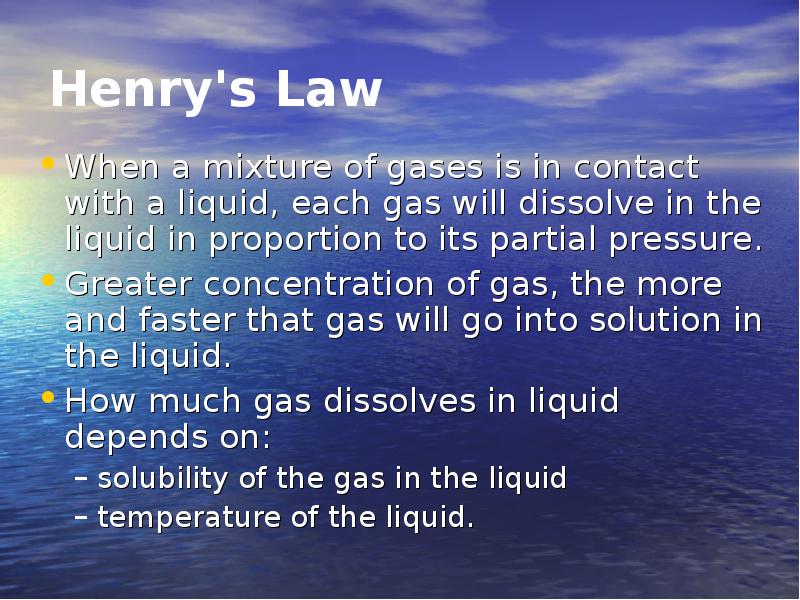
Henry's Law
• When a mixture of gases is in contact with a 
liquid , each gas will dissolve in the liquid in 
proportion to its partial  pressure .
•  Greater  concentration of gas, the more and 
faster that gas will go into  solution  in the 
liquid. 
• How much gas dissolves in liquid depends 
on:
– solubility of the gas in the liquid
– temperature of the liquid.
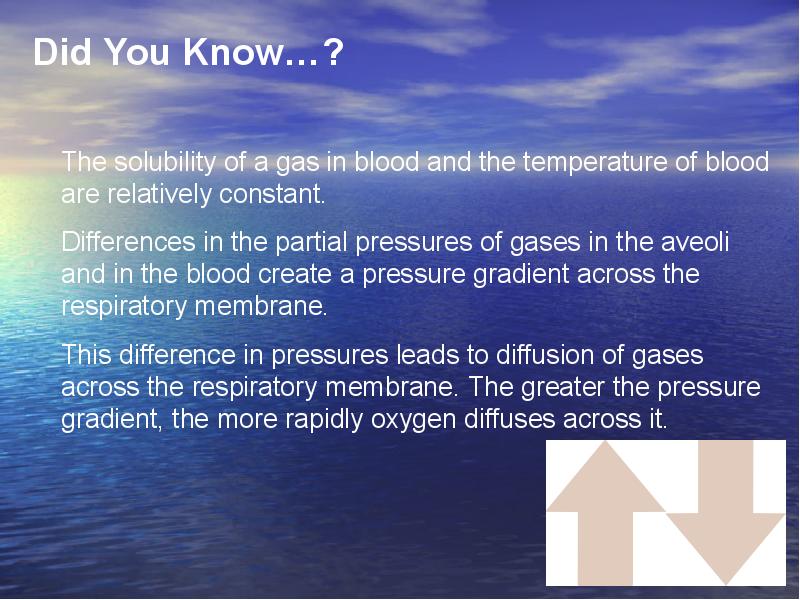
Did You  Know …?
The solubility of a gas in  blood  and the temperature of blood 
are relatively constant. 
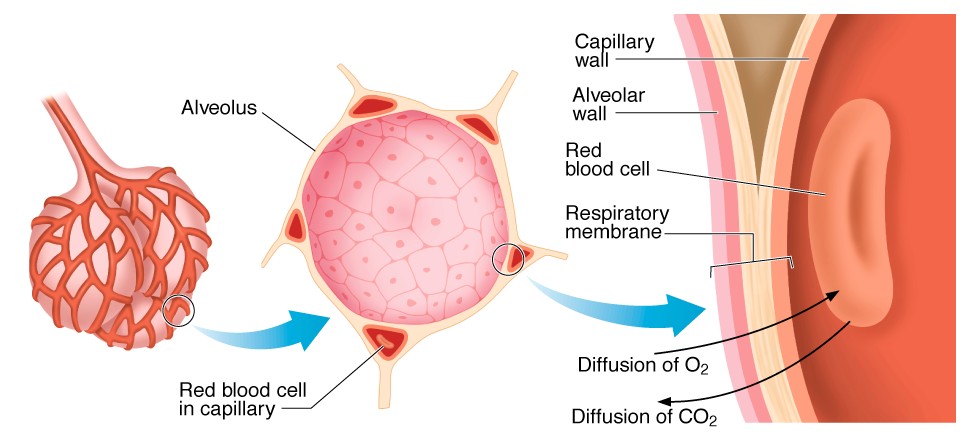
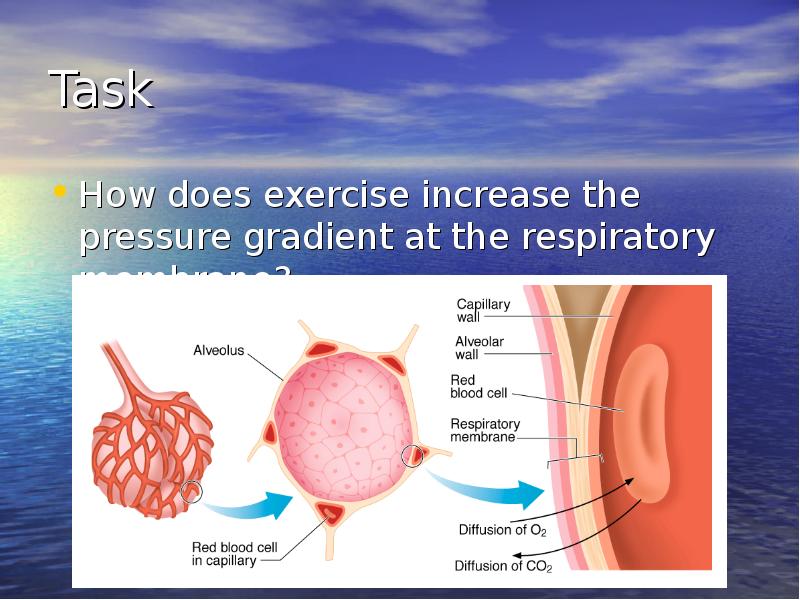
Differences  in the partial pressures of gases in the aveoli 
and in the blood create a pressure gradient  across  the 
respiratory membrane. 
This  difference  in pressures leads to diffusion of gases 
across the respiratory membrane. The greater the pressure 
gradient, the more rapidly  oxygen  diffuses across it.
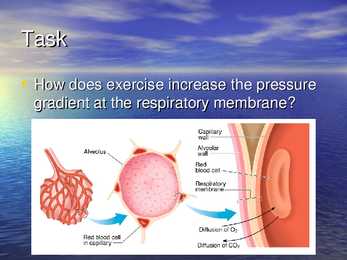
Task 
• How does  exercise   increase  the pressure 
gradient at the respiratory membrane?
Response &  Adaptation
• Response (acute)
 immediate response of systems as a  result  of  exercise  
 response can  change  with intensity, 
 system  changes  return to resting values  once  exercise bout 
has ceased, or shortly after. 
• Adaptation (chronic)
 more  permanent  changes as a result of training
 adaptations wil  resist change but wil  revert to  previous  
state if training ceases
 adaptation is not always a  good   thing  (maladaptation)    
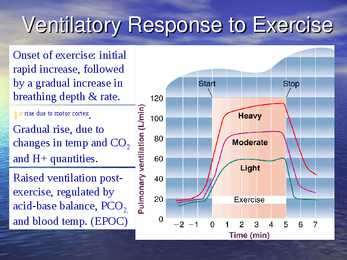
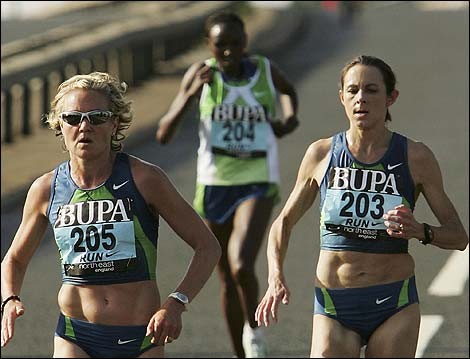
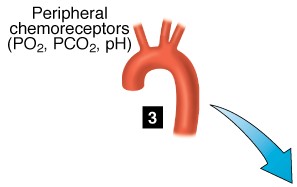
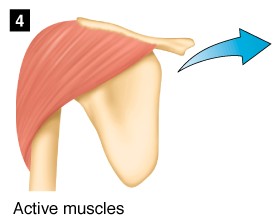
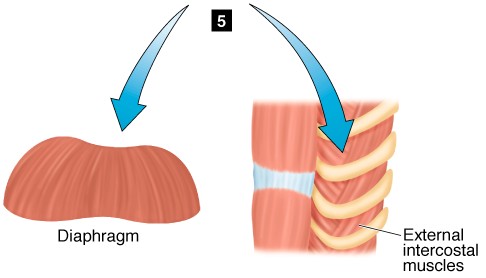
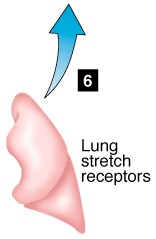
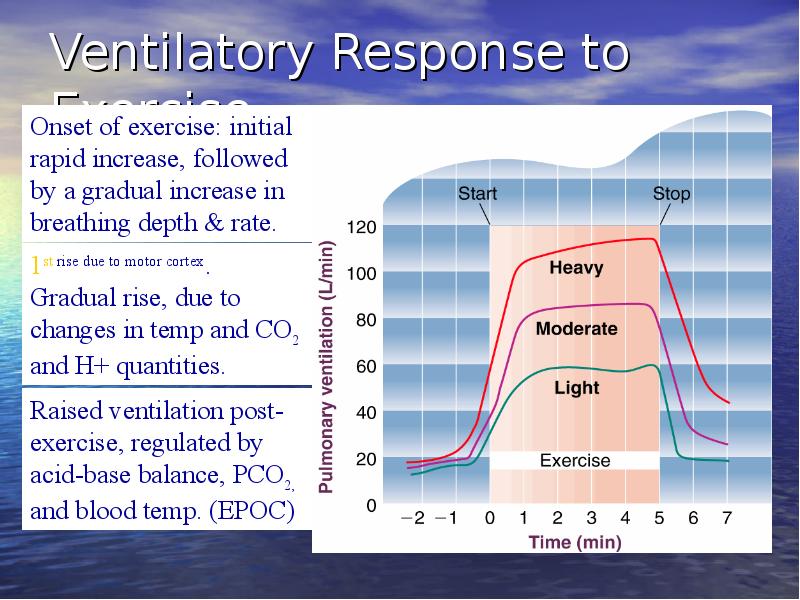
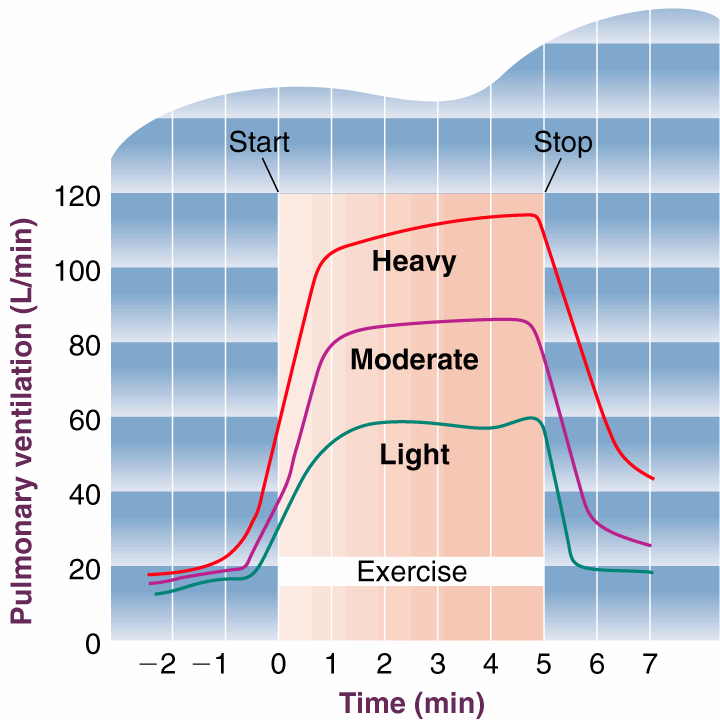
Ventilatory Response to Exercise
Onset  of exercise: initial 
rapid increase, followed 
by a gradual increase in 
breathing depth &  rate
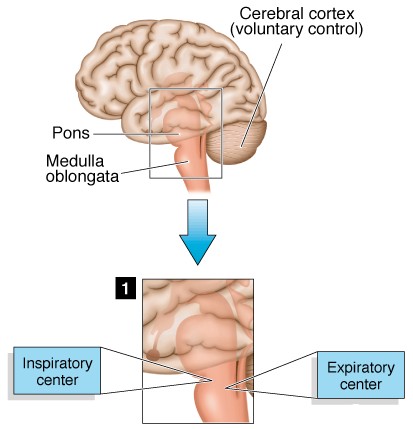
1st  rise  due to  motor  cortex. 
Gradual rise, due to 
changes in temp and CO  2
and H+ quantities.
Raised ventilation post-
exercise, regulated by 
acid-base  balance , PCO2, 
and blood temp. (EPOC)
Minute  Ventilation (V and 
E) and
Exercise 
•  Average : 35 – 45 breaths/min  during  
strenuous exercise, 
– Athletes 60 – 70 breaths per minute.
•  Tidal   volume  (TV) increase from 0.5L to 3L.
• V can rise up to 90 – 150L per minute.
 E can rise up to 90 – 150L per minut
• Some  studies  have  even  shown V  to rise 
E to ris
above  200L per minute
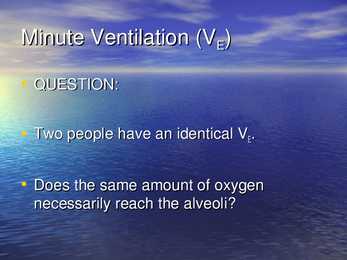
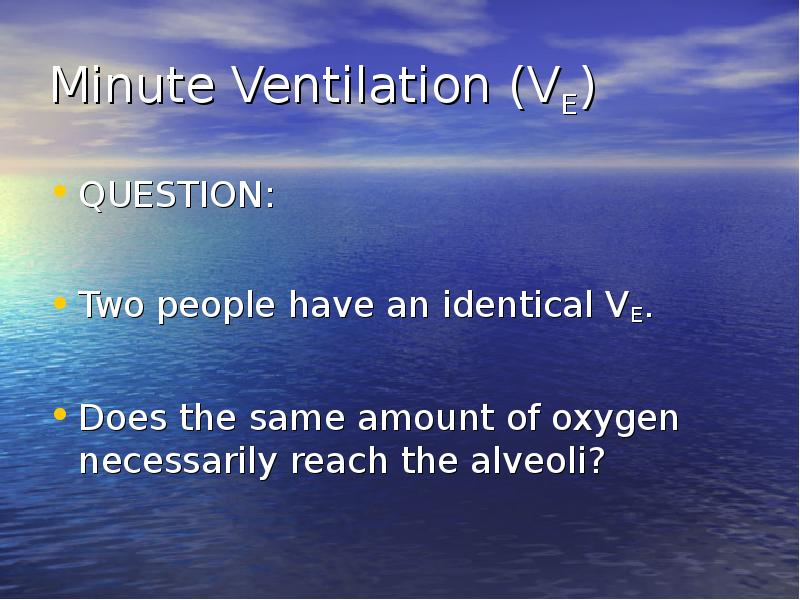
Minute Ventilation (VE)
• QUESTION:
• Two people have an identical VE.
• Does the  same   amount  of oxygen 
necessarily  reach  the alveoli?
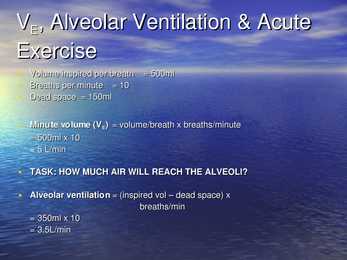
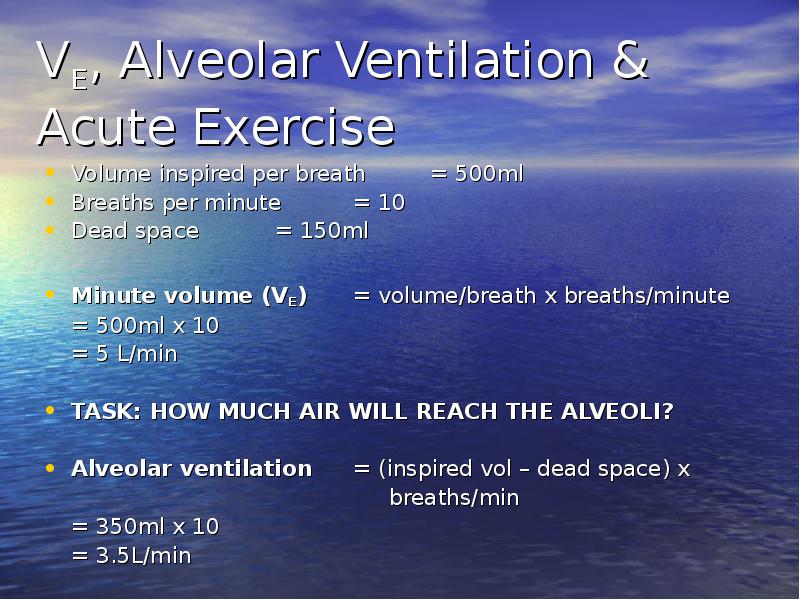
V ,  Alveolar  Ventilation & Acute 
E, Alveolar Ventilation & Acut
Exercise
• Volume inspired per breath = 500ml
• Breaths per minute = 10
• Dead  space  = 150ml
• Minute volume (V = volume/breath x breaths/minute
E) = volume/breath x breaths/min
= 500ml x 10
= 5 L/min
• TASK: HOW MUCH AIR WILL REACH THE ALVEOLI?
• Alveolar ventilation = (inspired vol – dead space) x
                                                  breaths/min
= 350ml x 10
= 3.5L/min
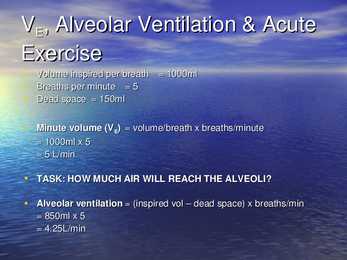
V , Alveolar Ventilation & Acute 
E, Alveolar Ventilation & Acut
Exercise
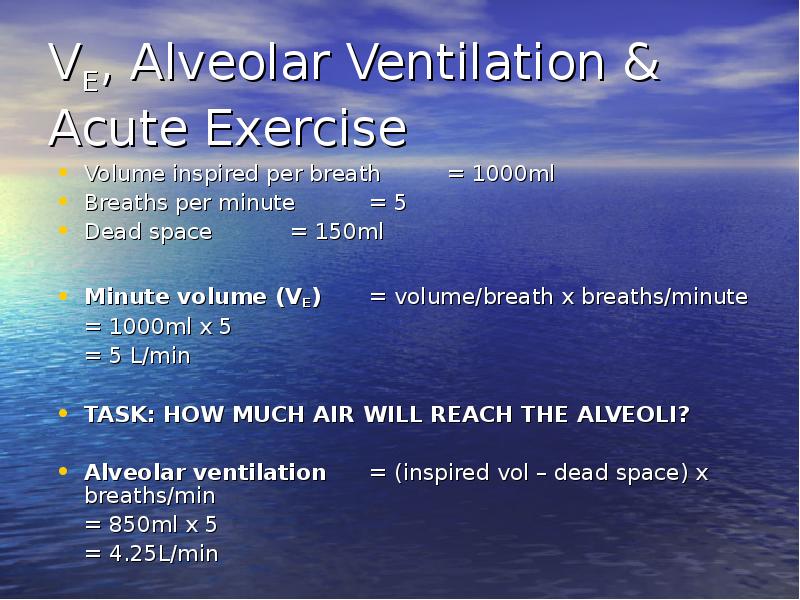
• Volume inspired per breath = 1000ml
• Breaths per minute = 5
• Dead space = 150ml
• Minute volume (V = volume/breath x breaths/minute
E) = volume/breath x breaths/m
= 1000ml x 5
= 5 L/min
• TASK: HOW MUCH AIR WILL REACH THE ALVEOLI?
• Alveolar ventilation = (inspired vol – dead space) x breaths/min
= 850ml x 5
= 4.25L/min
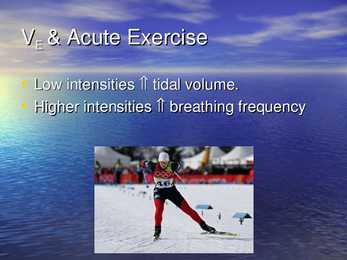
V & Acute Exercise
E & Acute Exercis
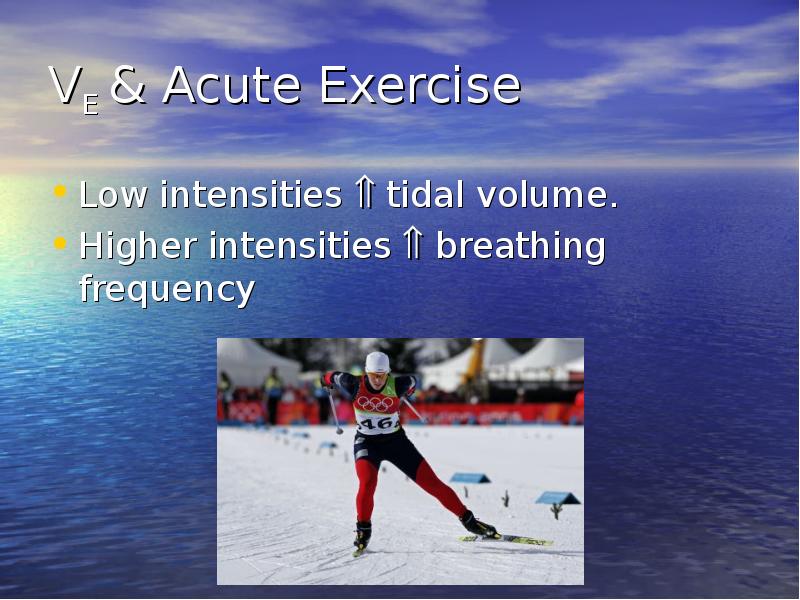
• Low intensities ⇑ tidal volume.
•  Higher  intensities ⇑ breathing  frequency
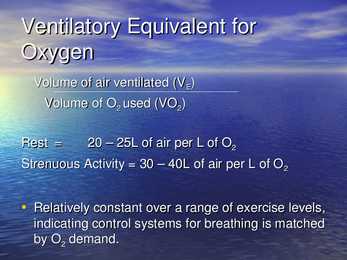
Ventilatory  Equivalent  for 
Oxygen
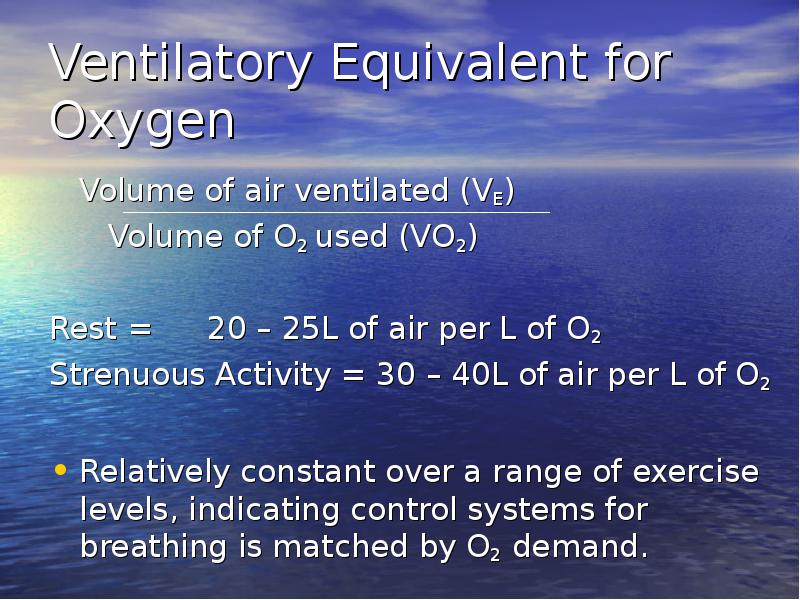
Volume of air ventilated (VE)
   Volume of O used (VO
2 used (V
2)
Rest   =
20 – 25L of air per L of O2
Strenuous Activity = 30 – 40L of air per L of O2
• Relatively constant over a range of exercise levels, 
indicating  control  systems for breathing is matched 
by O   demand .
2 demand
V /VO
E/
2
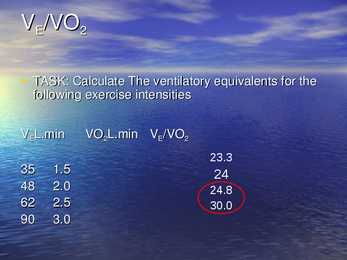
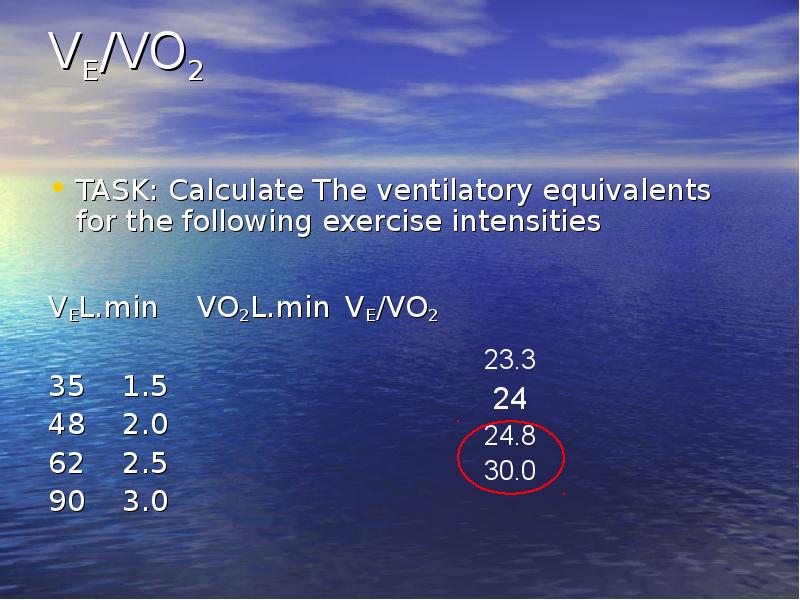
• TASK: Calculate The ventilatory equivalents for the 
following  exercise intensities
V L.min
VO L.min V /VO
EL.min
2L.min
E/V
2
23.3
35
1.5
24
48
2.0
24.8
62
2.5
30.0
90
3.0
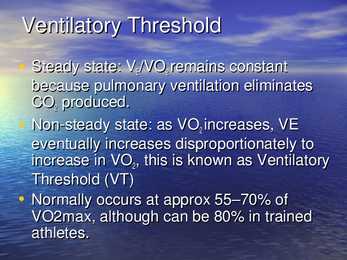
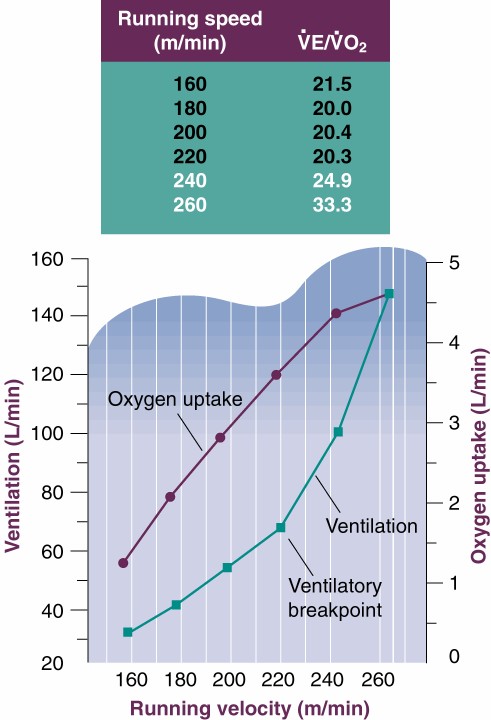
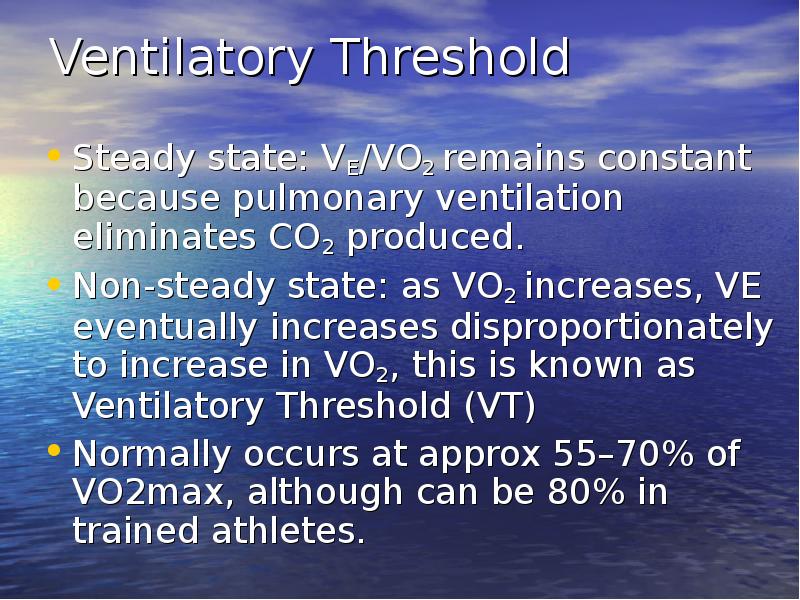
Ventilatory Threshold
•  Steady  state: V /VO remains constant 
E/VO2 remains constan
because pulmonary ventilation eliminates 
CO  produced.
2 produce
• Non­steady state: as VO  increases , VE 
2 increases, VE
eventually increases disproportionately to 
increase in VO , this is known as Ventilatory 
2, this is known as Ventila
Threshold (VT)
• Normally occurs at approx 55–70% of 
VO2max,  although  can be 80% in  trained  
athletes.
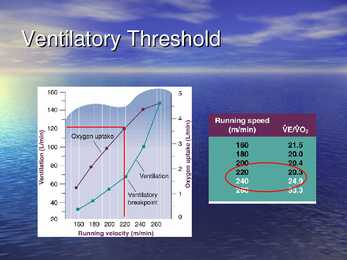
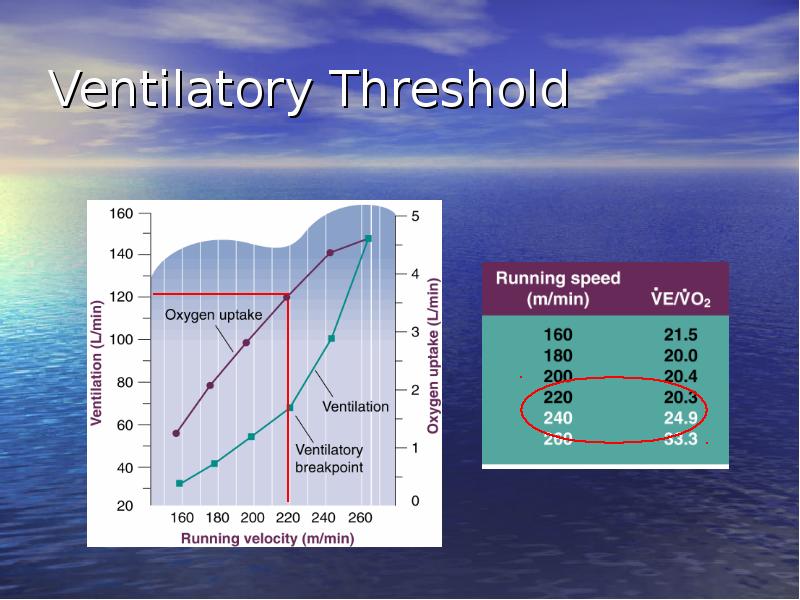
Ventilatory Threshold
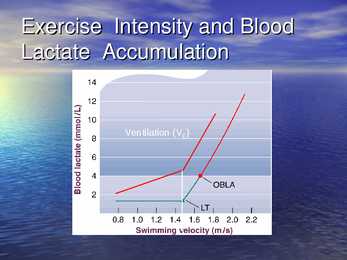
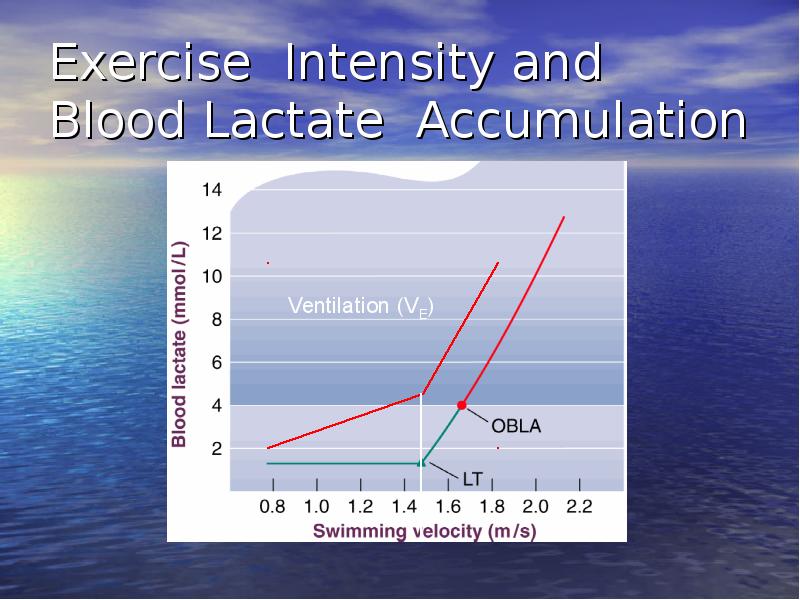
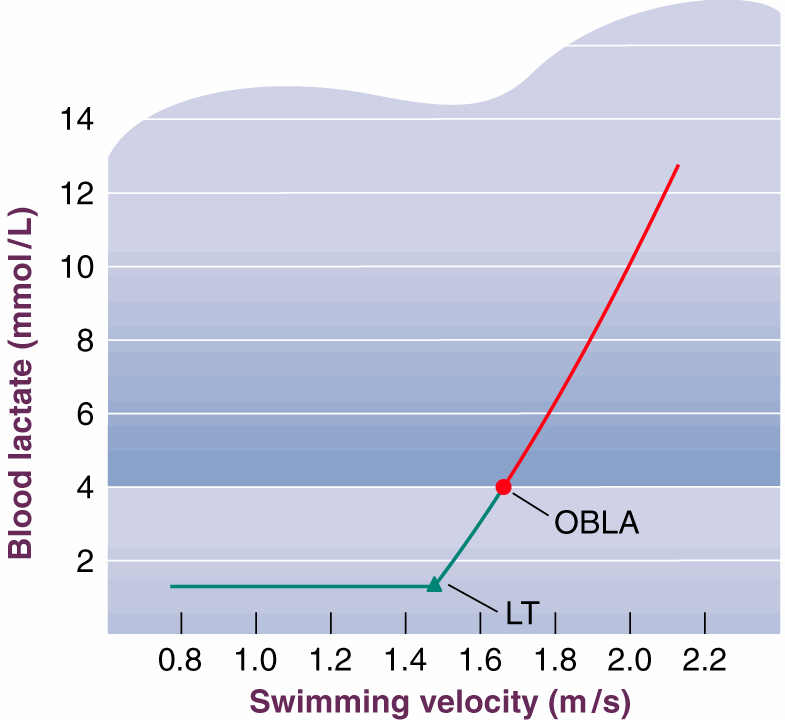
Exercise  Intensity and Blood 
Lactate    Accumulation
Ventilation (V )
E
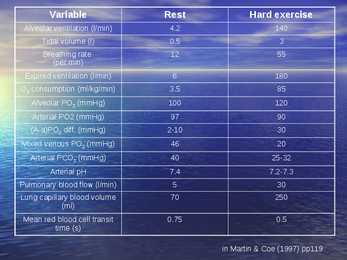
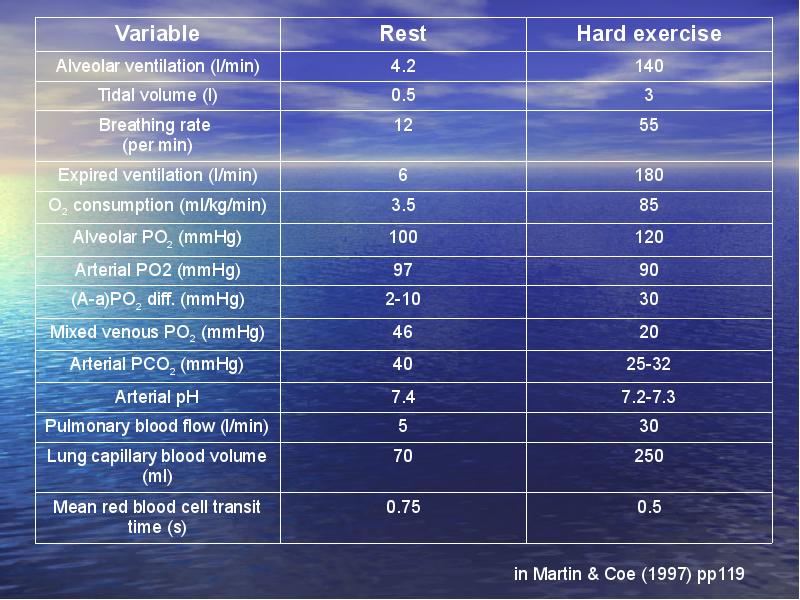
Variable
Rest
Hard  exercise
Alveolar ventilation (l/min)
4.2
140
Tidal volume (l)
0.5
3
Breathing rate 
12
55
(per min)
Expired ventilation (l/min)
6
180
O   consumption  (ml/kg/min)
3.5
85
2
Alveolar PO  (mmHg)
100
120
2
Arterial  PO2 (mmHg)
97
90
(A-a)PO   diff . (mmHg)
2-10
30
2
Mixed venous PO  (mmHg)
46
20
2
Arterial PCO  (mmHg)
40
25-32
2
Arterial pH
7.4
7.2-7.3
Pulmonary blood flow (l/min)
5
30
Lung  capillary blood volume 
70
250
(ml)
Mean  red blood cell  transit  
0.75
0.5
time (s)
in Martin & Coe (1997) pp119
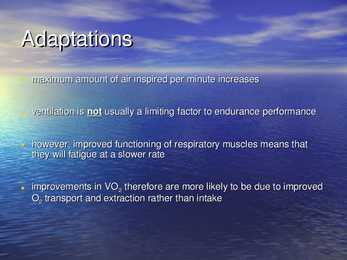
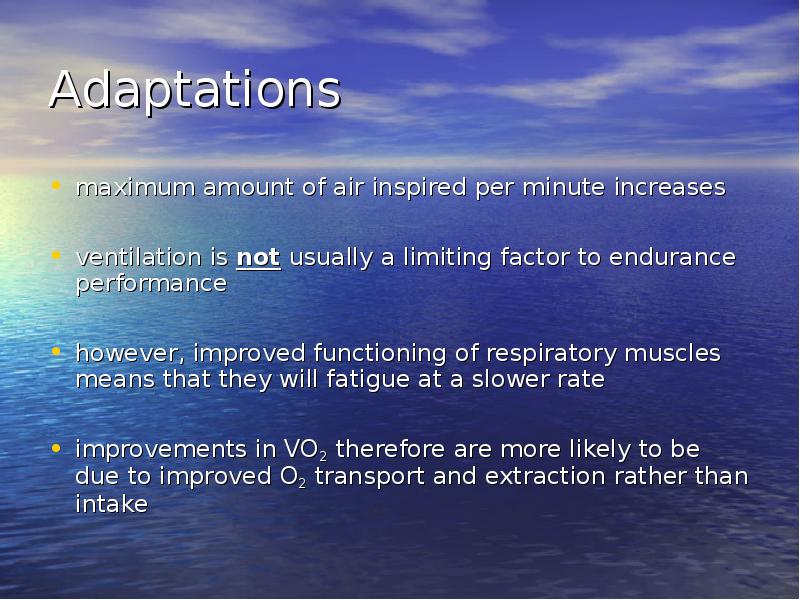
Adaptations
• maximum amount of air inspired per minute increases
• ventilation is not usual y a limiting  factor  to endurance  performance
• however,  improved  functioning of respiratory muscles  means  that 
they wil   fatigue  at a slower rate
• improvements in VO  therefore  are more likely to be due to improved 
2  therefore are more likely to be due to improved
O  transport and extraction rather  than  intake 
2 transport and extraction rather than intake
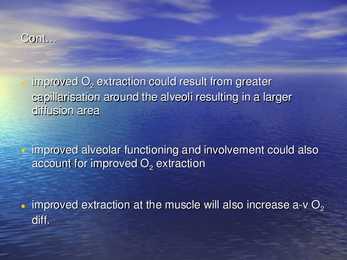
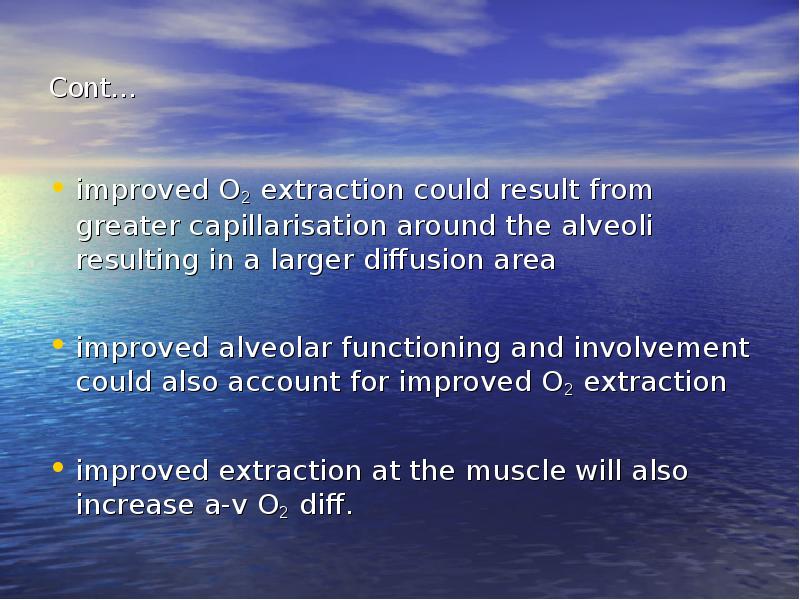
Cont
• improved O  extraction  could  result from greater 
2 extraction could result from greater
capil arisation  around  the alveoli resulting in a larger 
diffusion area
• improved alveolar functioning and involvement could also 
account for improved O  extraction
2 extract
• improved extraction at the  muscle  wil  also increase a­v O2 
diff.
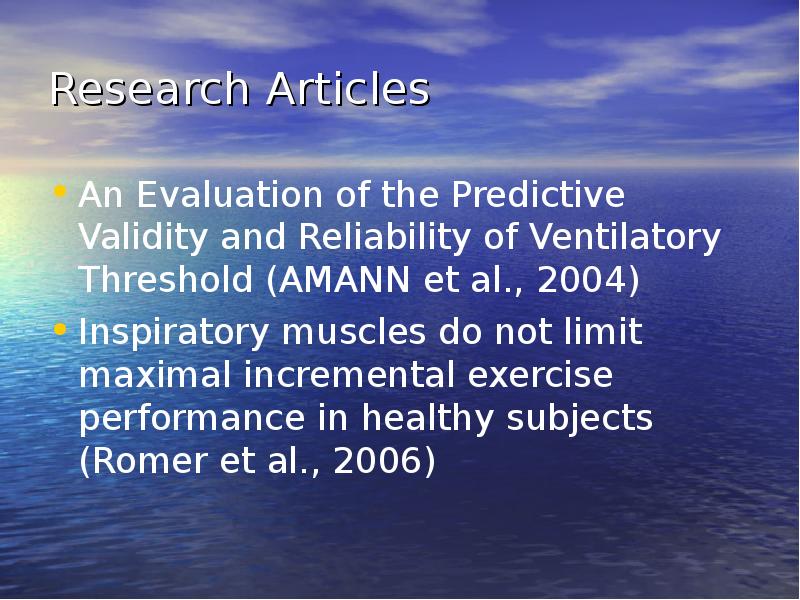
Research  Articles
• An Evaluation of the Predictive Validity 
and  Reliability  of Ventilatory Threshold 
(AMANN et al., 2004)
• Inspiratory muscles do not  limit  maximal 
incremental  exercise performance in 
healthy  subjects  (Romer et al., 2006)
Reading
• Marieb & Hoehn (2007) Human  anatomy  & Physiology. CH. 22.
• Tortora & Grabowski (depends on edition), Principles of 
Anatomy & Physiology, chap. 23
• Wilmore & Costil  (2004) Physiology of  Sport  & Exercise, 
chaps . 8 & 9
•  See also McArdle, Katch & Katch
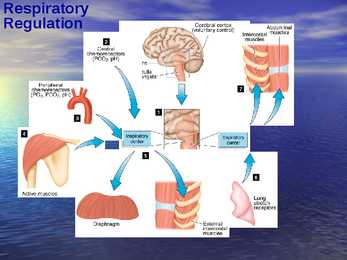
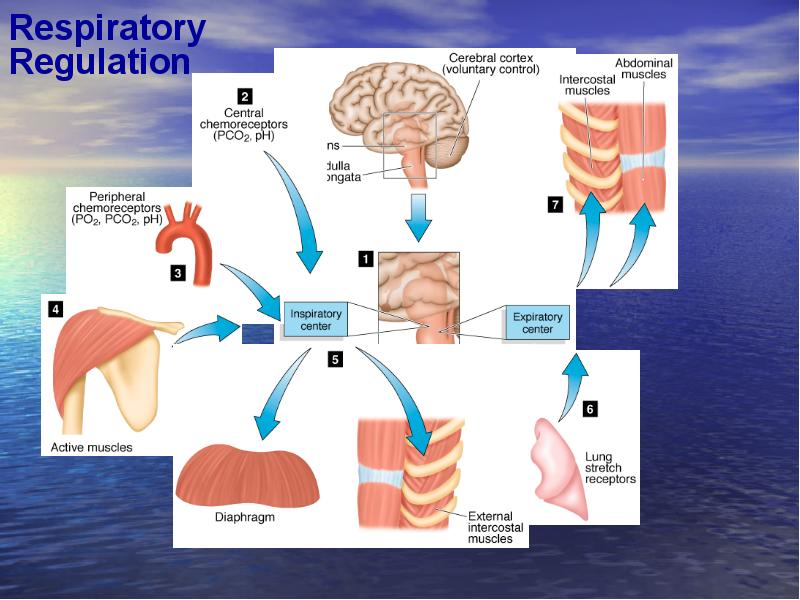
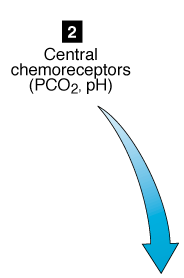
Respiratory 
Regulation

Document Outline

  • Lesson aims
  • Lecture 1 – recall task
  • Henry's Law
  • Slide 4
  • Task 
  • Response & Adaptation
  • Ventilatory Response to Exercise
  • Minute Ventilation (VE) and Exercise 
  • Minute Ventilation (VE)
  • VE, Alveolar Ventilation & Acute Exercise
  • Slide 11
  • VE & Acute Exercise
  • Ventilatory Equivalent for Oxygen
  • VE/VO2
  • Ventilatory Threshold
  • Slide 16
  • Exercise  Intensity and Blood Lactate  Accumulation
  • Slide 18
  • Adaptations
  • Cont…
  • Research Articles
  • Reading
  • Slide 23
  • Slide 24
Vasakule Paremale
Exercise Physiology - lecture 1 #1 Exercise Physiology - lecture 1 #2 Exercise Physiology - lecture 1 #3 Exercise Physiology - lecture 1 #4 Exercise Physiology - lecture 1 #5 Exercise Physiology - lecture 1 #6 Exercise Physiology - lecture 1 #7 Exercise Physiology - lecture 1 #8 Exercise Physiology - lecture 1 #9 Exercise Physiology - lecture 1 #10 Exercise Physiology - lecture 1 #11 Exercise Physiology - lecture 1 #12 Exercise Physiology - lecture 1 #13 Exercise Physiology - lecture 1 #14 Exercise Physiology - lecture 1 #15 Exercise Physiology - lecture 1 #16 Exercise Physiology - lecture 1 #17 Exercise Physiology - lecture 1 #18 Exercise Physiology - lecture 1 #19 Exercise Physiology - lecture 1 #20 Exercise Physiology - lecture 1 #21 Exercise Physiology - lecture 1 #22 Exercise Physiology - lecture 1 #23 Exercise Physiology - lecture 1 #24
Punktid 50 punkti Autor soovib selle materjali allalaadimise eest saada 50 punkti.
Leheküljed ~ 24 lehte Lehekülgede arv dokumendis
Aeg2013-11-20 Kuupäev, millal dokument üles laeti
Allalaadimisi 7 laadimist Kokku alla laetud
Kommentaarid 0 arvamust Teiste kasutajate poolt lisatud kommentaarid
Autor NyLily Õppematerjali autor
Inglisekeelne esitlus inimese füsioloogiast, mis annab ülevaate Henry seadusest, respiratoorsest tegevusest.

Sarnased õppematerjalid

Exercise Physiology - lecture 4 Blood-gas exchange-transport
28
ppt

Exercise Physiology - lecture 4 Blood, gas exchange, transport

Exercise Physiology Blood Gas Exchange and Transport Today's lesson Cardiovascular responses & adaptations to exercise ­ a review Transporting O2 and CO2 in the blood Gaseous exchange at the muscle Types of muscle tissue Properties and function of muscle tissue Microscopic anatomy of muscle tissue Sliding filament theory Components of Respiration Pulmonary ventilation External respiration Pulmonary diffusion Internal CO2 and O2 transport respiration via blood Tissue gaseous exchange

Meditsiin
Fitness In Soccer
409
pdf

Fitness In Soccer

Aside from this, he is involved as a sport physio and rehab coach in the youth academy of Oud-Heverlee Leuven, a Belgian first-division club. Pim Koolwijk, MSc, has a master’s degree in human movement science from the VU University Amsterdam and a bachelor’s degree from the Sport Academy in The Hague. Since 2007, he has worked as an exercise physiologist/physical trainer at FC Utrecht, which performs in the highest Dutch division. In the past, he has worked as a human movement scientist at several sporting organizations. He still works as an indepen- dent sports consultant for several sporting organizations and individual athletes in the Netherlands

Kategoriseerimata
The Anaerobic Energy Systems 7
21
ppt

The Anaerobic Energy Systems 7

converted to Glucose 6-phosphate. ­ Glucose to glucose 6-phosphate costs 1 ATP · Glycolysis produces pyruvic acid, without oxygen pyruvic acid is converted to lactic acid. · Net gain 3 moles of ATP (glucose = 2 ATP) Anaerobic Glycolysis · Reserve fuel activated when a person accelerates during race, during the last 200 m of a mile run, or performs a 400 m run or 100 m swim. Lactic Acid/Lactate Formation · During very high intensity exercise high rate of glycolysis H+ released faster than they can be removed by NADH (ETC) increased lactic acid production. · The above due to both lack of O 2 and the recruitment of fast twitch fibres. · Lactic acid lactate diffuses into blood for buffering and rapid removal. Lactic Acid as an Energy Source · Lactic acid allows high rates of ATP production for short duration (2-3 minutes). · As exercise intensity slows or during recovery sufficient O2 available again

Inglise keel
The 4-Hour Body - An Uncommon Guide to Rapid Fat-Loss-Incredible Sex-and Becoming Superhuman - Timothy Ferriss
574
pdf

The 4-Hour Body - An Uncommon Guide to Rapid Fat-Loss, Incredible Sex, and Becoming Superhuman - Timothy Ferriss

Weight Glide Path SUBTRACTING FAT Comparison of Dietary Fats and Oils Air Squats Wall Presses Chest Pulls Ray Cornise's Fat-Loss Spreadsheet Continuous Glucose Monitor Glucose Trend: Ferriss, Tim Modal Day: Ferriss, Tim Glucose Trend, September 25 Glucose Trend, September 26 Testosterone and Nandrolone ADDING MUSCLE The Kettlebell Swing Touch-and-Go Deadlifts Two-Legged Glute Activation Raises Flying Dog The Myotatic Crunch Abdominal Muscles Cat Vomit Exercise Front Plank Side Plank Hip Flexor Stretch Alpha-Actinin 3 (ACTN3) Time Ferriss, Before-and-After Shots Pull-down Machine Shoulder Press The Locked Position Slight Incline/Decline Bench Press Leg Press Leg Press Barbell Overhead Press Squat Sample Workouts Calendars The "Yates" Bent Row The Reverse Drag Curl Sacroplasmic Hypertrophy and Myofibrillar Hyertrophy IMPROVING SEX Conventional Missionary and Improved-Angle Missionary Improved-Pressure Missionary

Inglise keel
Stress
4
doc

Stress

Some techniques of time management (aja mahavõtmine?) may help a person to control stress. In the face of high demands, effective stress management (ohjeldamine) involves learning to set limits and to refuse some demands that others make. A destressitizer is any process by which an individual can relieve stress. Include some of the following: · Autogenic training (kehaline) · Cognitive therapy (tunnetuslik) · Conflict resolution (konflikti lahendus) · Exercise (harjutused) · Getting a hobby · Meditation · Deep breathing · Yoga · Relaxation techniques · Artistic Expression (kunstiline väljaelamine) -1- · Spas · Spending time in nature · Stress balls · Clinically validated (kehtestatud) alternative treatments (ravimeetodid) · Listening to certain types of relaxing music, particularly: o New Age music http://www.youtube

Inglise keel
Physical hazards konspekt
8
pdf

Physical hazards konspekt

Inconvenient Non-ionizing indoor climate Poor radiation lighting (magnetic fields) PHYSICAL HAZARDS Risk of fire and Noise in the working environment: electrical shock Physical Part I – Inconvenient indoor hazards Risk from climate sharp objec

Ergonoomika
Inglise keel unit 5 answers
276
docx

Inglise keel unit 5 answers

1. (a) (i) gene length of DNA; codes for a (specific), polypeptide / protein / RNA; max 1 allele alternative form of a gene; found at a, locus / particular position on, a chromosome; max 1 (ii) assume allele refers to coat colour allele (coat colour) gene / alleles, only on X chromosome; A no (coat colour), gene / allele, on Y chromosome male cats, XY / only have one X chromosome; males have only one (coat colour) allele / cannot have two (coat colour) alleles; need black and orange alleles for tortoiseshell colour; 2 r r w w (b) parental genotypes C C × C C ; r w gametes C , C ; F1 genotypes and pheno

Inglise keel
Stretches and exercises in office
12
doc

Stretches and exercises in office

your own stretching program. However, remember that stretching isn't for everybody. If you are currently experiencing pain, you must consult with your physician before doing any of these stretches, and if you experience any discomfort while doing these stretches, discontinue them immediately. Stretching essentials Warm up first. Stretching muscles when they're cold increases your risk of injury, including pulled muscles. Warm up by walking while gently pumping your arms, or do a favorite exercise at low intensity for five minutes. Better yet, stretch after you exercise -- when your muscles are warm and more receptive to stretching. Hold each stretch for at least 30 seconds. It takes time to lengthen tissues safely. Hold your stretches for at least 30 seconds -- and up to 60 seconds for a really tight muscle or problem area. That can seem like a long time, so keep an eye on the clock or your watch. Then repeat the stretch on the other side

Ergonoomika


Meedia

Kommentaarid (0)

Kommentaarid sellele materjalile puuduvad. Ole esimene ja kommenteeri


Sellel veebilehel kasutatakse küpsiseid. Kasutamist jätkates nõustute küpsiste ja veebilehe üldtingimustega Nõustun